"United we bargain, divided we beg."
Showing posts with label fermentation. Show all posts

Monday, February 21, 2022

The Fermentation Files (Ginger Beer/Not Beer)

Small batch fermenting is one of my favorite things to do. I love to make sauerkraut, kim chee, and kosher dill pickles. During milk season I make kefir and, of course, cheese. People don’t think of it that way, but cheese is in fact a fermented food. Someday I would love to try my hand at another non-intuitive fermented food - dry cured salami. Fermented foods have a ton of health benefits and they are a cheap, low stakes hobby that doesn’t require much in the way of equipment. 


A notable exception to that cheap and easy thing, though, is one type of fermentation that I don’t do anymore. I used to be a home brewer. I’d make plum wine in the late summer and hard cider in the fall. I never got all that good at it, but I did enjoy myself and I did amass a collection of cool glass carboys and neato accoutrements like airlocks and bottlecappers. And I felt a great deal of satisfaction and pride whenever I got “high on my own supply” and enjoyed a few glasses of mediocre but effective home made hooch. 

Alas, I enjoyed it all a little too much and eventually I quit drinking alcohol altogether. I gave away all my cool carboys and tubing and whatnot. It was sad to part with it all, but I still had a whole world of fermenting projects and kitchen-witchery to console myself. I’ve stayed away from fermented beverages ever since. Until a few days ago. 

My daughter Hope has long wanted to make old fashioned root beer and/or ginger ale. It’s a fermented drink, but it isn’t alcoholic. Or, at least, it shouldn’t be more than about 0.5-1% alcoholic, which is the same amount that’s allowed to be in regular apple or orange juice that you buy at the grocery store. So when, last week, the Gleaner’s Pantry offered up a bounty of a whole pound of fresh ginger, we decided to give it a try. 


I wasn’t sure how to go about it, but that’s why I have books. The first step in making ginger beer is making a ginger bug. A ginger bug is very simple to make. You just grate a ton of ginger into a jar, add a big scoop of sugar, and fill the jar with water. Leave it on your fermenting shelf (what? You don’t have a dedicated fermenting shelf?), and within a day or two it will be bubbling away. 

When your ginger bug is nice and active, make a pot of very strong ginger tea - actually a decoction of ginger. Grate, chop, or thinly slice at least six inches of ginger root into a half gallon of water. Simmer for twenty minutes. It will reduce down to about a quart. Strain into a half gallon jar and add a full cup to two cups of sugar and another quart of cool water. Temperature should be lukewarm. Then add your ginger bug in a mesh bag. 

Cover, but do not seal. Put it on your fermenting shelf (you set one up in the last minute and a half, right?). Wait a day or two until it’s nice and fizzy and drink. You can bottle at this point, but be careful. We bottled some in stoppered bottles and when we opened one a day later it shot out like champagne. 

I ended up not drinking the ginger beer, after just a taste. On the first day, I couldn’t taste any alcohol, but on the second day I thought I could. I might have been imagining it. It tasted like apple cider when it’s left out overnight. I’m certain it would be impossible to get drunk on this ginger beer, but these days I take no chances. It is a sugar-based ferment, and that means it must have some alcohol in it. I don’t fuck with alcohol anymore. So Hope gets to enjoy it all herself. 

However the taste I did get was great! Very “hot” ginger taste, light carbonation, and that slightly sweet-sour taste fermented liquids have. I’m sure it would be tremendously refreshing over ice on a hot day, and probably very good for stomach ills and nausea. Next time, I may try just making the string, sweet tea and adding carbonated water instead of a ginger bug. It won’t be a real fermented product that way, but at least I could drink it. 
Sunday, September 13, 2020

Preserving Log (Late Summer 2020)


I’ve been on an absolute tear in the kitchen the last two weeks. Late August/early September is the middle harvest season (Mabon is coming right up), the prime harvest season around here. Here’s a list of what I’ve done lately - as far as I can remember. 


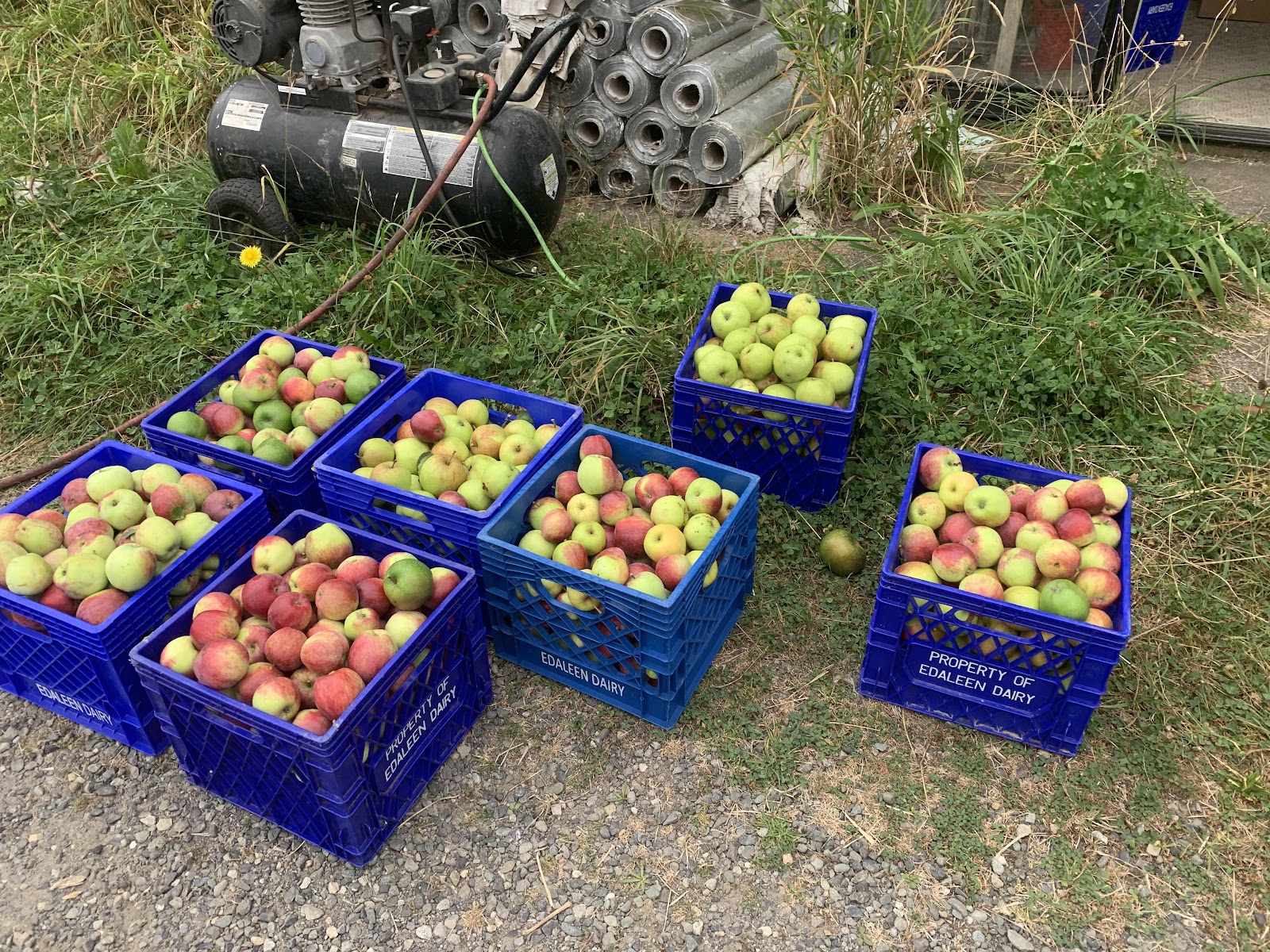
Today the girls and I pressed about ten gallons of cider, from the apples you see above. My friend H. down the way has a dozen apple trees and was only too happy to let us pick some. Tomorrow I will bring her some cider. 

Cidering is hard work. Picking the apples, carrying the crates, washing the apples, hauling the press out and cleaning it, bending down and standing up approximately 7000 times, pressing the buckets, pulling the tight-packed plate back out of the buckets, carrying the apple mast to the compost. It’s messy too, with little bits of apples flying everywhere and juice on everything. By the end I was so sweaty and sticky and tired! Working outdoors in this horrible smoke isn’t a lot of fun, either. But this was the first time we’ve pressed cider in a couple years and overall it’s a great experience. 

The smaller of my two carboys, three gallons, will be made into hard cider, and we’re keeping the rest sweet. I threw two gallons into the freezer, which leaves us about six gallons to get through before it turns into tepache. Not that there’s anything wrong with tepache. 


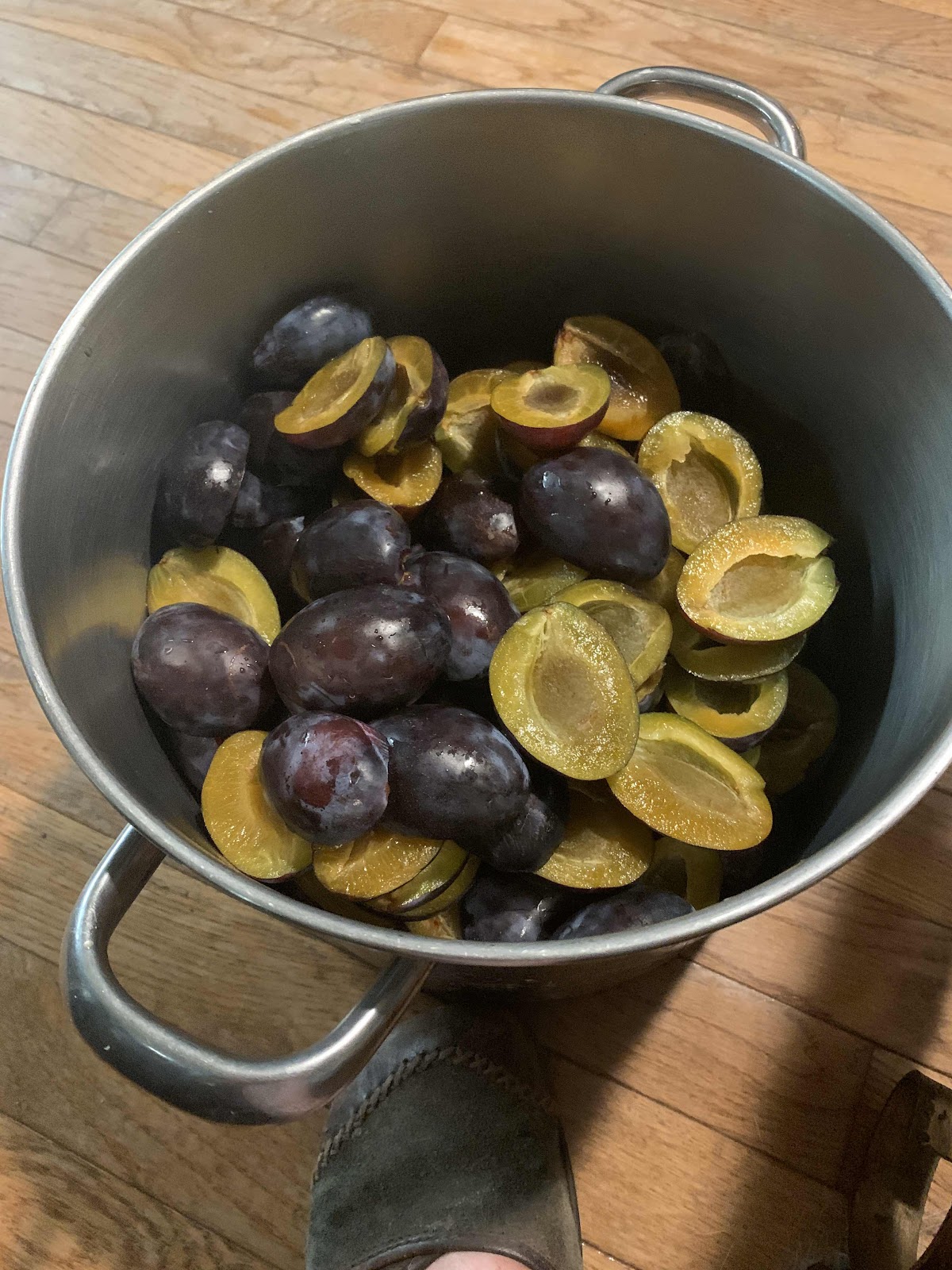
Plums. This in an on-year for the Italian plum tree, and there are hundreds and hundreds of plums. I’ve dehydrated enough to fill a gallon ziploc bag - more plums than you probably think - and the dehydrator is full of plums right now too. 

I’m taking another swing at plum wine. My past efforts have been drinkable, not fantastic.  Probably I won’t get any better unless I buy a little more equipment - like a hydrometer - and start taking recipes more seriously. But hey - there are so many plums. How far wrong can you go? Right now there’s about two gallons in a primary fermenting chamber and I’ll pitch the yeast tomorrow. I have to go buy another carboy because all of mine are currently full of apple cider. 


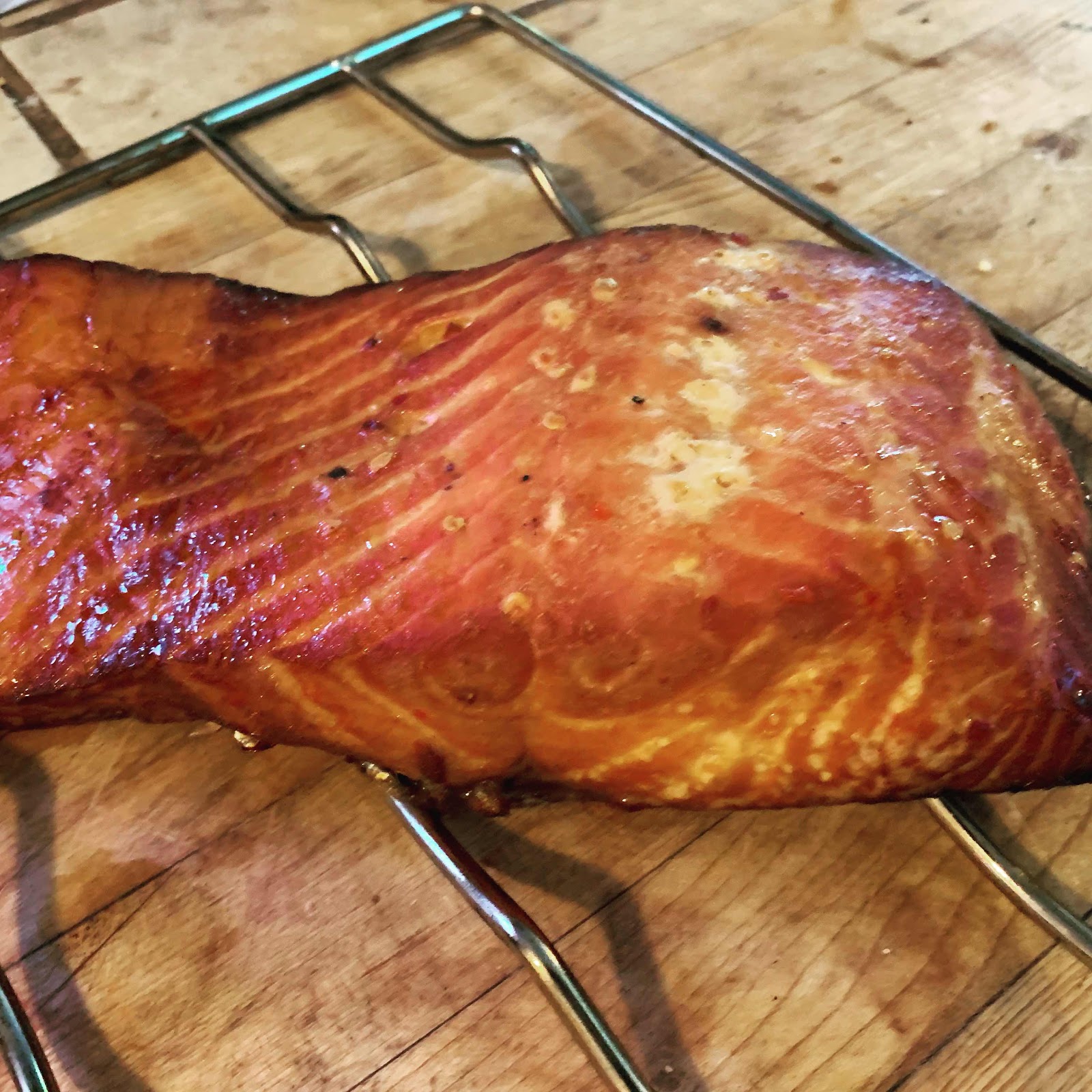
One of Homero’s clients brought him an enormous side of  salmon as a tip. I cut it into five approximately 1 1/2 lb pieces, and we ate one fresh and then I smoked the others. One of the smoked pieces is in the fridge to snack on and the others are vacuum sealed and will keep in the fridge for a few months. Probably not until Christmas though, sadly. Smoked salmon is my favorite thing to send friends and family as a Christmas gift. I could throw them in the freezer but I’m not sure how well the texture would hold up. 

Let’s see, what else? Oh, I canned six quarts of salsa ranchera  this week with tomatoes from gleaners. But I’m not doing a lot of canning for the simple reason that I can’t find canning lids anywhere! Apparently canning lids are the toilet paper of this phase of the pandemic. I have one package of small mouth lids left. 

A couple days ago I hit my favorite local farm stands just to see what was available. I brought home some sweet corn (which we ate), some cherry tomatoes (ditto), five pounds of green beans, and three smallish kohlrabi. I started kimchee with the kohlrabi. Earlier this summer I made a batch of kohlrabi kimchee and it was the BOMB. It’s only about a quart, but we will enjoy it. 

I’ll have to decide if I want to use the last of my canning lids to make canned dilly beans with the green beans, or if I will lacto-ferment them like kosher dill pickles. Both ways are good. 

I haven’t even started in the pears. Good lord, the pears! WHY did I plant FOUR pear trees? 


Sunday, July 19, 2020

High Cheese Season 2020 (Making Do)


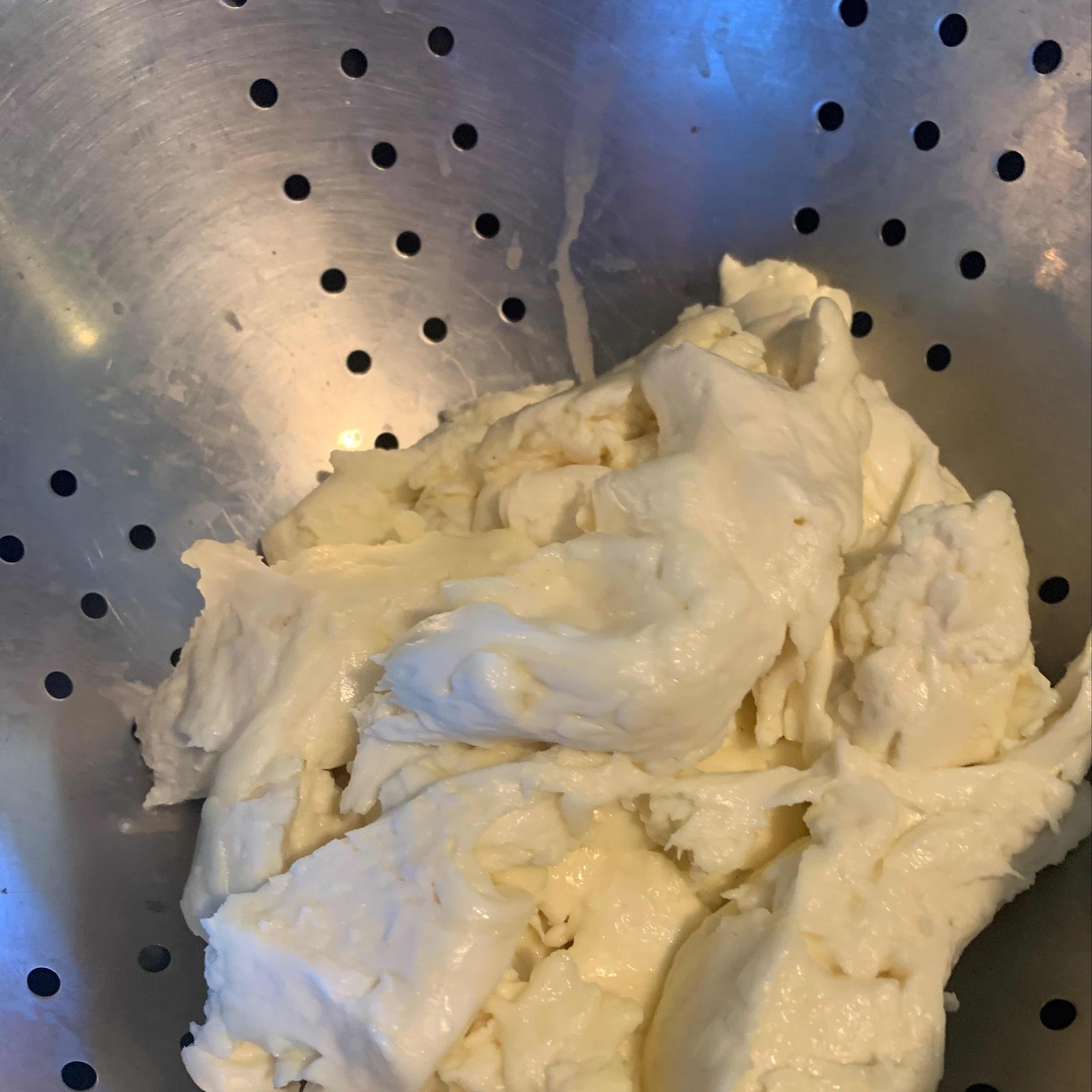
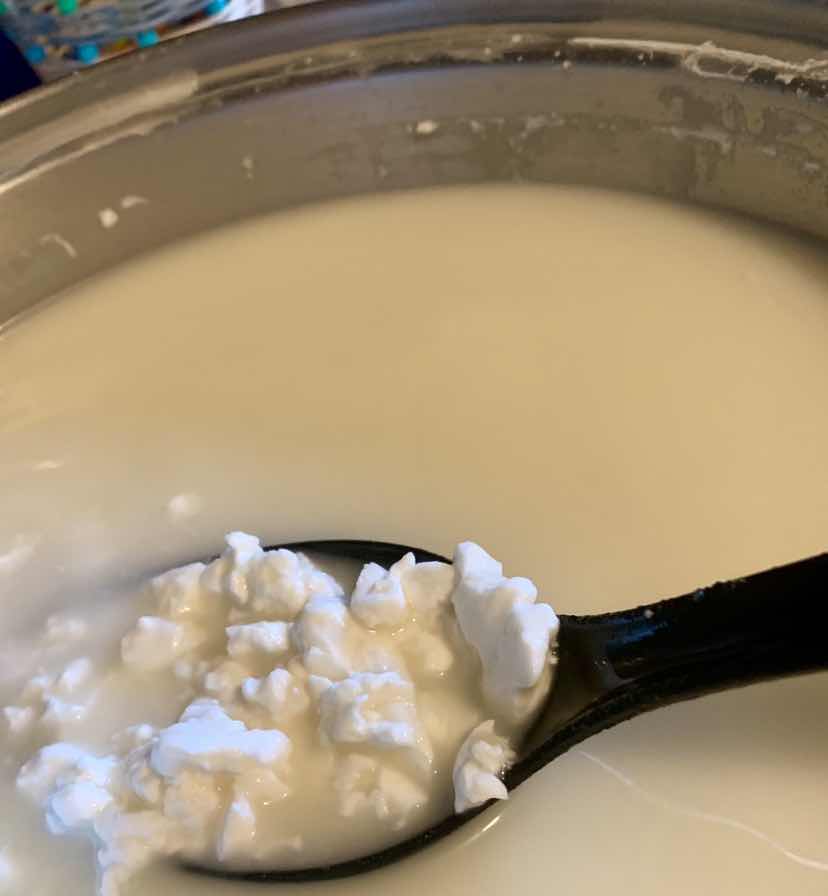
            A middle stage in the making of cheddar 


In last week’s post on preserving, I forgot to include cheese. Cheese is kind of the whole point of this farm - a desire to milk goats and learn how to make cheese was one of the driving forces in moving up here in the first place. After ten or so years, I have developed three or four cheese recipes that serve me well. As in many endeavors, it is pretty easy to achieve a basic level of competence, and then quite difficult to move on to a level of expertise that allows for consistent, high quality results every time. 

Being who I am, I have more or less decided that I’m happy with my level. I very seldom have an abject failure - all the cheese I make tastes good and is usable for one application or another. But I often have to decide what that application is AFTER I see how the cheese turns out. 

Today I am making chevre and cheddar. Chevre is easy - you just culture the fresh milk and wait 24 hours, then drain it through a clean pillowcase and salt it to taste. Once in a while, especially in very warm weather, the chevre will develop some off, goaty flavors that nobody is fond of. When that happens, I incorporate the cheese into a highly flavored recipe where the goaty flavors will be outcompeted,  like spicy eggplant Parmesan. 

Cheddar is more difficult. It requires several steps, and my recipes include instructions that are patently impossible to follow in a home kitchen, such as “hold the milk at exactly 99 degrees for four hours.” Much of the “cheddar” I’ve made is actually just “plain semi-hard cheese.” The most common defect is that it stays crumbly instead of melding into a single, smooth textured mass. But hey, goat cheese crumbles are a delicious addition to many dishes. Luckily, my Mexican husband is totally used to a dish of cheese crumbles on the table as a condiment, with a spoon, for sprinkling onto everything from refried beans to scrambled eggs to green salad. 

Making do with what you have is a philosophy, one that I’m fond of. I’m not going to waste any time lamenting over a “failure” to produce perfect cheddar when what I’ve actually produced is a pretty delicious piece of cheese. Instead, I’m going to incorporate that cheese into the larger, creative task of taking stock of what I have on hand and weaving disparate ingredients into something new and satisfying. 

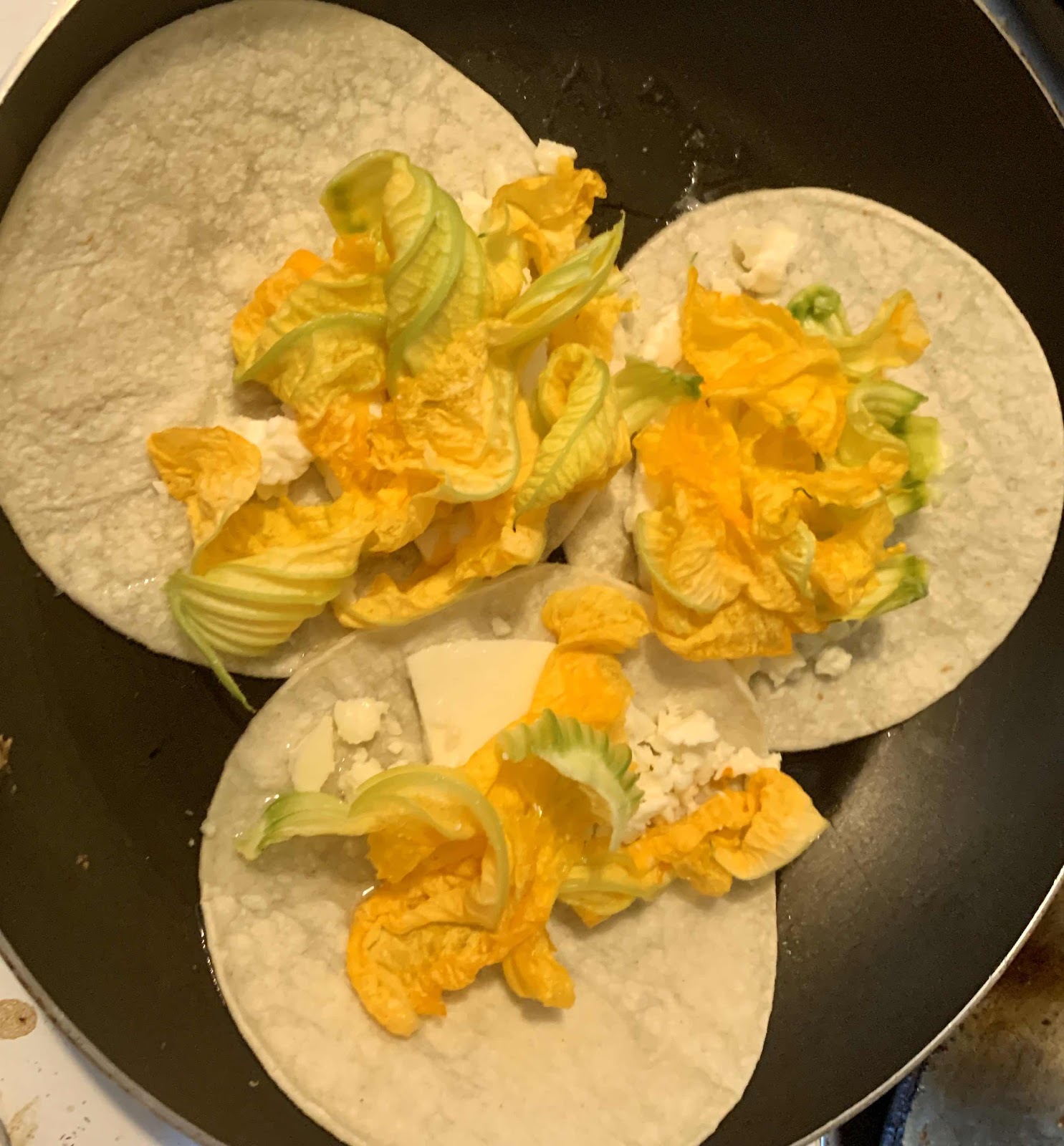
This morning, I opened a vacuum sealed package of cheese from early this spring, expecting to find a nice, mild, melting cheddar. Instead it was a sharp flavored crumbly cheese. But it still worked well to make squash blossom goat cheese quesadillas for breakfast. I got no complaints. 


Wednesday, March 18, 2020

State of the Farm: Pandemic Edition


The girls amuse themselves at home with Henna freckles 


DQ2 - day two of “quarantine.” We aren’t officially quarantined, of course, and not even prohibited from going out and visiting. The official prohibitions in Washington are (as of right now) no gatherings of over 50 people (or has it been changed to 10?) and smaller gatherings must abide by strict “social distancing” rules that keep people 6 feet apart. 

Schools are closed at least through 4/27. I started the DQ count from the first day that schools were closed, which was yesterday, hence today is DQ2. Restaurants are closed, though takeout and delivery is allowed. Bars are closed, as are any place where people habitually gather, such as bowling alleys, churches, movie theaters, museums, libraries, barber shops, etc. Grocery stores and pharmacies are open. 

Everyone who can work from home is being told to work from home. I am still working, working more than usual in fact. As a medical interpreter, I spend my days going from one doctor’s office to another, which I suppose makes me high risk for infection. Today, for the first time, there were nurses with thermometers stationed at the entrances of the clinics, taking everyone’s temperature before they were allowed in. I don’t have a fever. 

Homero is still working as well, but he works from home all the time anyway. People still need their cars fixed, even if they are being told to stay home, I guess. I worry a bit about him because he has a few different underlying health conditions (as do I) that could make him a higher risk for complications. At least he wears gloves all the time. 

The girls were initially thrilled about the prospect of a six week spring break, until it was made clear to them that they would not being spending much time hanging out with friends, or indeed outside the house at all. I have let them see a couple friends, one or two at a time, and I’m thinking of getting in touch with the parents of a few of their “best friends” and asking about creating a closed circle of friends so they can all hang out with each other without becoming vectors of disease. 

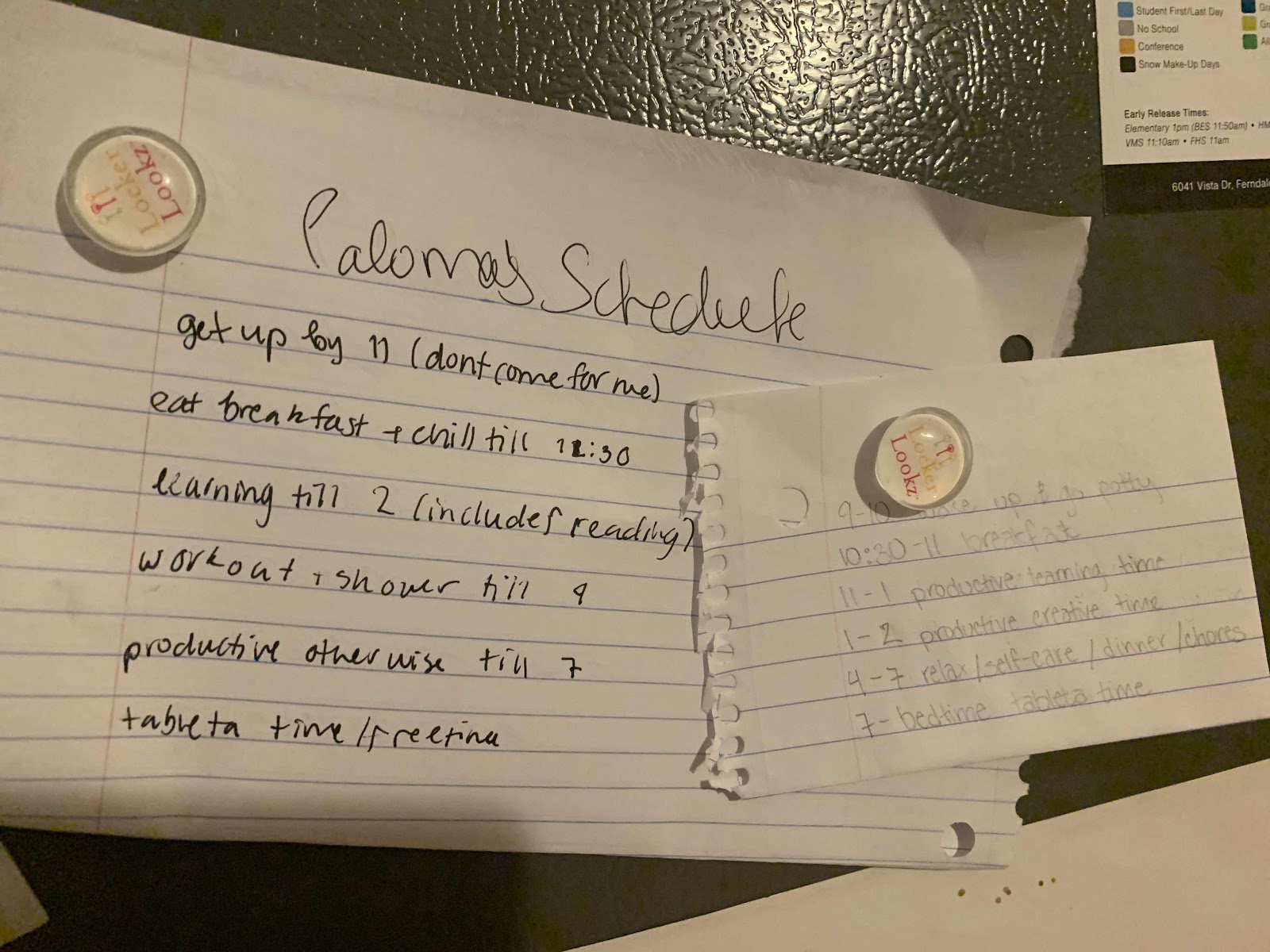
Nobody knows yet when school will resume. Teachers have been told not to send homework for the time being, since not every child has internet access at home and it wouldn’t be equitable. The district is working on a solution, at least for high schoolers, and I expect sometime in the next week or two that they will probably send home some fat packets. In the meantime, I told the girls this isn’t a vacation, and that they needed to write up a schedule for themselves. It doesn’t have to be a strict schedule, or overly specific, but it has to exist. Here’s what they came up with:


I especially like Paloma’s first line item: “get up by eleven (don’t come for me).” 

Each schedule has to include a two hour block of time for school related work (their teachers can’t assign work that will be collected and graded, but they can post “suggestions” online) and a two hour block of “productive other” time. This second category can be anything from playing piano to drawing to exercising to working in the garden to reading a book. Other than those two categories, and one chore assigned by me or their papa each day, their time is their own. 

Some examples of the chores I intend to make them do, in no particular order:

- walk the pastures and pick up all the pieces of broken plastic, plastic baling twine, or plastic bags and assorted trash they can find. No matter how careful one is, small plastic detritus accumulates over the winter. 

- turn over some of the compost pile

- clean out a drawer or a cabinet 

- harvest nettles

- organize the canning jars (full ones by contents; empty ones by size)

- use the sewing machine to make patches for mending the quilts with holes in them (our dogs have a tendency to get overexcited and tug on the bedclothes)

- clean up the greenhouse 

Like everyone else, I am imagining all the great stuff we will all get done during this enforced down-time, and like everyone else I am probably fooling myself. It’s unlikely I will take up a musical instrument or learn a third language. A more realistic hope is that I will have time and energy to put in a small garden - something I haven’t done for a few years - and read a few extra books. Perhaps do some drawing. Within a month the goats will kid, and soon thereafter it will be cheese season again. 

A good chore for me would be to find, clean, and organize 
my cheese making equipment, and order new cultures and supplies. 

Another good chore for me would be to commit to keeping a blog diary of our lives during this time.  Nobody knows how this is going to play out. Things could stay bad for a long time. Many of my neighbors are elderly and frail and are really not supposed to go out at all. Tomorrow I will talk about local efforts to pull together and provide help and services for folks who are ACTUALLY quarantined, and for folks who have lost their jobs, and those negatively affected in all sorts of ways by this unprecedented situation. 

Stay healthy! 

Tuesday, July 30, 2019

The Fermentation Files (Pickle-Palooza)


I’ve been doing a lot of fermentation lately. There was the rhubarb wine this spring, which I bottled a few weeks ago (and sampled while I did, of course). I made a really amazing batch of curtido, which is basically sauerkraut with Latin flavors. That’s a little simplistic, but not wrong exactly. 

Curtido is heavily salted shredded cabbage with shredded carrots, thinly sliced red onions, oregano, and jalapeños (if you like). Traditionally it is barely fermented - just about the level of fermentation you’d expect if you made it the day before and then left it out unrefrigerated in a hot central-American climate. I made curtido but then packed it into a half gallon jar and pounded it as you do for sauerkraut. Two weeks later it was sour and delicious, the cabbage wilted but still crunchy. I just finished that batch yesterday, piled on top of black bean burgers slathered with mayonnaise. Delicious. 

A friend gave me a ten pound sack of organic red onions. I didn’t know how to use those up, so I asked in my Facebook group dedicated to fermentation if anyone had fermented red onions before. The response was enthusiastic, so I went ahead and tried it. I added several sliced Serrano peppers, because my goal was something as spicy and yummy as the pickled red onions you find as a condiment  on every southern Mexican table. I was very pleased with the result - but I thought the spicy pink brine was even better than the onions themselves. 

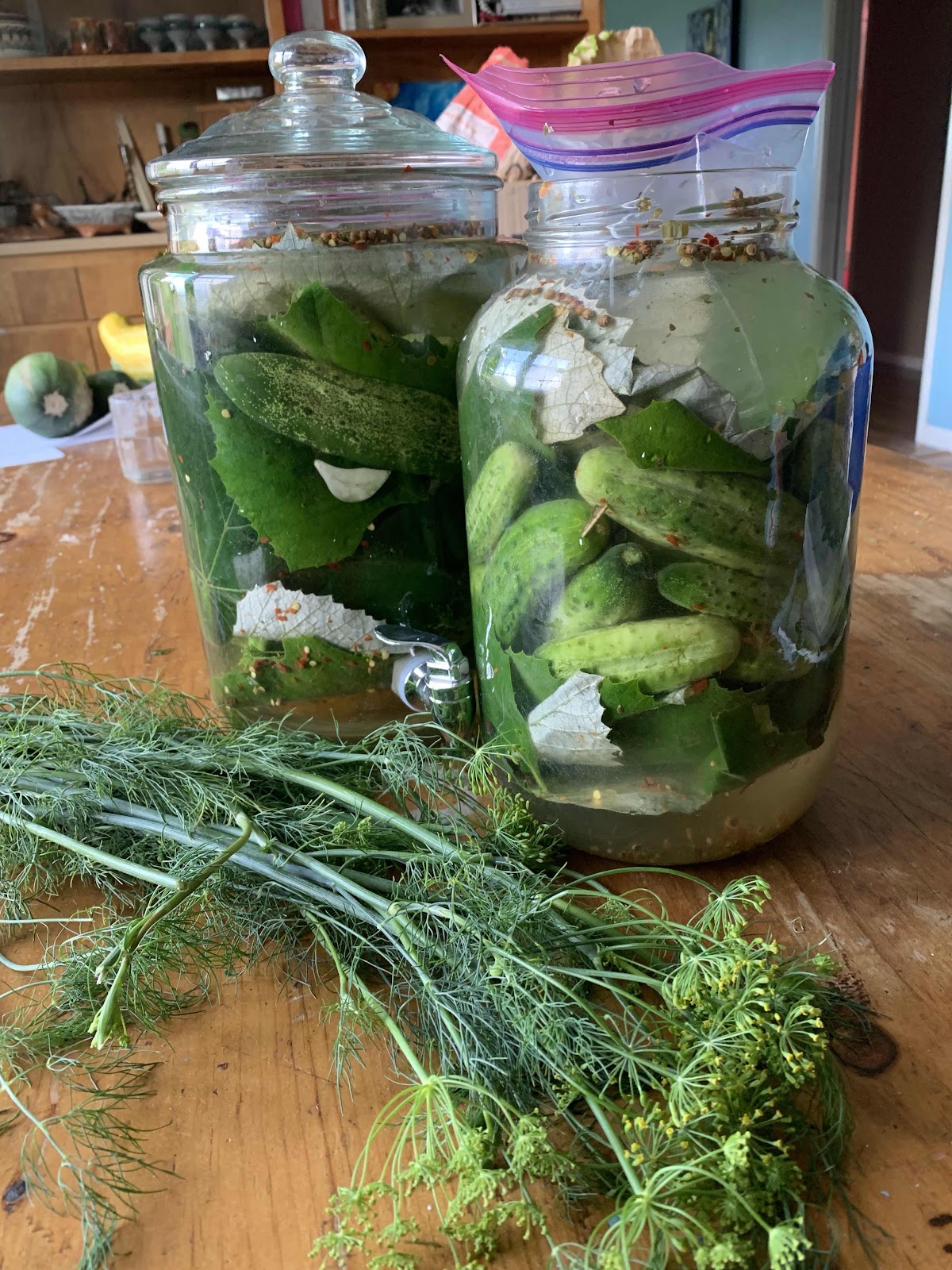
My favorite ferment will always be kosher dill pickles. Nothing is as satisfying as a salty, crunchy cucumber spear alongside a well made grilled cheese sandwich. We all love kosher dill pickles here, but even so I made too many last year. Too many being about five gallons. Eventually, they did all get consumed, but by November they were no longer as crisp and appetizing. Instead of eating them out of hand, I chopped them and put them into tuna salad or potato salad. 
This year I’m making two gallons. I imagine sometime in late September we will all be wishing I made more. 

And then of course there’s all the cheese I’ve been making... but that’s really another post. 

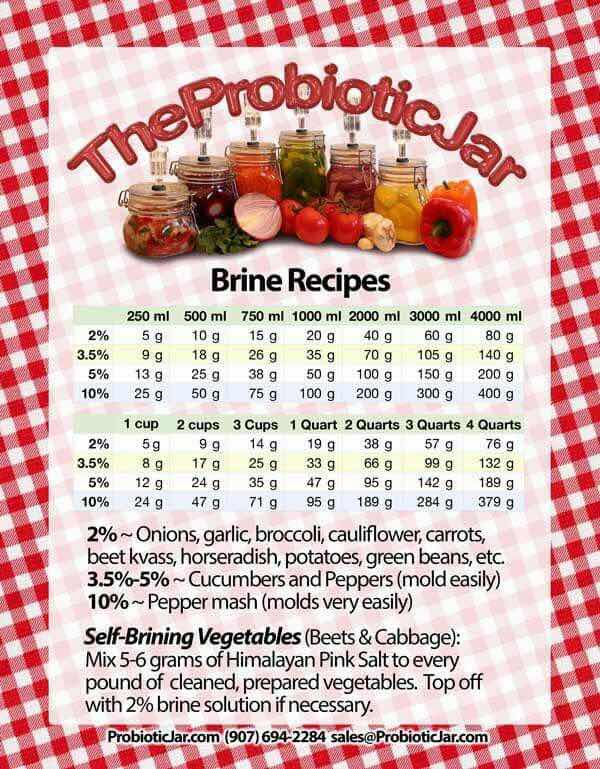
I encourage anyone who has ever been interested in lacto- fermenting to give it a go. It’s really entry-level food preservation. It’s low-risk and high reward. Here’s a neat chart I found in my Facebook group to help you get started. 


Saturday, May 18, 2019

The Fermentation Files, Spring 2019


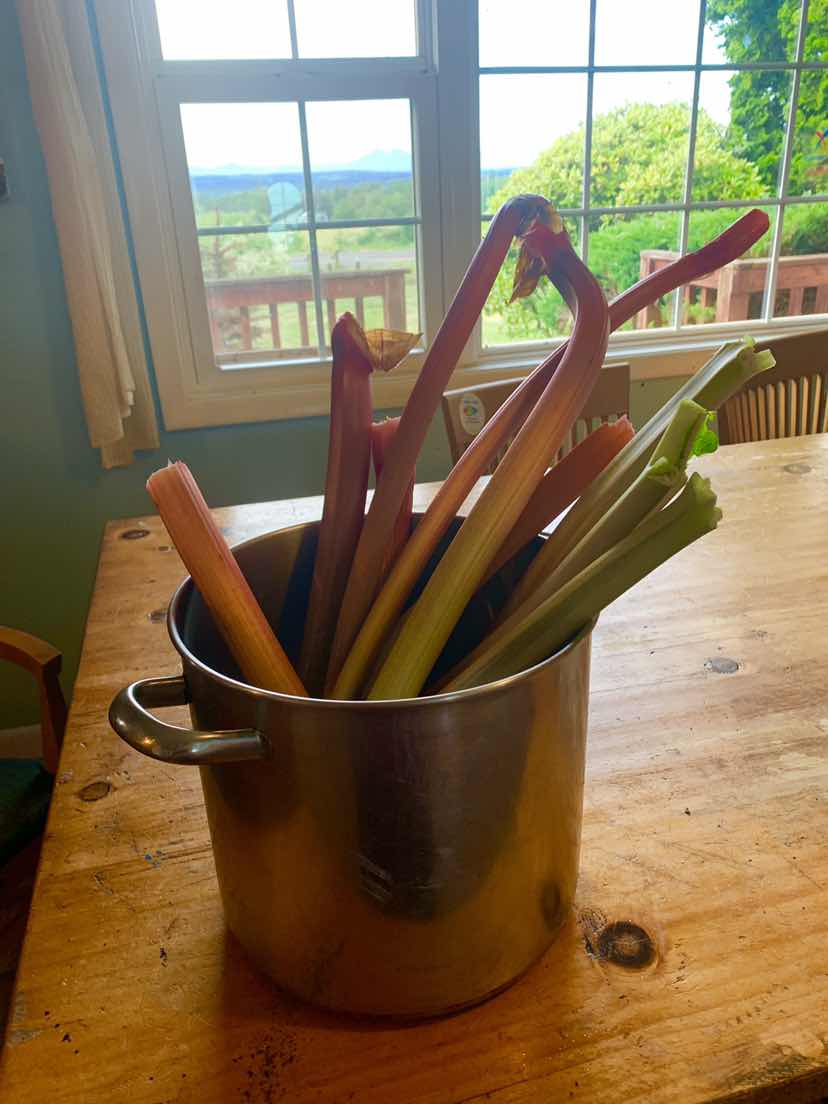
Spring finally sprang, and we’ve had a few weeks of beautiful weather. The grass grew all at once, the trees blossomed, and the rhubarb plant went wild. 


I love rhubarb, it’s exactly the kind of low maintenance perennial I want to fill my property with. But it is seriously prolific. By mother’s day I had already exhausted my family’s patience with rhubarb crisp, rhubarb pie, and rhubarb quickbread. So today I decided to start another batch of rhubarb wine. 

Last year’s rhubarb wine came out pretty good - dry, light pink, and quite quaffable. It’s nice to be able to start a wine in springtime, because most homemade fruit wines are only possible in the fall - blackberry, plum, hard apple cider. Rhubarb can be started now, in May, and be ready for drinking in September when the other wines are just getting started. 


It’s cheese season. The mama goats still have nursing babies on them, and will for the next few weeks. So I’m only getting about three quarters of a gallon daily, but that’s still plenty for making some cheese. 

This year I decided to switch up the cultures I usually buy.  In years past,  I have bought an all-purpose mesophilic starter that says it is suitable for chèvre, queso fresco, feta, and cheddar. And it is suitable for all those purposes.   But this year I decided to spend a little bit more for a fancier culture from France, and I’m so glad I did. My chèvre is leaps and bounds better than last year. It’s smooth, tangy, and delicious. It was a big hit at mother’s day brunch. 

Tonight I’m making cheddar with the same culture. I’ve made two batches of hard cheese before now, and they have been drying in the shelf during this nice dry weather. Today I broke out the vacuum sealer and sealed them up for long term storage in the fridge. That’s the best system I’ve yet found for keeping hard cheese at home without molding. It’s not ideal - the cheese doesn’t “breathe” if it’s vacuum sealed - but it does keep the cheese from molding for a good six months, which means we can enjoy cheese in December. 


Wednesday, October 3, 2018

The Fermentation Files (Plum Edition)


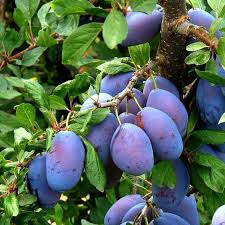
Italian plum trees are known for having an alternating harvest: one very heavy year alternating with a very light year. As everyone who has an Italian plum tree knows, the heavy harvests are very heavy indeed. In 2016, the last heavy harvest year, there were so many plums on the tree that branches were breaking from the weight of all the green plums, and we had to strip off and throw away hundreds and hundreds of unripe plums.


Last year, true to form, the tree produced very few plums. I am actually glad that the Italian plum tree provides its owners with a rest every other year, because dealing with literally thousands of plums all ripening at once is a ton of work.

Of course, we cannot possibly make use of each and every plum. That's just a silly proposition. Even if we were to dedicate ourselves to preserving plums 24/7 in season, inevitably many, many plums would fall to the ground and become a feast for wasps before we could make use of them. And that's just fine. After all, wasps need to eat too.

My sense of duty, however, and overdeveloped guilt reflex, mandate that I make a valiant attempt every year to utilize as many plums as possible. There are lots of ways to use plums: eating fresh (we eat a lot); dehydrating - the dehydrator is going day and night in mid-september; cooking in pies and crumbles; giving away to friends and neighbors; and wine. For using up a whole lot of ripe plums at once, there is no preserving method superior to winemaking.

In 2016 I made my first attempt at plum wine, and it was fairly successful. By which I mean I produced a quaffable product that would reliably get you drunk, not that I produced a product worthy of bottling and bragging about. Surprisingly, the wine was a light, orangey rosé, not the sort of deep, velvety purple you would expect from blue plums. It was pleasant, quite dry, with a bit of a sour tang. It was good enough that when faced with a similarly overwhelming number of plums this year, I decided to repeat the experiment.

One of my many failings is that I am constitutionally incapable of taking notes, keeping records, and thus reliably repeating successes in the kitchen. I can't remember - and didn't write down - what type of yeast I bought in 2016, nor whether or not I used yeast nutrient (which is something you usually have to add to wines that aren't made from grapes), nor how long I left the wine in the primary fermenting chamber (AKA food-grade plastic bucket) before putting it into a carboy and air locking it.

So, basically I was starting from scratch. I followed a recipe from one of my books, more or less - I decided I would forgo the reccommended yeast nutrient because I was making the wine on a weekend and didn't want to wait until the home-brew store opened on Monday. And I made a few other tweaks - I added honey instead of sugar, I didn't have any Camden tablets - okay, I basically ignored the recipe entirely and winged it 100%. Fruit + sugar + water + yeast + time = alcohol. Right?

I do - always - sterilize equipment with boiling water. That's a non-negotiable. And I used a real wine yeast (Chablis, if I remember right), not baker's yeast. But I think this year's batch may have suffered somewhat from my lackadaisical attitude. After putting the wine into a carboy and air locking it, it bubbled vigorously for a few days, but then stopped entirely, rather than just slowing down as it should do. I left it in a cool place to keep doing its thing for two more weeks, but then I sat down and stared at the airlock for three minutes. No bubble. That is pretty definitive that the fermentation has stalled.

Stalled fermentation isn't the end of the world - not even the end of the wine. There are things you can do to try to get it going again. I decided to rack the wine off into another carboy, thereby aerating it. Tasting the wine as I transferred it, it was pretty thin and sour tasting, so I decided to add a bit more sugar. I replaced the airlock, and now there's nothing to do but wait three or four months and then taste it. It will either be drinkable or not, and either way it's experience. The tremendous abundance of plums makes it cheap and low risk to experiment with winemaking, just as the tremendous abundance of milk in early summer makes it cheap and low risk to experiment with cheesemaking. If, next spring, I have a few gallons of nice plum wine, I'll be happy. If I have to pour a few gallons of weird plum vinegar out onto the compost, well, so be it.

There is another, much lower risk, delicious way to ferment a few dozen plums, though, and I did that too this year. A plum shrub. A shrub is basically a sort of fruit concentrate - you put chopped ripe fruit to macerate in sugar for a few days, and then pour over apple cider vinegar to cover. The shrub will keep in the fridge indefinitely, and can be mixed with water - still or sparkling - to make an elegant and yummy non-alcoholic drink. Of course, you can also add a jigger of rum or vodka or gin to your cocktail. I made a half gallon of plum shrub flavored with rosemary, and it was delicious, with or without spirits.

Looking forward to a year off. 2020 will be soon enough to get elbow deep in plums.


Wednesday, September 12, 2018

Preserving Log 9/18


Arrived home from Oaxaca ten days ago. In that time we had a lot to do to get the kids ready for school- go shopping for supplies and clothes, adjust their schedules, etc. Paloma made a schedule and posted it on the fridge:


We did all that. Also I started a serious job - ten days of full time, 8 hour days interpreting for a student enrolled in he Washington state Caregiver’s training program. I have done this same course several times before. It’s very demanding; after eight hours of simultaneous interpretation my brain feels like a bowl of cold oatmeal. But it pays well and after our expensive summer abroad I couldn’t turn it down. 

Meanwhile, the pears and the plums and the early apples just kept on coming. Here’s what I’ve done in the way of preserving in the last ten days, more or less in order:

1) dehydrated two gallons of pears and two gallons of plums

2) canned six quarts salsa ranchera

3) canned four quarts pear/apple sauce

4) three gallons lacto-fermented pickles

5) made three gallons of plum wine - currently undergoing secondary fermentation in a carboy on the mantle. 

6) made three pounds chevre

7) canned eight pints blackberry jam

8) froze a gallon blueberries

Planning on picking up several pounds of peppers for canning later this week. That’s about it for now. I want to hit the farmers market and look for wild mushrooms - chanterelle season is in full swing, and I’d like to dry a few pounds. 

Happy Mabon to you all. 


Saturday, March 10, 2018

The Fermentation Files (Spring 2018)


As usual, I have a couple of different fermentations going on in the kitchen. At this point in time, after years of tinkering and experimenting, home-fermented foods are simply an everyday part of our diet - which is as it should be. Fermented foods have been an integral part of the diets of people in all parts of the world for centuries, if not millennia.

http://fermentalitylab.com/116655-2/

Fermentation is the answer to many problems - how to preserve fresh vegetables through the winter; how to turn easily spoiled milk into delicious, storable cheese and yogurt; how to increase the digestibility and the vitamin content of tough root vegetables; how to get drunk and party through a long, drab, grey season.

Fermenting  is a traditional and easy way of preserving fresh vegetables through the cold season in four-season climates, like northern and Eastern Europe where most of my ancestors came from. It is the only method of preservation that actually increases the nutrient content of the food being  preserved. Bacterial action produces high levels of B vitamins, including the hard-to-find B12.

Discover-the-Digestive-Benefits-of-Fermented-Foods_1383-1.html


My Kefir. A few years ago I bartered for some kefir grains and was sadly disappointed to learn that I couldn't put them in fresh, raw goat's milk. When I tried that, they died overnight. Turns out - as I could have learned from a very short investigation online - if you want to propagate a particular SCOBY (Symbiotic Community Of Bacteria and Yeast), you need to cultivate it in a relatively sterile medium. Raw milk is chock full of it's own community of bacteria and yeasts, and they are stronger and more vigorous  than whatever you are trying to grow. I was basically starting WW3 every time I put a few kefir grains into raw milk. And my soft, domesticated culture lost every time. The kefir grains I bought turned into sludge and disappeared.

The last time we went to Oaxaca, two and a half years ago, I got new kefir grains from my mother-in-law. She calls them "bulgaros" and she calls the product they create "yogurt." In fact (or at least in English) yogurt is something different - simply milk cultured with certain bacterial strains, and it can be propagated indefinitely just by adding old yogurt to new, scalded milk. Kefir is a different animal - a SCOBY. You can make new yogurt from old yogurt, but you can't make new kefir from old kefir. You need the SCOBY - the grains.

These look like little niblets of cauliflower. Keeping them alive and growing is fairly simple. Put a tablespoon of kefir grains into a pint of pasteurized milk. Let sit for 24-48 hours. Strain. The thickened, digested milk that you strain off is kefir. Wash the grains in water several times, swishing and draining. Then place in new milk. Some books will tell you to wash the grains in milk, and not water. Don't believe them. When I did that, the grains melted over time into sludge. As soon as I started washing them in water every two days, they grew amazingly. Which is what my mother-in-law had been trying to tell me, but for reasons of cultural imperialism and white privilege I had been ignoring her wisdom in favor of some white dude who got published. If you are lucky enough to have access to an intact system of food production, utilize it! Go figure.


Sauerkraut. I probably wouldn't make sauerkraut very often except that my daughter Hope loves it. I like sauerkraut just fine, but its not what I would call a staple food. It is, however,  one of the easiest and cheapest ferments One head of green cabbage, and one or two tablespoons of salt, depending on the weight of the cabbage. Shred cabbage finely , massage with salt, pack into a glass jar and pound down tightly with a wooden pestle. Let sit on the counter at least one week, then test for sourness. If you like the taste, rinse quickly under running water, squeeze, and pack into smaller ja and put int he fridge.


Making bread. I lost my sourdough starter several months ago. This is a quick focaccia bread, made with store-bought yeast. Still yummy, however. I love baking, it makes me happy and nothing makes the house smell so good.

Monday, October 16, 2017

Brewing Notes (Cider and Wine)


Mainly just notes for myself so I don't forget when I did what. Today I racked the rhubarb wine into a clean carboy. It's been about a month in the first one, and a week in a fermentation bucket before that. I tasted it as a transferred it and it's AWFUL. But that doesn't mean anything. The plum wine was gross at this stage too, and it turned it pretty good. This is only my second attempt at fruit wine. Last year's plum wine was the first. Having never even tasted rhubarb wine before, let alone made it, I have nothing to compare it to. I just had so much rhubarb I had to do something with it. If it turns out horrible it's no big loss - my plant puts out rhubarb enough for as muchexperimentation as I feel like doing. 

Also racked the cider into a second carboy.  The cider tastes pretty good already. It's very dry, though. I think when I bottle it in a couple weeks I will add a bit of sugar for a little sweetness and fizz. I like my cider frizzante. 

Brewing is fun. It feels like magic. 

Friday, July 14, 2017

Preserving Journal


High Summer is upon us. Although I have yet to change the altar - it's still dressed with the kids' report cards and end-of-school paraphernalia - the preserving season has begun, and cannot be ignored.

This year, I've decided to try and keep an accurate record of all the preserving I do. So far, I had only posted one entry, and that consisted of:

Four quarts salsa ranchera
four pints pickled jalapeños
three pints pickled beets (all from a single beet bigger than baby's head)


Today I can add:

four MORE quarts salsa ranchera
three gallons kosher dills

for a running total of eight quarts salsa; 4 pints jalapeños; three pints beets; and three gallons dill pickles.

This is not counting cheese, since I still haven't figured out how to "preserve" cheese for longer than a few weeks. We either eat it fresh, or it molds.

Pickles make me happy. I love real lacto-fermentation, and I love real kosher dills. Last year, I made a ridiculous quantity of pickles; far more than we could eat, but luckily I found a neighbor who owns a dairy and cheesemaking operation who traded me pickles for cheese. Cheese that can, unlike my own, be stored and aged. Hopefully she is still interested in pickles this year, because three gallons of pickles is a lot.


Wednesday, November 16, 2016

Sprout Kraut


What do you do with too many Brussels Sprouts (courtesy of the gleaner's pantry)? I'm gonna try Sprout Kraut. 

Monday, October 10, 2016

Fall Fermentation (Wine and Cider)


Plum wine in the autumn sun 

The satisfactions of living off of one's own land are many and varied. It is, for example, delightful to invite my extended family over for Thanksgiving and feed them on turkey we raised ourselves and apple pie made from the apples on the trees of our own orchard.  It makes me happy and proud to throw a big birthday bash for Homero and give his Mexican friends the pleasure of an old-fashioned goat barbacoa such as they remember from their younger days back home in Jalisco or Oaxaca; the slaughter, butchery, and the digging of the pit oven included. These pleasures still lie in the future this year - imagining them is one of the distinct joys of this short ephemeral season. 

This is my favorite time of year - after the heat of summer has dissipated and the leaves have turned and are falling, creating a crisp, fragrant carpet underfoot - but before the rains have turned everything into cold muck. The sky these past several days is a cool, cerulean blue, and the trees are ninety different shades of gold, orange, burgundy, and brown. I try to let the goats out every afternoon to forage on the dry leaves and blackberry vines, and on the fall-flushed grass before the first frost comes and kills the nutrition. 

Today I enjoyed the unique pleasure of sitting out in the late afternoon sun on a warm October afternoon and drinking a glass of beautiful, pink, home-brew plum wine. I'd have to page back in this blog to find out when, exactly, I started this batch of plum wine. I don't want to do that - bathed as I am in the rosy glow of the same. Let's just posit that the wine was ready, today, for bottling. I decided to do it today not because of any learned examination of the wine itself, but because I had finally collected a sufficient number of large brown bottles. Corona beer puts out a "family" size that measures 36 ounces. There were eight of them lined up today, and I decided that the time was ripe. 


I have never made wine before - though I have made apple cider a few times. In fact, I made apple cider earlier this year. That's a funny story, and a lesson. We pressed apples on three separate occasions this year, which is three times more often than we usually do. Faced with many gallons of fresh juice, I decided to try making hard cider. I'm not the kind of person who cautiously measures and precisely calibrates anything. I'm more of a "wing it" kind of cook. I'm a good cook, I won't ever say I'm not, but I am much better at soup (such a forgiving medium) than I am at baking cakes.  When it comes to brewing, that means I am not going to be exactly certain of the strength of my creations. 

A few weeks ago, I bottled this year's cider. I bottled it in these same 36 oz Corona bottles. My husband, seeing them lined up on the mantle, decided he was thirsty and didn't feel like going to the store. Accustomed as he was to downing one of these hefty bottles full of Corona, he did just that. But the bottle was full of home-brew cider. Hard cider that you buy in the store is usually more or less beer strength - 5 to 7%. I, however, used a champagne yeast, and my cider was at least twice as strong as beer. Maybe as much as three times. Had my husband consulted me, I would have told him to drink it like wine, not like beer. Alas, he did not. 

I have never seen Homero so drunk. He was accidentally drunk, so it doesn't reflect on his character at all - but it was pretty funny nonetheless. Poor man could hardly speak, and hardly stand up. I had to put him to bed. My main regret was that he had downed  too much of the limited supply of cider.

Most of the plum wine was bottled today in the same size jugs. I simply capped them with bottle caps instead of using wine bottles and corks. My local brewer's supply store rents out a corking machine, but we don't drink enough wine to have bottles to use. I asked about using beer bottles and capping them like this, and was told that if we drank the wine within the year it shouldn't matter at all. 

No problem there. I drank about one-tenth of it today. Such a beautiful afternoon and evening. I absolutely love days like this - crisp enough that other people complain of the cold, and I can feel superior and smug sitting out in my shirtsleeves. Especially on days like this, when I have completed all my housework and I can take a book outside with me to read without remorse or guilt. Well - only the delicious guilt of reading trashy fiction instead of anything "serious." 

A canvas slingback chair, a cheap novel, a jug of new plum wine, and the sunset......

Wednesday, August 24, 2016

The Fermentation Files (High Summer Edition)


My High Summer Altar

It is the highest point of high summer. The sun is strong and steady and the pastures are pure gold, without any hint of green from a distance. If you get right up close and part the tall golden stems, you will see the green clover underneath. My goats burrow in and eat the clover, along with those sturdy, wiry weeds that are still green at summer's height: plantain, burdock, false dandelion, thistle. 

The leaves have started to turn, so some people might call this short, beautiful season "earliest fall" but I'm sticking to Summer. As long as the weather makes you want to go jump in the nearest lake, it's summer. Lucky for me, I have my choice of lovely lakes nearby. Last week I took the children for a dip, and gave thanks for the blessed cool water. 

The harvest goes on unabated. Principally, pears. So many pears. A hail of pears. Almost a plague of pears, but I would never be so ungrateful. We have FOUR pear trees, which, I can assure you, is more pear trees than any one family needs. Alas, pears cannot, like apples, be made into cider, so either we have to eat them fresh or find other people who want pears and trade with them. I cannot possibly process so many pears myself. So far this year I have made eight quarts of pear sauce, a whole bunch of pies, and now dehydrated a dozen or so. That has not made a discernible dent in the number of pears covering my kitchen table. 


But canning is not the main way I am preserving food right now. I have a number of exciting fermentation projects going on. I have so many varied fermentation projects going on, in fact, that it sometimes feels like I have a collection of small pets in the kitchen. Each living cultivar needs its own special care. None of them are particularly demanding on their own, but caring for all of them does begin to add up. 

There is always sourdough, of course. I've had a good sourdough going for about a year now, since a neighbor gave me some of her family's dough that - so the story goes - dates back to Alaskan pioneer days. Its a good dough and makes nice bread and great pancakes, but I don't bake as much as I used to and I often find myself pouring sourdough in the trash just to make room in the jar. The sourdough is not very hard to maintain though - every three to five days I have to refresh it with a cup or so of flour and more water. If I forget and leave it in the fridge for two weeks, it's fine - just pour off the accumulated alcohol on top and refresh as usual. 

I brought back some new kefir grains from Oaxaca. My last kefir cultivar died ( Well, That Was Fast) before I could really even use it. These ones are a different kind of creature - small, separate grains each only a millimeter or so in diameter. My mother in law acquired them a few years ago locally and makes what she calls "yogurt" out them. She knows them as "bulgaros." The "yogurt" they make is extremely sour but has a very good flavor. I smuggled a tablespoon or so home in a spice jar. The kefir grains need a little more care than sourdough - every other day or so I have to strain off the kefir into a clean jar, wash the grains with water (my book says to use milk but mama has kept these puppies alive a long time so I'm doing what she tells me) and put them into fresh milk. 

I've made two batches of kosher dill pickles - each batch is about two gallons, because that's how big my crock is. I was lucky this year and both batches came out fabulous. Sometimes pickles just don't work - don't ask me why.  I make them the same every time but sometimes they get soft and slimy. That happened last year and I was sad. This year though, both batches turned out crisp and delicious. So good, I even drank some of the brine straight, in little sips out of a shot glass. So good, I saved back a little of the brine to use to get my sauerkraut started. 

As you can see, I used purple cabbage this year. My neighbor of the HSH  (hotel-sized-house) gave me three beautiful purple cabbages. I chopped them finely, and packed them into the same crock I'd used for the pickles, saving the dill and the grape leaves. I left about an inch of pickle brine in the bottom, then covered the cabbage with a new salt brine. 

Today, after approximately ten days in brine, I emptied the crock and rinsed the cabbage and repacked it into quart sized jars in the fridge. I could, if I chose, water-bath can it at this point. But I don't think I will. I am really enjoying the live, complex flavors of all different ferments. Canning the kraut would preserve it, yes, but it would also kill it. Since there isn't a ton of it, just three cabbages worth, I'm sure we can get through it before it goes bad in the fridge. 

And I'm trying something new this year. My Italian Plum tree has decided to produce enough plums to sink a battleship. So many plums that branches are literally breaking from the weight. So many plums that I thought - well, I can experiment. It doesn't really matter if I devote a bucket of plums to an experiment that doesn't pan out - it's not like we are going to miss them. We are all, in fact, mortally sick of plums, so if my experiment ends up in the compost, I'm kind of sort of doing everybody a favor, right? 

Plum wine. Yesterday evening, I sat out on the lawn with a knife and a clean plastic bucket and a pile of plums, and pitted plums as I watched my daughters doing cartwheels in the setting sun. The bucket slowly filled up and their long legs flashed, upside-down in the slanting afternoon light. The scent of ripe plums - their purple sweetness - rose up into my nostrils. Haku lay panting at my feet and my husband sat a few feet away, reading quietly. When I had a bucketful, I carried them into the house and covered them with sugar water. 

Most likely, my plum wine will not be objectively delicious. But if, when I drink it, it reminds me of that hot August afternoon with my family; if it brings me back to my hands, working, and my back, aching gently, and my daughters calling "watch this, mom!" and my husband glancing over at me with a smile on his face, then it will be a success. 


Tuesday, May 10, 2016

Fermentation Files (Sourdough)


A couple of months ago, a neighbor gave me some sourdough starter that had been in her family for a very long time. The label on the container said "Skilly Dough, Alaska, 1890." While I can't vouch for the history, I can vouch for the deliciousness. 

For the first few weeks I used it only to make pancakes. I had never made sourdough pancakes before, but that was how my friend used the leaven, so I decided to try it. The pancakes were incredible, with a complex tang I had never tasted before. 

Next I tried making naan - Indian flatbread. That was a revelation, too. The flatbread went from being merely a way to convey curry into my mouth to being the star of the meal. The curry became merely a seasoning for the chewy, delicious bread. 

I made challah - sweet egg bread - for Easter, but I wasn't very happy with it. It was too dense, almost a kind of bread pudding, moist and rich with egg yolks and sugar. It tasted good, but it was not what I was trying to make, and nobody could eat more than a tiny bit of it. 

The same thing happened when I tried to make seeded rye rolls. I didn't get the lift I needed, and the bread, though flavorful, remained dense and wet, without the airiness I wanted. 

I let the sourdough languish in the fridge. A thick crust formed on top, and I thought that I might have let it die entirely. As a test, I took about a tablespoon out of the jar and mixed it with a cup of flour and a cup of warm water. The next day the mixture was bubbling vigorously, so it obviously hasn't died. 

Today, I took that mixture and mixed it with a cup of fresh warm goat's milk, a half cup of sugar, half a stick of melted butter, and more flour. I kneaded it for five or ten minutes and let it rest for a few hours. It didn't double in bulk, but it definitely grew. 

I kneaded it again, formed it into an oblong oval, places it on a greased cookie sheet, and let it rest another hour. Then I slashed the top, preheated the oven to 375, and baked it for 45 minutes. 

As you can see, it's freaking gorgeous. A little bit of the bottom crust stick to the cookie sheet and so I had to pry it off and eat it (I HAD to) with butter. It was perfect - shatteringly crunchy, slightly sweet, and toothsome. I am currently waiting impatiently for the loaf to cool and finish cooking on the counter, before j can slice it and slather it with butter and devour it. 

It smells so good in my kitchen I had to go disturb my husband, who was watching a movie, and make him come into the kitchen and smell the bread. He agreed with me that it smells heavenly and that furthermore I am a genius and he is a lucky man to have married a woman who can bake such a miracle. 


Tuesday, March 8, 2016

Well, That Was Fast


It only took me a day and a half to kill the kefir grains I was given. I have no idea what I did wrong - I only added a half cup of my own milk and then left them overnight at room temperature. The next day I opened the container and the liquid smelled great- tangy and fizzy. So I decided to strain some off and drink it. But when I poured the kefir through the strainer, nothing was left behind but a little bit of smooshy niblets, like cottage cheese. Less than a teaspoon. Even so I tried to save them by putting them back into fresh milk but no go. That evening they were totally dissolved. 

I don't get it. The only thing I can think of is that the milk I added was too cold. It was straight out of the fridge, but it was only about a quarter of the volume of the kefir in the jar, I didn't think it would make such a difference. 

That's the only idea I got. Sorry, unique kefir SCOBY!!  I didn't mean to kill you. 

Sunday, March 6, 2016

What's Growing in my Kitchen (the Fermentation Files)?

There's a new bookstore in town, and when I went in to check it out, I found this irresistible book:


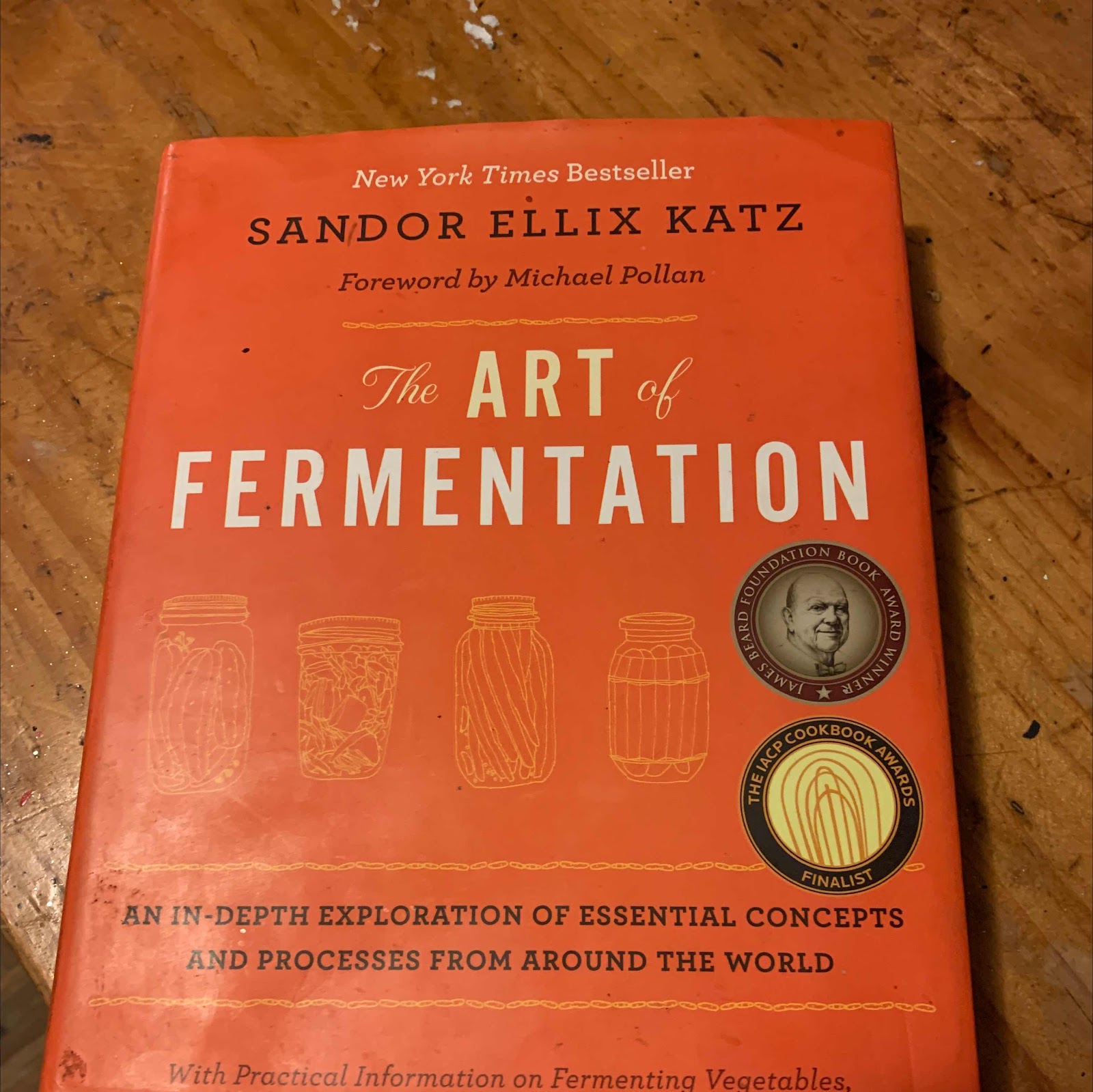
Much more than a recipe book - in fact, I don't think there any actual "recipes" in it at all - this book is a wonderful compendium of stories, anecdotes, instructions, and musings on all types of fermentation. Parts of it are scholarly and full of references to the newest scientific research on gut biota, and parts of it are full of poetic or mystical ramblings. I am thoroughly enjoying it, and it has inspired me to start a whole bunch of new projects. 

I have been dabbling in fermentation for ages, of course. Longtime readers of this blog will remember some of my experiments with pickles, kim chee, hard cider, and sourdough. Even cheesemaking is one of the fermentation arts, although I had never thought of it that way before. 


I miss baking. We get so much free bread from the Gleaner's Pantry that there has been no actual need for me to bake. My wonderful sourdough starter died over the year we lived in Oaxaca. I parted it out to friends, but none of them kept it going. I have been without sourdough since. 

Inspired by the book, I put out a call over Facebook for sourdough and Kefir grains. Within hours, a couple of local farmer ladies had answered me. This sourdough was brought to my friend G. by her aunt in Alaska. The aunt claims that it is from a strain that has been kept alive since the 1890's. It seems that most people who have family starters all claim that they have been nurtured since pioneer days; who knows? It's possible. 

This particular sourdough did not seem very lively. It took me a week to nudge it back to life. For a little while I thought it was completely dead. I had fed it with wheat flour, warm water, and dribbles of honey without much result. A slow bubble here and there. Then I remembered that when you first start a sourdough you are supposed to use rye flour - so I ransacked the cupboard to see if I had any. I did! Three years old, but apparently still potent because after I added a half cup of it to the mason jar, it perked right up and started bubbling vigorously. Today I baked my first loaf of bread, and it is delicious! 


Kefir is a weird thing. Most people who buy it in liquid form at the store probably think it is some sort of yogurt, but it is not. You cannot use kefir to make more kefir, as you can with yogurt; you need
a Kefir SCOBY (symbiotic community of bacteria and yeast), and you need to keep the SCOBY alive by providing it with fresh milk every day or two. That milk will become kefir as the SCOBY digests it.

There are lots of SCOBYs, by the way - a vinegar "mother" is a SCOBY, as is kombucha. the Kefir SCOBY looks sort of like cauliflower. The photo above shows the one given to me by M., another nearby farmer lady. She tells me it came from a woman on Lummi Island, who says she brought it with her 30 years ago when she moved here from the east coast. And one of the really cool things about this Kefir SCOBY is that is adapted to goat's milk, having been grown only in goats milk for at least the last several years.

Although I like knowing the age and history of my ferments, it feels like a bit of added pressure to keep them alive. What if I kill the 1890 Skilly Dough? What if this ancient and unique kefir SCOBY dies an ignominious death in the back of my crowded refrigerator? Well, presumably there are lots of other kitchen witches like me keeping their own little SCOBYs alive. Long may they prosper!