"United we bargain, divided we beg."
Showing posts with label frugality. Show all posts

Friday, April 14, 2023

King Kong Squash


This gorgeous, enormous Blue Hubbard squash was given to me by a neighbor. I don’t know for sure if she grew it herself but she’s quite a gardener so it’s entirely possible. Blue Hubbards are an heirloom variety winter squash with excellent keeping qualities, fine dry orange flesh, and which grow to impressive size. This one weighs 43 pounds. 


I’m staying home sick from work today, so I decided it was as good a day as any to deal with the giant squash. Their shells are so hard I had to have Homero cut it up with an axe. It occurs to me that this blog is full of pictures of Homero dealing with various large and unusual comestible items. Like the 25 pound Ling Cod. Cow heads. I should make a post of all those photos. 

My plan is to bake it, purée it, and make a bunch of pies, some soup, and….. I guess freeze the rest of the purée for later. It’s not recommended to home-can winter squash, even in a pressure canner. Something about the purée being too thick to heat evenly. But it freezes very well, and quart sized blocks of frozen purée can be used to make soup, pie and quick breads into the future. 

I’m also saving some seeds to plant later this spring. Blue Hubbards are an open pollinated heirloom variety, which means they will produce fruit similar to the parent plant, not like the more common hybrids that will produce fruit unlike, and usually inferior to, the parent plant. 

I love this photo of me and the squash. Look how happy I am! I can lift 43 pounds of food over my head!! 


Tuesday, July 19, 2022

The Pantry Project (Ice Cream Edition)


Ran across an ice cream maker at Goodwill the other day, and it reminded me that ice cream is a wonderful way of preserving the products of the season - goat milk, eggs, and fresh fruit. Also it’s been pretty hot lately and that’s just the excuse I needed. I bought the ice cream maker. 


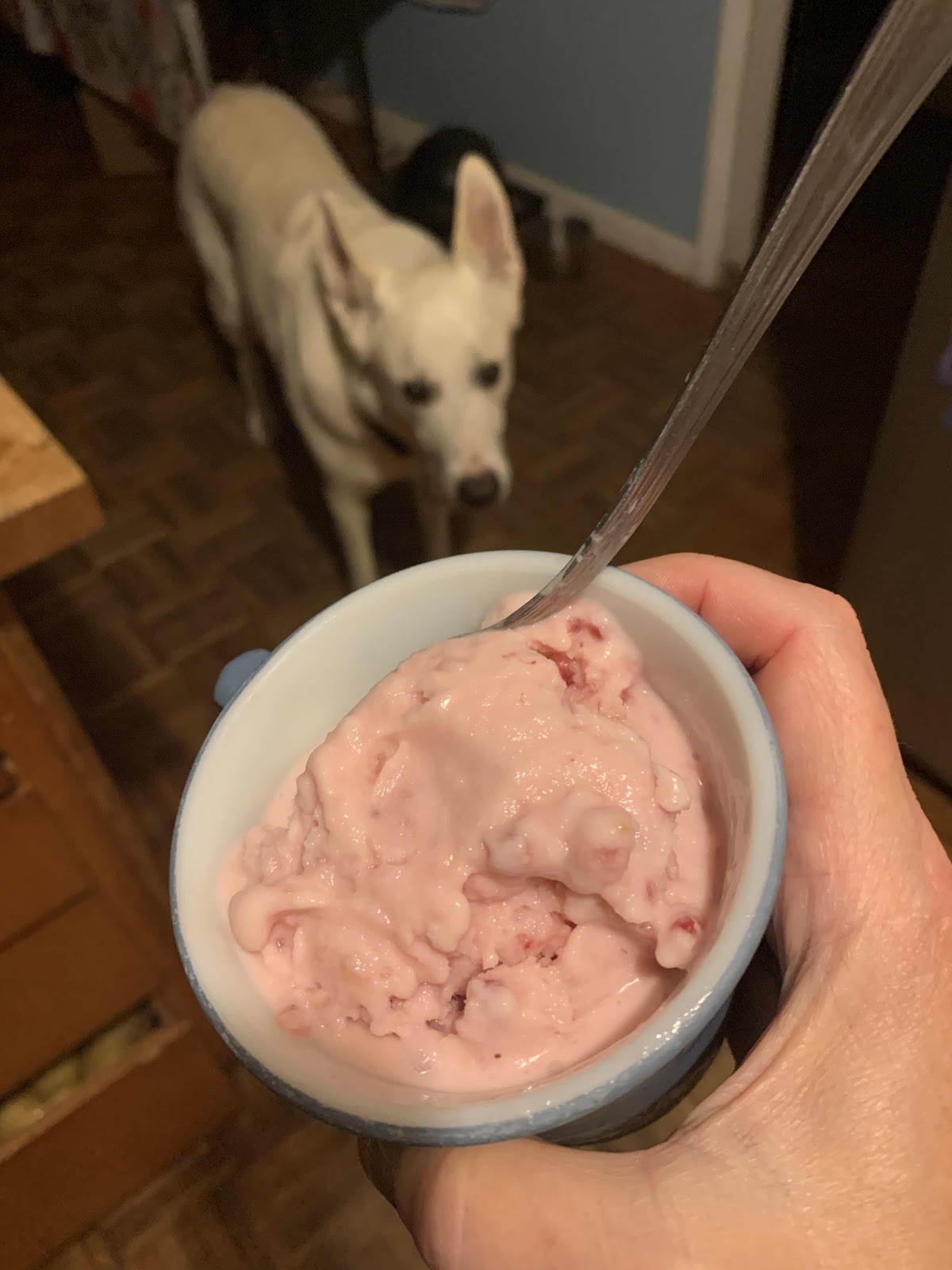
This delicious pink concoction, my first foray, is not technically ice cream, because it doesn’t have any eggs in it (or cream for that matter) but rather frozen yogurt. Sorta. I’m calling it “raspberry cheesecake” and it’s based on a batch of chévre that didn’t quite firm up enough to be called cheese. I could have used it like sour cream, but I already had sour cream in the fridge. It occurred to me to sweeten it instead, mix it with a bunch of raspberries, some yogurt, and run it through the machine. It’s delicious and right now I’m enjoying it as a bedtime snack. 

From the farm: 

Goat milk
Chèvre 
Raspberries 

From the grocery store:

Sugar
Yogurt 

Nothing from the gleaners pantry in this batch of ice cream, but maybe next I’ll try peach - there are always peaches at gleaner’s right now. 

Monday, May 30, 2022

Herb Harvest 2022


Mint is one of my favorite herbs, not only for its zingy flavor and medicinal qualities, but because it’s a hardy perennial that’s damn near impossible to kill, even for a notorious plant murderer like me. 

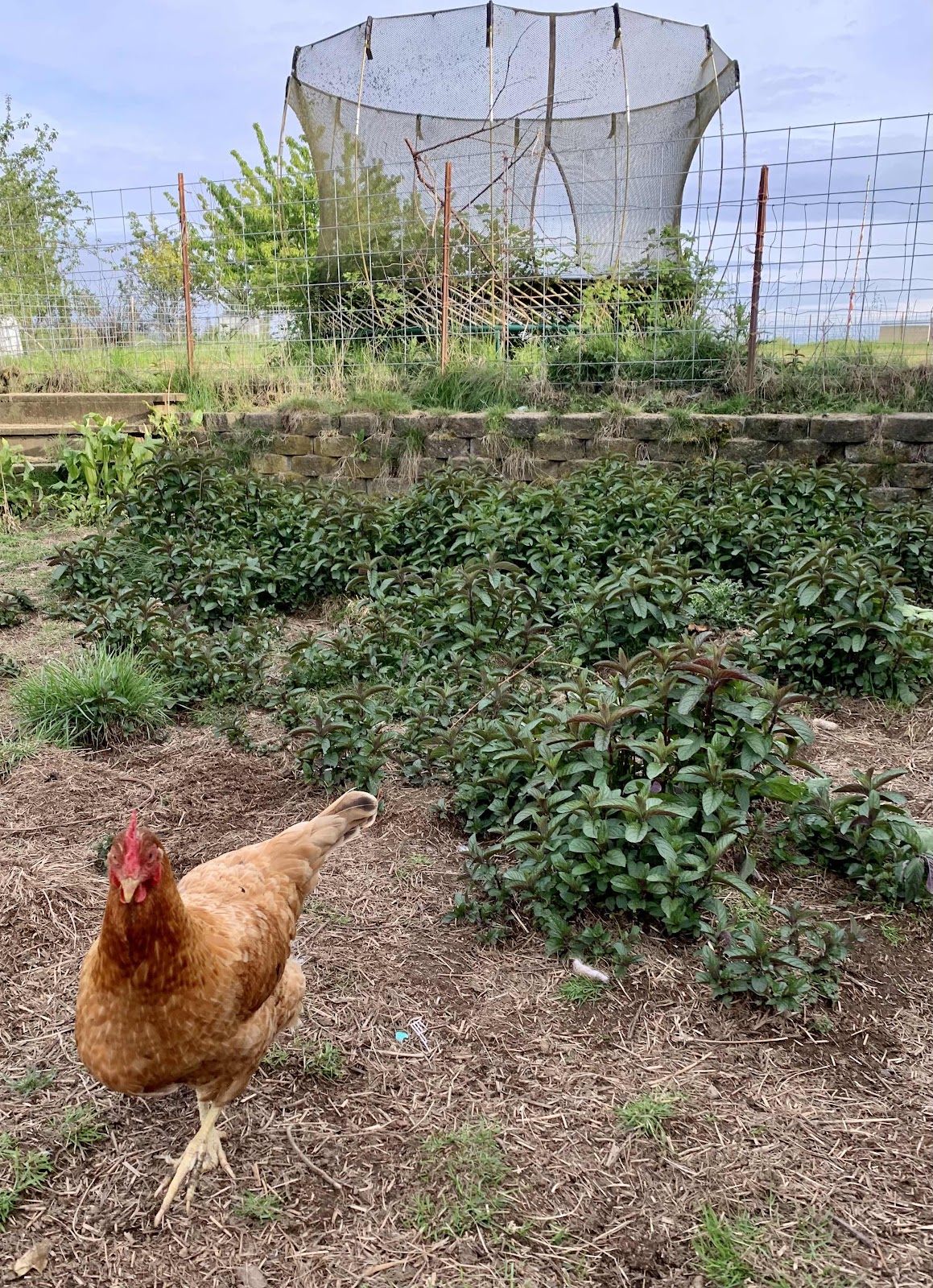
I have spearmint in the front yard and peppermint in the back yard. The spearmint is buried in amongst a hedge of tall weeds and I have to forage for it. This used to be the case for the backyard peppermint as well, but ever since we moved the chickens, the mint is the only green thing left. The rest of the yard has been scratched bare. 


Spearmint is a lovely herbal addition to lots of dishes and we eat a fair amount of it fresh. I add it by the handful to tabouli, for example, and to fresh fruit salads, especially melons. I added some to the melange of herbs I chopped finely and added to my chevre. It even goes well into a pot of Mexican chicken soup, if you can believe that.

Peppermint is a different proposition altogether. It’s much too strong for use as a vegetable or salad green. Mine is so strong that if you chew on a fresh leaf it actually burns your mouth. It’s pretty strictly for tea. A few years ago I made some peppermint vodka, but that’s out of my realm these days. 

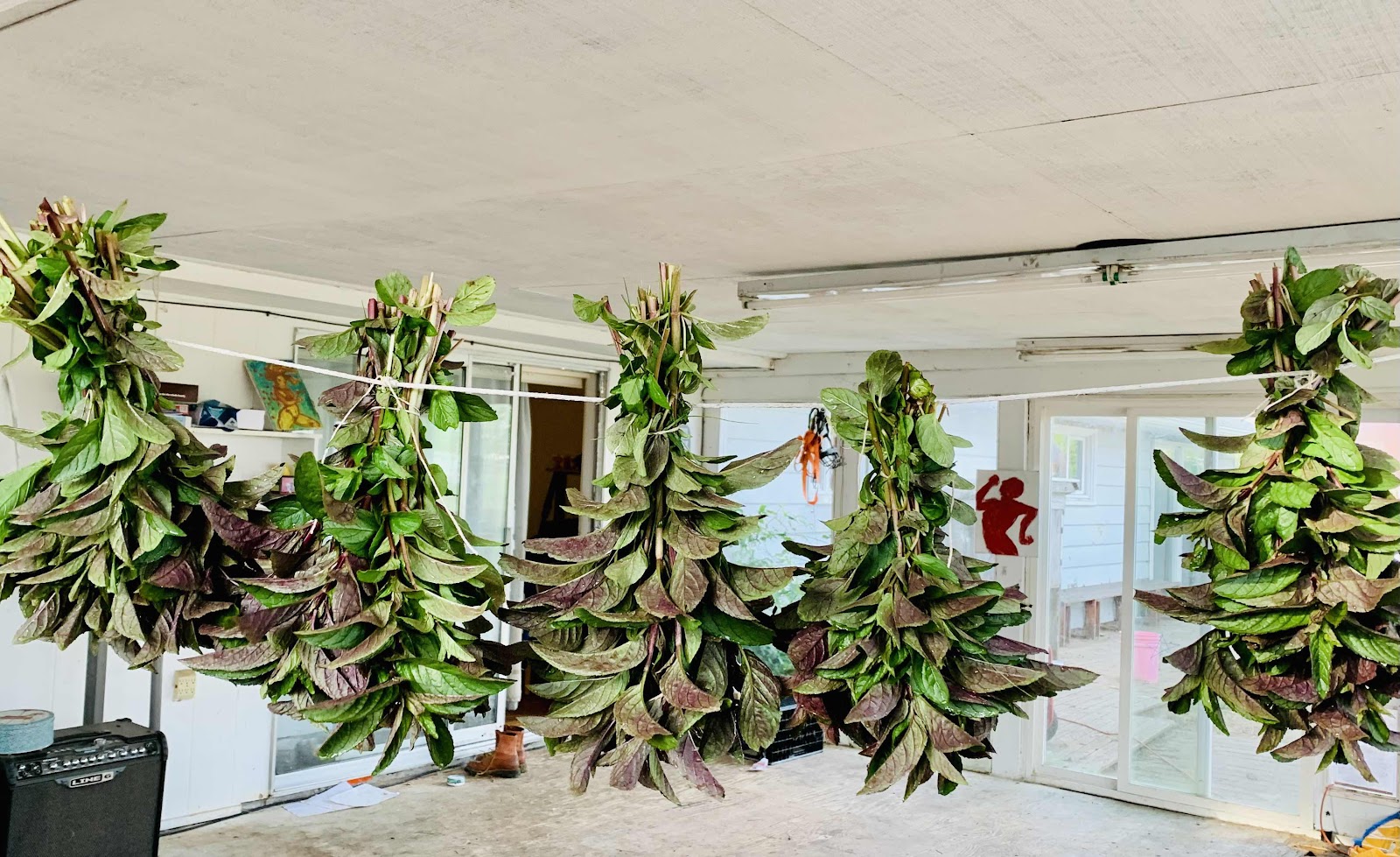
Last year I cut a couple bunches and hung them up to dry in the playroom. Then I forgot about them for an entire year. You don’t generally want to leave your herbs to dry for a whole year - most books will tell you dried herbs last a few months, maximum. However, today when I took the bunches down and rubbed the leaves off them, the scent of peppermint that wafted up was still vibrant. So I crushed them in my hands - they were crispy dry and crumbled nicely into bits - and put them into an airtight storage jar. Later on tonight I’ll make some tea and see how it tastes. 


Then I went and cut five more big bunches of peppermint and hung them up to dry. Since they are in the chicken yard, 
I gave them a good rinse first. This time I will try to remember to strip the leaves and jar them up before another year goes by. I should probably order some desiccant packs from the restaurant supply store, too. That will eliminate any chance of mold. And I’ll want them in a few months when it’s mushroom drying season. 


Now, I should probably get to work and harvest the lemon balm! Lemon balm makes delicious lemony tea and it’s very calming and good for nerves and insomnia. And I have an absolutely ridiculous amount of it. It’s in the mint family as well, and it gets out of control fairly quickly. 

Saturday, March 19, 2022

Food Finances (Project Pantry)


For a while now, I’ve been thinking about starting a new recurring feature on the blog about cooking and eating from “the pantry,” meaning in this case both my personal pantry and the Gleaner’s Pantry, which is a small food rescue organization from which I get a large percentage of our family’s food. We pick up produce, meat, dairy and bakery items going out the back door of supermarkets and sort the usable food from the unusable. On average, around three quarters of the food being tossed is perfectly fresh and good. The rest goes to animals. 

Years ago, when we first moved here, before I learned about the Gleaner’s Pantry, I was all about sourcing as much food as possible from our own land. We planted fruit trees, we put in a garden every year, we raised chickens and goats and pigs. I learned to can and put up quarts and quarts of applesauce, jam, salsa, and pickles every year. I dehydrated pears and plums for the kid’s school lunches. I made cheese and yogurt, and traded the excess to friends for vegetables from their gardens. I foraged for greens, mushrooms, and berries. 

A mixture of concern about climate change, food prices, and the zombiepocalypse combined with the inherent “wow” factor of being a real, live homesteader drove me to spend lots of time and energy producing and preserving as much of our own food as possible. Turns out, however, that with a few exceptions here and there, producing and preserving your own food is not cheaper than buying it already preserved for you. Mostly the opposite, in fact. You wouldn’t believe how expensive a dozen eggs are when you factor in the cost of building a coop and raising the chicks. 

Our global food system is based around efficiencies of scale, and it is very good at producing vast quantities of food extremely cheaply. Again, with a few exceptions, it is much cheaper to buy your food than it is to grow it yourself. Of course, much of that cheapness is predicated on government subsides and the exploitation of labor, not to mention the externalization of costs such as pollution of waterways from agricultural runoff. Money out of pocket is not my only concern, nor can it be the only concern of anyone who cares about the ethics of their consumption. 

Eating for the Gleaner’s Pantry allows me to address many concerns at once - cost of food, of course, but also the desire to minimize food waste and to avoid participating in the evils of Big Ag. None of us can avoid that entirely, of course - Big Ag is just one of the gigantic systems in which we are all enmeshed and which we literally depend on for our survival. I am under no illusion that my feeding my family from Big Ag’s waste-stream makes any appreciable (or even detectable) difference to any of the aforementioned problems. But it makes me feel good, it provides an example to my kids, and it saves us a lot of money. My daughters have taken many lessons - music, gymnastics, sports - that we were able to pay for because we were saving hundreds of  dollars a month in food costs. 

You might have noticed food costs have risen quite a bit lately. This phenomenon comes at a time that we are a bit tight on cash. Our family budget has taken a hit recently, and it made me think that I could probably make even more use of the Gleaner’s Pantry and save even more money. I’ve never tried to actually keep track of exactly how much we eat from the Gleaner’s versus how much from the grocery store. It seems like it might be a fun project for the blog. So I think I’ll try to make a weekly post breaking down at least one day’s cooking in terms of where the ingredients came from. Three categories - Gleaner’s, grocery store, or personal pantry, which includes farm-produced and foraged or bartered from neighbors. 

I’ll start with just one project: the lemon curd Swiss rolls I made today. They are super pretty! 

From Gleaner’s:                              From grocery store:

Flour                                                Sugar
Lemons                                            Butter

From Personal Pantry:

Raspberries
Eggs 

This is a win - four non-store items versus only two store items. Maybe I’ll keep a running tally! 


Sunday, September 13, 2020

Preserving Log (Late Summer 2020)


I’ve been on an absolute tear in the kitchen the last two weeks. Late August/early September is the middle harvest season (Mabon is coming right up), the prime harvest season around here. Here’s a list of what I’ve done lately - as far as I can remember. 


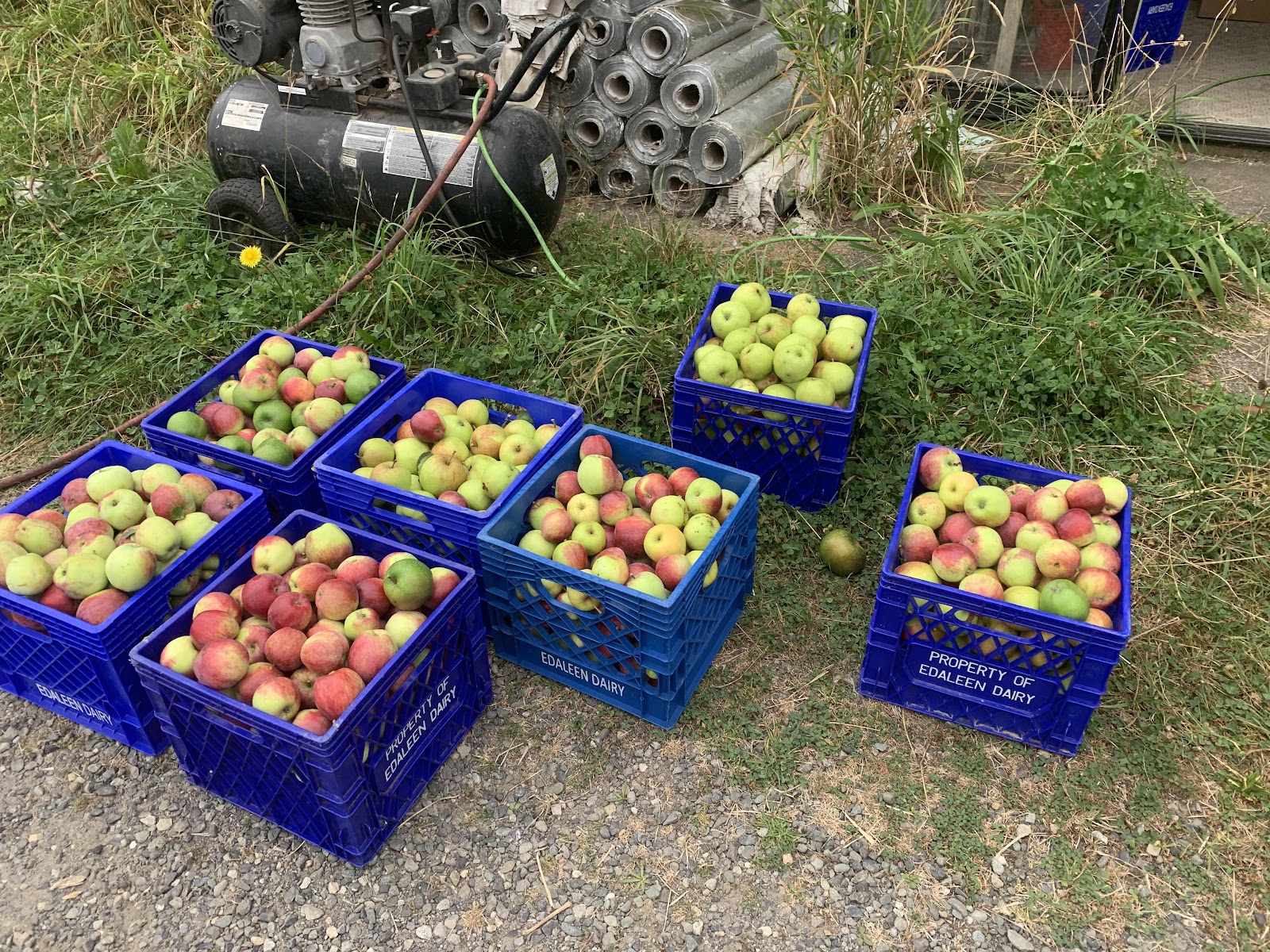
Today the girls and I pressed about ten gallons of cider, from the apples you see above. My friend H. down the way has a dozen apple trees and was only too happy to let us pick some. Tomorrow I will bring her some cider. 

Cidering is hard work. Picking the apples, carrying the crates, washing the apples, hauling the press out and cleaning it, bending down and standing up approximately 7000 times, pressing the buckets, pulling the tight-packed plate back out of the buckets, carrying the apple mast to the compost. It’s messy too, with little bits of apples flying everywhere and juice on everything. By the end I was so sweaty and sticky and tired! Working outdoors in this horrible smoke isn’t a lot of fun, either. But this was the first time we’ve pressed cider in a couple years and overall it’s a great experience. 

The smaller of my two carboys, three gallons, will be made into hard cider, and we’re keeping the rest sweet. I threw two gallons into the freezer, which leaves us about six gallons to get through before it turns into tepache. Not that there’s anything wrong with tepache. 


Plums. This in an on-year for the Italian plum tree, and there are hundreds and hundreds of plums. I’ve dehydrated enough to fill a gallon ziploc bag - more plums than you probably think - and the dehydrator is full of plums right now too. 

I’m taking another swing at plum wine. My past efforts have been drinkable, not fantastic.  Probably I won’t get any better unless I buy a little more equipment - like a hydrometer - and start taking recipes more seriously. But hey - there are so many plums. How far wrong can you go? Right now there’s about two gallons in a primary fermenting chamber and I’ll pitch the yeast tomorrow. I have to go buy another carboy because all of mine are currently full of apple cider. 


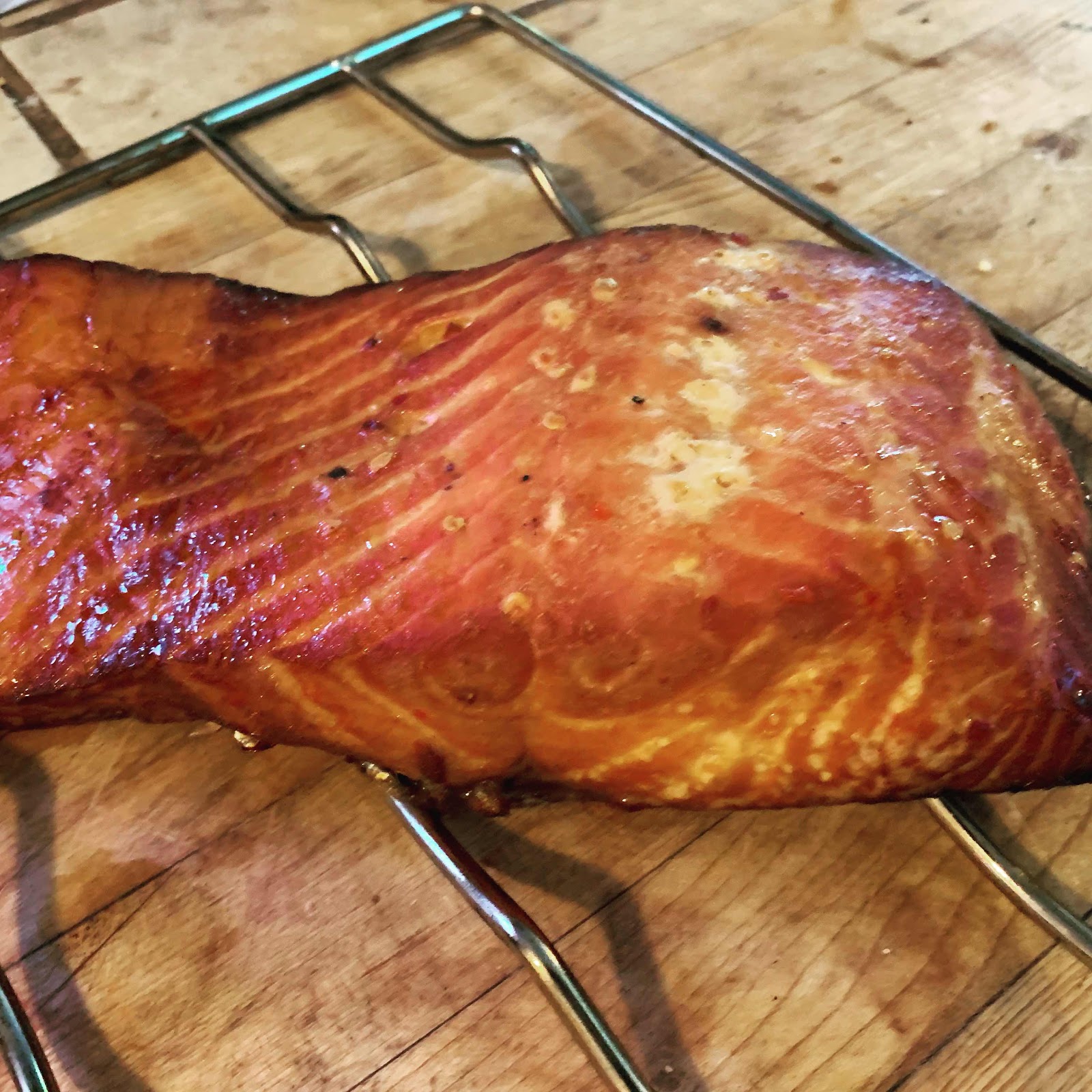
One of Homero’s clients brought him an enormous side of  salmon as a tip. I cut it into five approximately 1 1/2 lb pieces, and we ate one fresh and then I smoked the others. One of the smoked pieces is in the fridge to snack on and the others are vacuum sealed and will keep in the fridge for a few months. Probably not until Christmas though, sadly. Smoked salmon is my favorite thing to send friends and family as a Christmas gift. I could throw them in the freezer but I’m not sure how well the texture would hold up. 

Let’s see, what else? Oh, I canned six quarts of salsa ranchera  this week with tomatoes from gleaners. But I’m not doing a lot of canning for the simple reason that I can’t find canning lids anywhere! Apparently canning lids are the toilet paper of this phase of the pandemic. I have one package of small mouth lids left. 

A couple days ago I hit my favorite local farm stands just to see what was available. I brought home some sweet corn (which we ate), some cherry tomatoes (ditto), five pounds of green beans, and three smallish kohlrabi. I started kimchee with the kohlrabi. Earlier this summer I made a batch of kohlrabi kimchee and it was the BOMB. It’s only about a quart, but we will enjoy it. 

I’ll have to decide if I want to use the last of my canning lids to make canned dilly beans with the green beans, or if I will lacto-ferment them like kosher dill pickles. Both ways are good. 

I haven’t even started in the pears. Good lord, the pears! WHY did I plant FOUR pear trees? 


Wednesday, July 8, 2020

Preserving Log (Early Summer Edition)


I’ve fallen behind on my blogging, I’m afraid. Since the stay-at-home order was lifted early last month, I’ve been busier than a one-armed paper-hanger (as my mother used to say). 

Mostly, I’ve been working a lot. All the procedures and routine checkup and vaccination appointments and dentist appointments that were canceled during the lockdown have been rescheduled, and all the doctor’s and dentist’s offices are full. My agency is down by at least three interpreters. Two of them are elderly and not in great health and so are not taking appointments at the moment, and o e of them got stuck in Spain way back in March and hasn’t been able to come home yet. This means there is a ton of work for me, more than I want, really, but if I turn appointments down they often go unfilled.

In my free times, this is what I’ve been doing as far as preserving goes: 

 - several small batches (3-4 quarts at a time) salsa ranchera, as the gleaners pantry gives me the ingredients

- a gallon of kosher fills that is almost gone now. Yesterday I bought more pickling cucumbers and later on today I will gather grape leaves start a new batch

- a gallon ziploc of dried cherry tomatoes. Haven’t done this before and it’s really good. I season them with a little salt and garlic powder and then dry them till they are very leathery or even crisp. Nice for snacking and they add great flavor to a stew or soup.

- froze about a dozen quarts of strawberries. Went to the u-pick with friends when they were up visiting. 

And today I am breaking out the big stockpot to deal with this:


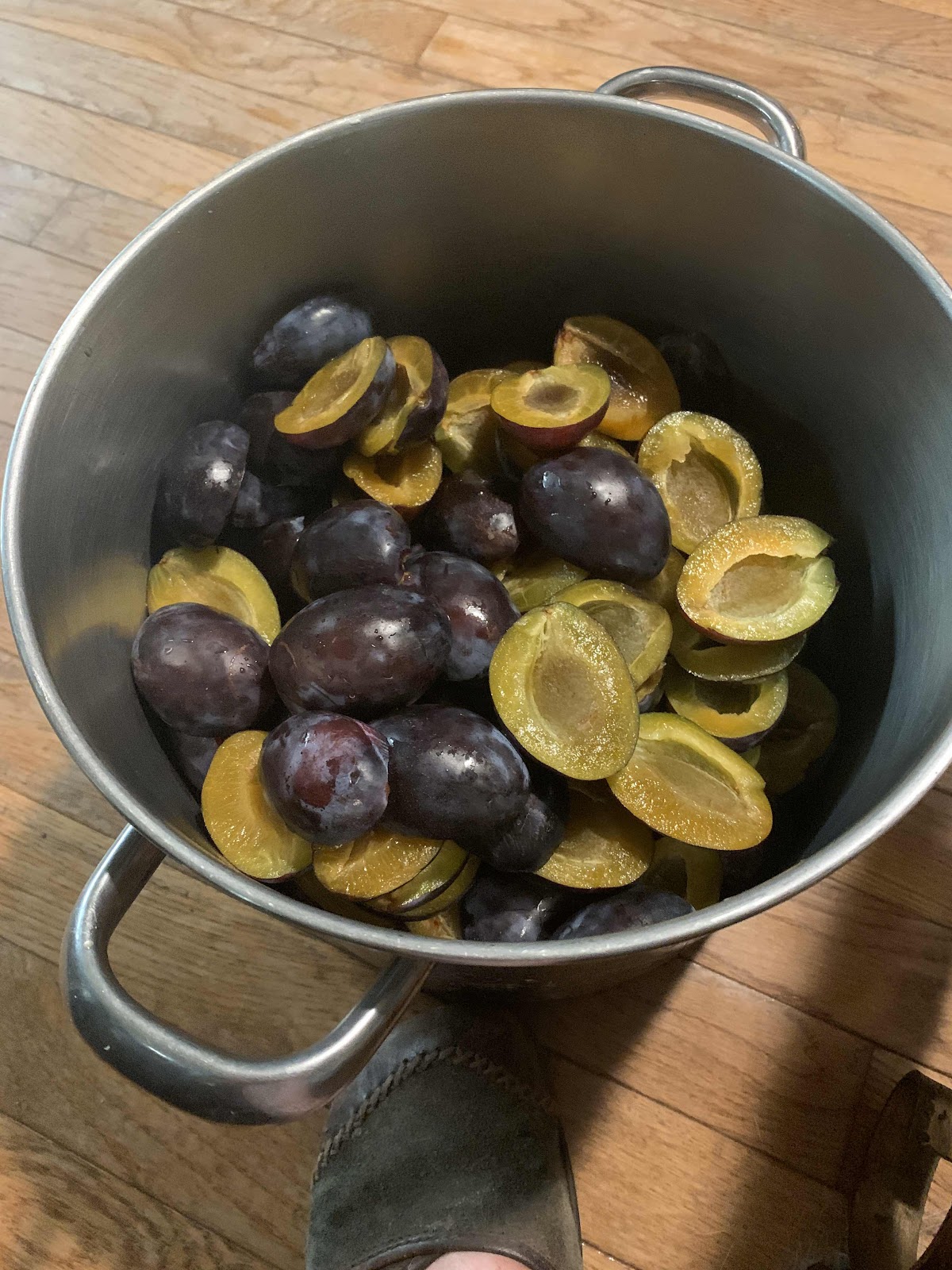
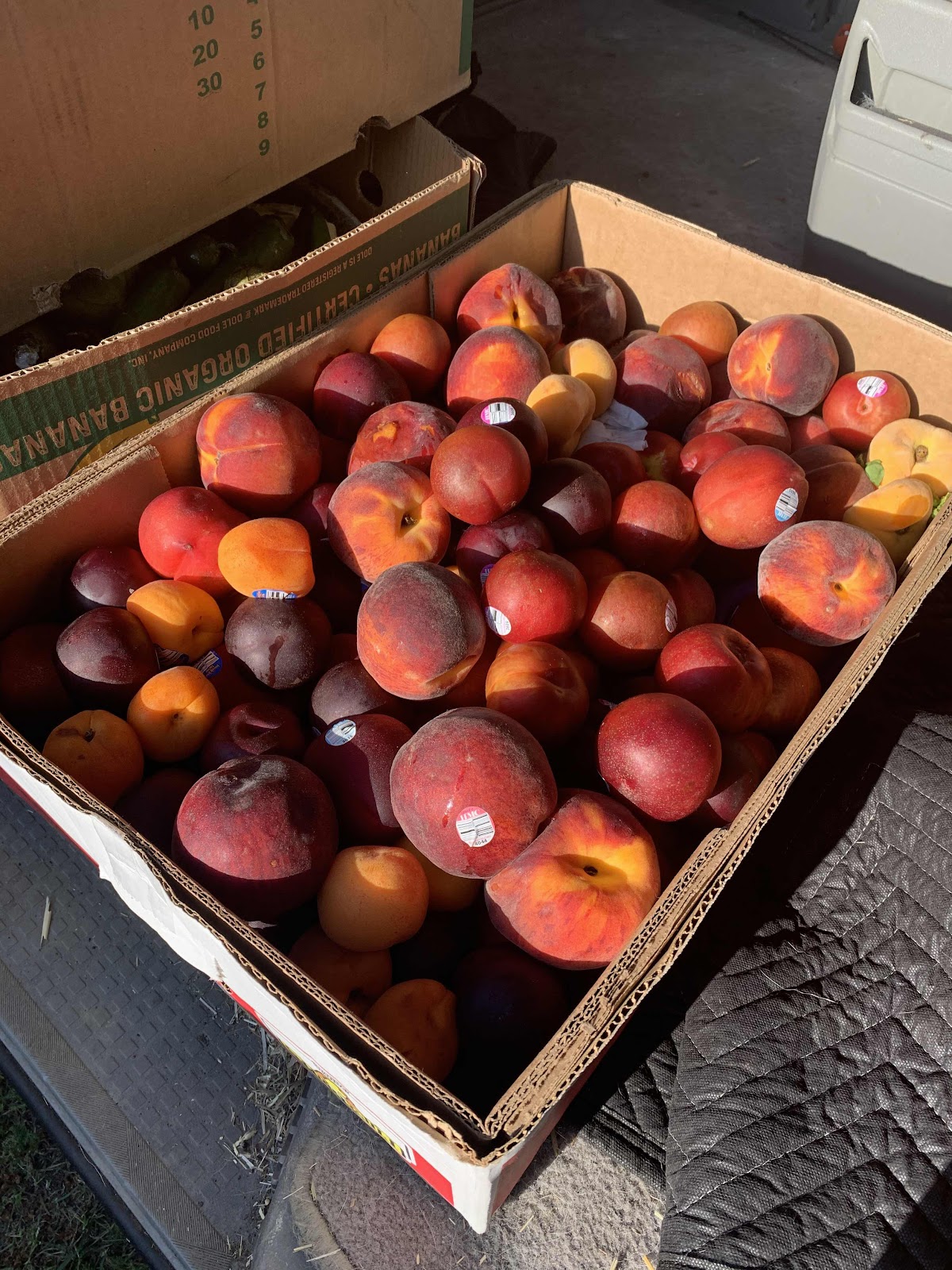
That’s about 25 pounds of mixed stone fruit from gleaner’s. After I separated the fruit that was too far gone and picked out the fruit that was still perfect for eating fresh, I was left with about ten to twelve pounds of slightly overripe fruit. The last hour or so has been devoted to bleaching, peeling, and chopping and my kitchen looked like a couple of murders had taken place (red plums!) but now I have this simmering on the stove:


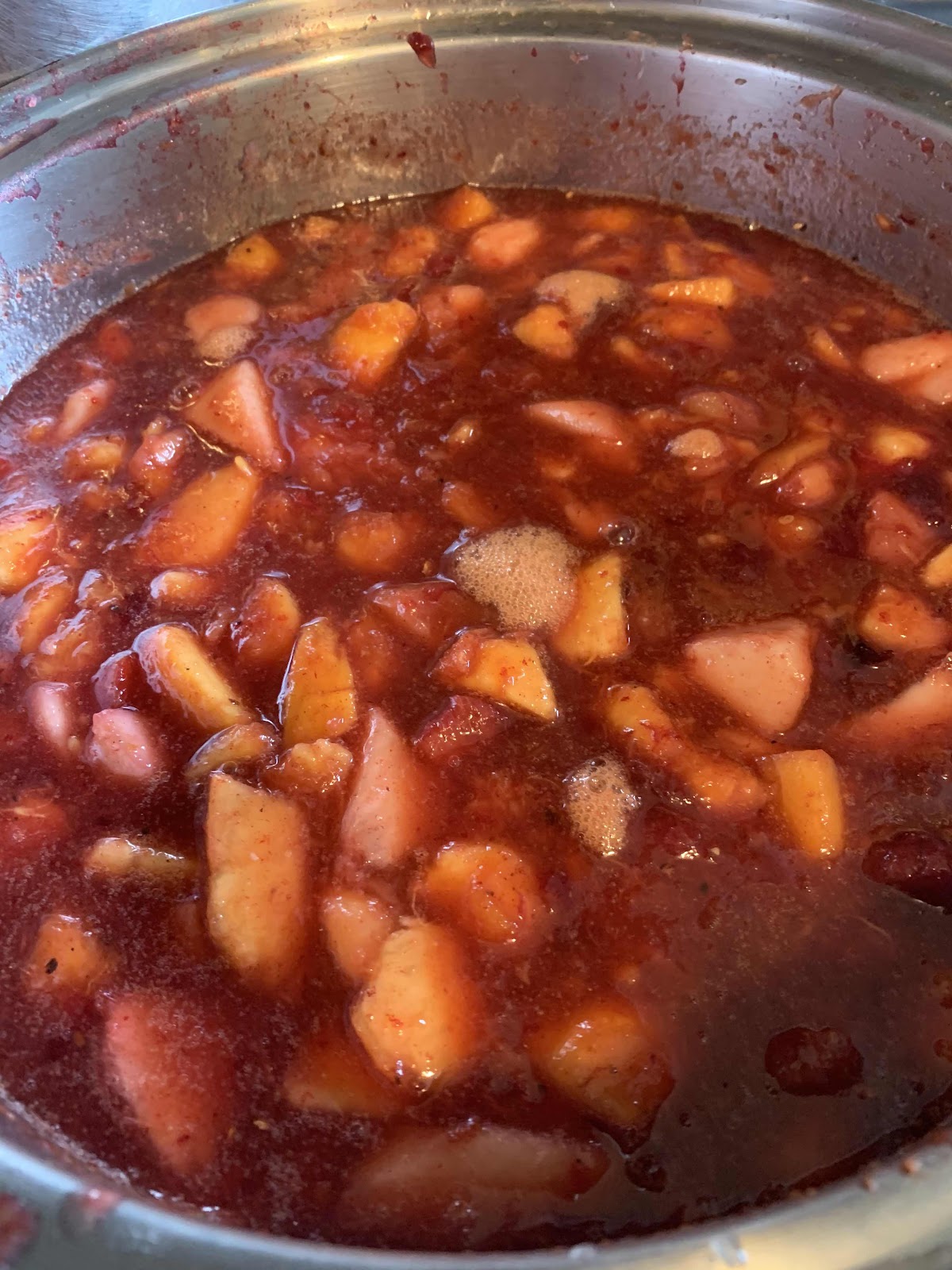
Spicy stone fruit chutney. It has cinnamon, cloves, black pepper, red pepper flakes, a TINY hint of garlic, brown sugar and apple cider vinegar. It smells like heaven and it ought to be delicious with pork chops, chicken breasts, or maybe a hearty fish like halibut. It’s super pretty, too. 

But man there’s gonna be a lot of it. I think this may be my Christmas present to a few people this year. 

Still sitting out on the front porch: a crate of corn on the cob to be shucked, shaved, and frozen; and about ten pounds of jalapeños to be turned into rajas en escabeche. I might get the peppers done today, but he corn is gonna have to wait. 


Wednesday, March 18, 2020

State of the Farm: Pandemic Edition


The girls amuse themselves at home with Henna freckles 


DQ2 - day two of “quarantine.” We aren’t officially quarantined, of course, and not even prohibited from going out and visiting. The official prohibitions in Washington are (as of right now) no gatherings of over 50 people (or has it been changed to 10?) and smaller gatherings must abide by strict “social distancing” rules that keep people 6 feet apart. 

Schools are closed at least through 4/27. I started the DQ count from the first day that schools were closed, which was yesterday, hence today is DQ2. Restaurants are closed, though takeout and delivery is allowed. Bars are closed, as are any place where people habitually gather, such as bowling alleys, churches, movie theaters, museums, libraries, barber shops, etc. Grocery stores and pharmacies are open. 

Everyone who can work from home is being told to work from home. I am still working, working more than usual in fact. As a medical interpreter, I spend my days going from one doctor’s office to another, which I suppose makes me high risk for infection. Today, for the first time, there were nurses with thermometers stationed at the entrances of the clinics, taking everyone’s temperature before they were allowed in. I don’t have a fever. 

Homero is still working as well, but he works from home all the time anyway. People still need their cars fixed, even if they are being told to stay home, I guess. I worry a bit about him because he has a few different underlying health conditions (as do I) that could make him a higher risk for complications. At least he wears gloves all the time. 

The girls were initially thrilled about the prospect of a six week spring break, until it was made clear to them that they would not being spending much time hanging out with friends, or indeed outside the house at all. I have let them see a couple friends, one or two at a time, and I’m thinking of getting in touch with the parents of a few of their “best friends” and asking about creating a closed circle of friends so they can all hang out with each other without becoming vectors of disease. 

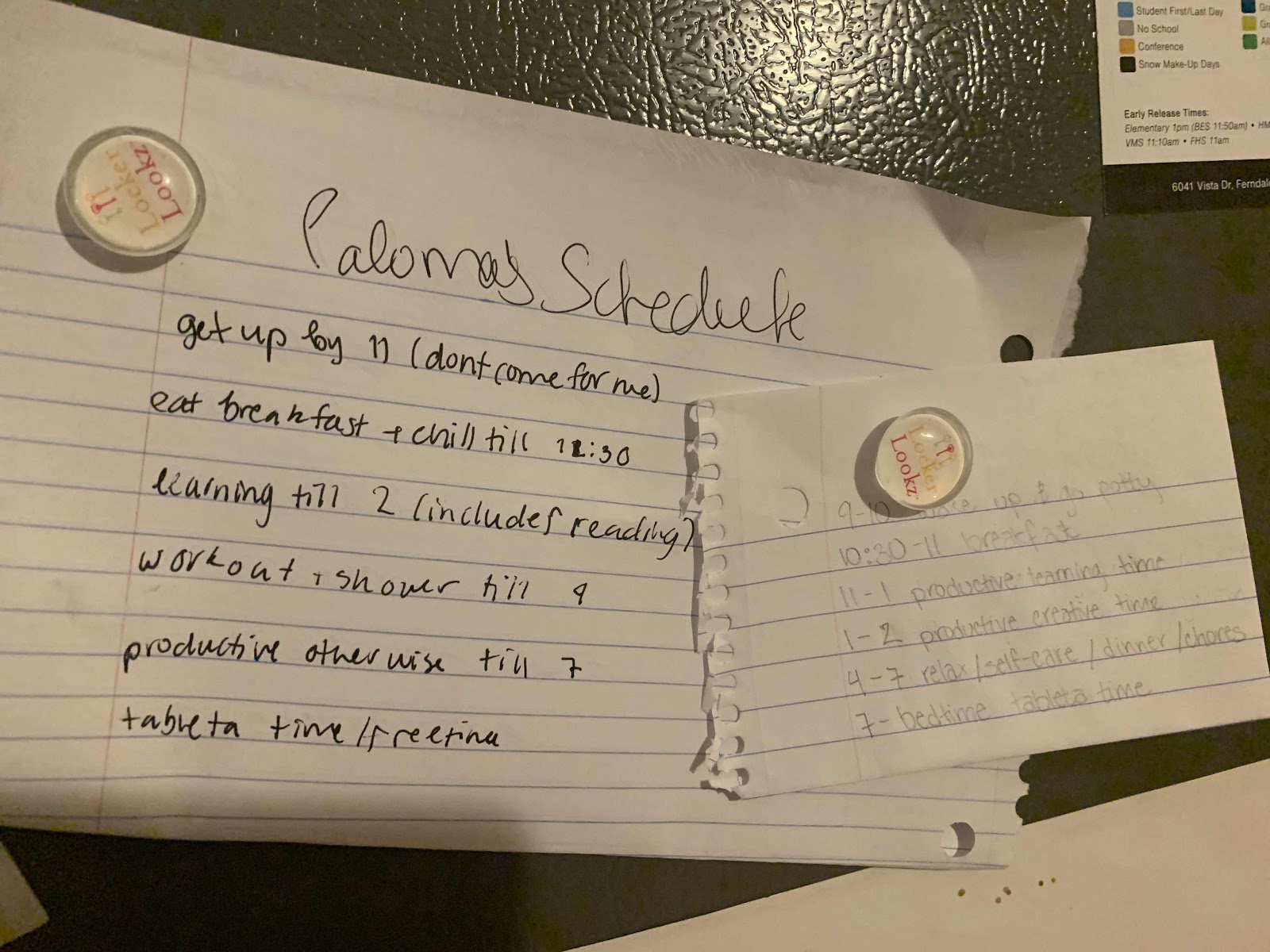
Nobody knows yet when school will resume. Teachers have been told not to send homework for the time being, since not every child has internet access at home and it wouldn’t be equitable. The district is working on a solution, at least for high schoolers, and I expect sometime in the next week or two that they will probably send home some fat packets. In the meantime, I told the girls this isn’t a vacation, and that they needed to write up a schedule for themselves. It doesn’t have to be a strict schedule, or overly specific, but it has to exist. Here’s what they came up with:


I especially like Paloma’s first line item: “get up by eleven (don’t come for me).” 

Each schedule has to include a two hour block of time for school related work (their teachers can’t assign work that will be collected and graded, but they can post “suggestions” online) and a two hour block of “productive other” time. This second category can be anything from playing piano to drawing to exercising to working in the garden to reading a book. Other than those two categories, and one chore assigned by me or their papa each day, their time is their own. 

Some examples of the chores I intend to make them do, in no particular order:

- walk the pastures and pick up all the pieces of broken plastic, plastic baling twine, or plastic bags and assorted trash they can find. No matter how careful one is, small plastic detritus accumulates over the winter. 

- turn over some of the compost pile

- clean out a drawer or a cabinet 

- harvest nettles

- organize the canning jars (full ones by contents; empty ones by size)

- use the sewing machine to make patches for mending the quilts with holes in them (our dogs have a tendency to get overexcited and tug on the bedclothes)

- clean up the greenhouse 

Like everyone else, I am imagining all the great stuff we will all get done during this enforced down-time, and like everyone else I am probably fooling myself. It’s unlikely I will take up a musical instrument or learn a third language. A more realistic hope is that I will have time and energy to put in a small garden - something I haven’t done for a few years - and read a few extra books. Perhaps do some drawing. Within a month the goats will kid, and soon thereafter it will be cheese season again. 

A good chore for me would be to find, clean, and organize 
my cheese making equipment, and order new cultures and supplies. 

Another good chore for me would be to commit to keeping a blog diary of our lives during this time.  Nobody knows how this is going to play out. Things could stay bad for a long time. Many of my neighbors are elderly and frail and are really not supposed to go out at all. Tomorrow I will talk about local efforts to pull together and provide help and services for folks who are ACTUALLY quarantined, and for folks who have lost their jobs, and those negatively affected in all sorts of ways by this unprecedented situation. 

Stay healthy! 

Tuesday, October 1, 2019

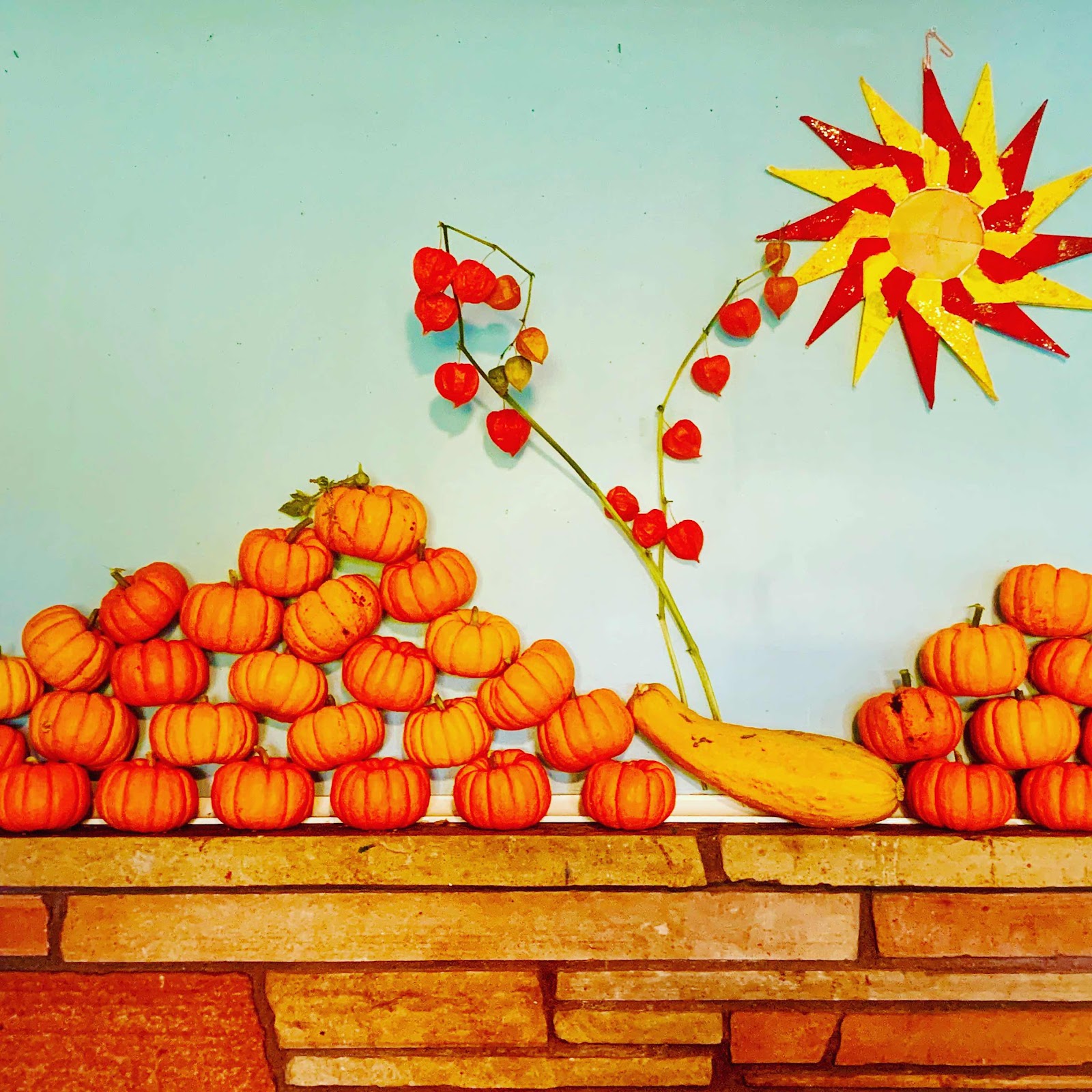
October Altar (Waste Not)


An enormous volunteer squash plant grew out of our compost pile this summer. This happens not infrequently, and because squash vines love rich compost, the plants tend to sprawl over vast areas and produce prodigious amounts of squash. However, most summer squash are hybrid varieties, so volunteer plants that sprout from discarded seeds are unlikely to bear fruit that is much good for eating. 

All squash blossoms are nice for eating, though. We picked many many blossoms for stuffing inside of quesadillas, or for stuffing with goat cheese. But no matter how many blossoms we picked, there were plenty left over for making squash. Past volunteer squash have produced warty gourds, yellow crooknecked squash but with hard shells and thin meat, or strange globular fruits. This one produced tiny rubbed hard shelled pumpkins, the kind you see 
decorated  with googly eyes and painted grins in bins at the grocery store in October. I’m sure they would be poor eating, but they make a nice autumn altar. 


After we picked all the little pumpkins, I let the goats go to town on the giant vine. They appreciated it. After we enjoy them on the altar for a while, I am donating these little guys to my sister, who is a pre-school teacher. No doubt they will all be festooned with googly-eyes and painted grins. 

Happy Fall to you and yours. 


Thursday, December 27, 2018

A Peck of Disappointing Peppers


The Gleaner’s Pantry usually has an abundance of food after any major holiday - and this year was no exception. The day after Christmas there was a special glean, and along with a plethora of cookies, cakes, pannetone, and various and sundry candies, there was also a vast amount of fresh vegetables and fruits. 


I took home three or four sacks of oranges, a half a dozen pomegranates, and a goodly number of specialty pears wrapped in crinkly foil paper, lovingly packed into wooden crates, and labeled with a well-known national
brand. But the real haul was a near-bushel of shiny, green, taut-skinned jalapeños. I couldn’t see a damn thing wrong with these peppers, nor imagine why they had been thrown away. I took all of them that nobody else wanted - at least two full shopping bags full. 

This morning I spent three hours with a pair of latex gloves on, prepping the peppers for canning. I searched the cabinets and discovered a dozen wide mouth pint jars; I unearthed the lids and rings and set them to boil. I sat down with a paring knife and put on a CD and filleted some fifty or sixty peppers and cut them into rajas. I made a brine of one third white vinegar and two thirds water, a half cup of sugar and a quarter cup of salt, pickling spices and several cloves peeled garlic. 


Ten pints of sealed pickled peppers later it occurs to me to actually taste the peppers - there were a lot left over. And damn! I finally figured out why such a huge quantity of perfect peppers was at Gleaner’s in the first place. These supposed jalapeños had ZERO heat. They were basically small, pointy green bell peppers. 

You have probably noticed - if you are over thirty years old and like to cook -  that jalapeño peppers have changed in the past decade or so. A new hybrid came out ten or fifteen years ago: a bigger, blunter, WAY less spicy jalapeño. I think it’s a cross between a jalapeño and a green bell pepper. Recently, it seems that this is the only “jalapeño” you can find. The older, smaller, hotter jalapeños have pretty much disappeared from the markets. These days if I want a hot pepper, I have to buy serranos. But I have never yet run into a hybrid jalapeño that had NO heat whatsoever.

My guess is that somebody bought a bunch of this batch and then complained to the grocery manager - I know I would. And then the manager taste-tested them and came to the same conclusion I did - these jalapeños are shit. 

Oh well - now I have twelve pints of pickled anemic peppers. We usually go through a pint of pickled jalapeños every two weeks or so. They are standard garnish for three out of every four meals we eat here - scrambled eggs, taco toppings, sandwich fillings, components in tuna or chicken salad. But peppers without any bite at all? I just don’t know how we will use them up. 


Sunday, November 11, 2018

Salvaging the Impalatable (Fermented Seal Guts)


April and May is goat cheese season, year after year. This past spring, however, I spent even more time than I usually do making cheese. That was because I knew that we would be spending the two months of high summer far from home, in Oaxaca. Whereas I would usually use most of the milk making fresh, easy to make and easy to use simple cheeses like queso fresco and chevre, this year I made more hard cheeses, intended for storing. 

My hope was that I could make enough hard cheese, and store it effectively enough, to have cheese in the late summer and fall when we came home. I made mostly cheddar, with and without flavorings such as chives and red pepper flakes, and I used my vacuum sealer to seal it up and store it in the fridge over the summer. In past years, I haven’t had great luck with this method - the cheese inevitably molded even inside the vacuum sealed pouches. This time I took more care to cure (air dry) the cheeses well before sealing. Then I packed them into the coldest part of the fridge, crossed my fingers, said a prayer, and flew away. 

Upon our return I was delighted to find that none of the packages showed any signs of mold. The seals were tight; thee was no evidence of air inside the bubble, and when I opened a package, the cheese smelled fresh and good. 

However. 

However. 

I still wasn’t happy with the “final product.” In my mind, an aged cheddar should have a distinct taste and texture  - “sharp,” piquant, and maybe a bit crystally, ever so slightly crunchy under the teeth. It ought to melt well. It ought to smell wonderful, and to be appetizing even to those who aren’t the biggest fans of aged cheese. At the very least, it ought not to be offensive to the taste (except to those weak-stomached fools who hate any strong flavored cheese). 

The cheeses I have opened so far have been a bit hit or miss, according to these criteria. Mostly, they do melt well and have a very good texture. The problem is their extremely strong, rather goaty flavor. The “goaty” flavor in aged goat cheeses is due to certain compounds known as Caprine flavor compounds. Apparently, they tend to concentrate over time. What went into the fridge in May as a nice, smooth, mild-mannered green cheddar came out in September as a rugged, aggressive, stinky, crumbly goat cheese. It is simply not something that most people - more to the point “we” - would choose to eat as a stand alone product. 

That’s disappointing of course. I’ve made myself eat a few slices on crackers, with grapes or apples and the soothing influence of fig jam or plum preserves, but it just isn’t a truly pleasant experience, if I am honest. So I am left with the question of what to do with several pounds of extra-strong stinky goat cheese that represents a silly number of hours of labor that I am simply not willing to chalk up to experience and toss in the trash.

Today I solved that problem by making calzone. I had some herbed pizza dough courtesy of the gleaner’s pantry, and our own pantry provided various strong flavored ingredients such as kalamata olives and marinated artichoke hearts, with which I intended to mask the Caprine compounds. 

Paloma helped me roll out the dough and I took the opportunity to educate her a little (read, bore her to tears) about the historical necessity of making do with whatever ingredients were available, regardless of their objective edibility. For most of human existence, nobody had the luxury of turning their nose up at “stinky” food. Willingness to eat what was available was quite literally the difference between life and death, or at least between health and malnutrition. 

“Some people in Greenland had to eat fermented seal guts,” I told her, “and eventually, it became a delicacy. Necessity is the mother of invention.” 

Her expression showed me she wasn’t convinced. 

“It’s always been a woman’s job to take whatever was at hand and turn it into something, if not delicious, at least something that her family would eat,” I continued. “And that’s the origin of haute cuisine. Seriously - all culinary creativity is based on using the dregs, the ugly bits, the stinky bits, and making it beautiful and desirable.” 

This, as I grate the too-stinky-to-eat goat cheese onto the rolled out calzone dough, and cover it with chopped olives, artichoke hearts, parsley and marinara sauce. I tell Paloma, and I cross my fingers that I’m not lying, that the cheese’s too-strong flavor will, in the company of all these other flavors, enhance the calzone and actually be an asset to the finished product. 

I’m sure that dozens of generations of women have made this same argument to their skeptical families regarding dozens of equally dubious ingredients. I mean, seriously. Natto? “Thousand year eggs?” Shrimp paste? The first Gorgonzola? We ladies have simply had to brazen it out, and time and history have largely vindicated us. Except for the fermented seal guts. 

The verdict on the calzones was that they were delicious. The goaty flavor of the cheese melded well with the salty, briny olives, and all the calzones disappeared with alacrity. 

One cheese down, several cheeses to go. 


Monday, October 29, 2018

Apple-anch, 2018


It’s apple season again, which means I’m too busy to write about it. These lovely specimens were part of a farm glean courtesy of the Gleaner’s Pantry. I’m hoping the weather holds and we can haul out the press this weekend, but in the meantime I’m dehydrating, making sauce and pies. 

Enjoy fall!! 

Wednesday, September 12, 2018

Preserving Log 9/18


Arrived home from Oaxaca ten days ago. In that time we had a lot to do to get the kids ready for school- go shopping for supplies and clothes, adjust their schedules, etc. Paloma made a schedule and posted it on the fridge:


We did all that. Also I started a serious job - ten days of full time, 8 hour days interpreting for a student enrolled in he Washington state Caregiver’s training program. I have done this same course several times before. It’s very demanding; after eight hours of simultaneous interpretation my brain feels like a bowl of cold oatmeal. But it pays well and after our expensive summer abroad I couldn’t turn it down. 

Meanwhile, the pears and the plums and the early apples just kept on coming. Here’s what I’ve done in the way of preserving in the last ten days, more or less in order:

1) dehydrated two gallons of pears and two gallons of plums

2) canned six quarts salsa ranchera

3) canned four quarts pear/apple sauce

4) three gallons lacto-fermented pickles

5) made three gallons of plum wine - currently undergoing secondary fermentation in a carboy on the mantle. 

6) made three pounds chevre

7) canned eight pints blackberry jam

8) froze a gallon blueberries

Planning on picking up several pounds of peppers for canning later this week. That’s about it for now. I want to hit the farmers market and look for wild mushrooms - chanterelle season is in full swing, and I’d like to dry a few pounds. 

Happy Mabon to you all. 


Saturday, September 1, 2018

Making Up for Lost Time (Mabon Again)


We arrived home late the night before last. Or perhaps more accurate to say, early yesterday morning. We finally opened the door to our home at about 1:30 am Friday morning, to a couple of very happy dogs. 

After sleeping in quite late, we set about cleaning the house (my daughter Rowan did a wonderful job taking care of the farm and keeping the place operational, but she apparently didn’t sweep the floor or scrub the toilet once in seven weeks). I had cleaned out the fridge before we left, so there wasn’t much food in the house. 

A quick reconnaissance of the orchard revealed that there is still a heck of a lot of fruit to cope with. The greengage plums are done for this year - though a neighbor friend picked a bunch and dehydrated some for us - but the Italian plums are still a week or so away from ripe, and the tree is loaded. 

Pears are falling all over the property. I think I may have mentioned that I have FOUR pear trees, which is a ridiculous number. The Bartletts are ripe, and the Comice pears are not far behind. The Seckels and whatever the fourth one is (I forget) have a ways to go. Today I picked up a few dozen fallen Bartlett pears that were still firm and  fragnrant and tomorrow I will haul the dehydrator out of storage and scrub it. The girls love dehydrated pears in their school lunches. School starts Tuesday. 

The cider apple tree is covered with apples. Cider season will be soon.  The other Apple trees, still quite young, have a few dozen apples apiece. And the Asian pears trees, planted two years ago, and a half have a few pears on them. 


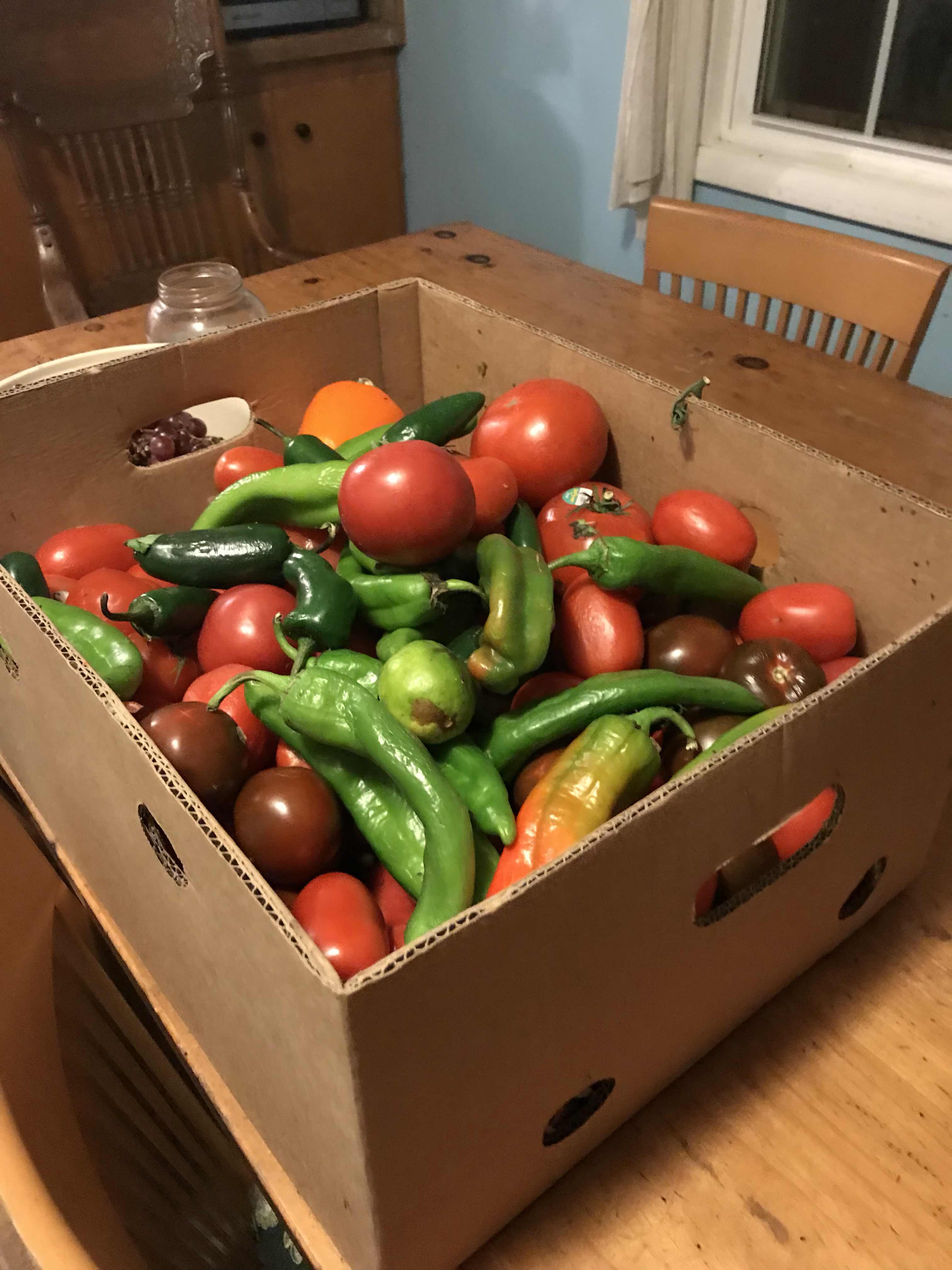
Today I went to Gleaners’s Pantry. Came home with the crate you see above - about twenty five pounds of tomatoes and peppers. Tomorrow I will can. I’m guessing there’s a good dozen quarts of salsa in that box. 

Tonight I spent a few hours making good use of other produce fromGleaner’s. Roasted hatch chiles, red onions, corn on the cob, and fresh tomatoes became this beautiful salsa: 


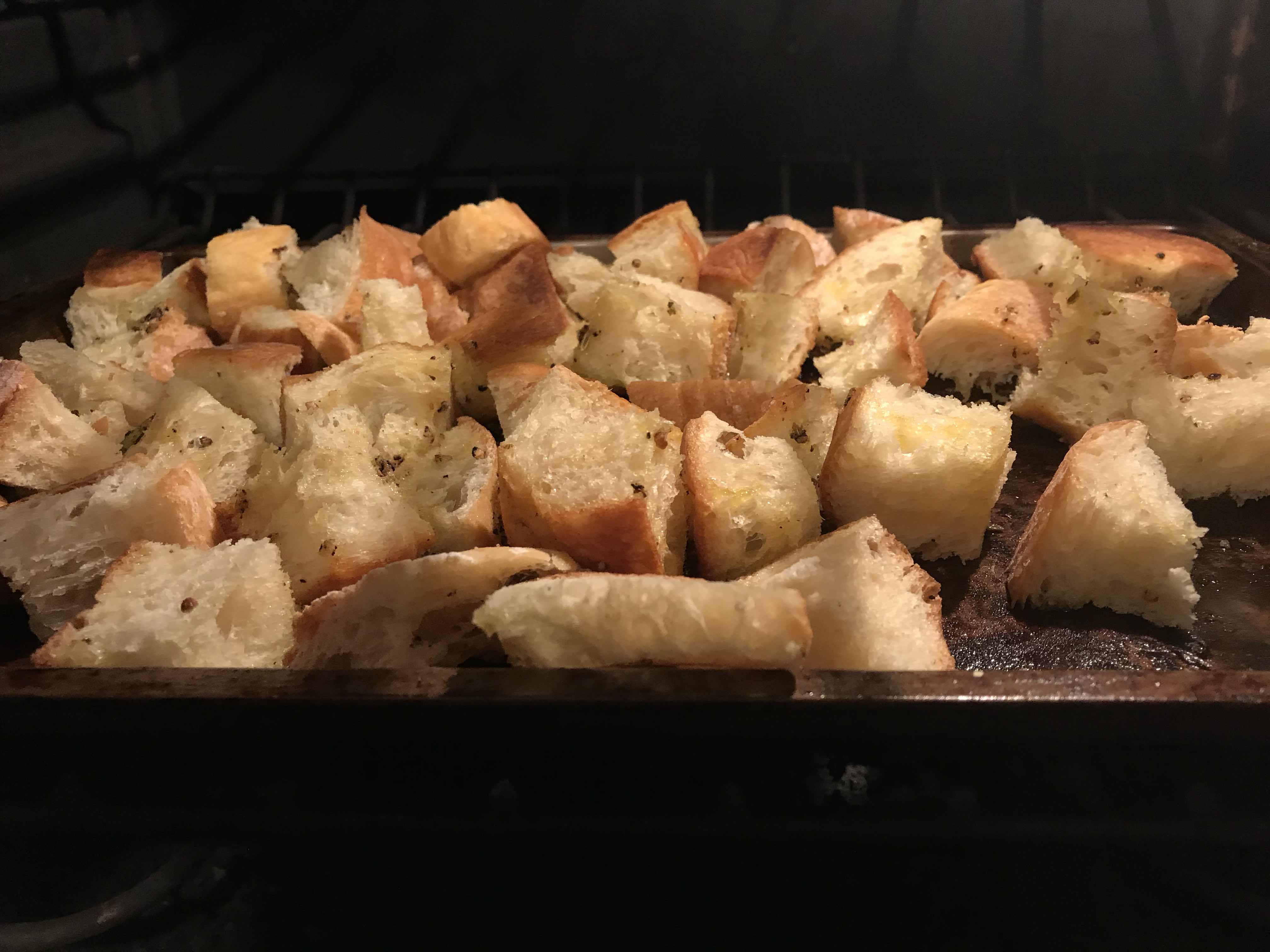
I also brought home a half dozen loaves of ciabatta bread. I like to cube it up and toss the cubes with a mix of olive oil, herbs, garlic, salt and pepper, and bake until they are crunchy croutons. Store in a ziplock bag in the fridge. 


 Not pictured here is a new experiment - plum shrub. A shrub is a fruit based concentrate, made of any fresh fruit macerated with sugar for a few days and then mixed with apple cider vinegar. That makes a storable concentrate that can be mixed with fresh water - still or sparkling - for a delightful refreshing non-alcoholic beverage. If you like, of course, you can also add a jigger of vodka or gin. My first attempt at a shrub is a half gallon of chopped Italian plums and a few springs of rosemary. I expect it will be delicious. 

I missed a lot of preserving season this year - for the very worthwhile reason that we were in Mexico with my husband’s family - but I am making up for list time. Mabon is upon us, almost, and I intend to embrace the motto of the season and be prepared. 

Besides, I love it. Putting up food is just about my favorite thing ever. 

Saturday, March 10, 2018

The Fermentation Files (Spring 2018)


As usual, I have a couple of different fermentations going on in the kitchen. At this point in time, after years of tinkering and experimenting, home-fermented foods are simply an everyday part of our diet - which is as it should be. Fermented foods have been an integral part of the diets of people in all parts of the world for centuries, if not millennia.

http://fermentalitylab.com/116655-2/

Fermentation is the answer to many problems - how to preserve fresh vegetables through the winter; how to turn easily spoiled milk into delicious, storable cheese and yogurt; how to increase the digestibility and the vitamin content of tough root vegetables; how to get drunk and party through a long, drab, grey season.

Fermenting  is a traditional and easy way of preserving fresh vegetables through the cold season in four-season climates, like northern and Eastern Europe where most of my ancestors came from. It is the only method of preservation that actually increases the nutrient content of the food being  preserved. Bacterial action produces high levels of B vitamins, including the hard-to-find B12.

Discover-the-Digestive-Benefits-of-Fermented-Foods_1383-1.html


My Kefir. A few years ago I bartered for some kefir grains and was sadly disappointed to learn that I couldn't put them in fresh, raw goat's milk. When I tried that, they died overnight. Turns out - as I could have learned from a very short investigation online - if you want to propagate a particular SCOBY (Symbiotic Community Of Bacteria and Yeast), you need to cultivate it in a relatively sterile medium. Raw milk is chock full of it's own community of bacteria and yeasts, and they are stronger and more vigorous  than whatever you are trying to grow. I was basically starting WW3 every time I put a few kefir grains into raw milk. And my soft, domesticated culture lost every time. The kefir grains I bought turned into sludge and disappeared.

The last time we went to Oaxaca, two and a half years ago, I got new kefir grains from my mother-in-law. She calls them "bulgaros" and she calls the product they create "yogurt." In fact (or at least in English) yogurt is something different - simply milk cultured with certain bacterial strains, and it can be propagated indefinitely just by adding old yogurt to new, scalded milk. Kefir is a different animal - a SCOBY. You can make new yogurt from old yogurt, but you can't make new kefir from old kefir. You need the SCOBY - the grains.

These look like little niblets of cauliflower. Keeping them alive and growing is fairly simple. Put a tablespoon of kefir grains into a pint of pasteurized milk. Let sit for 24-48 hours. Strain. The thickened, digested milk that you strain off is kefir. Wash the grains in water several times, swishing and draining. Then place in new milk. Some books will tell you to wash the grains in milk, and not water. Don't believe them. When I did that, the grains melted over time into sludge. As soon as I started washing them in water every two days, they grew amazingly. Which is what my mother-in-law had been trying to tell me, but for reasons of cultural imperialism and white privilege I had been ignoring her wisdom in favor of some white dude who got published. If you are lucky enough to have access to an intact system of food production, utilize it! Go figure.


Sauerkraut. I probably wouldn't make sauerkraut very often except that my daughter Hope loves it. I like sauerkraut just fine, but its not what I would call a staple food. It is, however,  one of the easiest and cheapest ferments One head of green cabbage, and one or two tablespoons of salt, depending on the weight of the cabbage. Shred cabbage finely , massage with salt, pack into a glass jar and pound down tightly with a wooden pestle. Let sit on the counter at least one week, then test for sourness. If you like the taste, rinse quickly under running water, squeeze, and pack into smaller ja and put int he fridge.


Making bread. I lost my sourdough starter several months ago. This is a quick focaccia bread, made with store-bought yeast. Still yummy, however. I love baking, it makes me happy and nothing makes the house smell so good.

Tuesday, December 12, 2017

What is Guacamole, Anyway?


Let's get one thing out of the way: there's no such thing as one "right" way to make guacamole. There are not even one hundred "right" ways to make guacamole. There are as many "right" ways to make guacamole as there are abuelitas in Mexico. 

I'd like to be a fly on the wall listening to a hundred Mexican abuelitas argue about how to make guacamole. There will no doubt be virulent partisans: for or against the inclusion of tomatoes; the chunky tribe versus the smooth; those who advocate garlic and those to whom garlic is a barbarian adulterant. 

If we turn to etymology, as I always do in times of doubt, we find that "guacamole" is a compound word made up of the Nahuatl words for "avocado" and "sauce." (Well, okay if you want to get technical the Nahuatl word "ahuahacatl" actually means "testicle" but that's only an interesting aside. Avocados grow in pairs. Picture it.) Therefore, guacamole is simply a sauce made with avocados. Quite likely, for the prehispanic residents of Mexico, guacamole may have consisted of no more than mashed avocados and salt, perhaps with chiles. 

I don't know enough about regional Mexican cuisine to pinpoint a cook's origin by her guacamole recipe, but I know how they do it in Oaxaca - or, okay, at least how my husband's family does it. In Oaxaca, guacamole contains tomatillos. When Homero and I were getting married, my mom hired some great caterers and told her we wanted a Mexican buffet. They worked up a sample menu and invited us to taste it. It was fantastic - the food is what everyone remembers about my wedding - but Homero had a problem with the guacamole. They had made a chunky style guacamole with tomatoes - like a pico de gallo suspended in a mousse of whipped avocado. Homero barely recognized it as guacamole - he wanted something looser, soupier, more liquid. In Oaxaca this is achieved by blending the avocados with soft simmered tomatillos, fresh raw chiles, onion, and cilantro. Oaxacan guacamole is smooth, of variable spiciness, and most often used as one of several garnishes on tacos, chilaquiles, enchiladas, or what have you. It isn't a "dip," per se. 

Over the years, I've developed what I consider to be my own ur-guacamole recipe, meaning the list of ingredients without which I cannot make guacamole, but in practice, I seldom make guacamole the same way twice. That list is:

- avocados (of course)
- chile (much preferred fresh but I'll use cayenne powder if I have to)
-cilantro
-lime

Onion is nearly as essential but I don't include it because  if I didn't have an onion (the horror!) I wouldn't let it stop me from making guacamole if I had all the other ingredients. 

In Mexico, avocados are cheap. Even in the states, in some areas, avocados used to be ubiquitous and inexpensive. In fact, they used to be called "poor man's butter" in Florida. Alas, no longer. Even in season, avocados these days are pretty dear. So I'm often looking for avocado-extenders. 
If I happen to have them, I'll use tomatillos. I like to use them raw, however, instead of simmered. For one thing, who is going to make guacamole if it involves actual cooking? For another, I like the fresh, slightly citrusy acidity of raw tomatillos and am not a fan of the soft, almost slimy texture of cooked tomatillos. 

Other extenders I've come up with are decidedly less traditional. I have used sour cream, yogurt, and even 

(Dum Dum DUM....) 

Mayonnaise.

I started one time throwing in plain, tangy yogurt not as an extender, but because I was looking for a way to make the guacamole less calorically dense. I decided I liked it. The acidity of good yogurt is a nice balance to the creaminess of avocado. 

Personally, I like the texture that the addition of dairy products brings to guacamole. Avocado is so creamy and rich, and it seems to me that extending it with other creamy and rich products like sour cream or mayonnaise preserves that quality.  That creaminess always needs to be balanced by the acidity of lime. I might extend that to include lemon, but in my mind citrus is the only possible source of acidity. I have occasionally heard of people using vinegar and while I would never do such a thing, I'm not going to tell anybody else what to do. 

Which brings me to my main point. Any given dish made by any given cook has a story, a history. That history interacts with the tastes and the resources of the cook to produce a new dish - the actual dish that the cook is putting on his or her table on any given evening. "Authenticity" is a moving target, not a static Platonic ideal enshrined in any particular place or time. I am a good cook - I'm both respectful of tradition and inventive and innovative. I use everything I have at my disposal - the knowledge imparted to me by my mother and mother-in-law; the skills I have developed through trial and error; the ingredients unique to this farmstead, this time and place; and the feedback from my husband and children, my "customers." 

The food that I place on my family's table night after night is the unique and personal expression of the covergence  of multiple factors. That makes it "authentic." My guacamole is authentic. Is it authentic Oaxacan? No. Is it authentic Oaxacan-American? Yes.

Is it delicious? Hell to the yeah. 

Wednesday, October 19, 2016

Meat Madness (Weighing Options)


I have a neighbor who raises beef cattle, Mr. B., and we have bought beef from him several times in the past. It's wonderful stuff, he has gorgeous pastures, but we haven't bought any the last few years. Not last year, because we had our own cow butchered (she was a cull from a dairy that couldn't be bred, but she made a decent meat animal), and not the year before because we waited too long to ask him, and he'd already sold it all. He doesn't butcher very many steers in any given year - maybe 12 or 15 - and he told me that usually he sells all of it to extended family. I took that as a hint that I should look for beef elsewhere.

This year, we have Homero's nieces living with us again, which means dinner is for seven every night. We all like beef, and eat it pretty often. The freezer was almost empty. We were down to the last few packages of hamburger from last year's cow, and so I went on the hunt for grass fed beef on Craigslist.

Wow, the price of beef has really gone up in the last several years. I can't remember for sure what the price per pound was the first year I bought beef (2008) but I know it was under $2/lb. I think it was $1.80. This year I couldn't find anything under $3.50/lb hanging weight, which means by the time you pay the cut and wrap and figure in the 20% discard, you are paying around $5/lb for the actual beef you are going to eat.

Not that that is a high price, speaking in absolute terms. Around here, if you can even find local grass fed beef in the grocery store, it starts at $6.00 for the hamburger and goes up from there. The really nice steaks are probably over $20/lb - not that I would know! So don't think I'm complaining! However, it does mean you have to come up with a big chunk of change all at once.

I finally resigned myself to paying the going rate, and spoke with a lady in Lynden. She had a half a Hereford to sell, and she said I could buy the half or just a quarter if I preferred. The meat was already at the butcher's and would be ready in a week or so. She said he was a good sized animal, so I bought a quarter. We'd wait until the butcher called me with the final weight before I paid her.

Then, that Sunday, I went to church and saw my neighbor. Over coffee after the service, he asked me if Homero and I would like some beef this year. He wasn't certain, but he thought he'd probably have a little extra.

"If it turns out I do, would you want it?"

"Yes," I said, instantly deciding it would be a good idea to get back on his list of customers.

"Well, I'll let you know."

Now I had a conundrum. Should I cancel on the lady with the expensive beef? Mr. B.'s price was considerably lower. But what if it turned out Mr. B. didn't have any beef after all? Or what if he only had an eighth? Homero and I talked it over and he said to go ahead and buy the quarter anyway, to be on the safe side. We'd certainly eat it.

When the butcher called me a few days later, however, I was in for a surprise. The final hanging weight was 250 pounds! For those of you who have never bought your beef by the side, let me assure that is a LOT of meat. The steer must have been one gigantic animal. At $3.50/lb, plus the cut and wrap, I would be spending something like $1000 to put it in my fridge. But there was no option - the meat was mine.

Mr. B. spoke to me again at church the next week. He said there was a half for me. I smiled and said "that's wonderful, thank you so much!"

There's no way we could get through THREE QUARTERS OF A COW by ourselves, especially when one of the quarters is nearly as big as an average half. Luckily, my sister said her family would split the half with me. We simply called the butcher and told him we wanted to split it, and each of us gave our cut and wrap orders.

Now the freezer - 18.5 cubic feet; a big freezer! - is packed to the brim with meat. There is so much beef in there that we can't butcher the baby goat because there's simply no place to put him. We had to remove a few gallons of cider and drink it up to make room. There are worse problems to have than a surfeit of high quality beef. So we'll have to eat beef more often this winter than I would have guessed. Oh, Rats!


Thursday, September 29, 2016

Swine Squared (Women's Work?)

KWe have acquired two new pigs. To get a pig or not to get a pig, in any given year, is one of the larger farm-related decisions we make. Pigs can be profitable, and of course they are delicious, but pigs are also expensive and destructive. 


The price of weaned pigs has risen precipitously in the last several years - from about $75 to about $140. And with pig food running at $15 per 50# sack, that means that pigs are only profitable if we can generously supplement thier diet with free food - AKA the Gleaner's Pantry. (http://newtofarmlife.blogspot.com/2013/10/scavenge-city-gleaners-pantry.html?m=1)

The problem is, that in order to seriously supplement the diet of not one, but two pigs, we would have to go to the gleaner's twice a week. And that's a hell of a lot of work. Frankly, more work than I am prepared to do. Accordingly, I told my husband that we could get pigs if and only if he would sometimes take my place at gleaner's.

He reacted with poorly concealed horror. He squirmed and he hemmed and hawed. He looked at the floor. 

"What's the problem?" I asked. "I've been doing it alone for three or four years now, and you know how much work it is. I'm tired." 

"Well," he said, practically digging a hole In the floor with his toe, "there's only women there." 

"What?" I was a little taken aback. "That's not true! There's always a guy
or two.... Usually..."

I'm surprised at myself that my first impulse was to deny the truth - yes, gleaner's is a women's organization and
fully 90% of the people there are of the female persuasion. Why was my instinctual response an attempt to soothe my husband's discomfort, rather than a challenge to the implicit assumption that he couldn't possibly be expected to be the only man in a room full of women, even for one hour? 

Could it possibly be because I've been conditioned to believe that a man's psychological comfort is more important than my time, my effort, or my feelings? That part of my job as a woman and especially as a wife is to protect him from the need to ever confront his unconscious sexism? 

Nah. Couldn't be.

So, without insisting on a discussion of the underlying gender dynamics, I simply said "well, I don't think I can commit to going to gleaner's that often. I guess we won't get any pigs. Even though - look!- these beautiful well-grown piglets are available at an extremely good price." 

As I suspected, Homero's anticipatory hunger won out over his conditioned reluctance to do what had been branded in his mind as "women's work." He said he'd help me get food from gleaner's to feed the pigs. And so we went and bought these incredibly adorable and healthy, larger-than-usual pigs. 


We've had the pigs for two weeks, however, which means six opportunities to go to gleaner's, and Homero has yet to go in my stead. So maybe the joke's on me. 

It was hilarious to watch Haku interacting with the pigs. He clearly had no idea what they were - maybe puppies? He tried to play with them like puppies. He made a play bow, and the pigs looked at him and snuffled. Next he tried pawing them, which they didn't like. 

Even a baby pig is fully capable of defending itself against your average dog. When Haku got too rough, the pigs charged him and bit. Haku snarled in retaliation, and then I stepped in to scold him.

"Gentle!" I said.

"Gentle" is probably the word Haku knows best, after "no." As soon as he heard me say "gentle," he stopped roughhousing and started quietly licking the pigs along the ribs.

The pigs, under this treatment, went into a trance and slowly toppled over on thier sides.  I love this about pigs. Scratch them gently, and they just roll over and lay there with silly smiles on their snouts, legs stiffly akimbo. 


Monday, April 13, 2015

Canning in April (Gleaner's Pantry)


My kitchen table was a housewarming gift from my mom. It is absolutely beautiful - twelve feet of knotty pine, seats eight comfortably or ten in a pinch. Here it is covered with produce from the Gleaner's Pantry today. Aside from the boxes and bags you see here, there are also three or four boxes full of animal food in the van - trimmings and waste, wilted lettuce and yellow greens and apples with bad spots and rock-hard bagels.

Everything in the photo above is human-quality food. It just needs a little love. The grapes, for example, might have a couple of shriveled specimens hanging on that need to be plucked off and thrown away. A bell pepper might have a crack in it, or an onion could be sprouting a bit. In a five pound bag of mandarin oranges, a lone moldy orb renders the whole bag unfit for sale. For the most part, I can't even tell why the food was deemed unacceptable for the grocery store - it all looks good to me.

Today I brought home a lot of food. The flat of tomatoes on the left is, as we speak, being turned into salsa ranchera and I will can it as soon as I finish this post. Canning tomatoes in April: imagine. Several loaves of fancy crusty organic sourdough bread are slowly becoming croutons in the oven right now, bathed in olive oil, herbs, and garlic. A massive bag of chopped organic kale is in the oven, too, and will soon become crunchy kale chips, a favorite after school snack.

Three heads of Napa cabbage will be kim chee. I'm going to chop it and macerate with salt, garlic, ginger, and red pepper flakes. Nobody likes kim chee but me; but I like it a lot. Fermented food is good for the gut.

Dinner tonight is cream of celery-root soup. There were two gigantic celery roots on offer and I have leftover chicken from last night with which to make stock. Celery root makes the most wonderful silky smooth soup, you hardly even need cream. I will be enriching mine with chèvre, of which I also have an abundance this time of year.

After everyone had taken as much food as they wanted and could carry, there was still so much food leftover! A few people who raise pigs took crates of produce and leftover baked goods. But even after that, there is still good, edible food going to the landfill, simply for lack of people to take it home and eat it. It's amazing what goes to waste because of the difficulties of logistics and our "just-in-time" food system.

Thursday, September 4, 2014

Demon Cheese (Homero the Hero)

Our house is old. Most of the essential features - the roof, the septic system - have been upgraded over the years (this sweeping statement covers a whole host of terrifying and - in retrospect - amusing stories, some of which can be found in these posts Mold Monster UpdateA Handy Man is Good to Find...?The Demon of Bad Smell (the Plumber as Hero)) but others have not. One such system is the plumbing, which was, like the rest of the house, originally owner installed and has some - shall we say - quirks.

Some of the issues with the plumbing, however, are entirely my own fault. Over the last several months, the kitchen sink has been chronically slow to drain, and when I do laundry the washing machine water backs up into the utility sink in the laundry room. Such is life with old pipes, we thought, and simply used the heavy-duty plunger to unclog things temporarily. A couple days ago, however, the sink was completely stopped up and plunging did no good. Homero took apart the U bend underneath and it was clear, so the problem was further along, somewhere under the house. Our thirty foot snake couldn't clear the problem, either.

At this point, I was all for calling the roto-rooter man. That's what he's for, right? Unclogging pipes. Homero, on the other hand, will not call in a professional unless he has previously tried and failed at least six times to fix the problem, and sometimes not even then. I'm relatively certain he would rather live with, say, a non-working refrigerator forever than pay somebody else to fix it. As you might imagine, this has been a source of considerable stress for me, but a few years ago I decided I would rather live with a non-working refrigerator than with Homero's injured pride. These days, I make one gentle suggestion that it might be time to call in the pros, and after that I go take a hot bath. Assuming it isn't the hot water heater that is broken, of course.

So Homero went under the house. We have a very tight crawlspace. Two years ago the sump-pump bit the dust and the crawlspace flooded. We have yet to make repairs, so the insulation hangs down in damp curtain-like swaths, and the vapor barrier doesn't adhere tightly to the floor or walls. It's a dank, musty, scary, claustrophobic place. Oh, and the wiring went kablooey so the only light is a flashlight. I wouldn't go down there for all the tea in China. In truth, I probably wouldn't fit.

Homero asked me to stay by the trapdoor in case he needed anything. I lay on the concrete floor of the garage and peered into the dark, listening to Homero grunting softly as he wormed his way over to the space underneath the kitchen sink. He began banging softly on the pipes with a wrench to find the clog. A little later, I heard the sound of his power saw. He was cutting open the pipe. He yelled something back to me that sounds like "cheese."

"What?"

"They're full of cheese!"

"What?"

"CHEESE!"

Homero came crawling back with a three foot section of pipe. Sure enough, it was clogged solid with a substance that bore some hellish resemblance to cheese. White, soft, crumbly, and squishy, and unbelievably revolting.

"How did that happen?" I gagged.

"It's from all the whey you pour down the drain," he said. "And the whole pipe is full of it all the way to the sewer line. I'm going to have to replace it all. Help me out of here, I'm going to Home Depot."

For the last four or five years, as long as I've been making cheese, I've been letting the cheese drain in the sink. The whey that drains off varies, but is usually clear or nearly clear, and I didn't think there was any harm in letting it go down the drain. I know that whey is actually useful for all sorts of things and if I were thriftier and less lazy, I would have caught it and used it to water my plants, or polish the silverware, or cure warts or something. Whenever we had a pig during cheese season, the pig would get the whey, but most years we didn't. I felt awful, and not just from the smell.

"I'm so sorry," I said. "I didn't know. What can I do?"

He didn't even dignify that with an answer. He just washed his face and drove away.

Later that afternoon,  Homero returned with a lot of black PVC piping and some clamps and other stuff that I didn't look at too closely and couldn't identify if I did. He asked Hope to come under the house with him and hold the flashlight for him. I was a little alarmed at that - Hope is ten - but I didn't say anything. Hope was totally game. She's a brave girl. I hovered by the hole, trying to see and occasionally yelling "everything okay down there?"

About an hour later Homero sent Hope up.

"He said he doesn't need me anymore," she said.

Homero kept working for another hour or so, and finally came back up through the trapdoor, looking grim and dirty.

"All done?"

"All done," he said. "I'm taking a shower."

"Wouldn't it be nice if somebody paid you $900 to do that?" I asked with a smile, attempting levity.

He shook his head. "I wouldn't do it."

Later, after dinner and after the kids were in bed, Homero told me that he had sent Hope up because he had come upon a nest of pink baby rats. He has a horror of rats, a real phobia - of course, anyone would be afraid of rats in that situation, under the house in the dark, where you can't see them and you can't escape! But he didn't lose his cool, he just told Hope "Okay, that's all, thanks, you've been a big help," and then he squished the baby rats with the handle of his power saw and kept working.

I just can't come up with a response to that kind of bravery and determination. Nothing I could do or say feels like enough. I told him I was so proud of him, and I thanked him over and over again, and I told him he can have whatever he wants for a whole week, no holds barred. I promised to never ever make cheese in the sink again. But really, I'm just speechless. A small part of me would rather he had called a plumber and let somebody else freak out under the house, but most of me is incredibly grateful and admiring. Homero is really something else, he really is. He's macho in the very best sense of the word. No, there's a better word, from my Eastern European Yiddish speaking ancestors: he's a mensch. My husband is 100% mensch.


Sunday, March 9, 2014

New Frontier in Goat Care (Disbudding)


Polly's buckling, the survivor of the twins, is growing incredibly fast because he is getting all of Polly's milk. I didn't think one baby goat would even be capable of draining Polly, who is a prodigious producer, but this little guy is doing a pretty good job. Although only ten days old, it was already time to disbud him. 

Disbudding goats means burning the little horn buds off with a red-hot iron, an electric machine that looks like a giant version of the cigarette lighter in your car. Usually, this is done at about two weeks of age. It's a delicate procedure - albeit that's a strange word to use in conjunction with the phrase "red hot iron." It's quite easy to make mistakes. One can either be too gentle and hesitant, in which case the buds aren't completely destroyed and the goat ends up with weird, misshapen "scurs" instead of horns; or one can be too aggressive and damage the baby's brain. 

Even the veterinarian can make mistakes - a few years ago I lost a baby that I brought to be disbudded at the vet ( This One Really Hurts (Bad Year for Baby Goats)). The risk of killing a goat, along with the inherent barbarity of the procedure and the cost of buying a disbudding iron, combined to prevent me from attempting to do my own disbudding. Until now. 


Blizzard in a disbudding box

So far this year, I have three bucklings and no does (Flopsy kidded yesterday with adorable twin bucklings - photos to follow). Bucklings, especially unregistered bucklings, are not very valuable, being worth only about half as much as doelings. I listed my bucklings for $75 on craigslist. Disbudding costs $50 at the vet. You can see that it just isn't financially viable to take bucklings to the vet for disbudding. Doelings, maybe; I can usually get $150 for a pretty, spotted doe. 

In past years, I have taken my babies to a farmer to be disbudded, and so I have seen what it looks like without anesthesia. It's about like you'd imagine. But I decided I have to get over myself and give it a try. I was a nurse once - blood and guts and screaming in pain isn't supposed to bother me. 

In case you are wondering why we don't just leave the buds on and let them grow horns, there are a few reasons. With does that I plan on keeping, I do let them grow horns. Polly has horns and it isn't a problem. In fact they make convenient handles. Bucks are different, however. A horned buck can be a dangerous animal, especially during rut. My goats come from a line of large, heavy animals and a full grown buck probably weighs about 200 pounds. I don't want a horned buck on the property. He could hurt not just me or the kids, but the does. I have heard about pregnant does miscarrying because they were butted by bucks. Also, it's difficult to to sell a horned animal. And occasionally, a horned goat will stick his or her head through a fence and get stuck. That's not a fun situation to deal with. 

 For all of these reasons, I decided that this was the year I was going to disbud my own baby goats. I asked around among my friends, and a neighbor of mine, K., was willing to lend us their iron and their baby box. Homero and I showed up with Blizzard and a fresh hot loaf of zucchini bread. K. and her husband had the iron heated up already, and it was just a few minutes work to pop the baby in the box and clip the fur on his head.

Before burning the buds, you are supposed to use hoof trimmers (or something like that) to cut off the tips of the horn buds. For some reason, that part made me feel much more queasy than the cauterizing did. I made Homero do that part, but then I did the burning. I sat down on the box behind the baby goat, and while Homero grabbed his head, I applied the iron firmly to the bud, twisting back and forth and counting to six. Most people say ten, but I wasn't taking any chances on burning his brains. I could always re-apply.

However it wasn't necessary. You can tell when you are done by the "copper ring" around the horn bud - that's a shiny, copper colored ring which I believe is actually burnt bone. It shows up pretty well in the photo below. Then you use the side of the iron to burn the middles a little bit more - just a second or two - and then the little fried cap of skin comes off, and you're done. On that side, anyway.

the copper ring

A robust baby goat ought to stay conscious and actively struggling throughout the procedure. You don't want to render them unconscious; that's probably going to cause brain damage. After you are done, promptly return the baby goat to its mother - they should run right up and nurse for comfort. The thing to remember is that even if the baby looks like he or she has come through with no ill effects, keep a close eye on them for 48 hours. If there is going to be trouble, it will be the result of inflammation and swelling of the brain. Inflammation peaks about 48 hours after injury and then begins to decline. If you have Banamine, an injectable anti-inflammatory, that's a good idea. Ask your vet for dosage information.

I'll be watching young Blizzard for any signs of trouble, but I expect he will be just fine. And I feel fine, too. It wasn't anywhere near as hard as I'd thought it was going to be. I actually had serious doubts about whether or not I would be able to do it, when push came to shove. But I guess once a nurse, always a nurse - the screaming  didn't bother me much at all.