"United we bargain, divided we beg."
Showing posts with label self-sufficiency. Show all posts

Friday, September 30, 2022

Everybody Gets a Share (Doggy Delight)


Mercy 


Haku 

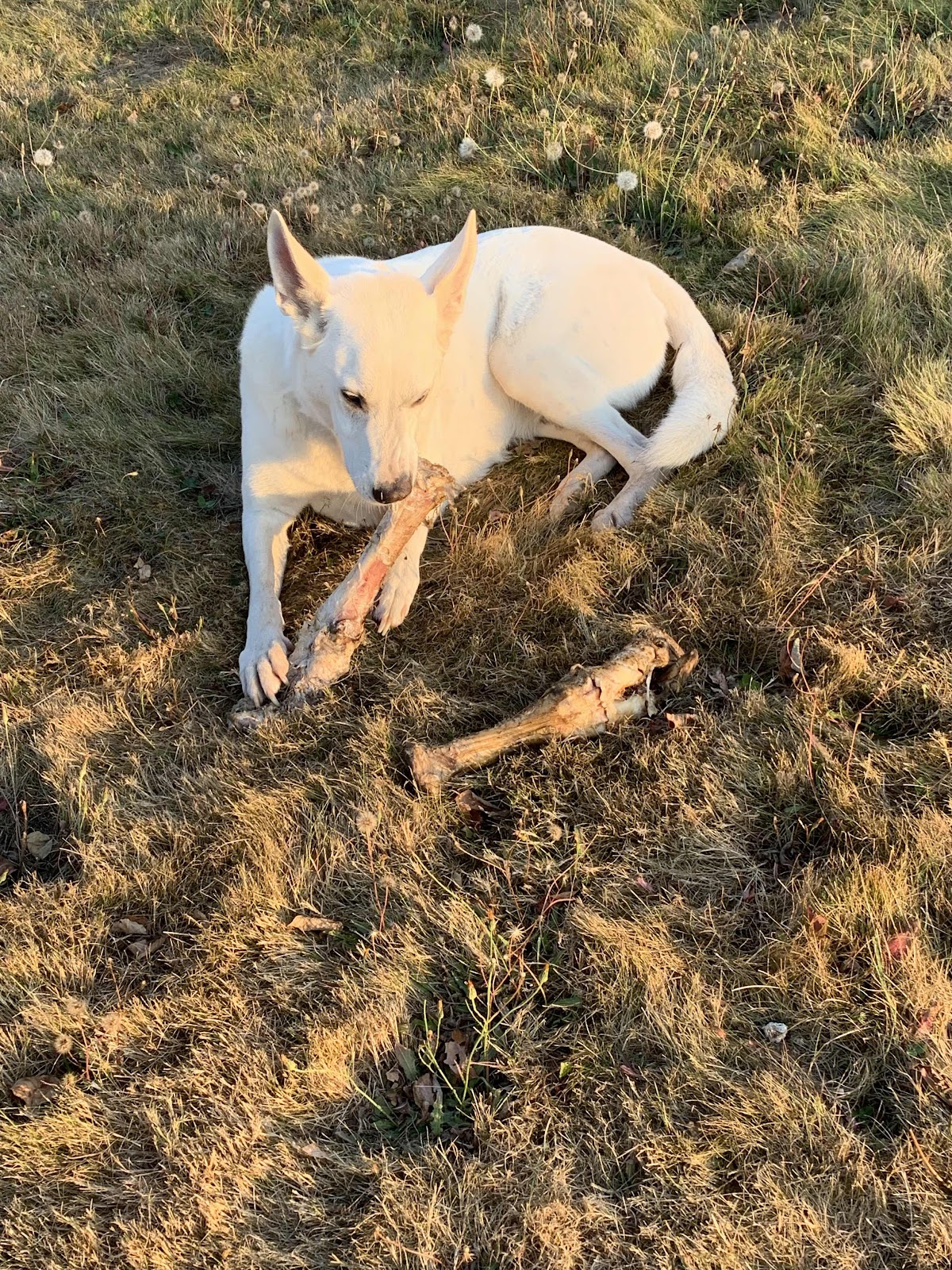
My husband’s insistence on keeping the gristly bits of the cow sure paid off for the dogs. They’ve been chewing on these shinbones for a full week now. 

Monday, May 30, 2022

Herb Harvest 2022


Mint is one of my favorite herbs, not only for its zingy flavor and medicinal qualities, but because it’s a hardy perennial that’s damn near impossible to kill, even for a notorious plant murderer like me. 

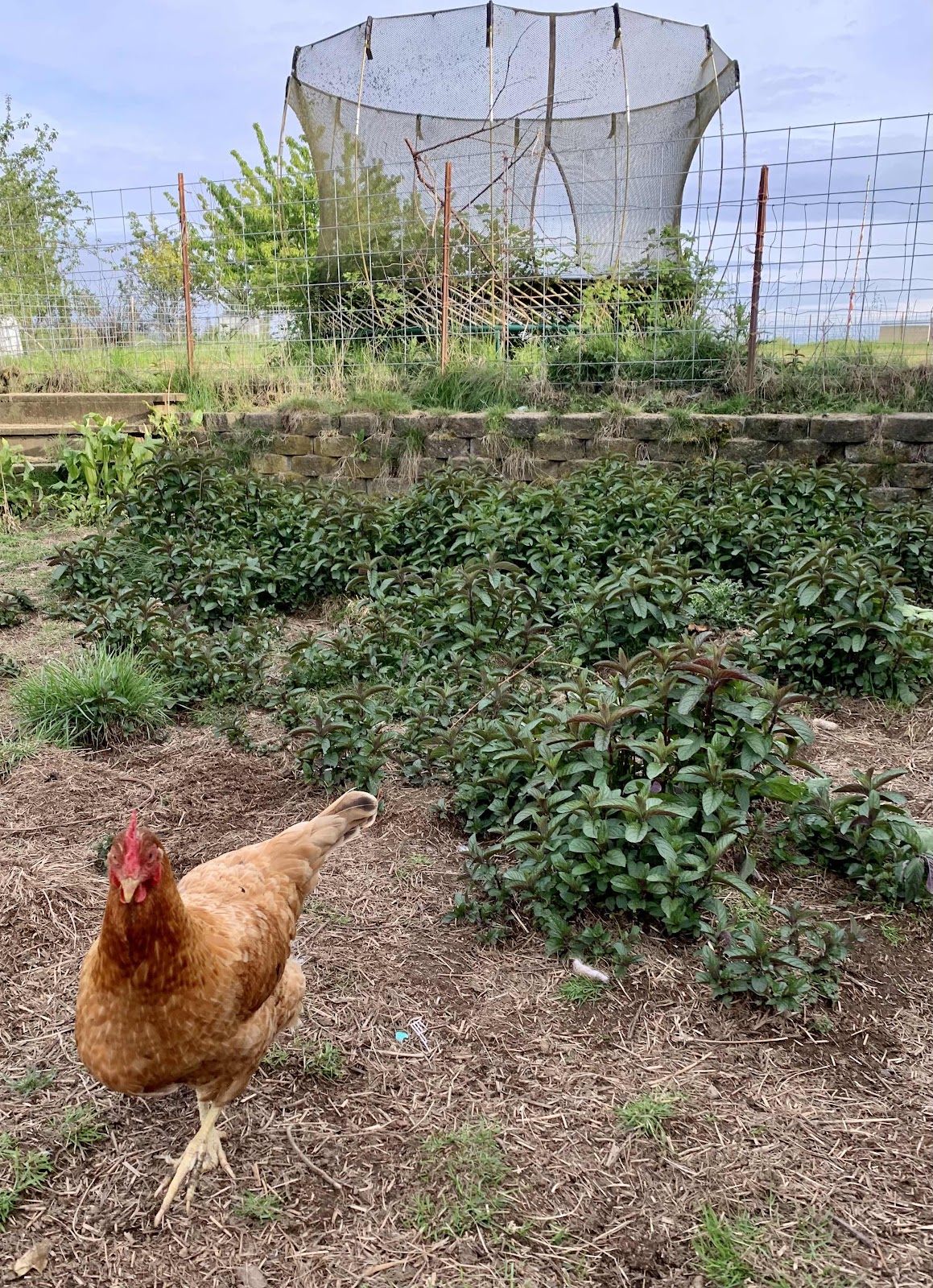
I have spearmint in the front yard and peppermint in the back yard. The spearmint is buried in amongst a hedge of tall weeds and I have to forage for it. This used to be the case for the backyard peppermint as well, but ever since we moved the chickens, the mint is the only green thing left. The rest of the yard has been scratched bare. 


Spearmint is a lovely herbal addition to lots of dishes and we eat a fair amount of it fresh. I add it by the handful to tabouli, for example, and to fresh fruit salads, especially melons. I added some to the melange of herbs I chopped finely and added to my chevre. It even goes well into a pot of Mexican chicken soup, if you can believe that.

Peppermint is a different proposition altogether. It’s much too strong for use as a vegetable or salad green. Mine is so strong that if you chew on a fresh leaf it actually burns your mouth. It’s pretty strictly for tea. A few years ago I made some peppermint vodka, but that’s out of my realm these days. 

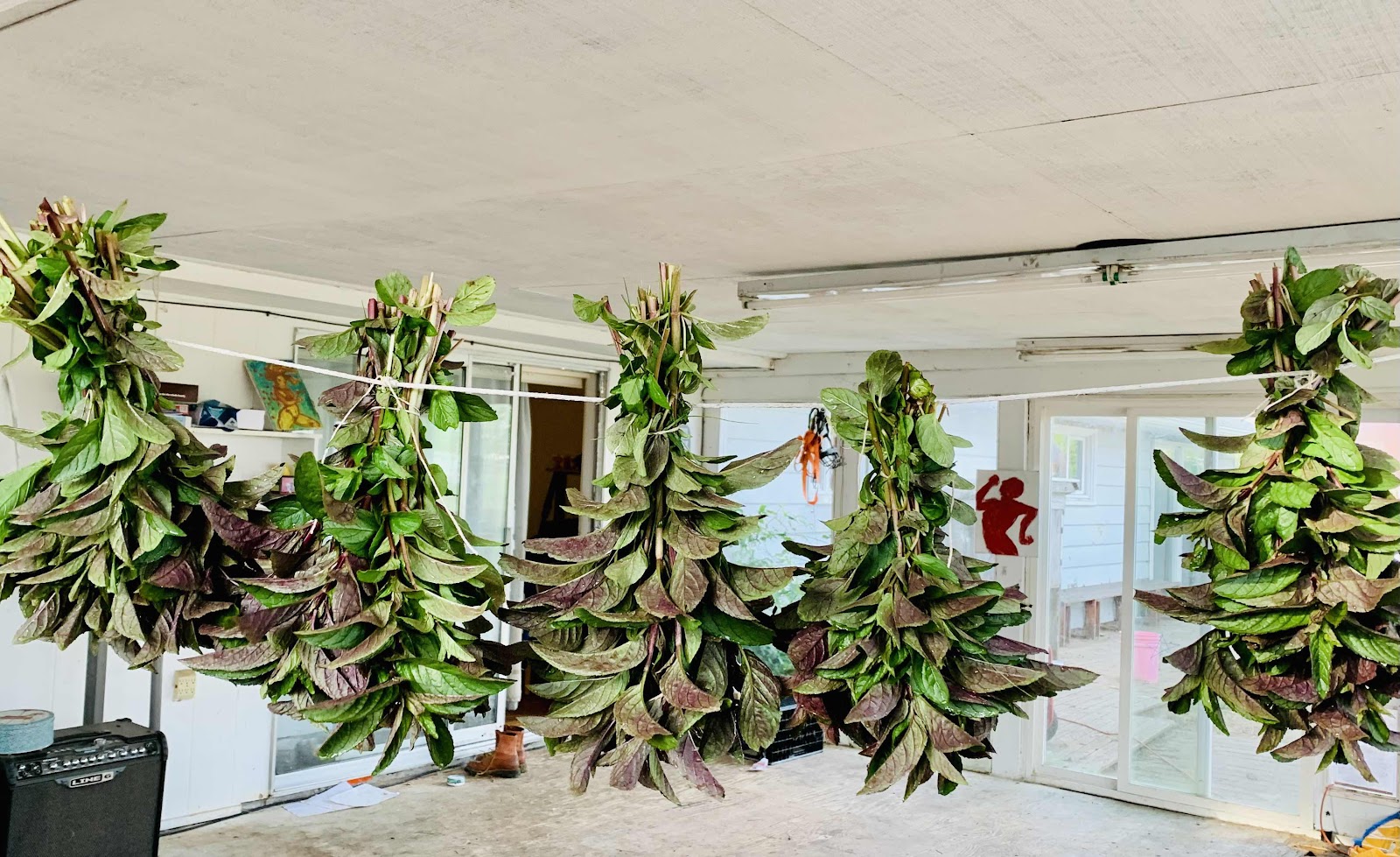
Last year I cut a couple bunches and hung them up to dry in the playroom. Then I forgot about them for an entire year. You don’t generally want to leave your herbs to dry for a whole year - most books will tell you dried herbs last a few months, maximum. However, today when I took the bunches down and rubbed the leaves off them, the scent of peppermint that wafted up was still vibrant. So I crushed them in my hands - they were crispy dry and crumbled nicely into bits - and put them into an airtight storage jar. Later on tonight I’ll make some tea and see how it tastes. 


Then I went and cut five more big bunches of peppermint and hung them up to dry. Since they are in the chicken yard, 
I gave them a good rinse first. This time I will try to remember to strip the leaves and jar them up before another year goes by. I should probably order some desiccant packs from the restaurant supply store, too. That will eliminate any chance of mold. And I’ll want them in a few months when it’s mushroom drying season. 


Now, I should probably get to work and harvest the lemon balm! Lemon balm makes delicious lemony tea and it’s very calming and good for nerves and insomnia. And I have an absolutely ridiculous amount of it. It’s in the mint family as well, and it gets out of control fairly quickly. 

Saturday, March 19, 2022

Food Finances (Project Pantry)


For a while now, I’ve been thinking about starting a new recurring feature on the blog about cooking and eating from “the pantry,” meaning in this case both my personal pantry and the Gleaner’s Pantry, which is a small food rescue organization from which I get a large percentage of our family’s food. We pick up produce, meat, dairy and bakery items going out the back door of supermarkets and sort the usable food from the unusable. On average, around three quarters of the food being tossed is perfectly fresh and good. The rest goes to animals. 

Years ago, when we first moved here, before I learned about the Gleaner’s Pantry, I was all about sourcing as much food as possible from our own land. We planted fruit trees, we put in a garden every year, we raised chickens and goats and pigs. I learned to can and put up quarts and quarts of applesauce, jam, salsa, and pickles every year. I dehydrated pears and plums for the kid’s school lunches. I made cheese and yogurt, and traded the excess to friends for vegetables from their gardens. I foraged for greens, mushrooms, and berries. 

A mixture of concern about climate change, food prices, and the zombiepocalypse combined with the inherent “wow” factor of being a real, live homesteader drove me to spend lots of time and energy producing and preserving as much of our own food as possible. Turns out, however, that with a few exceptions here and there, producing and preserving your own food is not cheaper than buying it already preserved for you. Mostly the opposite, in fact. You wouldn’t believe how expensive a dozen eggs are when you factor in the cost of building a coop and raising the chicks. 

Our global food system is based around efficiencies of scale, and it is very good at producing vast quantities of food extremely cheaply. Again, with a few exceptions, it is much cheaper to buy your food than it is to grow it yourself. Of course, much of that cheapness is predicated on government subsides and the exploitation of labor, not to mention the externalization of costs such as pollution of waterways from agricultural runoff. Money out of pocket is not my only concern, nor can it be the only concern of anyone who cares about the ethics of their consumption. 

Eating for the Gleaner’s Pantry allows me to address many concerns at once - cost of food, of course, but also the desire to minimize food waste and to avoid participating in the evils of Big Ag. None of us can avoid that entirely, of course - Big Ag is just one of the gigantic systems in which we are all enmeshed and which we literally depend on for our survival. I am under no illusion that my feeding my family from Big Ag’s waste-stream makes any appreciable (or even detectable) difference to any of the aforementioned problems. But it makes me feel good, it provides an example to my kids, and it saves us a lot of money. My daughters have taken many lessons - music, gymnastics, sports - that we were able to pay for because we were saving hundreds of  dollars a month in food costs. 

You might have noticed food costs have risen quite a bit lately. This phenomenon comes at a time that we are a bit tight on cash. Our family budget has taken a hit recently, and it made me think that I could probably make even more use of the Gleaner’s Pantry and save even more money. I’ve never tried to actually keep track of exactly how much we eat from the Gleaner’s versus how much from the grocery store. It seems like it might be a fun project for the blog. So I think I’ll try to make a weekly post breaking down at least one day’s cooking in terms of where the ingredients came from. Three categories - Gleaner’s, grocery store, or personal pantry, which includes farm-produced and foraged or bartered from neighbors. 

I’ll start with just one project: the lemon curd Swiss rolls I made today. They are super pretty! 

From Gleaner’s:                              From grocery store:

Flour                                                Sugar
Lemons                                            Butter

From Personal Pantry:

Raspberries
Eggs 

This is a win - four non-store items versus only two store items. Maybe I’ll keep a running tally! 


Thursday, October 28, 2021

Monster Squash 2021 (Count on Cucurbits)

My mother used to say there were only two things for certain in this world - death and taxes. But I know there is another - that every year volunteer squash will grow out of the compost pile. 

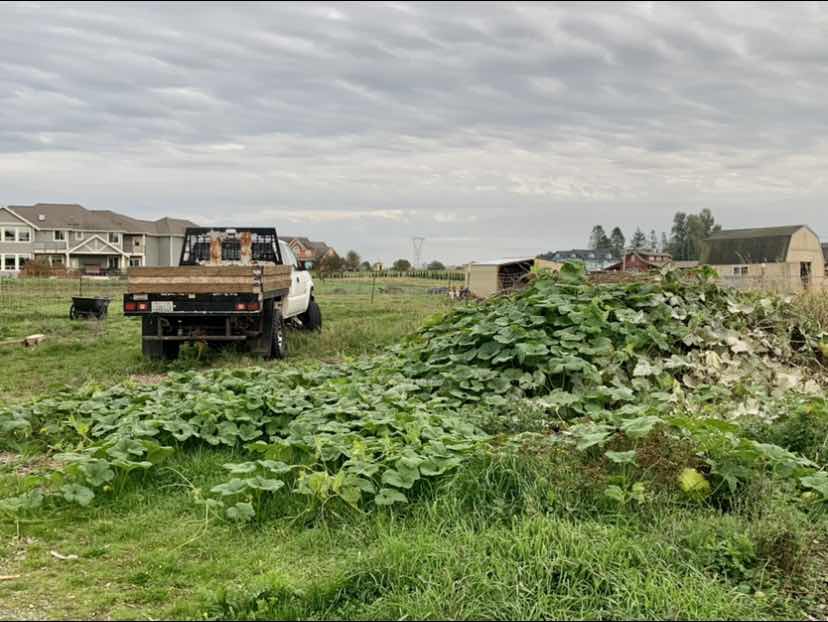
It’s so funny, I don’t usually have much luck trying to grow winter squash on purpose. The plants get powdery mildew, or they are poorly pollinated, or they get blossom end rot. But lo and behold the vigorous vines that sprouted this year from our discarded supermarket squash seeds:


There are actually three separate volunteer plants in that picture, and together they cover a good 500 square feet. All of them bore copious fruit, but unfortunately since supermarket squash are mostly hybrids, none of the three distinct varieties of fruit they bore was good to eat. 

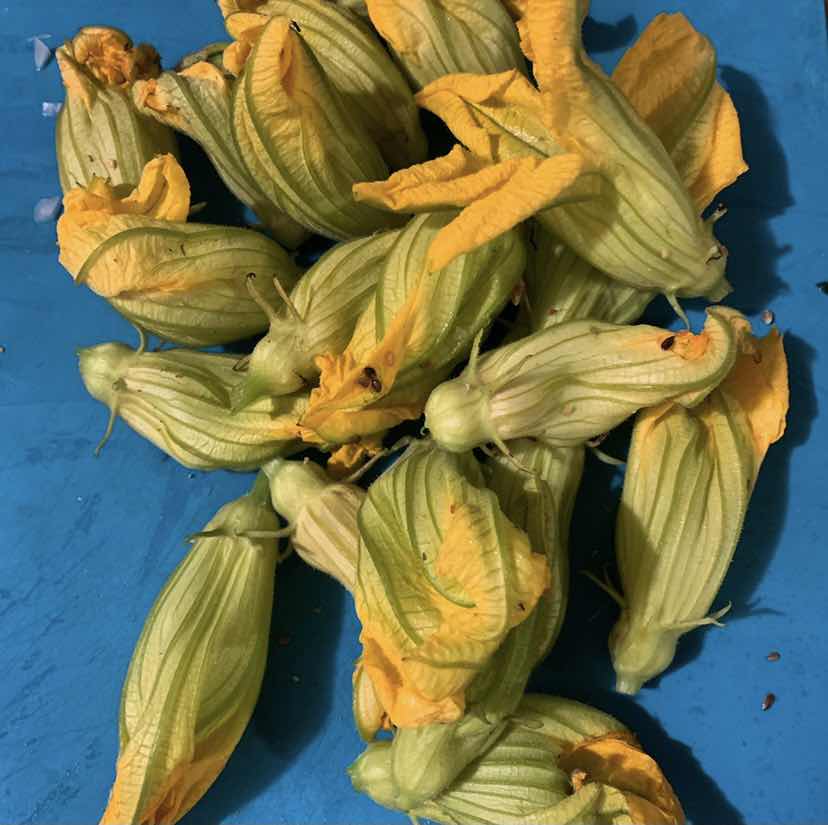
As varied as squash fruits are - that is to say, infinitely - squash blossoms are uniform. All squash plants, be they winter or summer or of unknown provenance, produce lovely yellow trumpet shaped flowers that are delicious. 

We like to tuck the fresh raw flowers into quesadillas, but they can be prepared in any number of different ways - one Italian preparation is stuffed with goat cheese, battered and fried. They can be added to soups or just sautéed in butter. 

Since we didn’t care about the inedible fruit of these particular plants, we picked both the male and female flowers, but if you are growing squash to eat just pick the male flowers. They are easy to tell apart because the male flowers grow in tall stems and the female flowers stay stuck close to the vine. Remove the pistils; they can be bitter. And always check for bugs! Our vines were still producing flowers last week, in chilly late October. 


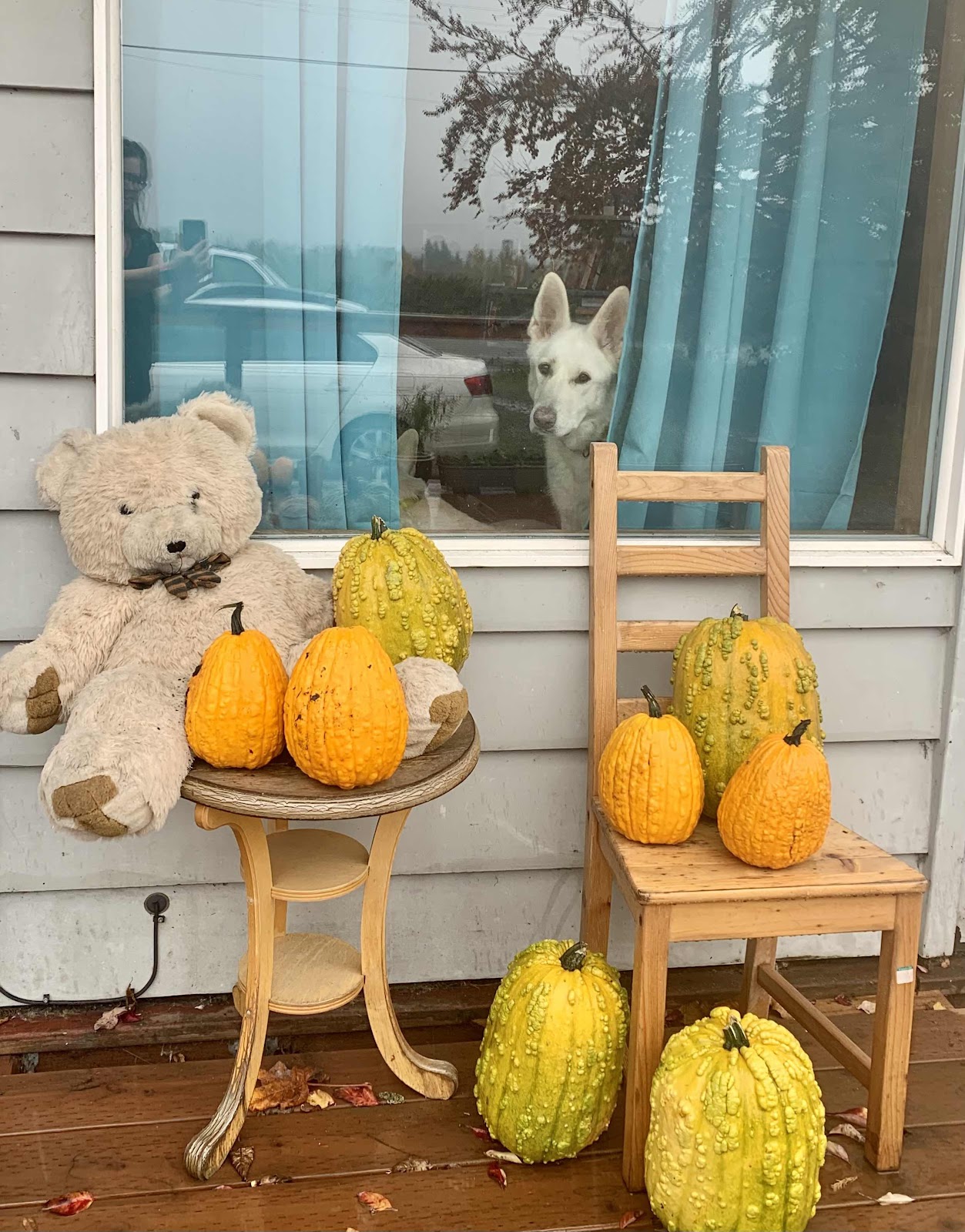
Although inedible, this year’s gourds do make a fine halloween porch display. There are many more that are not pictured here. One gargantuan vine produced more than a dozen of the huge warty gourds - probably well over 100 pounds of squash. 

I am not certain if the seeds of all these squashes are edible or not. I believe they are - I never heard of a poison pumpkin seed - but I should probably look it up to be safe before I decide to roast all the seeds after Halloween. 

Mercy is in the window. 


Thursday, October 7, 2021

Farmer’s Swap Meet (Fall Harvest)


A neighbor of ours, a friend who started out as one of Homero’s clients, started a farm a few years ago. She raises medicinal plants of all sorts and makes them into tinctures, salves, ointments, and decoctions. She started just two or three years ago with a weedy patch of ground and now has a lovely three acre medicinal plant garden. 


Last month, she decided to throw a swap meet for all her local friends - mostly farmers but also bakers, artists, musicians, and people with skills of various sorts. I was super excited to be invited - a decade ago I did the same thing, hoping to make it an annual event, but alas there was only one September Swap Meet and Jamboree on our farm. 


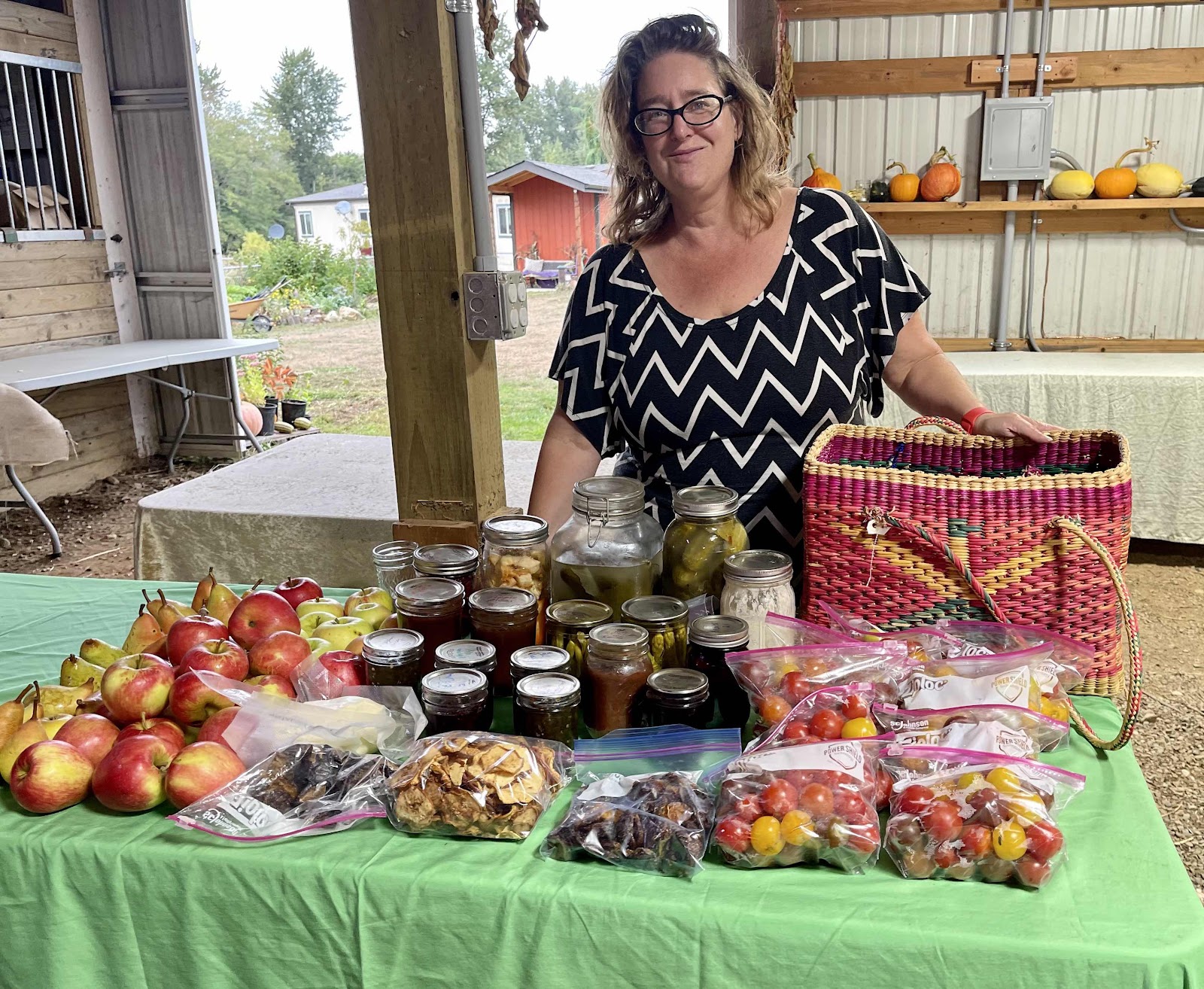
Deciding what to bring was half the fun. I didn’t know what might be available to trade for, so I didn’t worry about that and just brought a little of everything, hoping to hold my own and put on a pretty spread on front of my farming peers. 

We had lots of fruit from our trees - Italian plums, pears, and apples - both fresh and dehydrated. And just the day before Gleaner’s pantry hosted a farm glean for organic cherry tomatoes, so I had a ridiculous number of gorgeous cherry tomatoes in various colors. I also brought a selection of ferments - some caraway kraut, some kohlrabi kimchi, and some sourdough starter. 

I rounded out my section with a bunch of canned goods from the pantry. Admittedly, some of it was weird stuff from years last that didn’t get eaten, like my “spicy mixed stone fruit chutney” and some apple-plum butter. But I also brought a whole bunch of freshly made blackberry jam and pickled asparagus and dilly beans. Oh, and a two pound wheel of cheese. 

There was also a potluck, which was delicious. I brought lentil soup with bacon from our pig, and a big sourdough bread made with the same starter I had brought to swap with. 

We came home with a lot of stuff. Two or three different salves and some lip balms; tomatillos; raspberries; eggs; a carved wooden kitchen spoon, a fancy bottle shaped like a skull (which I think started out filled with tequila); a load of firewood; and a dehydrator. 

It was a great day. I got to meet lots of my neighbors and fellow farmers. Most of them were considerably younger than me, but it’s nice to be slowly morphing into a kind of elder in the community. I got to show off a little bit - my table was definitely one of the more diverse and well-frequented. And Homero and I got to wander through the beautiful garden eating raspberries and holding hands. 


Saturday, May 18, 2019

The Fermentation Files, Spring 2019


Spring finally sprang, and we’ve had a few weeks of beautiful weather. The grass grew all at once, the trees blossomed, and the rhubarb plant went wild. 

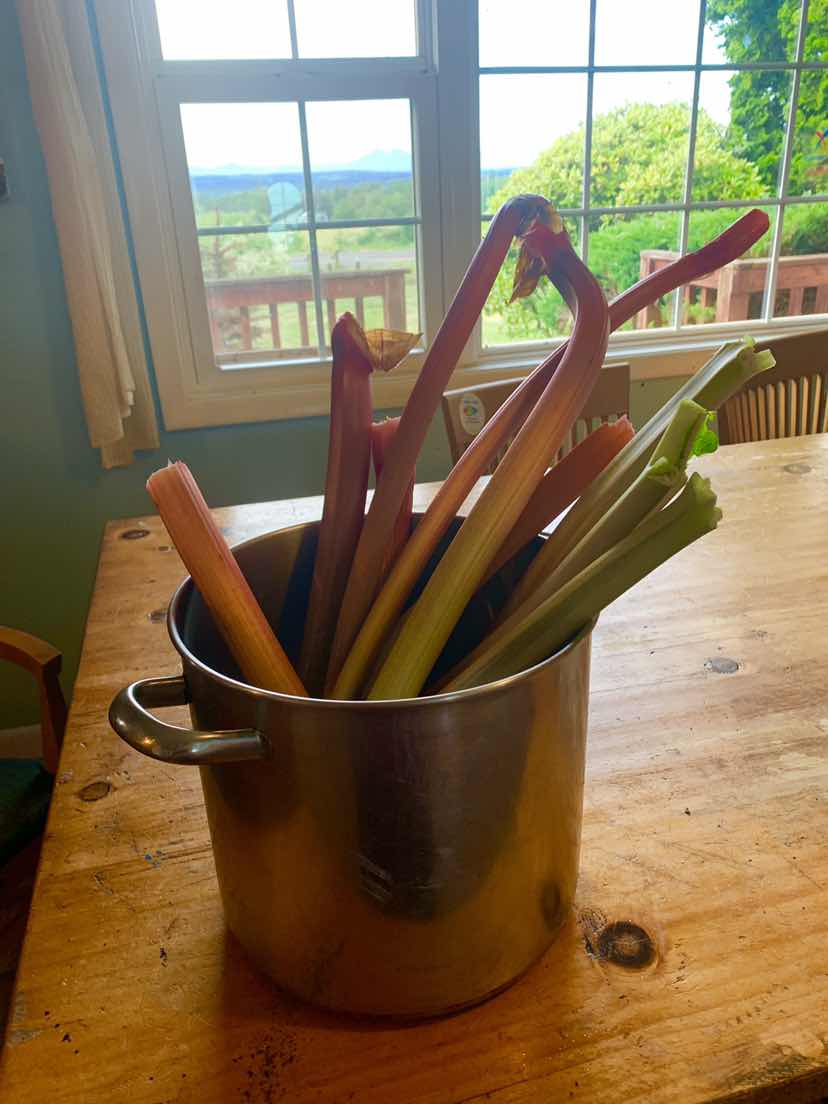
I love rhubarb, it’s exactly the kind of low maintenance perennial I want to fill my property with. But it is seriously prolific. By mother’s day I had already exhausted my family’s patience with rhubarb crisp, rhubarb pie, and rhubarb quickbread. So today I decided to start another batch of rhubarb wine. 

Last year’s rhubarb wine came out pretty good - dry, light pink, and quite quaffable. It’s nice to be able to start a wine in springtime, because most homemade fruit wines are only possible in the fall - blackberry, plum, hard apple cider. Rhubarb can be started now, in May, and be ready for drinking in September when the other wines are just getting started. 


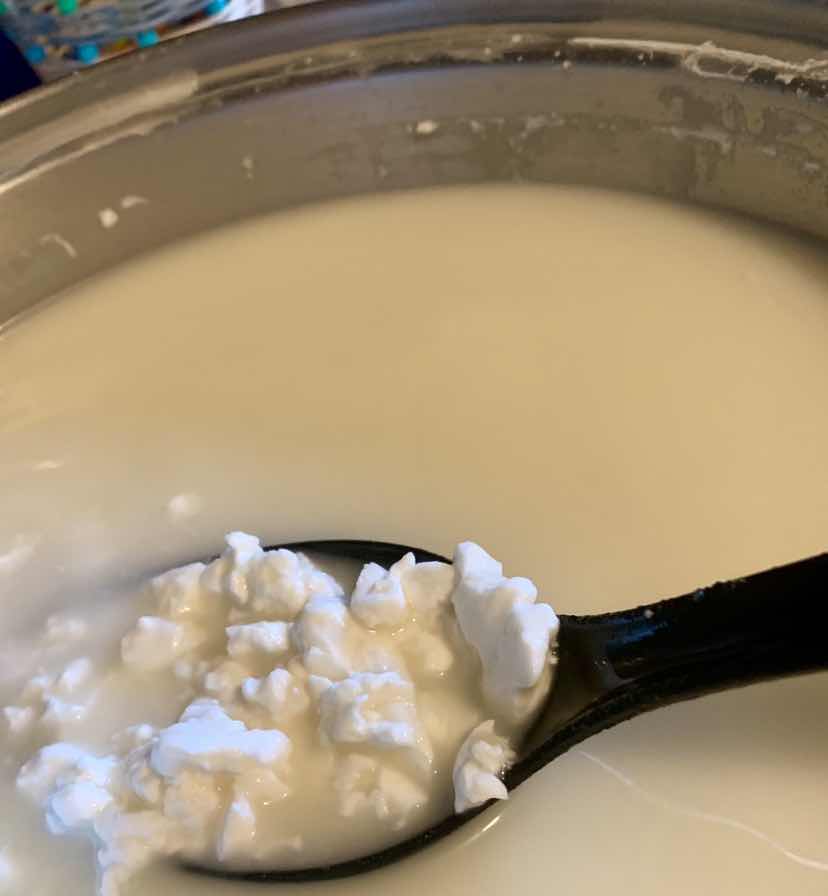
It’s cheese season. The mama goats still have nursing babies on them, and will for the next few weeks. So I’m only getting about three quarters of a gallon daily, but that’s still plenty for making some cheese. 

This year I decided to switch up the cultures I usually buy.  In years past,  I have bought an all-purpose mesophilic starter that says it is suitable for chèvre, queso fresco, feta, and cheddar. And it is suitable for all those purposes.   But this year I decided to spend a little bit more for a fancier culture from France, and I’m so glad I did. My chèvre is leaps and bounds better than last year. It’s smooth, tangy, and delicious. It was a big hit at mother’s day brunch. 

Tonight I’m making cheddar with the same culture. I’ve made two batches of hard cheese before now, and they have been drying in the shelf during this nice dry weather. Today I broke out the vacuum sealer and sealed them up for long term storage in the fridge. That’s the best system I’ve yet found for keeping hard cheese at home without molding. It’s not ideal - the cheese doesn’t “breathe” if it’s vacuum sealed - but it does keep the cheese from molding for a good six months, which means we can enjoy cheese in December. 


Sunday, April 22, 2018

Farm Finances, Goat Edition 2018

For my records: all four baby bucklings have been sold, surprisingly. Usually, bucklings are hard to sell. The four were sold for an aggregate of $375. Also, Bunny and Ombré, last year’s doelings that didn’t catch pregnant this year, have been sold for $75 each. That’s awfully cheap for does, but these are an unuseful cross breed between Nubian and Nigierian. They are short and will not be good milkers. Basically good for only meat or weed-control. The gentleman who bought them said he wanted them to eat blackberries, but I suspect they will probably end up as food. That’s okay, as long as they are well treated in the meantime. 

Still for sale are this year’s three doelings. I’m asking $150, willing to bargain. I have no idea what to do with them if nobody wants them. I’m trying to get rid of many goats as possible because we will be in Oaxaca most of the summer and I don’t want to overburden the pasture. 

In any case: proceeds so far this year from animal sale:

Sale of live goats: $525
Sale of processed pork: $400

Total: $925

Not too shabby. 

Friday, September 16, 2016

Preserving a Peck of Peppers


The harvest season is winding to a close. Of course it's only September, and a good deal of produce is yet to come
- winter squash, more apples, more
pears, mushrooms. The harvest won't be over for quite some time. What I mean is that MY preserving season is winding down. 

I had a wonderful season this year; better, I think, than any in recent memory. I've been canning salsa in small batches all year - from Gleaner's produce - so I won't even count that. Real summer preserving this year involved making a ton of fermented pickles (the fridge is still full of jars); drying what felt like
hundreds of plums and pears; canning bread and butter pickles, dilly beans, pear sauce and applesauce; and even making wine and cider! 

Yesterday I did what I think will probably be my last canning of the year (not counting gleaner's salsa). I had a couple pounds of beautiful small green hot peppers. I'm not sure of the variety because I bought them from a farm stand, but they looked like green cayennes. Since I still have plenty of home canned jalapeños in vinegar, I decided to use these ones for pepper jelly. 

Not everybody likes pepper jelly - my husband for one thinks it is a bizarre substance, but I love it. Alas, I am just 
not very good at making jelly. There are still six - count em six - pints of straw berry syrup in the cabinet that was supposed to be strawberry jam. I don't know what I'm doing wrong, but my jelly often, well, fails to gel. 

This time it was sort of a half-success. It did gel, not very firmly but firm enough. It isn't syrup. And it tastes good. But I don't care for how it turned out aesthetically. It's kind of an ugly algae green color and most of the pepper bits sank to the bottom before it really gelled. It is still delicious on a cracker with chèvre, and I know we are capable of going through it, but I had hoped to send off little jars of pepper jelly as Christmas presents this year, and I don't think these are pretty enough. 

Oh well - another harvest that is still going on is the Salmon harvest. I haven't smoked any salmon yet this year. Last year I sent everybody smoked salmon for Christmas, and I didn't hear any complaints. 

Monday, April 13, 2015

Canning in April (Gleaner's Pantry)


My kitchen table was a housewarming gift from my mom. It is absolutely beautiful - twelve feet of knotty pine, seats eight comfortably or ten in a pinch. Here it is covered with produce from the Gleaner's Pantry today. Aside from the boxes and bags you see here, there are also three or four boxes full of animal food in the van - trimmings and waste, wilted lettuce and yellow greens and apples with bad spots and rock-hard bagels.

Everything in the photo above is human-quality food. It just needs a little love. The grapes, for example, might have a couple of shriveled specimens hanging on that need to be plucked off and thrown away. A bell pepper might have a crack in it, or an onion could be sprouting a bit. In a five pound bag of mandarin oranges, a lone moldy orb renders the whole bag unfit for sale. For the most part, I can't even tell why the food was deemed unacceptable for the grocery store - it all looks good to me.

Today I brought home a lot of food. The flat of tomatoes on the left is, as we speak, being turned into salsa ranchera and I will can it as soon as I finish this post. Canning tomatoes in April: imagine. Several loaves of fancy crusty organic sourdough bread are slowly becoming croutons in the oven right now, bathed in olive oil, herbs, and garlic. A massive bag of chopped organic kale is in the oven, too, and will soon become crunchy kale chips, a favorite after school snack.

Three heads of Napa cabbage will be kim chee. I'm going to chop it and macerate with salt, garlic, ginger, and red pepper flakes. Nobody likes kim chee but me; but I like it a lot. Fermented food is good for the gut.

Dinner tonight is cream of celery-root soup. There were two gigantic celery roots on offer and I have leftover chicken from last night with which to make stock. Celery root makes the most wonderful silky smooth soup, you hardly even need cream. I will be enriching mine with chèvre, of which I also have an abundance this time of year.

After everyone had taken as much food as they wanted and could carry, there was still so much food leftover! A few people who raise pigs took crates of produce and leftover baked goods. But even after that, there is still good, edible food going to the landfill, simply for lack of people to take it home and eat it. It's amazing what goes to waste because of the difficulties of logistics and our "just-in-time" food system.

Saturday, January 31, 2015

The Worst Job on the Farm (Disbudding)


Meet the littlest baby goat. Flopsy gave birth just a week or so after Polly, who lost both babies
( Sad Day (Breeding Gone Awry)) because we didn't know she had got pregnant so early and also because she can apparently hide twins in her belly and still look like a caprine supermodel. After that sad day, of course I kept a sharp eye on the other goats, and so we had plenty of time to lock up Flopsy in the warm, dry mama barn when she began to show signs of impending labor.

Surprisingly, she only gave birth to one baby, this fine spotted buckling you see above. Flopsy has thrown triplets more often than anything else, although her first baby was a single buckling as well, the inimitable Storm Cloud. It seems that whenever a goat throws a single, it is always a big buckling.  Iris once  had a single buckling, Clove, who was so big and vigorous he was trying to stand up before he was all the way out.

It may be that this little guy is our only baby goat this year. If Iris is pregnant it will be quite a while yet - she is thin and shows no udder development at all. At nine years old, her fertility may be declining, which is fine by me. Iris has given us many beautiful babies over the years and produced an awful lot of milk. She has earned her retirement. I don't mind if we don't get more babies - the market for goats has been poor for years now, and we often end up eating them instead of selling them. There's nothing wrong with that, of course, but it wouldn't bother me to take a year off from butchering.

I'm going to try to sell this little fellow as an intact buck. He has a fair chance, I think, because of his lovely spots. If I knew for certain he were destined to be a meat animal, I wouldn't bother with disbudding him, but there is absolutely zero chance anyone will buy a buck with horns. Nor should they; a full grown horned buck would a dangerous animal during rut season. So, today we disbudded him.


Disbudding baby goats is a terrifying procedure carried out with a red-hot iron (or actually, copper, as seen on the model above). I used to pay the veterinarian to do it under anesthesia, but that became prohibitively expensive as the price I could get for baby goats declined. Also, the vet killed one of my babies by accident ( This One Really Hurts (Bad Year for Baby Goats)) and I figured if anybody is going to kill one of my babies, it might as well be me.

Homero built me a kid-containment box out of an old bookshelf and I bought a disbudding iron off the internet. Last year I borrowed a friend's iron just to see if I could handle the procedure, and it turns out I can. It's horrible, but I can do it. Last year I disbudded three babies and they all turned out fine - no brain damage - and as far as I know they never grew any scurs, either. This year's baby buckling is now disbudded and back with his mama, seemingly none the worse for the experience. I'll watch him carefully and check him early in the morning for any signs of brain injury, but I think I have successfully added disbudding to my list of farm tasks that I can competently do, unpleasant as it is.


Tuesday, July 22, 2014

Fruitocolypse (Or Pear-mageddon)


This spring, I was all aflutter over the lack of bees during flowering time (What's Wrong With These Pictures?) but the bees must have been there, because the orchard is going crazy. Above is one of my four pear trees, each of which is absolutely loaded with fruit. If I remember right (which I most likely don't) we have a Comice, a Red Bosc, an Anjou, and a Bartlett.

Three of the trees, including this one, are young trees we planted ourselves, but the fourth - the Bartlett - is a hoary old beast some sixty years old. It has on years and off years, and this is definitely an on year. It looks to have some five hundred pears on it. Some of those will drop off immature, of course, and others will be lost to scab or other infirmities, but that leaves plenty of pears for us. And the neighbors. There will be enough pears to feed the Russian Army, as my mother used to say.

Pears make good pie, and pears can be canned as sauce, especially mixed with apples, blueberries, and blackberries. Pears can be dehydrated (though I hate dehydrating stuff) and late ripening pears can be stored wrapped in paper in a cool shed.  Pears can also be fed to livestock (carefully; in moderation) and pears can be given away to friends and neighbors.

Alas, pears cannot be pressed for juice, at least not with the equipment I have. Pears turn to mush and gum up the works. I can throw a few pears in with a batch of apples, but I can't just press pears by themselves.

What else can you do with pears? Have pear fights? Ideas, anybody?

Sunday, March 9, 2014

New Frontier in Goat Care (Disbudding)


Polly's buckling, the survivor of the twins, is growing incredibly fast because he is getting all of Polly's milk. I didn't think one baby goat would even be capable of draining Polly, who is a prodigious producer, but this little guy is doing a pretty good job. Although only ten days old, it was already time to disbud him. 

Disbudding goats means burning the little horn buds off with a red-hot iron, an electric machine that looks like a giant version of the cigarette lighter in your car. Usually, this is done at about two weeks of age. It's a delicate procedure - albeit that's a strange word to use in conjunction with the phrase "red hot iron." It's quite easy to make mistakes. One can either be too gentle and hesitant, in which case the buds aren't completely destroyed and the goat ends up with weird, misshapen "scurs" instead of horns; or one can be too aggressive and damage the baby's brain. 

Even the veterinarian can make mistakes - a few years ago I lost a baby that I brought to be disbudded at the vet ( This One Really Hurts (Bad Year for Baby Goats)). The risk of killing a goat, along with the inherent barbarity of the procedure and the cost of buying a disbudding iron, combined to prevent me from attempting to do my own disbudding. Until now. 


Blizzard in a disbudding box

So far this year, I have three bucklings and no does (Flopsy kidded yesterday with adorable twin bucklings - photos to follow). Bucklings, especially unregistered bucklings, are not very valuable, being worth only about half as much as doelings. I listed my bucklings for $75 on craigslist. Disbudding costs $50 at the vet. You can see that it just isn't financially viable to take bucklings to the vet for disbudding. Doelings, maybe; I can usually get $150 for a pretty, spotted doe. 

In past years, I have taken my babies to a farmer to be disbudded, and so I have seen what it looks like without anesthesia. It's about like you'd imagine. But I decided I have to get over myself and give it a try. I was a nurse once - blood and guts and screaming in pain isn't supposed to bother me. 

In case you are wondering why we don't just leave the buds on and let them grow horns, there are a few reasons. With does that I plan on keeping, I do let them grow horns. Polly has horns and it isn't a problem. In fact they make convenient handles. Bucks are different, however. A horned buck can be a dangerous animal, especially during rut. My goats come from a line of large, heavy animals and a full grown buck probably weighs about 200 pounds. I don't want a horned buck on the property. He could hurt not just me or the kids, but the does. I have heard about pregnant does miscarrying because they were butted by bucks. Also, it's difficult to to sell a horned animal. And occasionally, a horned goat will stick his or her head through a fence and get stuck. That's not a fun situation to deal with. 

 For all of these reasons, I decided that this was the year I was going to disbud my own baby goats. I asked around among my friends, and a neighbor of mine, K., was willing to lend us their iron and their baby box. Homero and I showed up with Blizzard and a fresh hot loaf of zucchini bread. K. and her husband had the iron heated up already, and it was just a few minutes work to pop the baby in the box and clip the fur on his head.

Before burning the buds, you are supposed to use hoof trimmers (or something like that) to cut off the tips of the horn buds. For some reason, that part made me feel much more queasy than the cauterizing did. I made Homero do that part, but then I did the burning. I sat down on the box behind the baby goat, and while Homero grabbed his head, I applied the iron firmly to the bud, twisting back and forth and counting to six. Most people say ten, but I wasn't taking any chances on burning his brains. I could always re-apply.

However it wasn't necessary. You can tell when you are done by the "copper ring" around the horn bud - that's a shiny, copper colored ring which I believe is actually burnt bone. It shows up pretty well in the photo below. Then you use the side of the iron to burn the middles a little bit more - just a second or two - and then the little fried cap of skin comes off, and you're done. On that side, anyway.

the copper ring

A robust baby goat ought to stay conscious and actively struggling throughout the procedure. You don't want to render them unconscious; that's probably going to cause brain damage. After you are done, promptly return the baby goat to its mother - they should run right up and nurse for comfort. The thing to remember is that even if the baby looks like he or she has come through with no ill effects, keep a close eye on them for 48 hours. If there is going to be trouble, it will be the result of inflammation and swelling of the brain. Inflammation peaks about 48 hours after injury and then begins to decline. If you have Banamine, an injectable anti-inflammatory, that's a good idea. Ask your vet for dosage information.

I'll be watching young Blizzard for any signs of trouble, but I expect he will be just fine. And I feel fine, too. It wasn't anywhere near as hard as I'd thought it was going to be. I actually had serious doubts about whether or not I would be able to do it, when push came to shove. But I guess once a nurse, always a nurse - the screaming  didn't bother me much at all.


Saturday, December 7, 2013

Baby It's Cold Outside (and Inside)!

We are in the middle of one of the most prolonged cold snaps I can remember. This is the third or fourth day that the mercury hasn't risen above freezing, and it is not predicted to do so for nearly another week. In fact, daytime highs have been well below freezing - today I think it was 27. Nighttime lows are in the mid teens, and last night's windstorm brought the windchill down into negative numbers.

Years ago, when I thought the farm needed a name (why?) I chose "Windy Hill Homestead," which is very apt. There is always a stiff breeze up here, and when there is a storm, we get the brunt of it coming over the ridge from the water. Yesterday afternoon, as I went out to feed the animals in the fading sunlight at 4:00 pm, it was so icy that my hands were hurting within seconds, and whenever I turned my head crosswise to the wind, it felt as though tiny little icepicks were stabbing into my eardrums.

Trying to keep some water liquid for the animals is nearly impossible. When we put in the new water line last year (Bad News from Home), I decided to pay extra to extend it all the way out to the fence line, an extra fifty feet or so. That cost us an amount which I can't remember right now but which was far from insignificant. My husband was not keen on spending the extra money, but I was thinking of days like yesterday, days when I would be carrying the water to the animals in two five gallon buckets through an icy tornado, when the wind would blow the water right out of the buckets and into the tops of my rubber boots. Yesterday, I congratulated myself grimly on my foresight as I filled and refilled the bucket and simply lifted it over the fence. The wind blew it right out of the bucket and into my face, yes, but still I think it was an improvement.

No matter how much water I pour, however, it is kind of a moot point, because ten minutes later it is frozen again. The dairy cow in particular is always thirsty. I worry a lot about that poor little thing; she is terribly skinny, or at least she seems so to me. I've never had a cow before and I'm not really familiar with their anatomy. I know they are bonier than horses or goats, but this one's hipbones and ribs are sharp. I don't know why - she has alfalfa to eat all day long and gets supplemental grain twice a day, plus things like old carrots, beets, and apple cores. I gave her a double ration of grain and piled up more straw in her shelter. This morning she was up and bawling for her morning grain, so I guess she's going to be fine. I just feel terrible for her, all alone. The goats and ponies all crowd into the main barn together and they are toasty warm. I know because the water I carry inside the barn doesn't freeze. It gets knocked over and pooped in, but it doesn't freeze.

It's plenty cold inside the house, too. We have done a fair amount of weatherizing over the years, but the fact is, this drafty old farmhouse is never going to be very warm in winter. Homero's skills at installing weatherstripping leave something to be desired, so we hang a quilt over the door at night and lay a rolled up towel against the crack on the floor. A few years ago we insulated the crawl space, but most of the insulation was ruined in the flood (see above link) and we haven't had the time/money/inclination to re-insulate yet. Then there is the fact that this house faces a spectacular view to the north and takes advantage of it with lots of big, north facing windows. Only some of them are double paned.


the view to the north


Somebody somewhere told me about a cheap way to insulate windows, with bubble wrap. Having googled it, it seems to be legit. Today I went by a mailing shop and asked if I could buy a big roll of bubble wrap. They said no, but told me where I could do so, on monday when it opened. So, that's the plan for next week: cover my big, beautiful view with bubbles. Then see if I can come up with a threat dire enough to keep the kids from popping all the bubbles. 

Bubble wrap is only a band-aid - over the long haul we need to make some serious changes in how we heat the house. I bought a thousand dollars worth of propane this week and I don't expect it will last the winter. That's on top of the $500 I spent on propane back in September. Years ago, Homero bought a brand new oil burning furnace off Craigslist for a couple hundred bucks, with the idea that he was going to convert it to run on waste veggie oil. That would be cool, if it ever happens. The brand new oil burning furnace is right where he put it five years ago, when he unloaded it off of his truck. 

I would love to install a wood burning insert in our great big fireplace, which, incidentally, is another major source of lost heat. It's basically just a hole in the house, and we keep the flue closed and - you guessed it - hang a quilt over the hole in the winter. I looked into the cost of putting in a wood burning insert, and was staggered. Totally aside from the cost of the insert itself, we would have to have the whole chimney clad in sheet metal and get a bunch of masonry work done. Suffice it to say, it's several winters worth of propane at currant prices. 

In the meantime, I buy up all the wool sweaters I can find at Goodwill and constantly keep a teapot on the simmer for hot tea and cocoa. This week, the furnace has been running full blast night and day but the temperature inside won't go above 63. We are all dried out like beef jerky, sipping our tea and huddled on the couch under blankets in our sweaters watching movies.

Ah well, there's an upside... no mud. 


Friday, August 23, 2013

Anonymous Squash (Must be August)


When I got home from the grocery store this afternoon, I found this box of Zucchini on the porch. There must be twenty zucchini in there, and they aren't puny, either. Whoever it was didn't leave a note; I guess they don't want me stealing over to their house and leaving zucchini bread on the doorstep.

Thank you, Mr. or Ms. Anonymous Squash Donor! I am making several permutations of zucchini bread - chocolate, with and without walnuts; raisin; and savory with cheese. Into the freezer they will go, and then I need fear no bake sale all year long!

The only problem.... so far, I've made six loaves, and only used up two and half zucchini.

Wednesday, February 22, 2012

A Productive Day (Redneck Coldframes and Unnatural Apples)


When I woke up this morning, something was different. I wasn't sure what it was, but there was a semi-painful stabbing sensation in my eyes and I had a hard time keeping them open. The light was as bright as an operating room, seemingly, and a cacophony of noise assaulted my ears. It was rather like waking up with an epic hangover, but without having gotten drunk the night before.

Gingerly pulling aside the curtains, I saw a wall of golden light. Ah yes! I remember! the SUN! And that jangling noise? Why it must be BIRDS! After taking a few minutes to shake off the feeling of being a Morlock emerging painfully into the world of light, and letting my dark-adapted pupils adjust, I felt a wave of energy and joy. Fairly leaping out of bed, I decided that today was the day I had been waiting for.

Yes. First gardening day of spring! A caveat: I did, in fact, already plant a tree this year - a pussy willow. So today wasn't in fact the absolutely first time this year I have done anything garden related. But it was a very productive day. I seriously made up for lost time. Here are some photos of my activities today, activities which I will surely feel in my lumbar region later on tonight.

In the greenhouse, which is still unsealed and therefore not really a whole lot warmer than the outside air, I mixed up my special potting mix of two parts local topsoil (obtained from the construction site where Homero built his shop), one part homegrown compost (read: mixed animal shit and kitchen garbage left to gently rot for a year or so), and one part store bought pearlite. This sounds like an easy thing to do, but it actually involves lots of back aching work with a short handled shovel. Then I filled up a few large pots with the mix and planted snow peas. I also repotted a rosemary plant which has been languishing in the greenhouse all winter in a pot much to small for it. I don't know if it will live or not, but I've given it a chance at least. By the way, if you are wondering how I plant in milk crates, see: The Tippler's Garden

Walking around taking notes, I saw that apparently the Rhubarb corm my sister gave me last year (Rhubarb Ho! (Thanks, Sis!)) has survived the winter. Never having grown rhubarb before, I don't know how it behaves in the wintertime. I thought mine had died, because it lost all it's leaves and looked very yellow and forlorn. The ground where I planted it it is quite saturated (I don't hardly have any ground that isn't) and I thought my poor plant had drowned. But today I saw that the lovely crimson corm is swelling and putting out a few small shoots, so it looks like all will be well. I don't know if it will put out enough shoots for a pie this spring, but I hope so. I adore rhubarb pie.
Here we have a shot of my ghetto coldframe garden (Eat your heart out, Idiot Gardener!) . Out in the wide open spaces between the trees in my orchard, I have located the largest containers in my container garden: a couple of old clawfoot bathtubs. I don't know about where you are, but around here, old clawfoots are highly valued and not usually obtainable for under $75 or $100 each, no mater how crappy the condition. Several years ago, I managed to score these beauties for $25 apiece. Craigslist, of course. One of them had had its hole welded shut so it could be used as an animal waterer: that is the one you see in the foreground full of rainwater. I occasionally add a few shovelfuls of animal crap and call it "compost tea." This tub, together with a gallon sized milk jug, functions all year long as my water supply to the second bathtub and to the orchard, since the hose doesn't reach that far.

The other bathtub had a functioning drain, and so I created a layered system of river rocks on the bottom, sand in the middle, and soil on top so that the tub would have decent drainage.

This second tub has become, through the magic of scavenging, a tiny greenhouse. Or what I'm calling a ghetto coldframe. Every homestead worth it's salt has, somewhere on the premises, a small stack of glass in the form of old windows or patio doors. Ours is stored under the RV. After I worked the soil in the bathtub and planted it with spicy mesclun mix, all I had to do was ask my husband to drag out a sheet of glass. I washed the glass with water from the rainwater tub to make it less opaque (it was covered with chicken crap. Apparently the chickens like to hang out under the RV) and hoisted it carefully onto the planted bathtub.

Theoretically, the early spring sun, weak as it is, will provide enough heat, trapped as it is beneath the glass sheet, to let the mesclun mix germinate and give us salad a good two weeks before salad would otherwise be available. If we were dying of scurvy, these two weeks would be essential. Since we aren't, they are only bragging rights.

I wasn't done yet: I also planted two apple trees. I've gone over to the dark side: I bought grafted three-variety apple trees from Costco. A couple of years ago I did the right thing and bought fancy heirloom apple trees from a small locally owned company called Trees of Antiquity (New To Farm Life: Expanding Orchard). They were extremely helpful, but four out of the six trees I ordered died due to goats, mowers, or unknown factors. I figured that more well-grown trees might stand a better chance.

My children are being problematical and demanding (darn grade-schoolers, always needing hep with their homework!) so details will have to wait, but suffice it to say I planted two fruit trees today as well as a bed of mesclun and some snow peas. I feel industrious.

Thursday, October 20, 2011

Brewing Up a Storm (Drinking and Driving)


My first batch of hard cider came out great! I can't take all the credit - or even most of it - or, in fact, hardly any of it at all. I pressed the apples, but J. (my homebrewing friend who moved away and gave me all his equipment - see Cider, Revisited) found the recipe and walked me through the beginning of the process with little baby steps.

After pasteurizing the fresh juice, cooling to room temperature, and tranferring into a sterilized carboy, J. "pitched the yeast" which basically means, pour your yeast into the carboy, and added the airlock. A week later, after it stopped bubbling, we transferred the cider - now somewhat alcoholic - into a second clean carboy, leaving the dregs behind. This second carboy bubbles away with an airlock for another week or so, and then it's time to bottle.

Since I was trying to make carbonated cider, I had to add some more sugar to the cider before bottling it. The idea is that the sugar will fuel a second fermentation in the bottle, creating carbon dioxide which provides the fizz. Just like champagne. I managed the final bottling on my own.

Then I was suppoosed to let it mature for several weeks before imbibing, but I was impatient. Of course I had tasted the cider as I was bottling it, and it tasted pretty good. Not knowing how long it might take to develop some fizz, I waited about four or five days before opening up a couple bottles. There was some slight fizziness, but nowhere near as much as in a bottle of commercial brew. The taste, however, was very good - off dry and apple-y. I drank a bottle as though it were beer, and felt quite tipsy. Clearly, stronger than beer, though not as strong as wine. I'm guessing somewhere around 8%.

Over the next two weeks, all twelve bottles disappeared. I think I gave away six, and Homero and I shared the other six. So, no idea how it might have tasted after the recommended six weeks in the bottle. Better luck this batch - it's a five gallon batch instead of a two gallon batch, so there will be many more bottles. I hope it turns out as tasty this time. The fresh cider was not quite as good - nor as sweet - as the last batch of fresh cider. I'll just have to hope for the best.


Homero has been brewing, too. He's had virtually no work these last few weeks, and so has been turning his attention to those projects that tend to languish when he is busy. One of these is biodiesel. It had been a fair while since the last batch, but over these last two weeks he's made several batches, using up our stored oil and our chemicals. All three vehicles have full tanks, and there is still some thirty gallons leftover to refill them again. I think he made seventy-five gallons in all.

The oil is free to us - he has arrangements with a few local restaurants to pick up their used oil with his oil-sucker. The oil sucker is a very cool device he made. Basically it is a fifty-five gallon drum fitted with hoses and valves. He sticks it in the bed of the pickup and goes to one of his restaurants that has a full oil-dumpster. Then he can use the compression of the engine of his truck to create a vacuum inside the drum and suck up oil. I was very impressed. The oil is free, but the chemicals are expensive. Homero did the math a while ago and at that time, biodiesel costs us about $1.40 a gallon, when you figure in electricity. So, filling the three gas tanks cost somewhere in the vicinity of sixty dollars, or about one-third the cost of regular diesel.

Of course, it takes time, too. Homero hasn't quite got the fiddly precise process down, and so he spends many hours on each batch, and it can be quite frustrating. But even so, it's a highly worthwhile endeavor, economically speaking. Much more so, truth be told, than my cheesemaking or cider-brewing. But I get a lot of satisfaction out of my fiddly processes, too.

I am so proud of him. Of us, really. We are just a couple of homebrewers, each in our own specialty. Driving homebrew on his end, drinking homebrew on mine. Don't worry - we won't mix the two. Never the twain shall meet.


Friday, October 14, 2011

Filling Up the Freezer (Great Grapes!)

It was an insanely beautiful day today - much nicer than late October has any right to be. The sun was out in full glory, and I could feel the heat on my shoulders all day long as I completed various fall chores. This has not been a good year for leaves, and so even though the sky was a bright, washed blue, I did miss the sharp contrast of the yellow, gold, and red leaves against it.


That's an awfully petty complaint, though, isn't it?

I had a productive day. This morning, I went and cut a whole lot of grapes. A neighbor woman was advertising on Craigslist that she had a nearly unlimited amount of concorde grapes, and would sell them for $5 the five gallon bucket. That was the first thing I did this morning - cut grapes. It's a fine task - searching through the thick leaves, just beginning to wither and yellow, for the dark blue bunches. Her elderly pit-bull bitch followed me around the vineyard, occasionally pushing her wet nose into the back on my knee. It took me some twenty minutes to fill the bucket.

When I got home, I washed and sorted the grapes. I soon learned that only the very ripest and blackest of the grapes were sweet enough to eat out of hand. The majority of the grapes were dark red, but still sour. Not knowing quite what to do with them.I decided to juice them and boil down the juice (with added sugar) into a concentrated syrup that I could can and use throughout the winter to make grape juice. I saved out the sweetest for table grapes, and spent the next couple of hours juicing grapes and boiling down the resulting juice. I have to say, I'm not very happy with it. It isn't clear and claret-colored like store grape juice - it's kind of thick and brownish, and not very good looking. It tastes delicious, but I doubt it will make an attractive table beverage. Oh well.

Other freezer-related developments: we butchered the last two baby goats, and I put one of them into the freezer in the form of small, carefully wrapped packages of raw meat. The other was, as usual, steamed for several hours and consumed in the form of tacos. My family, my sister's family, and our friend C. the butcher's family all ate heartily, and there was enough leftover to send C. home with several pounds of shredded, cooked meat; to send my my brother-in-law home with a couple of pounds, and to put a couple of pounds in the freezer as well. According to my calculations, one medium-small seven month old goat can feed twelve adults and eight children, three times over. Or, I guess, thirty-six adults and twenty-four children. That is, of course, with side dishes, tortillas, beans, etc.

Lastly, we bought a side of beef. In years past, we have always bought a side of beef jointly with my sister's family - a quarter for each of us. That has always been plenty of beef. In fact, I think I just cooked the very last roast from last year's quarter last week. We didn't choose to get a whole beef because we wanted more meat. We did it because the farmer (a neighbor) couldn't find anyone to buy the other half of this small steer. Rather than lose the beef, I said we would take the whole thing. My sister's family is splitting their half with various relatives, but we haven't made any plans here. I seriously doubt we can use an entire half, so I'm going to have to look for somebody to share our half with.

Hey - if you live nearby - this is excellent beef, 100% grass raised and grass finished. We've bought from the same folks for four years running and I have never tasted such good beef in my life. I can see the cows out my front window and can personally vouch for the fact that they live happy, natural lives and that the land is beautifully cared for. You can get in touch with me through the blog if you are interested. I figure I have about a 100 pounds of beef to sell, in the form of hamburger, roasts, steaks, and ribs.

Monday, October 3, 2011

Cider, Revisited


As I wrote in my last post, our neighbors J. and L., our pastors and friends, are leaving town. In exchange for Homero fixing up their car, they are giving us all of J.'s homebrewing equipment - and a couple of lessons. On saturday, I went over to their house with a few gallons of freshly pressed apple cider to get my first lesson.

Wow, J. has a lot of stuff! He's a fairly serious homebrewer - meaning, I guess, that he brews several times a year and consistently turns out a yummy product. The pile of equipment he is giving us was enough to almost cover their kitchen floor. Three carboys of varying sizes; yards and yards of various types of tubing; airlocks, small buckets, mesh bags, filters and funnels of all descriptions. Large stainless steel kettles. A stainless steel chiller - which is a really cool item that enables to cool down five gallons of boiling mash to room temperature in short order. A stand-up bottlecapper. Bags of bottlecaps. And several boxes of bottles.

the bottle-capper

the chiller


When I arrived, J. had a batch of dandelion wine in the smallest carboy that was ready to bottle. So we did that first, and I learned how to sterilize bottles and tubes, siphon the liquid off the top of the carboy into the bottles and how to use the bottlecapper. We sampled the wine, of course, and it gave the rest of the proceedings a certain golden, summery glow - which I believe is the whole point of dandelion wine.

Some of the equipment...

J. has not actually tried making cider before, probably because he doesn't have a cider press. Believe me, when you have ten or fifteen gallons of fresh cider on hand, turning it into a storable product - a storable alcoholic product - floats to the top of one's mind. Winemaking, let us not forget, is one of the preservation arts, no less than smoking or drying. Originally, in fact, winemaking was most likely a semi-accidental by-product of preserving fruit. The pleasant effects of alcohol were probably a felicitous side-effect, one that was only afterwards studied, harnessed, and turned into an art in its own right.

God bless the internet - in under five minutes, we had located a simple recipe for hard apple cider. We added two cups of sugar per gallon of fresh cider and brought it to a temperature just short of boiling. Then we let it cool to blood temperature, more or less (we didn't use the chiller, because it needs to be well-washed and sterilized), and poured it into the carboy. At this point, before you add the yeast, you want to aerate the product, so we shook it up real good.

Then J. put in the yeast - a champagne yeast which I bought at the Four Corners brewing supply in bellingham, and capped the carboy with an airlock. Today, not quite 48 hours later, he called me to let me know that the cider is bubbling away. In a week or so, we will decant it into another carboy for the secondary fermentation, and a week after that I will bottle it. Probably by myself, since I think J. and L. will be gone by then.

I hope this batch comes out better than my single past batch, which was wholly undrinkable. I'm very much looking forward to adding brewing to my small but growing repertoire of traditional skills. I can think of no other ability that has the ability to add so much cheer to a long dark winter.

I read in the paper today that there is a new La Nina system forming in the pacific, meaning another wetter and colder than usual winter around here. Here's hoping that we will have plenty of hard cider to keep our spirits up!

Sunday, September 11, 2011

The Fermentation Files (Daikon Kim chee and Grape Leaves)


There is a reason I haven't been posting much lately, but I don't care to go into it. Suffice it to say that I have a frustrating, time consuming, but in no way life-and-death situation which is sucking up a lot of my brainpower. Hopefully, this situation will resolve itself one way or the other soon, and life can get back to normal.

In the meantime, Preserving Season waits for no woman. The Great Trade I was going on about last week (Mother of All Trades (?) and Trade Network Update) has morphed into the Pretty Good Trade, but I'm happy about it. Basically, it's a crate of produce, and I get to fill it however I want. That crate isn't here yet, but there is still lots of vegetables coming in the door.

My sister passed me a bag full of daikon radishes and turnips. I like both of those sliced thinly and drizzled with lemon juice and salt, but not in those quantities. So I made kimchee. I have made kimchee a couple of times before, but only cabbage kimchee (detailed instruction can be found here:Kim Chee Situation (Food Storage Update)). Luckily, I save all my old Saveur magazines and I found the one with an enormous section all about kim chee. Basically, daikon kim chee is made the same way as cabbage kim chee, but with sugar added.

My other bonanza of the week was grape leaves. I love grape leaves, both for making dolmas and other wrapped foods (try wrapping fish in them), and also for their high tannin content. Adding grape leaves to kosher pickles will keep them crisp.

My daughter Rowan is babysitting this week for a friend who just so happens to have one of the most amazing small-homesteader type properties in the city of Bellingham, which is saying a lot. She is only renting the property, but whoever originally laid out the half acre did a fantastic job. There are some seven fruit trees - apples, plums, and cherries - sixteen blueberry bushes, a long row of raspberry canes, a truly impressive enormous asparagus bed, four 4x16 foot raised beds for annuals, and two gigantic grapevines.

These are the best grapevines I've seen in a home garden in this area, ever. Not sure of the varieties (alas) but both of them are covered in bunches of large grapes, which are just beginning to turn color and to soften. And did I mention they are huge? Each of them covers an arbor about twenty feet long by twelve or sixteen feet wide. And one of them has grown up into a large maple tree to a quite surprising height. Right away I asked if I could pick some leaves.

"My grapevines are your grapevines," said the gracious friend. So I filled a shopping bag. I decided to pickle them for use further on in the year. You CAN lacto-ferment grape leaves, but I decided to play it safe and vinegar pickle them. Here's how I did it:

Use a sharp knife or scissors to trim the grape leaves of their stems. Set aside leaves that are too small or ripped. You can use these in making fermented pickles, or feed them to your rabbits, if you have any. We do, and they loved them. This is a rather tedious task when you have a shopping bag full of leaves. The glass of wine you see in the middle helped out with that. Stack the leaves to be pickled with their stem-ends together.


Boil up your jars in a big kettle. When jars are sterilized, remove them to a clean towel. Take small stacks of grape leaves - about six or seven - and use tongs to dip them in the boiling water. Hold for about twenty seconds. They will wilt and turn brighter green.


Drain the leaves by holding them up and shaking them slightly. Roll the stack into a cigar shaped bundle and tuck into your sterilized quart jar (you may have to tuck one end under to make them fit). Each jar will fit about five of these bundles. Fill the jars with a basic brine (1/4 cup salt and 1 cup white vinegar to a half gallon of water), leaving 1/4 inch headroom. Add several twists of lemon peel, if desired. Place on sterilized lids and process in a water bath for fifteen minutes.

These make one of the prettier preserves. If I were making them for gifts I would use the quilted pint-sized jelly jars, the ones that always end up as water glasses in our house.

Tuesday, September 6, 2011

Summer in September (Garden Wrap Up)

Well, since winter lasted through the end of March, and the cool wet spring lasted through the end of July, I guess it's only fair that summer is here at last and looks to stick around for a little while longer.


The last few weeks have been hot, clear, and dry. The tomatoes ripened almost at once, which wasn't a problem since there were so few of them. A few beautiful tomato salads, a lot of surreptitiously snatched cherry tomatoes as I walk by the back porch, and that's it! Farewell, tomatoes, we hardly knew ye!

Other hot weather crops are showing mixed results - there's only one cucumber plant, but it's doing beautifully, with several long, curly cucumbers hanging off of it. The tomatillos look great, all covered in little paper lanterns, but most of the lanterns are empty. I've never grown tomatillos before, so I don't know if it's a pollination issue or something I'm doing wrong. Yesterday I discovered that my eggplant plants actually DO have a few eggplants on them, not just the lovely purple flowers. But they are still very small, and I don't know if they will get big now that cool nights are here. My cantaloupe plant, in the greenhouse, has two softball sized cantaloupes on it. I am watering religiously and we'll see if they get any bigger. I intend to eat them no matter what. And lastly the chile pepper plants that survived the cold spring (not many) are pumping out long wrinkly cayenne peppers at warp speed.

Out in the back garden, the pumpkin plant has sprawled over an area thew size of Delaware, yet produced only one pumpkin. It's supposed to be a giant variety. Right now it is almost the size of a beachball. Meanwhile, we are eating all the flowers off the plant and very nice they are, too, stuck inside quesadillas or just quickly sauteed in butter. I picked the last of the cabbages, which also grew to amazing proportions. The slugs got some, but there's plenty left to eat as much cabbage as any one family can eat for quite some time. And it is time to dig potatoes. The plants are dying back. I haven't done it yet because it's been too hot to be out wielding a shovel.

All in all, I'm quite pleased with this year's garden. It has certainly produced more food in pounds than any other garden up here yet! There were a few abject failures (garlic, green beans) but not many. I think I'm getting better.

A little, anyway.