"United we bargain, divided we beg."

Thursday, March 19, 2020

DQ3 - Fire on the Hill


Life ain’t so bad. Geese are honking overhead. Coyotes are singing in the copse to the west. Venus is burning like a white hot torch in the western sky. Beers are cold and fire is hot. 

Wednesday, March 18, 2020

State of the Farm: Pandemic Edition


The girls amuse themselves at home with Henna freckles 


DQ2 - day two of “quarantine.” We aren’t officially quarantined, of course, and not even prohibited from going out and visiting. The official prohibitions in Washington are (as of right now) no gatherings of over 50 people (or has it been changed to 10?) and smaller gatherings must abide by strict “social distancing” rules that keep people 6 feet apart. 

Schools are closed at least through 4/27. I started the DQ count from the first day that schools were closed, which was yesterday, hence today is DQ2. Restaurants are closed, though takeout and delivery is allowed. Bars are closed, as are any place where people habitually gather, such as bowling alleys, churches, movie theaters, museums, libraries, barber shops, etc. Grocery stores and pharmacies are open. 

Everyone who can work from home is being told to work from home. I am still working, working more than usual in fact. As a medical interpreter, I spend my days going from one doctor’s office to another, which I suppose makes me high risk for infection. Today, for the first time, there were nurses with thermometers stationed at the entrances of the clinics, taking everyone’s temperature before they were allowed in. I don’t have a fever. 

Homero is still working as well, but he works from home all the time anyway. People still need their cars fixed, even if they are being told to stay home, I guess. I worry a bit about him because he has a few different underlying health conditions (as do I) that could make him a higher risk for complications. At least he wears gloves all the time. 

The girls were initially thrilled about the prospect of a six week spring break, until it was made clear to them that they would not being spending much time hanging out with friends, or indeed outside the house at all. I have let them see a couple friends, one or two at a time, and I’m thinking of getting in touch with the parents of a few of their “best friends” and asking about creating a closed circle of friends so they can all hang out with each other without becoming vectors of disease. 

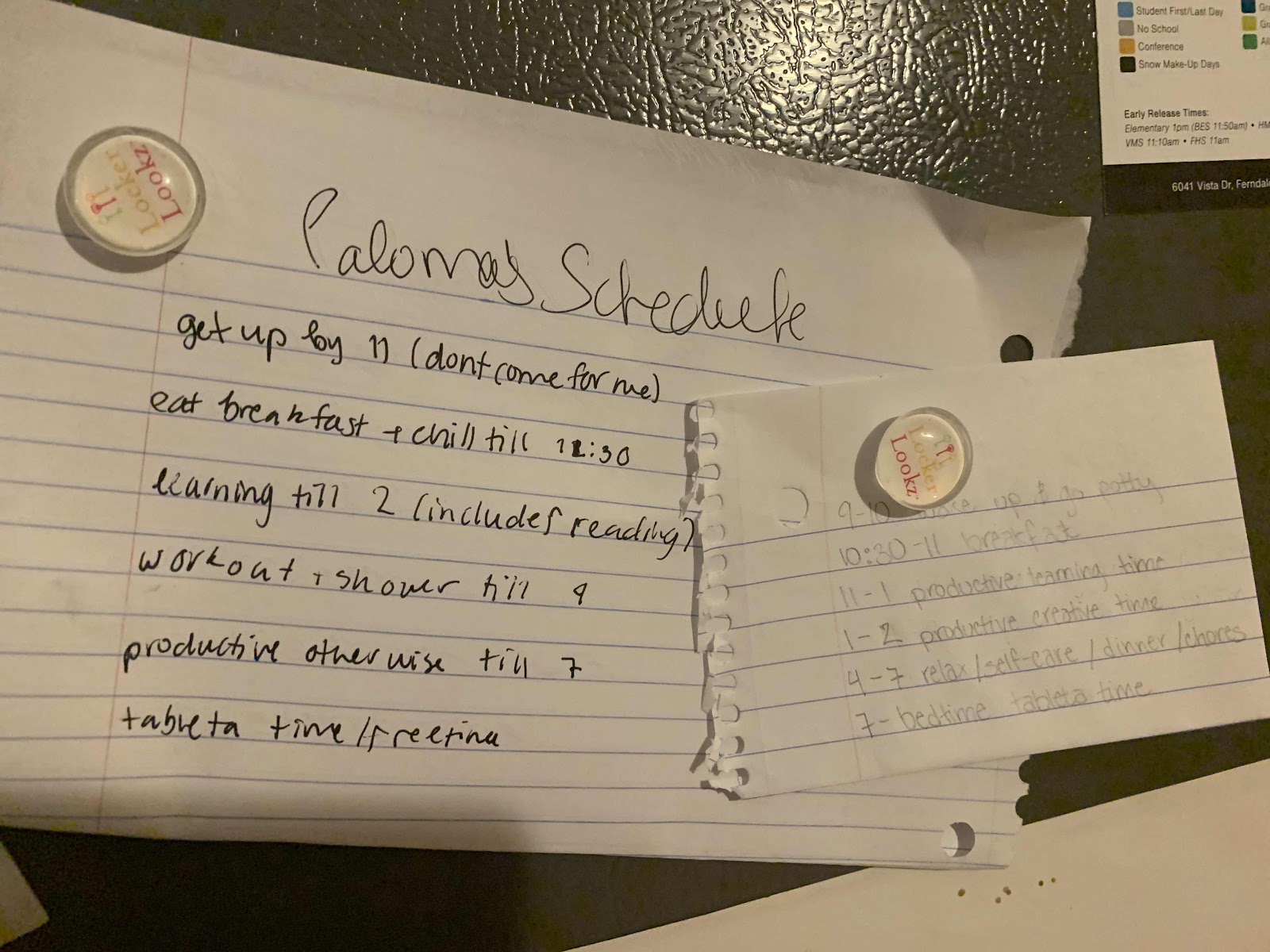
Nobody knows yet when school will resume. Teachers have been told not to send homework for the time being, since not every child has internet access at home and it wouldn’t be equitable. The district is working on a solution, at least for high schoolers, and I expect sometime in the next week or two that they will probably send home some fat packets. In the meantime, I told the girls this isn’t a vacation, and that they needed to write up a schedule for themselves. It doesn’t have to be a strict schedule, or overly specific, but it has to exist. Here’s what they came up with:


I especially like Paloma’s first line item: “get up by eleven (don’t come for me).” 

Each schedule has to include a two hour block of time for school related work (their teachers can’t assign work that will be collected and graded, but they can post “suggestions” online) and a two hour block of “productive other” time. This second category can be anything from playing piano to drawing to exercising to working in the garden to reading a book. Other than those two categories, and one chore assigned by me or their papa each day, their time is their own. 

Some examples of the chores I intend to make them do, in no particular order:

- walk the pastures and pick up all the pieces of broken plastic, plastic baling twine, or plastic bags and assorted trash they can find. No matter how careful one is, small plastic detritus accumulates over the winter. 

- turn over some of the compost pile

- clean out a drawer or a cabinet 

- harvest nettles

- organize the canning jars (full ones by contents; empty ones by size)

- use the sewing machine to make patches for mending the quilts with holes in them (our dogs have a tendency to get overexcited and tug on the bedclothes)

- clean up the greenhouse 

Like everyone else, I am imagining all the great stuff we will all get done during this enforced down-time, and like everyone else I am probably fooling myself. It’s unlikely I will take up a musical instrument or learn a third language. A more realistic hope is that I will have time and energy to put in a small garden - something I haven’t done for a few years - and read a few extra books. Perhaps do some drawing. Within a month the goats will kid, and soon thereafter it will be cheese season again. 

A good chore for me would be to find, clean, and organize 
my cheese making equipment, and order new cultures and supplies. 

Another good chore for me would be to commit to keeping a blog diary of our lives during this time.  Nobody knows how this is going to play out. Things could stay bad for a long time. Many of my neighbors are elderly and frail and are really not supposed to go out at all. Tomorrow I will talk about local efforts to pull together and provide help and services for folks who are ACTUALLY quarantined, and for folks who have lost their jobs, and those negatively affected in all sorts of ways by this unprecedented situation. 

Stay healthy! 

Wednesday, February 12, 2020

Dedicated Cheese


Today I opened up a cheese from last spring, that had been resting, vacuum sealed, in the dedicated fridge in the store room. The “dedicated fridge” is a half-sized refrigerator that I bought last year to store cheese, smoked salmon, and various fermented products such as sauerkraut, kim chee, and so forth.

As of today, there were only three packages of cheese in the dedicated fridge, totaling  perhaps  four pounds. Most of the cheese had been either eaten or traded away months ago. It’s always a gamble opening up a sealed cheese. 

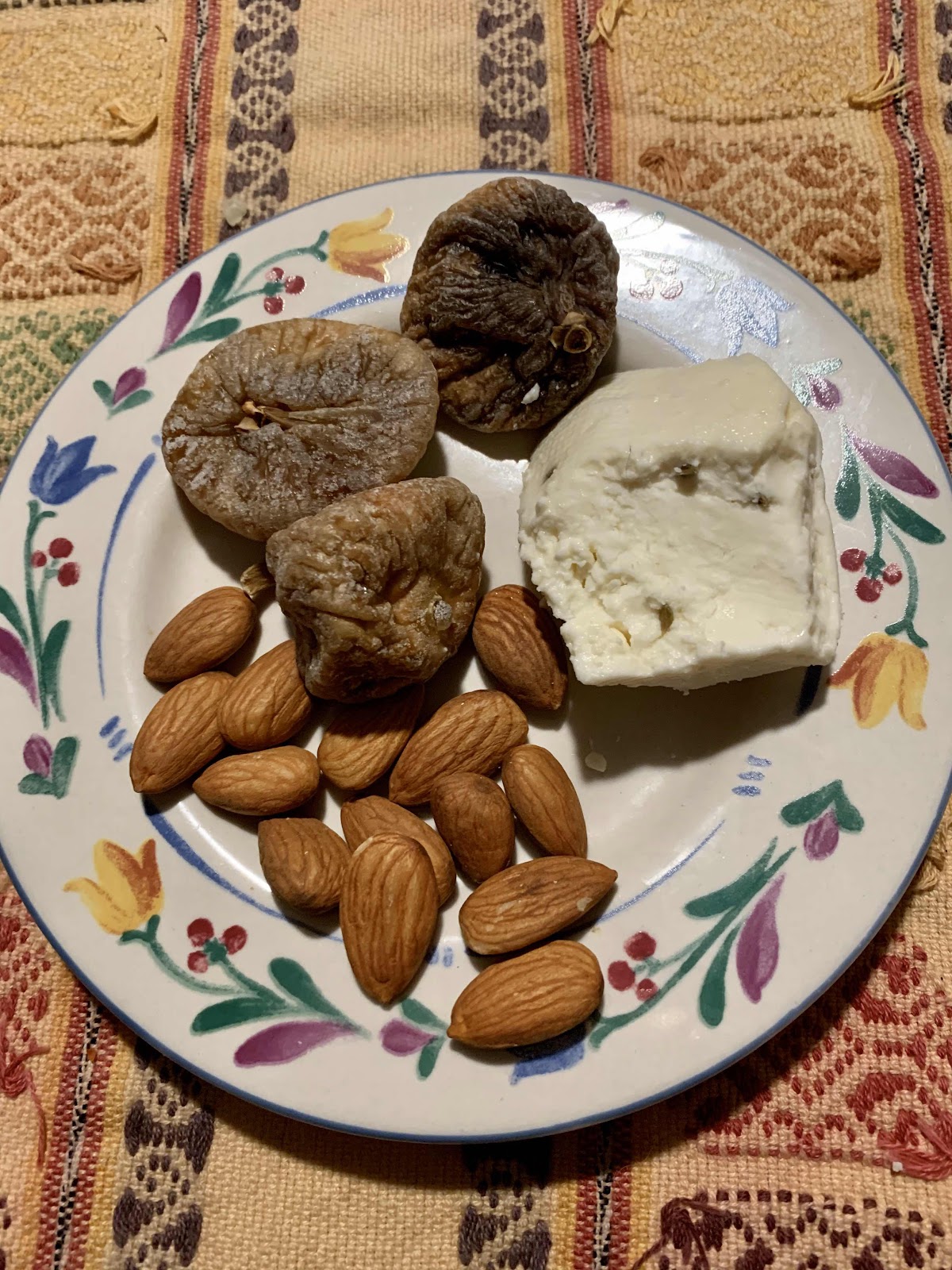
This gamble paid off. The cheese is strong but delightfully rather than offensively so; goaty but pleasantly so; herbal with the scent of caraway seed, but not overpoweringly. A handful of almonds and a few dried figs made a beautiful accompaniment.

Other likely partners include fresh apple slices, sourdough bread, olives, maybe roasted red peppers and artichoke hearts... basically it would be an enhancement to any mezze plate or antipasto plate. 

I’m inordinately proud. I mean seriously. How many people are there, in this day and age, who make their own cheese? And cheese made from the milk of goats who they raised and milked themselves, at that? the cheese I enjoyed tonight is a true artisan farmstead product that few people have the chance to taste.

More’s the pity. if you ever make it out here, there’s cheese in the dedicated fridge. Dedicated for you. 

Saturday, February 1, 2020

Double Dog Update


It’s going so much better than we could have hoped. Looks like we have two dogs now. 


Friday, January 31, 2020

Welcome Mercy (On Taking a Chance)


                             Haku and Merced 


I am a sucker for beautiful dogs. I never even had a dog of my own until I was a grown up married lady. My first dog was the incomparable Ivory (http://newtofarmlife.blogspot.com/2011/05/ivory-dog-omy-heart.html?m=1) - a gorgeous white shepherd/whippet mix who was graceful, intelligent, affectionate, protective, and silly - everything a dog ought to be. Ivory became the mold and model that all subsequent dogs would have to live up to. 


                                   Ivory 


When Ivory died, at age 14, we were heartbroken and were not ready for a new dog for nearly six months.... a long time to be dogless, for dog lovers. We eventually found Haku - a white shepherd mixed with something  (maybe golden lab?) who had been given up twice before he was a year old for being too destructive and unmanageable. We had no particular reason to think we would be able to handle him better than anyone else - we are not dog trainers or experts of any sort - we just thought he was incredibly beautiful and we couldn’t live without him another day of our lives.

Haku tested us severely by destroying the playroom utterly, jumping every fence we could erect, and killing an entire sheep, but over the course of two years he finally settled down and became what you could call a good dog, if you aren’t too picky about dictionary definitions. Now we can’t imagine life without him. He makes us all feel very safe by scaring the living daylights out of anyone who ventures onto the front porch. 

Paloma has been pestering us for a second dog for many moons now. I have been the main holdout - everyone else in the family is persuadable (Homero doesn’t need persuading - he’d have a dozen dogs if I’d let him) but I have been the lone voice of reason. Who’s going to take care of two dogs when we go to Mexico? Who’s going to pick up twice as much dog poo? Sweep up twice as much dog hair? Buy twice as much dog food and pay twice the vet bills? Huh? Huh? 

Well call me a hypocrite, because a couple days ago a desperate plea floated through my internet space. A lovely young shepherd, named Merced, was being given up by her family because she had attacked a new puppy brought into the house, and when mom got in between them, she got bitten, badly enough to need to go to urgent care. The family has very reluctantly decided that Merced could not stay with them. The humane society declined to accept her. They didn’t know what to do, and issued a general plea for someone to foster her before she would have to be destroyed. 


Well I must have been a little tipsy, or hypnotized, because I forwarded her photo to my husband, knowing full well he would fall lock stock and barrel in love. 

Fast forward two days. We spoke to the owners; we spoke to their trainer; we spoke to the handler at the kennel where she was being boarded. We visited her and she was every bit as charming as we imagined she would be. We were warned from all quarters that she was a challenging dog who would need careful monitoring and ongoing training, but also that she was intelligent, obedient, loving, healthy, and eager to please. We said we’d take her, pending a successful introduction to Haku. 

The handler at the kennel, a big bear of a man named Adam, helped us with the meet and greet. He spent a good two hours of uncompensated time with us and the two dogs, doing everything he could to ensure they had a peaceful introduction. It went very very well indeed, and we took Merced home the same day - yesterday. 

Today, all has gone well so far, except for one short squabble that ensued when Haku got jealous that Merced was leaning on me and tried to push past her and get closer to me. She snarled, and he snapped. He got an ear in his teeth and made her YIKE, but there was no blood and it was over in less than five seconds. Since then, they’ve spent hours together with no further trouble. 

I have high hopes that within a month, Merced and Haku will be fast friends. My main worry is that they might bond  as a pack and go after my goats. Twice the German shepherds is like, six times the prey-drive. It’s a the-whole-is-more-than-the-sum-of-it’s-parts situation. The two of them could make a very efficient killing machine working in tandem. 

But we’ll cross that bridge if we come to it. In the meantime, I am very much enjoying making my daily rounds attended by two majestic white hounds. It makes me feel like Princess Mononoke. 


Saturday, January 18, 2020

Snow Week (Indoor Chores)


The past week has brought frigid temperatures and a fair amount of snow - nothing like last year’s two and a half feet of snow, but enough to close school since Wednesday. And Monday being a holiday, we have quite a long stretch of being mostly home bound.

The first couple of snow days are always exciting, with a feeling of playing hooky. We play cards, break out the board games, watch movies, and play in the snow. But as the week stretches on, boredom inevitably sets in. The girls are used to three hours of wrestling practice six days a week, and they get antsy and irritable without exercise. The snow goes from pristine sparkly white to dingy grey, and my husband leaves gritty puddles behind him wherever he treads. The house starts to feel stuffy and stale, and we’re out of fresh food and snacks. There’s nothing to do. 

Time to get on top of some indoor chores. My mom used to answer every complaint of “I’m bored” by telling me to go clean something, and I guess I must have internalized  it. 

My New Year’s resolution was to clean out one cabinet or drawer per week. This old farmhouse has a truly absurd amount of storage; every room is lined with built in drawers and cabinets. Which is great, except that for the past thirteen years, whenever I find myself standing in the middle of a room with an object in my hand that has no designated location, I simply opened the nearest drawer and put it inside. Now every single one of my drawers and cabinets is basically a junk drawer, and all of my stuff is indiscriminately jumbled together and evenly distributed throughout aforementioned ridiculous amount of storage. 

So far I’ve cleaned out the silverware drawer and the spice drawer. It’s not as simple as removing extraneous stuff - kitchen drawers and cabinets somehow acquire a sticky layer of grime that needs to be scrubbed off. In the case of the spice drawer, there were enough spices embedded in that layer to make a medieval peasant rich for life. Today, I think I’ll tackle the beverage cabinet. That’s the place where I keep the coffee and coffee accoutrements, tea, chocolate, etc. 
Right now its cluttered with empty boxes, crumpled up coffee filters, dusty expired tea leaves, and random bits of kitchen equipment that I haven’t used in years. 

It’s also “tend to the ferments” day. Find the neglected jar of kefir in the back of the fridge, strain and wash the grains, scrub the jar and fill with fresh milk. Peel the crust off the sourdough starter, add some new flour and water, and set it in a warm place for a while. Sort through the jars of various fermented experiments that have gotten shoved to the back of the fridge and decide if any of them are worth keeping or if it’s time to give them all to the pigs. Start a few new jars with the vegetables that need to get used up. I found cabbage, carrots, and cilantro, ergo I’m making curtido. 

Also a good day to make slow food, so while I clean the cabinet I will be accompanied by the smell of beef bones roasting for the soup we will have for dinner later. My youngest child is keeping herself amused by teaching herself “Two Guitars” on the piano, and my other daughter is in her room attempting “Purple Rain” on her guitar. A homely cacophony as background noise. 

Snow days aren’t so bad. 

Sunday, December 1, 2019

Advent Calendar of Events (Day One)


Decorate the altar. 

This is year 5 of our annual advent calendar of events - a conceit I came up with to try to put the focus of the season more on activities and being together, and less on STUFF. 

While I can’t pretend it’s been wholly successful in its stated aim - STUFF is still high on everyone’s agenda for Christmas - it is a special project that has now become a permanent part of our family’s ritual year. Hope may be 16 and Paloma 14, but they still get excited about opening the paper doors and finding out what we can do tomorrow, if their busy high schools schedules allow. 


Wednesday, November 27, 2019

Thankful for the Truth (Warning graphic photos)


I love Thanksgiving, especially in the years, like this one, that I get to host. I enjoy the process of writing a menu, shopping for ingredients, and setting a beautiful table. There are few things that make me happier than seeing people I love really digging in to food I’ve prepared for them. I’m happy when my adult daughter comes over, and I’m happy to see my mom. But there is something about Thanksgiving that make me feel uneasy. There is a whiff of - if not hypocrisy, then maybe willful blindness - that hangs around the Thanksgiving table. 

Thanksgiving is a day of delicious excess, a national fantasy of happy peaceful families and endless sweetness, but the truth is often unpalatable. Enjoying an abundance of good things and being thankful for what we have is, of course, wonderful, and in no way a bad thing. Indeed, we’d all be happier and the world would probably be a better place if we came together more often to share our abundance and to give thanks out loud and in the presence others. 

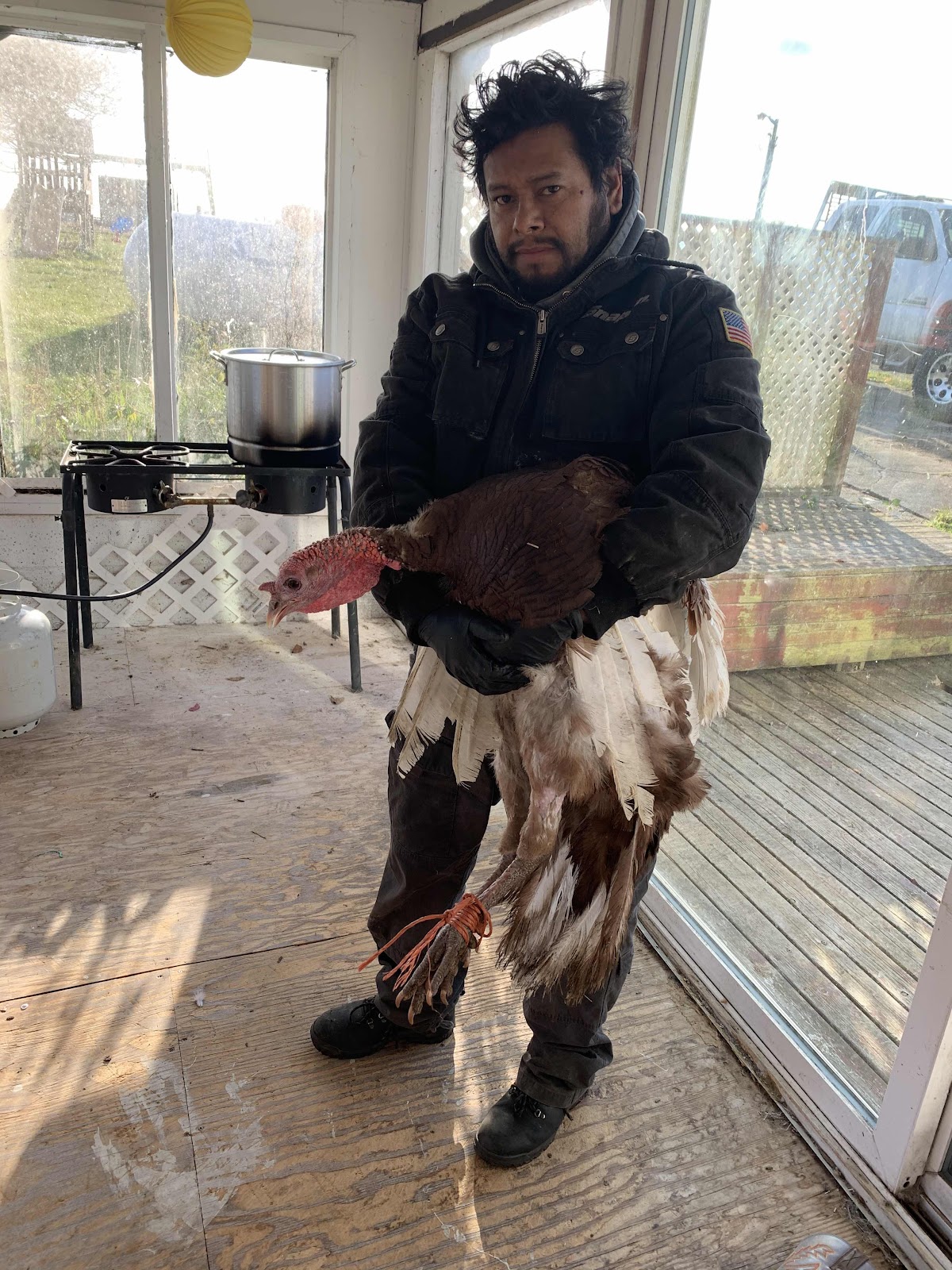
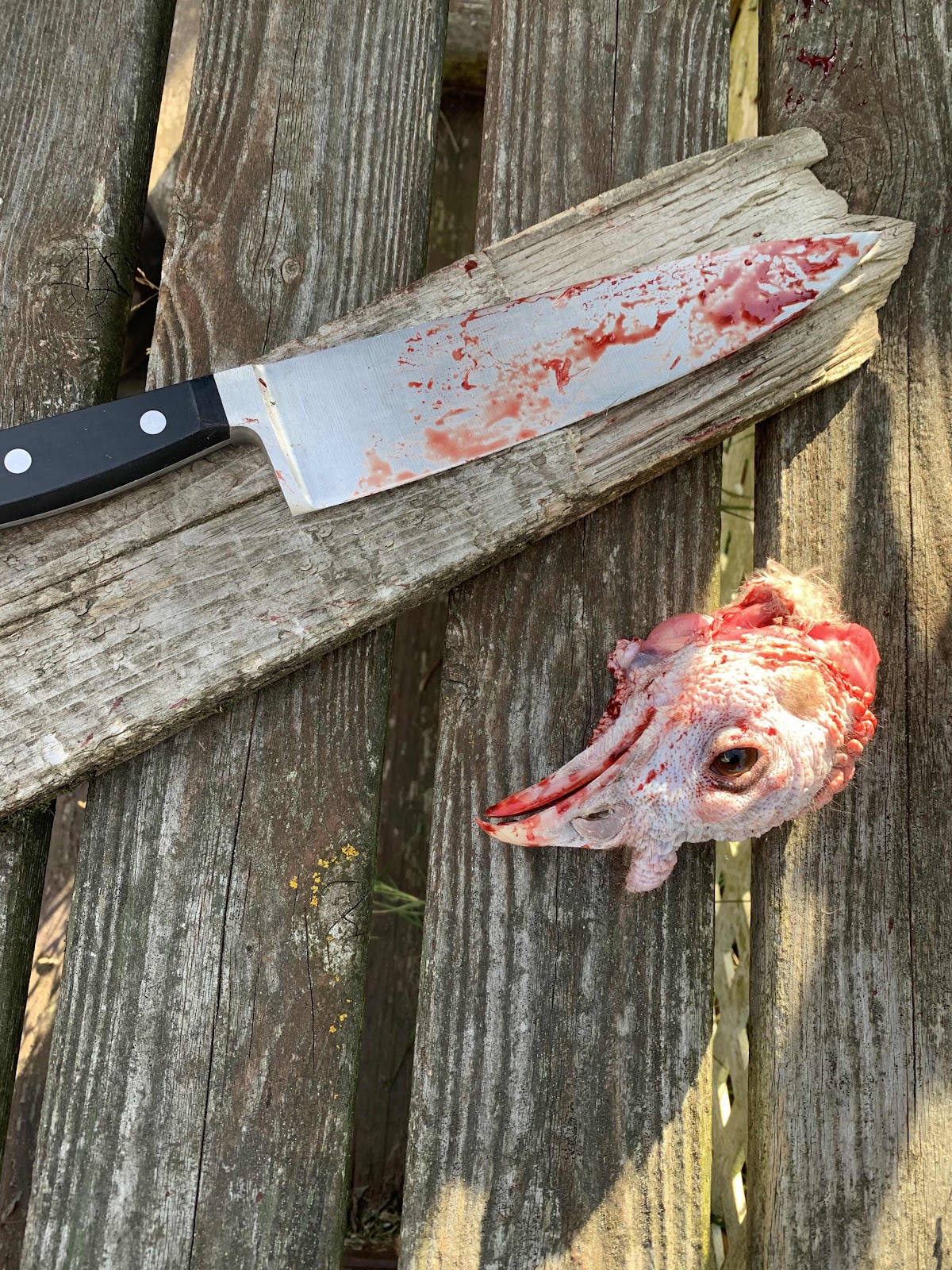
But it’s also important to acknowledge the realities that underlie the feast. These are manifold. Firstly, I acknowledge that to make this feast, a beautiful turkey had to die. 


I acknowledge the work that went into raising him - this bird was raised on pasture by a local farmer, so I thank my neighbor for her work and expense. But I also recognize the labor of the people - mostly immigrants - who toil in the vast and dangerous poultry processing industry; I acknowledge their worth and affirm their right to safe working conditions and just recompense. 

I thank my husband for the work he is doing right this minute - butchering the turkey out in the cold November wind. I acknowledge this is a disagreeable task and I thank him for being willing to develop the skill to do it well. 

The vegetables on the table - the potatoes, the Brussels sprouts, the salad greens - are produced by an unsustainable system that abuses workers and the earth in equal measure.  I am a witness, and I pledge to do what I can to avoid participating in those injustices and to mitigate the tremendous waste generated. 

And finally, I acknowledge that I live on unceded land of the Lummi and Nooksack tribes. All of us settlers live on land that either was never ceded by the tribes, or which was ceded under deeply unequal conditions, in which one side held all the power. I acknowledge that uncomfortable truth. If you want to know on whose land you reside, visit this link: 
https://native-land.ca/. I pledge to work toward correcting the grave inequalities that resulted by upholding the efforts of local tribes to sustain their culture and supporting their businesses and candidates for office. 

None of this is meant to be a huge bummer.

It is possible to be grateful for our wealth while recognizing the problem of poverty. We can celebrate being together with family while knowing that some are lonely. We can give thanks for warm homes, abundant food, and all the good things in our lives without trying to shut out the knowledge of the many who lack those things. It’s not a sin to be warm, to be fed, to be loved. These are wonderful gifts.

My hope and my prayer is that naming our gifts and sharing them with our loved ones will inspire us to share them more widely, as well. I remind myself, as I bask in warmth and light, of the existence of cold and darkness not out of guilt, but so that I may be moved by gratitude and grace to expand the circle of warmth and light to include others. I remind myself, as I nourish my body with roast turkey, of the death of the animal I am eating not as some sort of penance, but to honor the truth that this act embodies the cycles of life and death on this beautiful planet, cycles we are all of us bound by. 

May you be abundantly blessed this Thanksgiving. May you have much to give thanks for, as much as I. 


Sunday, November 17, 2019

Paloma’s Pigs


Some years we raise a couple of pigs, and some years we don’t. The decision whether or not to get a pig in any given year is based on a number of factors - how much meat we have in the freezer, the price of local weaner piglets, whether or not our neighbors are raising pigs this year, etc. 

In general, I have more or less decided that it is as cheap to buy pork from our neighbors as it is to raise a pig of our own, and much less work. However I can be swayed. This year we were swayed by our youngest daughter’s need for an FFA project coinciding with the availability of some handsome well-grown weaners raised by a close neighbor and offered at an excellent price. 

Paloma, our youngest, swore up and down to us that she would be in charge of feeding the pigs. Of course, she doesn’t know what that actually entails. We get much of our pig food from the Gleaner’s Pantry, and she can’t participate in that. The truth is that I will be doing most of the sourcing of food for the piggies, and Paloma will only be in charge of doing her pig-related homework. 

The question she posed and will be trying to answer is “is it financially advantageous to raise your own pigs?” For those who are interested enough to follow the links, I’ve already done the math and answered this question to my own satisfaction:
 
For those who aren’t that interested, the answer is - you can get nearly free meat if you don’t put any value on your own labor. 

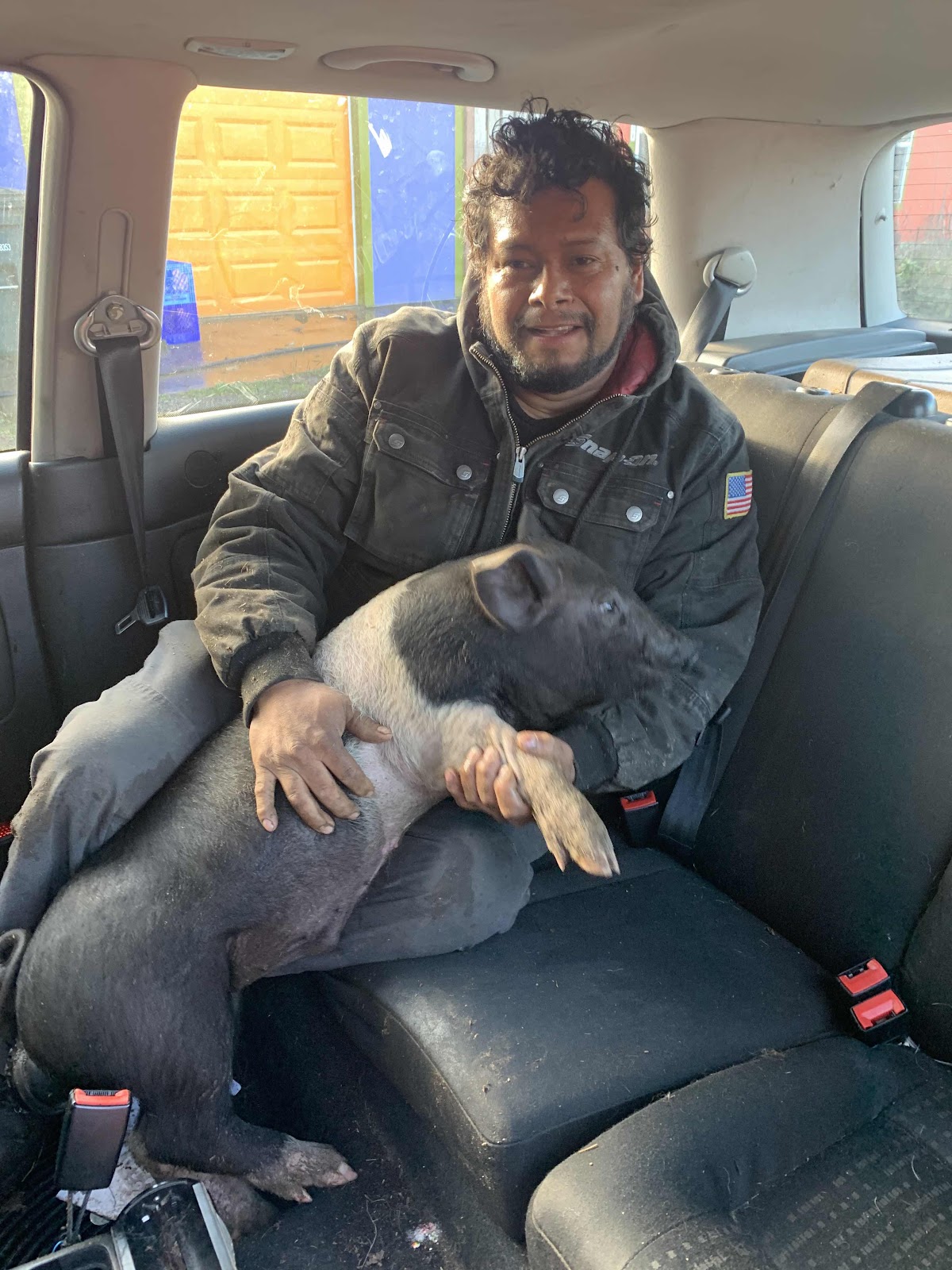
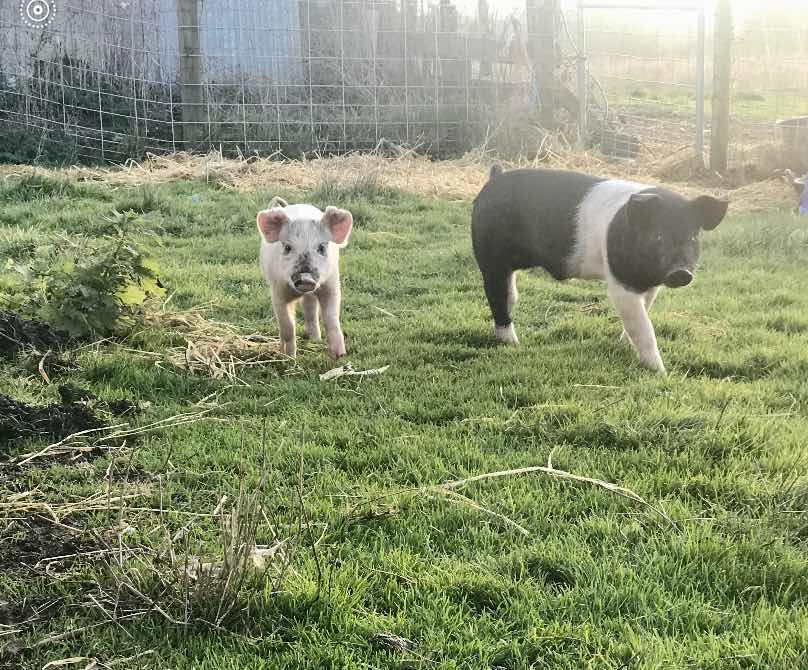
But of course labor counts. Here is Homero, after spending some twenty minutes chasing down a couple of well-grown piglets today. His face clearly shows that labor counts.  My neighbor told me we could choose our own pigs from her litter of fourteen, and there were a couple of standouts. In the end, however, we took whichever pigs Homero was able to catch. 


This handsome boy was the largest of the entire litter, and probably tipped the scales at sixty pounds. Homero was hard pressed to keep ahold of him all the way home. 


The second piglet he managed to catch was the smallest one of the litter, a little pink girl with curled back ears. They seem to be happy with their new digs - we have them in the sacrifice area which is about 100 x 100 feet. Their house is a round calf hutch stuffed with hay. 

Raising pigs over the winter has its challenges, and it obviously costs more than raising the same animals over the summer months, because mammals require many more calories to keep their body temperature up during the cold season. Also their natural rooting behavior causes more damage during the wet season. That’s why we have them confined to the sacrifice area, which is compacted and has a bad weed situation. Any rooting they do may actually be beneficial, and their manure will help fertilize the sandy poor soil. 

As in past years, the idea is to sell one pig (post-slaughter, in cuts) and use that money to offset the costs of raising the other pig, which we will keep for ourselves. Paloma will be keeping the books this year, and I’ll keep you all updated on her conclusions. 


Thursday, October 10, 2019

Lobsters of the Forest (Mushroom Madness)


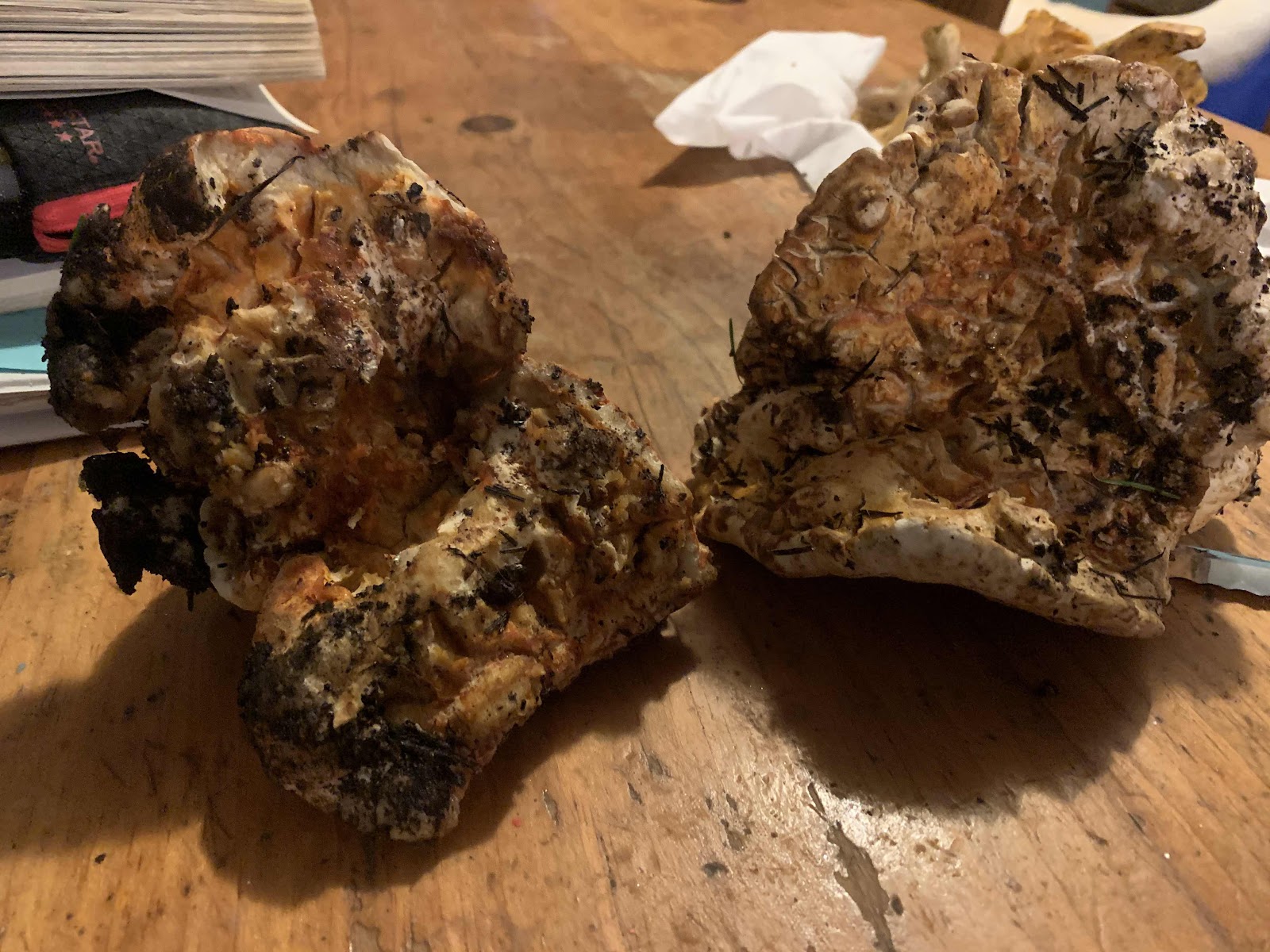
These ugly lumps are actually highly prized lobster mushrooms. 

It’s prime time for mushroom hunting in the Pacific Northwest. The rains came in mid September, right on schedule, and since then we’ve had alternating rain and sunshine, which is just perfect for making the mushrooms pop up. By all accounts it’s been a bumper year for chanterelles. 

I have long been fascinated by fungi, but I’ve not done the work of educating myself to pick them, beyond a very few varieties that are easy to identify. There’s a patch of shaggy manes out in the back pasture. I’m relatively sure I can recognize agaricus campestres (though there are toxic lookalikes). If I happened to trip over a chanterelle or a morel I would know what it was. 

Nobody just trips over forest mushrooms though. You have to go out and search for them, and you have to get off the trails and go bushwhacking through the deep woods. It’s hard physical exercise and it gets you wet, dirty, and scratched up. Also exhilarated and energized. 

A relatively new friend of mine is a confident forager. In the past I’ve traded her goat cheese for mushrooms, but this year I asked if I could pay her to just take me out with her foraging. Not to any of her secret spots! That would be a very rude thing to ask. Just out into the woods and help me improve my eye for good habitat and gain some confidence identifying a few more varieties. She was happy to do so. 

We found several edible mushrooms - coral mushrooms and oyster mushrooms, a couple of decent boletes, and a small patch of chanterelles- but the coolest find was a large number of lobster mushrooms. 


The ugly lumps after careful cleaning.

Lobster mushrooms are cool. They are actually a boring, bland mushroom that has been attacked by another fungus and improbably turned into something delicious. Lobsters start out as Russula Brevipes, which is a large white mushroom that pushes up through the forest duff in evergreen forests. They are edible but exceedingly bland. Wherever you find lots of Russulas, though, you will find a few that have been turned into lobsters. The fungus makes them bright orange and hard, and curls them into fantastic, tortuous shapes. Keep an eye out for glimpses of orange poking through the forest floor. 

Cleaning them is a chore. You don’t want to wash them with water if you can help it because they will soak it up like a sponge and ruin their texture and dilute their subtle flavor. Use a stiff brush instead. Most lobsters will have at least a few wormholes in them (these ones are exceptionally free from worms) but don’t worry about that. Just trim off any bits  that seem too wormy to eat. Ditto any parts that are stubbornly grubby - though as my mom says, you gotta eat a peck of dirt before you die and eating it along with wild mushrooms seems like as good a way as any. 


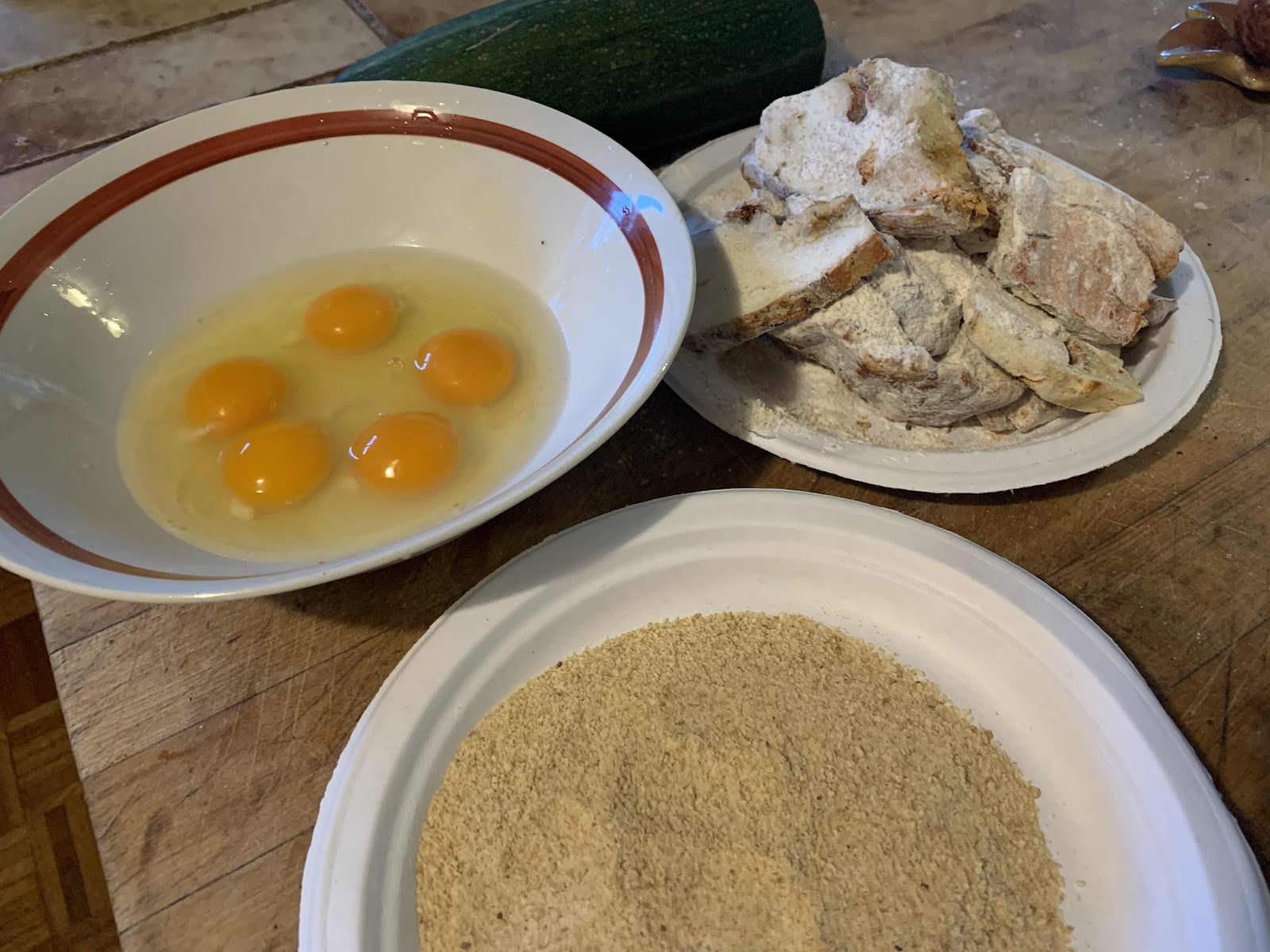
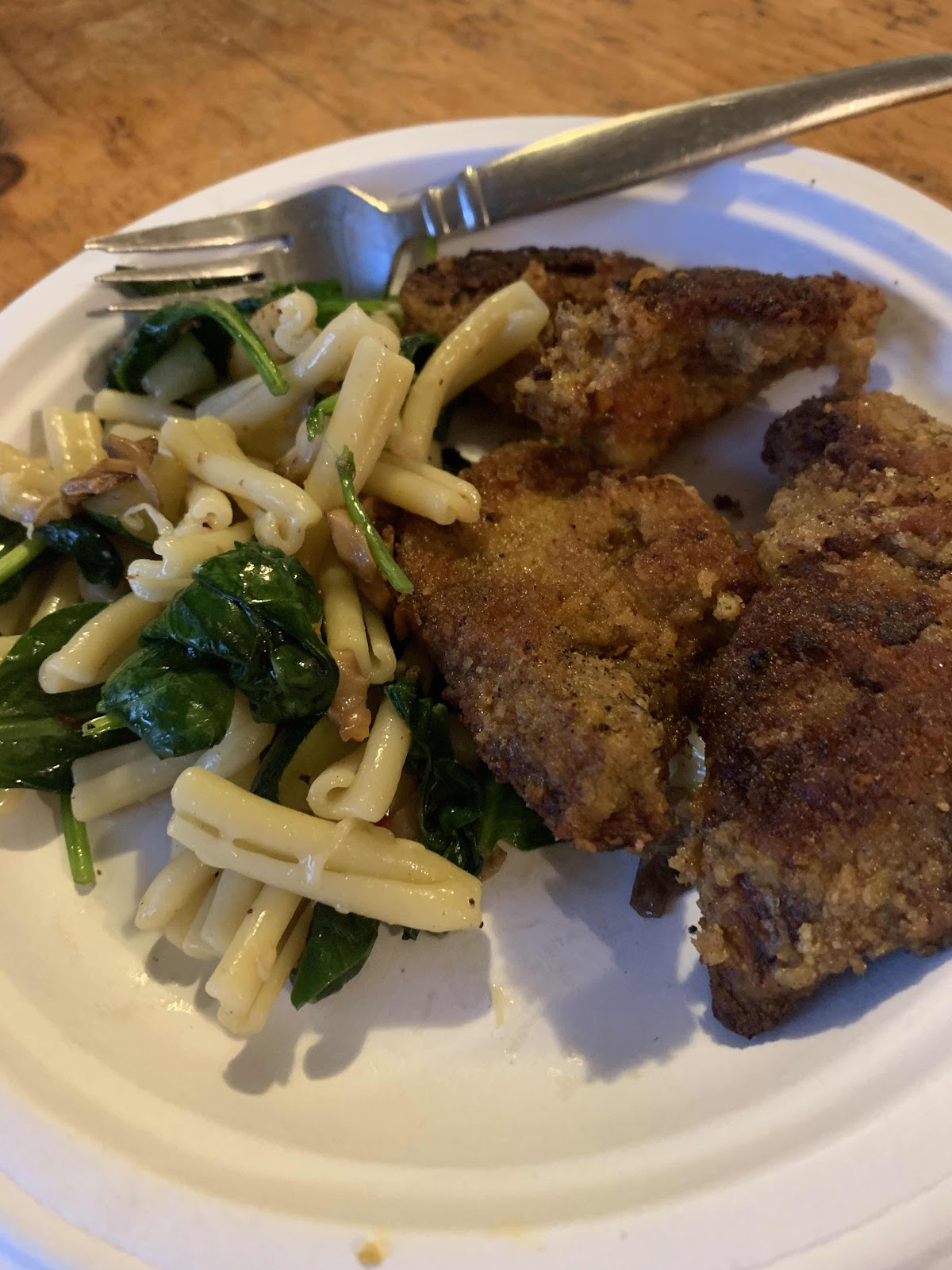
There are lots of ways to prepare lobsters, but they are one of the few wild mushrooms tough enough to stand up to being sliced and fried in egg wash and crumbs like chicken-fried-steak. I added Parmesan to my bread crumbs and pan fried the mushroom steaks y til deep golden brown on both sides. I found I liked them better the more cooked they were, so next time I might use a little lower heat and give them more time. 


The other mushrooms we found went into a pasta side dish with spinach. My husband and kids were a little leery of eating the lobsters at first, but they both enjoyed them after trying them. Homero, in fact, ate an entire lobster mushroom
all by himself. 

After three hours of hiking in the intermittent rain and then cleaning the haul and cooking dinner, Ipushed back from the table, told everyone to clean up please,  I was going to take  a long hot bath. I earned it. 

Wednesday, October 2, 2019

Last Chance Fuego


We’ve had a nice long stretch of dry weather - long for post-solstice September in the Pacific Northwest, anyway; about ten dry days in a row. I love this time of year when the sky is blue and the leaves are red and you can still go outside in a T-shirt. I’ve been spending my afternoons out with the goats, letting them feast on the fall-flush of grass. Waste not, want not is the motto of the season. We laid in only a small supply of hay this year, so the more I can fatten the goats on the September pasture, the better. 

The lack of precipitation has also allowed our brush pile to dry out. Several days ago, we tried to start a fire but the moist brush refused to burn. This afternoon I tried again, and with the help of a small amount of lighter fluid, I got it going. The last couple hours have been devoted to reading a magazine next to the fire and watching the first stars come out.


Tuesday, October 1, 2019

October Altar (Waste Not)


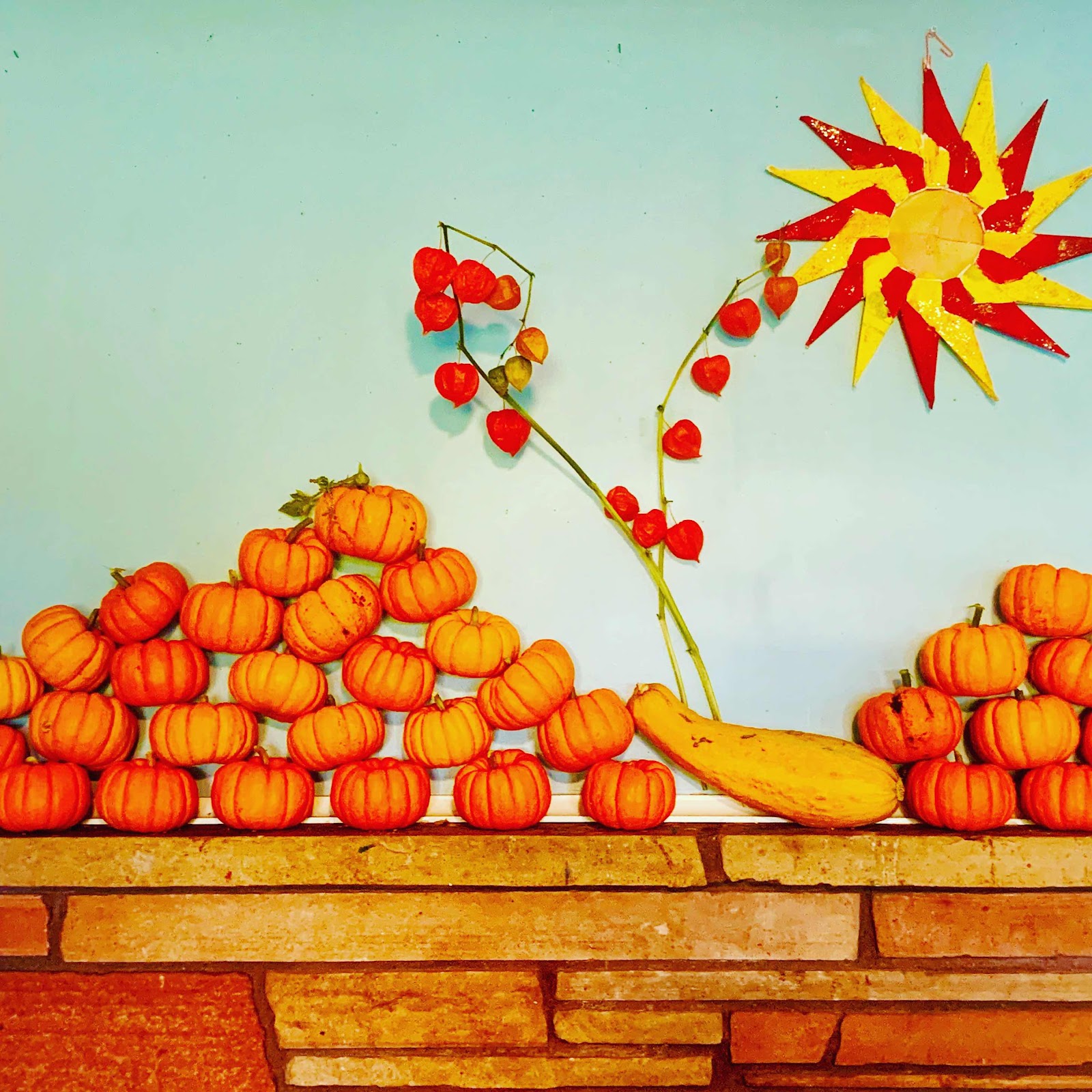
An enormous volunteer squash plant grew out of our compost pile this summer. This happens not infrequently, and because squash vines love rich compost, the plants tend to sprawl over vast areas and produce prodigious amounts of squash. However, most summer squash are hybrid varieties, so volunteer plants that sprout from discarded seeds are unlikely to bear fruit that is much good for eating. 

All squash blossoms are nice for eating, though. We picked many many blossoms for stuffing inside of quesadillas, or for stuffing with goat cheese. But no matter how many blossoms we picked, there were plenty left over for making squash. Past volunteer squash have produced warty gourds, yellow crooknecked squash but with hard shells and thin meat, or strange globular fruits. This one produced tiny rubbed hard shelled pumpkins, the kind you see 
decorated  with googly eyes and painted grins in bins at the grocery store in October. I’m sure they would be poor eating, but they make a nice autumn altar. 


After we picked all the little pumpkins, I let the goats go to town on the giant vine. They appreciated it. After we enjoy them on the altar for a while, I am donating these little guys to my sister, who is a pre-school teacher. No doubt they will all be festooned with googly-eyes and painted grins. 

Happy Fall to you and yours. 


Friday, August 23, 2019

The Gift of the Crab


Hope’s best friend’s dad took the girls out to check his crab pots today. Of course I instantly told her to offer the Dad goat cheese for a couple of crabs. She rolled her eyes a little and said she would. 

Then she started texting me photos. Photos of a giant cauldron of crabs boiling in seawater. 

“Mom we got SO many crabs! And we’re going back out!”

“Don’t forget!” I wrote. “Goat cheese! Or ham! Or maybe some grass fed beef?”

More photos. More crabs. Big crabs! Hope learned to clean a crab. Hope sent pictures of herself eating big handfuls of snowy white crab, but no word on whether or not she was bringing any home.

“My right arm? My firstborn child?” I texted. And then “you’re killing me, smalls!” 

When she finally came home, she shook her head. 

“Sorry mom, they didn’t want to part with any crabs.”

“Really?!” I was surprised, but not THAT surprised. I mean, no matter how many dungeoness crabs I had, I’d still find it difficult to give them away. Maybe they were for a big event. Lots of people have crab parties on the beach this time of year. 

“Bummer!” I said. “I was really hoping....” 

“Sorry mom, But I could only ask him once, you know” she said, a little witheringly. 

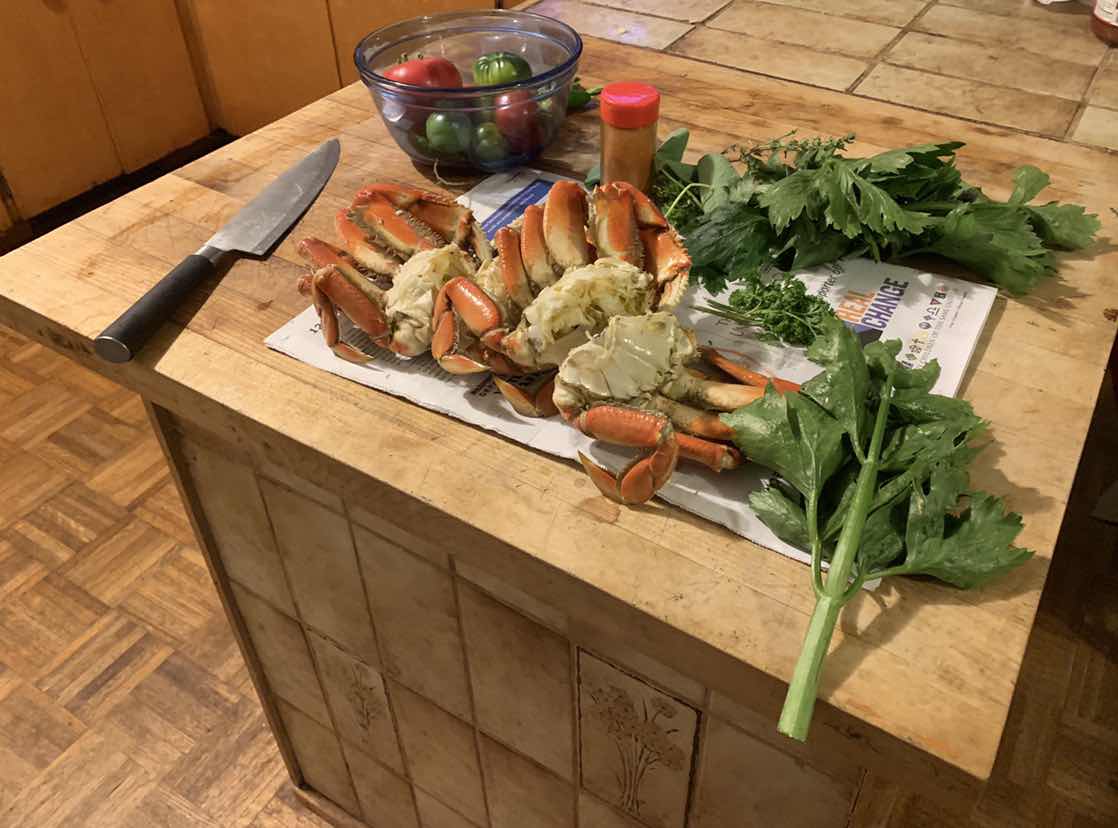
“I know, I know. It’s fine,” I answered, but not really feeling fine. Dungeoness crab is the absolutely best seafood on earth. Fight me. 

Then the door opened and her best friend came galloping in holding an ice chest and both girls dissolved into giggles. 

“Gotcha, mom!” Hope teased me. “How could he NOT give you crabs? I showed him our text thread. You were THIRSTY for crabs.” 

Four big crabs, already cooked and cleaned. I didn’t even have a chance to give him anything in return. Hope’s friend is spending the night, so I can send her home with something. 

Not my right arm, though. I need that to hold the nutcracker. 


Sunday, August 11, 2019

Sweet Corn and Sweet Memories


If you’ve never had sweet corn Mexican style, you really have to try it. When I was a child, we rolled our fresh boiled ears of sweet corn on top of a cold stick of butter, unwrapped and set on the table for that purpose. The hot corn melted a deep divot in the butter, making each subsequent ear easier to baptize. Then we sprinkled the ears with salt and went to town. 

There’s nothing wrong with that “recipe.”  I believe it was Garrison Kieller, in his wonderful memoir Lake Wobegon Days, who first asked the question “yeah, sex is great, but have you ever had fresh sweet corn straight from the field?” I will not go on record as to my preference, but I will affirm that fresh sweet corn bathed in butter and sprinkled with salt is one of life’s great pleasures. 

The kind of super-sweet hybrid corn we enjoy in the states  was more or less unknown in Mexico until very recently. Traditionally, all corn grown in Mexico for human consumption is what we know as “field corn” and generally used as animal feed. A little more scientifically, it’s known as “dent corn” for the little dents that develop in the center of each kernel as it dries. This is the corn that Mexican families grow, dry on the cob, twist the kernels off and store in buckets, and eventually turn into nixtamal and grind into masa to make the staple Mexican food, tortillas, all year round. There are literally hundreds of varieties - white, yellow, green, blue, red, black, and speckled. 

While most of the harvest is let to mature and will be used as described above, some of it is picked “tierno,” or “tender,” and eaten fresh. It is nowhere near as sweet as our hybrid corn, but it has a toothsome chew, and a satisfying heft that fills you up as sweet corn does not. It’s a complex carbohydrate, for sure. 

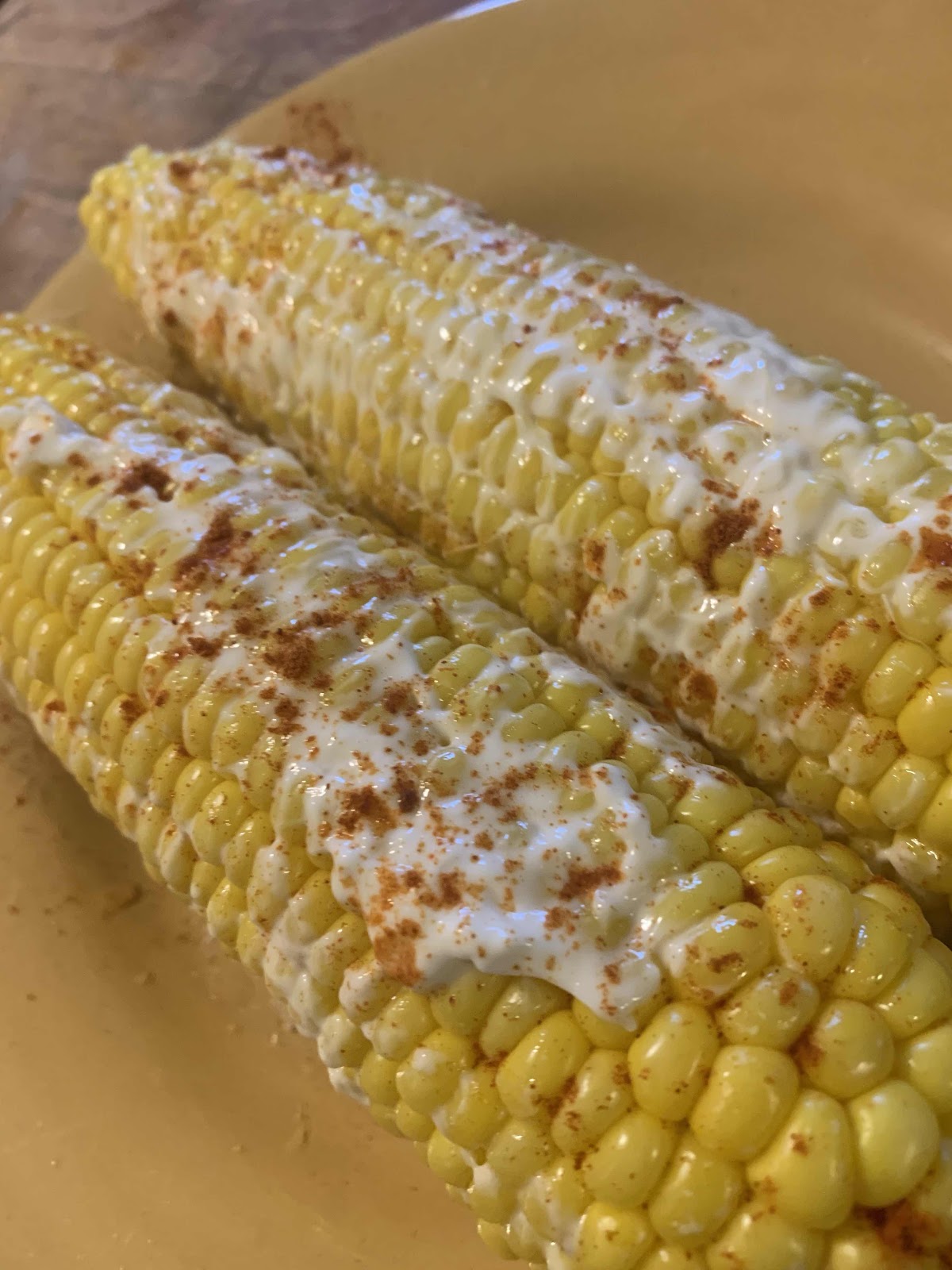
In Mexican Spanish, a fresh boiled ear of corn is called an Elote. It’s one of the most common street foods, served slathered with mayonnaise, squirted with fresh lime juice, sprinkled with chile powder, and rolled in grated cotija cheese. The same assemblage of flavors can be served in a cup, made up of the kernels of corn cut from the cob and then dressed with the same toppings. In this form it’s called Esquites, and it’s my absolute favorite Mexican street snack. 

One of my finest memories is sitting on a wrought iron bench in Oaxaca’s zocalo on a fine summer evening, eating esquites and watching dozens of well-dressed couples of a certain age dancing to the music of a marimba band. One of my greatest ambitions is to be one half of such a couple, on a fine summer evening a score of summers hence. And lord, I hope there will be esquites to revive me after I tire of dancing. 


Wednesday, August 7, 2019

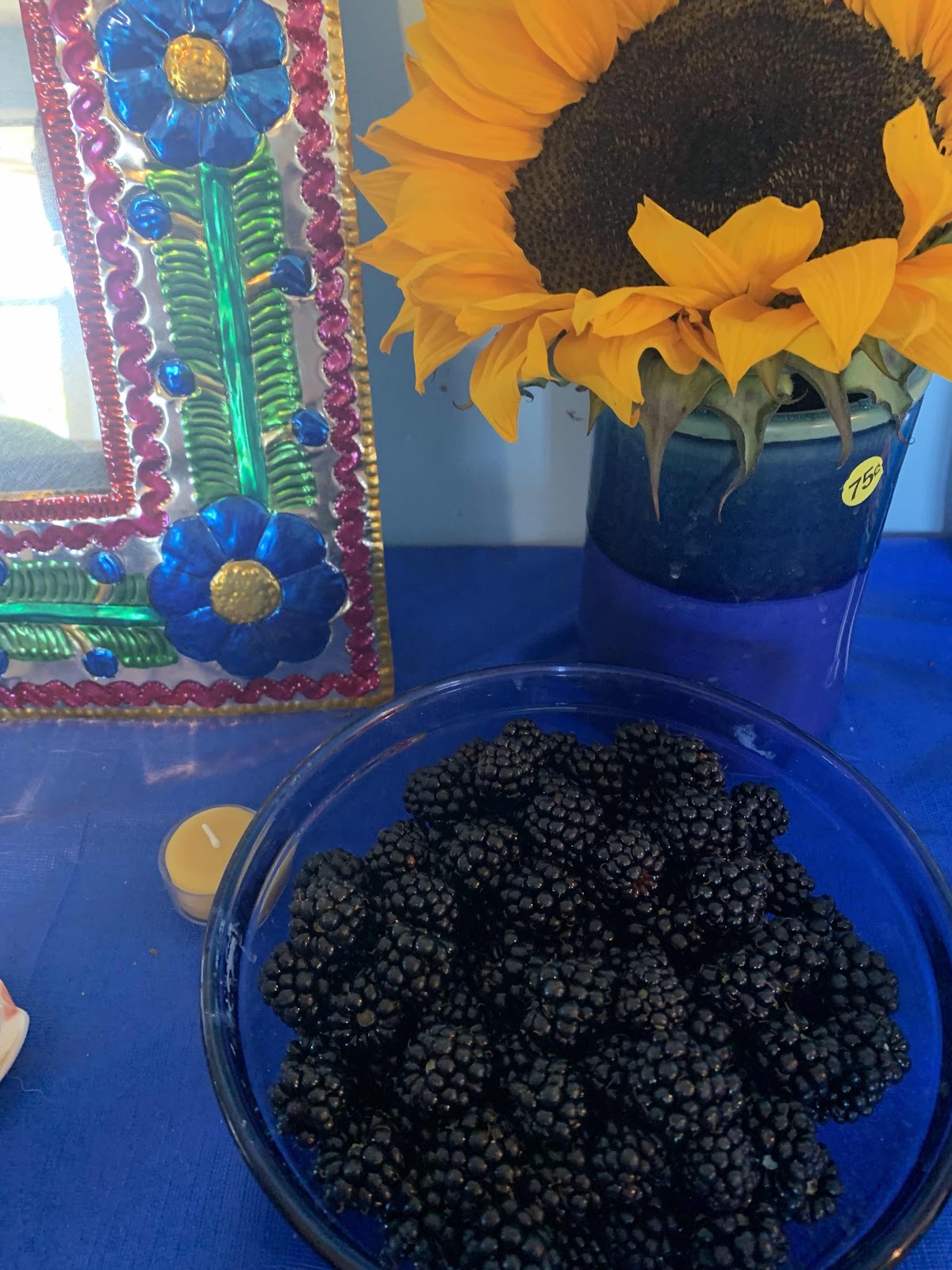
Blackberry Blessings