Wednesday, September 12, 2018
Preserving Log 9/18
Posted by Aimee at 8:42 PM 0 comments
Labels: apples, berries, canning, fall, farm, fermentation, food, frugality, fruit, harvest, homesteading, preserving, seasons
Saturday, September 1, 2018
Making Up for Lost Time (Mabon Again)
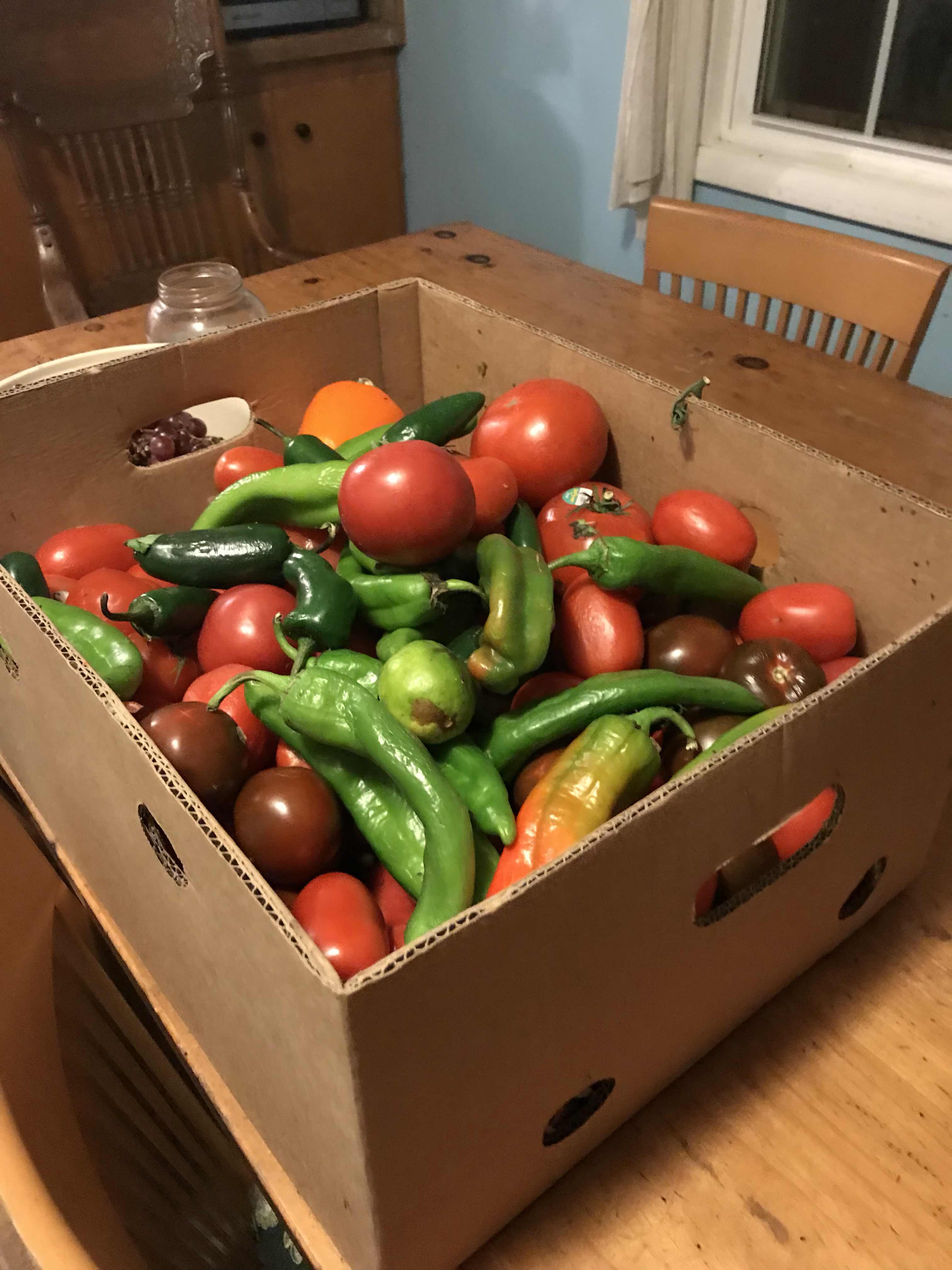
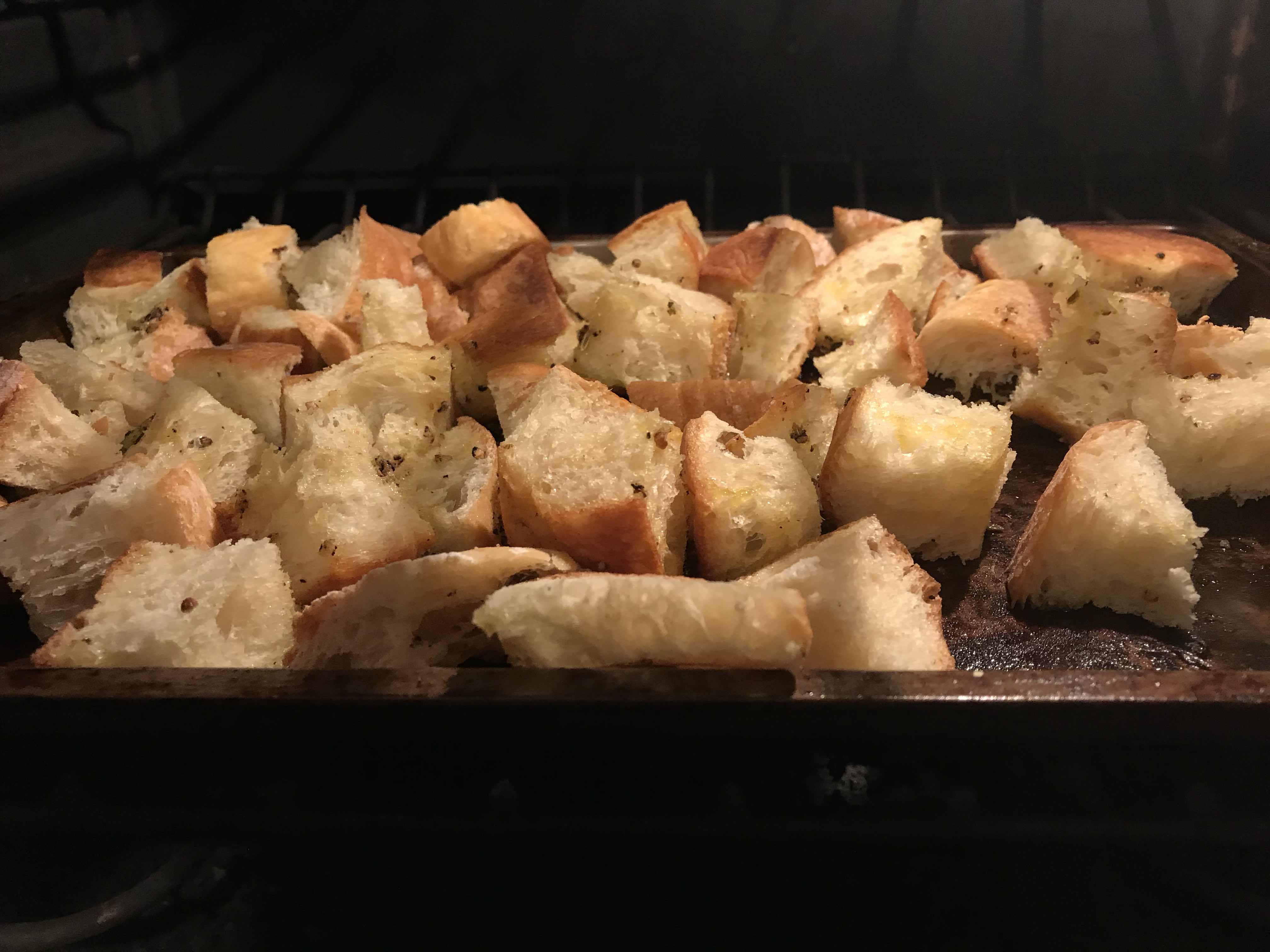
I also brought home a half dozen loaves of ciabatta bread. I like to cube it up and toss the cubes with a mix of olive oil, herbs, garlic, salt and pepper, and bake until they are crunchy croutons. Store in a ziplock bag in the fridge.
Posted by Aimee at 9:56 PM 3 comments
Labels: berries, canning, fall, food, frugality, harvest, homesteading, preserving, self sufficiency, summer
Tuesday, August 28, 2018
Quince Años for Hope
Opening the Waltz with Papa
Posing with the mariachis. Hope has become quite a good guitar player, and after the mariachis performed they sat down to eat - as is traditional - and Hope played a few songs. As they were leaving, the bandleader stopped Hope and told her that she has an enchanting voice, plays well, and should never stop.
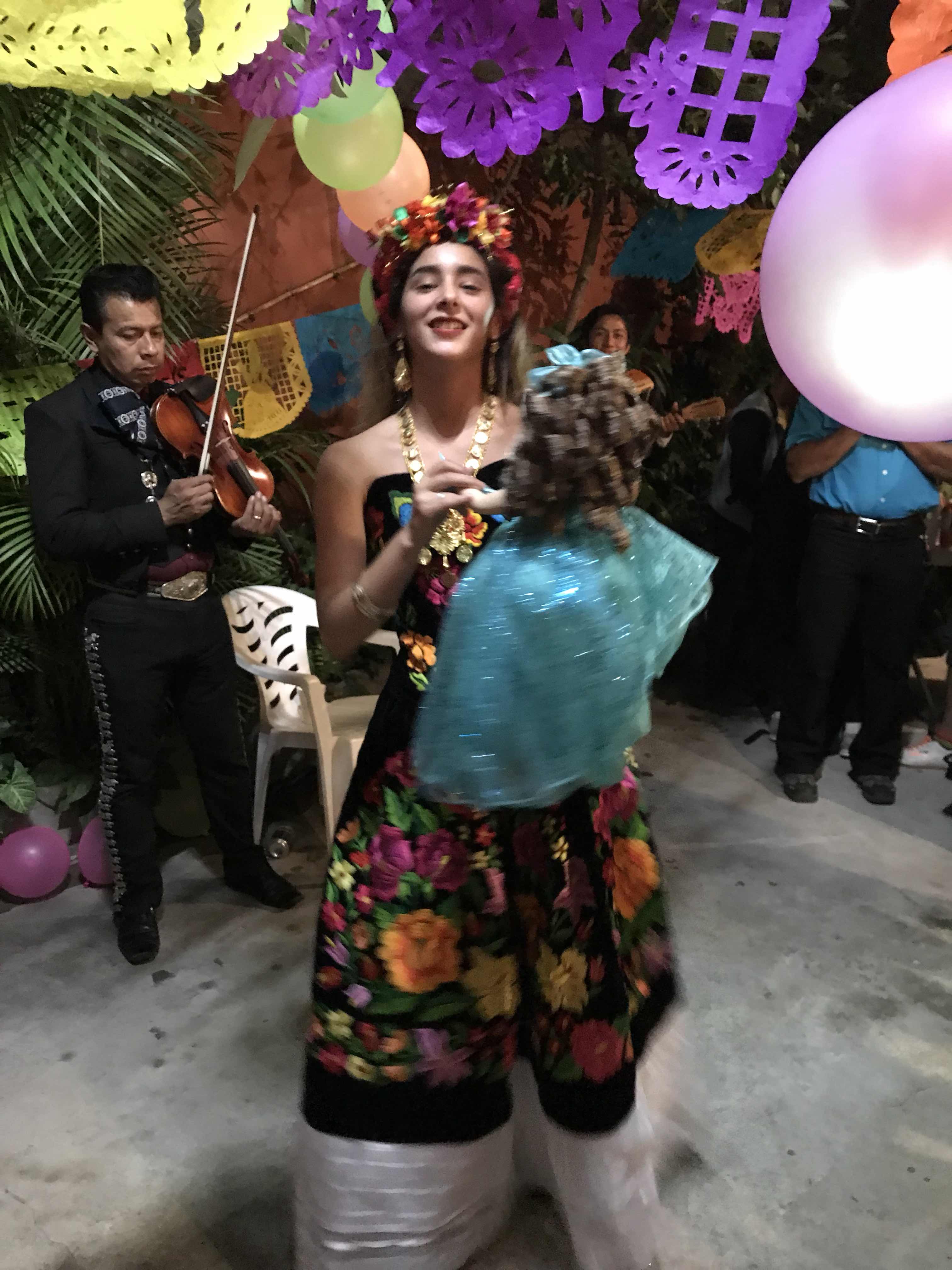
Last waltz with a doll.... this tradition symbolizes “putting away childish things” and becoming a grownup lady.
Saturday, July 21, 2018
Cooking in Oaxaca (Improv Style)
Friday, July 13, 2018
Guelaguetza in Oaxaca
Sunday, July 1, 2018
All the Fruit We Won’t Be Eating
Sunday, June 10, 2018
Long Live Hippies (Trade Network ‘18) S
Posted by Aimee at 6:59 PM 2 comments
Friday, June 8, 2018
Bloodsuckers (Parasite Problems)
Dairy goats are plagued by parasites. It's just a fact. Some areas of the country are worse than others, and in some areas resistance has become a problem; in other areas its less serious. But anyone who raises dairy goats will have to develop a parasite protocol and be on the lookout for signs of infestation.
I've had my troubles with parasites before - our wet weather and lack of hard freezes some winters contributes to the issue. We've had lungworms and stomach worms and coccidia. For the most part, these have been passing problems, and with vigilant treatment otherwise healthy goats shake off the effects and continue to thrive. I do know by now, however, what a wormy goat looks like.
-Diarrhea. Primary symptom. May be intermittent or constant.
- Skinny. Weight loss is the main symptom (after diarrhea) and it happens not just because the parasites leech energy from the host, but because if the host is losing enough blood they will become anemic and then the rumen doesn't get properly perfused, doesn't work correctly, and you get malabsorption syndrome. Then it doesn't matter how much quality food you are feeding, the goats can't benefit from it.
- anemia symptoms: lethargy, pale gums and conjunctiva
- lowered milk production, if they are in milk
- rough, coarse coat. I don't know why this happens.
In the middle of winter, when it's cold, and all the forage is gone and the goats are subsisting on just hay, and they are pregnant, it's fairly normal for them to lose a little weight. But they shouldn't get really thin. This past winter my goats kept losing weight no matter what I fed them. In fact, they were skinny as rail fences, and generally looked run down and wormy. They started pooping green glop, instead of nice clean pellets. I figured I had worms and dosed everyone with the standard medicine, Ivermectin.
When they didn't improve after some time, I repeated the ivermectin, and when they still didn't improve I thought I might have some resistant worms on my hands and switched to a different wormer that works by a totally different action.
Well they just kept losing weight. Spring came, they gave birth (Flopsy to quadruplets again) and the babies were all healthy, but the moms went downhill, trying to feed all those insatiable little monsters. I brought fecal samples to the vet and, maddeningly, they came out clean. Negative for everything. Repeat fecals came out clean as well.
I discussed the issue with my vet, on the phone, but all he suggested was increasing their ration of grain and buying some alfalfa hay. He seemed to think it was a feed issue, and indeed it certainly looked as though my poor goats were starving to death. He said "Parasites are not your problem," but I knew he was wrong. I know an anemic goat when I see one.
I don't know when the light dawned. Maybe it was when spring was far enough advanced that I started letting the goats out to graze in the front, and began spending a lot more time in close proximity with them than I did in the winter, when I would just go out for a few minutes twice a day for chores. I noticed that their coats weren't just rough, but that they actually had bald patches and that they were rubbing themselves along the fences. BINGO! A lightbulb went off in my head.
Not all parasites are internal. There are external parasites as well. Lice. Probably brought here by the buck I used to serve them last fall.
As the parent of three children who went to public school, I have had my fair share of experience with human head lice. As obnoxious and disgusting as they are, in people, lice are not dangerous. They do not carry and dangerous diseases, and being confined to a small percentage of our total surface area, they can't really suck enough blood to do us great harm. In goats, however, the case is different.
A serious lice infestation can act exactly as a serious internal parasite infestation - the insects can suck enough blood to cause serious anemia, and then all the sequelae are the same as that of a worm-induced anemia - malabsorption syndrome, weight loss, even death by starvation. My poor goats were being sucked dry by thousands of tiny vampires.
Luckily, the treatment is easy and cheap. It's actually the exact same medicine used in people - Permethrin - but at a higher concentration. You can buy it at the feed store under the name "Ultraboss," You dose the animals at 3mL/100lbs at a 5% concentration, laying down a line along their spines, just like applying flea medicine to dogs. As in people, it requires a minimum of two doses given two weeks apart, because Permethrin kills live lice but not eggs. Now my goats have received three treatments, and I may still have to give them a fourth. This was a very heavy infestation.
Almost immediately they began to improve. Their energy level went up quickly, and they began to gambol about and bounce like healthy goats do, instead of hobbling around arthritically. Milk production skyrocketed (another post will follow - I am drowning in milk). Their coats began to fill out and regain their gloss. Only the diarrhea is still hanging around. I think that probably the severe anemia actually did some damage to their rumens and it will simply take some time for them to heal and perform optimally again. That's just a supposition. If the diarrhea persists for another couple of weeks, I will have to bite the bullet and actually have the vet out to look at them.
But for now, I feel pretty proud of myself. Yes, it took me a while, but I diagnosed the problem despite poor veterinary advice, and was able to treat my ladies and help them get better. It makes me trust my eye and my instinct better than before. Little belittle, I am becoming a real farmer.
for more information about lice in goats:
http://www.ansc.purdue.edu/SP/MG/Documents/SLIDES/External%20Parasites.pdf
Posted by Aimee at 8:07 PM 0 comments
Labels: farm, goats, parasites, self sufficiency, sick, veterinarian
Wednesday, June 6, 2018
Monday, May 28, 2018
Homero’s Great Big Birthday
Tuesday, May 15, 2018
Summer in Oaxaca (Abbreviated Cheese)
Posted by Aimee at 5:29 PM 0 comments
Labels: cheese, cheese making, farm, finance, goats
Tuesday, May 1, 2018
Good Beltane to You!
Sunday, April 22, 2018
Farm Finances, Goat Edition 2018
For my records: all four baby bucklings have been sold, surprisingly. Usually, bucklings are hard to sell. The four were sold for an aggregate of $375. Also, Bunny and Ombré, last year’s doelings that didn’t catch pregnant this year, have been sold for $75 each. That’s awfully cheap for does, but these are an unuseful cross breed between Nubian and Nigierian. They are short and will not be good milkers. Basically good for only meat or weed-control. The gentleman who bought them said he wanted them to eat blackberries, but I suspect they will probably end up as food. That’s okay, as long as they are well treated in the meantime.
Posted by Aimee at 5:16 PM 0 comments
Labels: farm, finance, self-sufficiency
Monday, April 9, 2018
Baby Goats Make Grey Days Okay
Posted by Aimee at 6:50 PM 0 comments
Friday, March 30, 2018
The Long Goodbye
Today at around five o'clock in the evening I got the call from hospice that my dad had died
.
It was anything but an unexpected death, which I suppose is obvious from the fact that he was in hospice. That was my doing. As his legal guardian, it fell to me to make the decision to move him out of the ICU, where he had spent the past nine days, and into a hospice, where the pretense that he might possibly recover would end, along with all the futile, painful interventions that maintained that pretense.
I've been shuttling back and forth from Bellingham to Tucson frequently in the past year, along with my sister. Last spring, or early last summer, I forget which, my stepmom called us and said she couldn't care for him at home anymore. We were unsurprised. Frankly we wondered how she had been managing for the past several years. Dad had a stroke in 2002 that left him hemi-paralyzed, and his health had described a slowly declining arc ever since.
The visit that followed my stepmom's pronouncement was pure hell, a hell that illuminated for me every single thing that is wrong with American health care and the American way of caring (or not) for the elderly and disabled. My sister and I had to make one awful, wrenching decision after another. Dad resisted with all of his strength facing the truth that he needed a level of care that could not be provided at home, and he used every tactic at his disposal. In the end we left him in the local veteran's hospital on a psych hold, and I started emergency proceedings to become his legal guardian.
There followed several months of bureaucratic nightmare waltz. Dad was transferred from one facility to another. I think he went through five placements in a fewer number of months. He was in and out of the hospital. I, formally instated by a judge as his legal guardian, received midnight calls from emergency room physicians asking me what I wanted them to do.
"If I do nothing, he's going to die," said the voice on the other end of the telephone.
This happened more than once.
Those awful episodes were interspersed with weeks of semi-recovery in various nursing homes. The nicest one had chickens and a nurse who helped him plant some seeds in pots in the small courtyard. Dad was always a gardener. I don't think there has been a single year of his adult life he didn't have some sort of garden, even in these latter years. My brother-in-law built him raised beds in his yard in Tucson, beds he could plant and weed from his wheelchair.
That reminds me, of course, of all the time he and I spent dreaming about a little five-acre farm. During the years he lived with me and my daughter in the blue house in Seattle. It was a game we played, the "Self-Sufficiency" game.
The self-sufficiency game (love you, Dad)
This time, this last time, the call came that dad was in ICU again, and nobody was really sure what was happening. The first doctor I talked to said he thought it was a pulmonary embolism; the next one said septic shock. Shortly it became clear that whatever the precipitating event was, dad was extremely ill and not very likely to recover enough to make it back to the nursing home. Not that anyone was willing to come right out and say that - but that's a post for another day.
My sister and I both flew down. Dad was in and out of consciousness. We spent a week more or less at his bedside. It was clear, to me anyway, that he was declining, but oh so very, very slowly. It was only after we both had flown home that he became entirely unable to eat or drink, and it was when they started talking about a feeding tube that I said "No."
"Get me hospice," I said.
My mother and my brother have both named me as their medical power-of-attorney, as did dad a couple years ago. I'm not entirely sure why this duty has devolved on me, but I believe that in my mom's case at least, she sees me as the child "most likely to pull the plug." She has made it clear to all of her kids that she has zero desire to hang around in agony one minute longer than necessary, but I'm the one she has designated to make it so. She trusts me to kill her. I can't help but wonder - in dark moments like this one - if my family sees me as unfeeling.
Sometimes I wonder the same thing about myself.
This is the second spring in a row that I have had to fly to Tucson during kidding season. For two years in a row, I have left my husband and kids, who are not experts by any means, to cope with goats giving birth and getting the kids off to a good start. Last year there were complications, and this year I anticipated more complications. Flopsy was once again carrying a ridiculous number of babies, and I knew they would need active help. I did all I could, which was to ask knowledgeable neighbors if they could be on standby, and give their phone numbers to my husband.
Even as I sat at my dad's bedside in the hospital, even as I interrogated his cardiologist or his nurse, I was thinking about Flopsy and her quadruplets. I couldn't help it. Dad was manifestly in good hands - being cared for by people far more qualified than myself and obviously good at their jobs. The same could not be said for my goats. I wanted to care only about my dad, to be in one place completely, at his side and nowhere else, but that just wasn't possible. Not for me. Maybe it never is possible for anyone, and I'm being unreasonably hard on myself. How would I know? This is the first time I'm doing this. Thank all the gods I made it this far.
Luckily, the goats gave birth without major complications and the neighbors came through in spades. Mental note: I need to by a few Starbucks gift cards. In fact, I was sitting outside in the fragile evening sunshine enjoying the sight of seven little goatlets prancing about the lawn when the call came. Dad had passed away quietly, deep in a morphine dream, without pain or agitation, after two weeks of hospitalization.
My dad was a fighter. He did not Go Gently into that Good Night. He resisted every step of the way, with courage and stubbornness. There are certainly easier ways to live and to die than the ways he chose - or the ways that fell to him though fate and genetics - and for my part I hope I find those easier ways. But I admire him his fighting spirit. No one can say he didn't do his damndest to the very end.
Posted by Aimee at 8:33 PM 2 comments