"United we bargain, divided we beg."
Showing posts with label wildlife. Show all posts

Monday, August 16, 2021

Meet the Greengage (Bears and Plums)


When we first moved here, in 2007, I knew the first thing I wanted to do was plant some fruit trees. The property had been a dairy farm before it was chopped into five acre parcels and sold off, and our parcel was the one with the original farmhouse on it, and where the dairy barn had stood before it was razed. There were few trees and a lot of bare earth. In my mind, an orchard is an indispensable part of any homestead, so I started doing some research.

Fruit trees are not as easy as people think - they are really rather finicky and delicate, for the most part, and need to be carefully chosen for the site. One needs to take into account not just the zone you are in 
(We are 8a - you can look up yours here) but also your microclimate and factors like drainage and soil composition. I have a very cold, windy microclimate and sandy, gravelly soil. Not really ideal. However I also have full sun all day long and  more than adequate rainfall.  While I was looking for information about varieties that might do well on my farm I found this amazing web site: Trees of Antiquity

Trees of Antiquity is devoted to propagating and preserving heirloom varieties of fruit and nut trees, and their experts will happily chat with you on the phone about your specific needs. They also have a terrific catalogue which arrives in the dead of winter and provides hours of entertainment in January, when I am likely to have exhausted all the interesting options on Netflix. 

After extensive consultation, I chose several trees - three varieties of apple including one cider apple (a golden russet); three cherries (Bing, Rainier, and one named Sam), three pears (really too many pears, nobody needs three pear trees but I'm glad I got the Comice, they are the best pears EVER. I forget what the other two varieties are) and two plums. One is an Italian plum, which are purple on the outside and golden on the inside and delicious. That tree bears an alternating light/heavy harvest, but always as many plums as we can eat or possibly use. 

The second plum tree I chose is a greengage plum. Greengage plums are a very old variety, believed to have originated in Iran, and first introduced to Europe by the royal gardeners of 16th century France, who named it the Reine Claude. You MAY have seen greengage plums once or twice in a particularly well-sticked grocery store, but they are not generally available because the trees are not well suited to profit driven agriculture. They take a decade or so to begin bearing, and then they only bear good crops every two or three years, with very scant or absent crops on the off years. 

My tree has a perverse tendency to bear only in years when we are spending the summer in Mexico. I have only had three good harvests off this tree (which I planted in 2008. The first was in 2016, when we first discovered the unearthly deliciousness of these plums. Their reputation as the queen of plums is well deserved. We gorged ourselves and eagerly anticipated the next harvest. In 2017 there were no plums. In 2018 we could se it would be a goof year, but alas, we were spending the entire summer in Oaxaca. 

I told a friend of mine to please harvest the plums, and she did. She texted me to thank me and said "oh by the way, there has been a bear in your orchard. I saw bear scat." Normally, I would probably pooh-pooh a pronouncement by a friend of mine that they saw bear scat, but this particular friend grew up in the Yukon, and I trust she k owe bear scat when she sees it. "don't worry about it," she said, "your goats are safe. He was here for the plums." A year or so later, while we were beating about the bushes looking for a lost turkey, we found the place where the bear must have come in. A heavy-duty galvanized cattle panel was crumpled up from the ground, bent and twisted and lifted a good three and a half feet from the ground. We hadn't noticed because it was in an area of very thick brush. As far as we know, the bear hasn't been back. 

Maybe the bear hasn't been back because the tree hasn't fruited again until this year. In late spring, I could see the tree was absolutely loaded with small fruit, and that this would be the best year yet. And once again, we were planning to be in Mexico from mid July through mid August. I lamented the fact that we would probably one again miss out, and told my friend to come on back, and watch for bears. But luckily, when we returned a few days ago, the plums were just beginning to ripen and fall. 

They are just as good as I remember. So sweet - the sweetest fruit I can think of, sweeter than peaches. They are beautiful, too, green with glowing yellow and pink blushes. There is probably no better way to use them than to just eat them out of hand until you can eat no more. But because there are so many, I need to find some other things to so with them. 

Things to do with greengage plums, after eating yourself sick:

- dehydrate them (greengages are a freestone plum, so very easy to prep and dehydrate)

- make a shrub (cover a quart or so of chopped fruit with sugar and let macerate two days in the fridge. Add apple cider vinegar to make a concentrated, sweet-and-sour fruit flavored syrup. Pour over some ice cubes and add sparkling water, with or without a jigger of spirits)


- jam, as a last resort. Perusing some recipes suggests vanilla as a flavoring. However, we also got home in time for peak blackberry season, so my jam needs will be well-met. 

Small rant to end this post: The world has lost some vast and depressing percentage (I've heard everything from 30-75%) of its heirloom varieties of food plants. The wonderful diversity of food plants not only provides us with a spectrum of tastes and nutrition, but is also essential for food security. Different varieties of the same species have differing resistance to pests and diseases and different abilities to thrive in varied climates. This isn't academic - with climate change we need ALL the varieties of ALL the food plants in order to feed our hot, crowded planet. 

There are many seed houses and orchardists devoted to preserving these wonderful old heirloom varieties. 
It's worth seeking some of them out and supporting their mission. You'll eat better and sleep better :)


Thursday, February 28, 2019

Turkey Tale and Maybe Bears


These are our new turkeys. A neighbor was selling off her entire menagerie, and we got these pretty mixed breed ladies. She said they were layers, and went broody, but they haven’t laid any eggs here yet. They spent the first couple weeks locked up in the coop, and then we let them out into the barnyard. I always prefer to let my poultry free range if possible. 


It isn’t possible, however, with Haku around. The very first morning they were out, he chased them and scared them, and they flew away over to the neighbor’s property. I really don’t know what I’m going to do about that dog. We’ve had turkeys and chickens for years, and he’d gotten quite good about not chasing them, but we haven’t had any poultry in about six months, and I guess he “forgot.” I’m very worried about the future baby goats. That, however, is a worry for another day - a day about six weeks off. 

The turkeys spent two nights roosting in a horse chestnut tree on the fence line between the neighbor’s yard and Homero’s shop. We put out food for them, but when we approached, they retreated. They are good fliers. There wasn’t much we could do except wait and hope that they’d come back on their own. I wasn’t sure if they’d been here long enough to think of this place as home, but apparently so, because this morning they were back in the barnyard. 

We still haven’t been able to catch them and get them back into the coop, though. We’ll wait for dusk and hope they roost in the barn, then we can sneak up on them. I found a Tom turkey for sale nearby, and I’m going to get him tomorrow. If their former owner was telling me true, maybe they will hatch chicks this summer. That would be cool. 

While we were beating about the bushes along the fence line, Homero found something odd in an inaccessible corner. A sturdy cattle panel - heavy gauge! - has been severely bent, wrenched up off the ground more than two feet, making a big gap. It looks like it got hit by a car, but there’s no access for any vehicle - it’s deep in the brush.   


Last summer, while we were in Mexico, a friend of mine was coming by three times a week to make sure everyone had water and to enjoy the cherries and plums that we were missing out on. She told me she saw bear-scat a couple of separate times. Normally I’d be skeptical, but this particular friend grew up in the Yukon, and she knows bear scat. Also, there were multiple sighting of a young black bear within a couple of miles of our place. Maybe this is how the bear got through the fence. I really don’t know what else might have done it. I would have guessed a bear would go over a fence, not under it, but what do I know about bears? Not much. 

Haku, meanwhile, is on house arrest. 


Sunday, January 8, 2017

Peace and Birdwatching

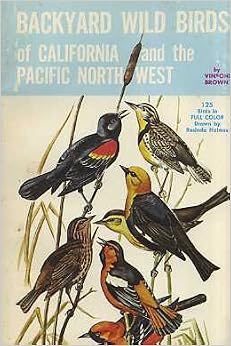
Image result for backyard birds pacific northwest


There was controversy surrounding our christmas tree this year (O (Dead) Christmas Tree); a controversy that resulted in us having two trees - one cut and decorated inside the house, and one live and potted outside the house.

The small live tree that Rowan and I decorated with pine cones (smeared in peanut butter and rolled in birdseed) has provided us with many hours of entertainment watching the birds who came to eat. Homero set it up right outside the kitchen window, where we could see it as we drank our coffee in the mornings. The freezing weather may have brought extra birds to our feeder. It's been very cold and snowy since before Christmas. Quite unusual.

I am not much of a birdwatcher, but Rowan says that among the visitors were spotted towhees and various kinds of chickadees. I can recognize the black capped chickadees. There was a tiny brownish grey bird with a yellow belly. Some sort of finch? It was surprisingly delightful to see the little birds up close, scrabbling with each other and picking at the pinecones. There were several mated pairs, bright males and drab females, who reappeared again and again. You could almost fancy that it was possible to identify individuals.

The cut tree is still in the living room, but we have undecorated it. It really ought to be hauled out for the goats to eat before it gets any drier. The goats need all the food they can get - they are all (presumably) pregnant now, and the cold has been unrelenting and unusually severe. For a week or so, I put fleece vests on them to help keep them warm, while the mercury was hovering in the low teens. We try to keep hay available at all times, but in the severe cold they eat twice as much as usual. And of course, the dairy calf eats as much as three or four goats all by herself.

We are running out of hay. We've already been through eighty bales, which, in a mild winter will carry us through until early spring. Luckily, we still have thirty bales "on hold" with the family who took Poppy pony from us. I didn't ask for any money for Poppy, no "rehoming fee" or anything like that. I was just happy to have found an excellent home for her. But they offered to give us thirty bales of hay in trade, and I didn't say no. They also offered us the use of their Nubian buck for stud this year, and I took them up on that as well. Homero will have to go get the thirty bales pretty quickly - I think we are down to three bales left in the mama barn.

This is a quiet time of year. The goats and the cow huddle up and chew their cud. The chickens stay up in the hayloft for most of the short day. About the only excitement is provided by the occasional escape of the pigs. They are getting big enough to stand uno and put their front feet on top of the barn's half-door, and I think once in a while they slide the catch open more or less by pure chance. Then there's a merry chase to get them back in again.

As for me, I am enjoying the freeze, because it means a respite from the mud.

Monday, April 28, 2014

Warm Weather Work (Slug Shoes)

Today brought the first real warm weather of the season, by which I mean I'm pretty sure it was over 64 degrees fahrenheit. In any case it was warm enough that I got rather sweaty doing some digging out in the garden.

The potatoes that I planted as an experiment in tubs in the playroom back in january (Spud 'Speriment (Potato Poetry)) needed to be hilled already, which I did, digging up some nice black dirt from the oldest, backmost part of the compost heap, now five years old and covered with grass. I also did quite a bit of transplanting. I transplanted some sage and some thyme from black plastic into pretty, porch-worthy containers. I moved some globe artichoke starts from the greenhouse outside, and I moved the greenhouse tomatoes and peppers into larger containers. 65 degrees notwithstanding, I don't trust the weather enough to move tomatoes outside until June.

After all that shovel work, my back was aching and I needed a stretch. A couple of weeks ago, I noticed the tiny white cobwebby beginnings of a tent caterpillar infestation in the orchard. Tent caterpillars, for those of you lucky enough to live somewhere they don't, are a thoroughly disgusting form of insect life with no redeeming qualities whatsoever.


Tent caterpillars are one of those mysterious kinds of bug that has some multi-year life cycle, making it difficult to predict when they are going to show up. Like locusts. The lore of my youth said that every three - or five - or seven years there would be a bad infestation. That doesn't even leave much scope for accuracy, but what I can say is that we have lived here for seven years and these are the first I've seen.

This link will tell you more about tent caterpillars and what kind of unholy chemical hell you can unleash on them if you are so inclined (http://www.seattle.gov/transportation/caterpillars.htm). I prefer to walk the orchard on fine evening such as this, and when I see a tent, I bend over and grab a dock leaf, or a plantain leaf, or some other broad and sturdy leaf; fold it into my palm, and squish the little fuckers manually.

It's an unpleasant job, squishing caterpillars by hand. Nobody said homesteading was always aesthetically pleasing. I never promised you a rose garden. However I will say that today, squishing caterpillars in the warm, slanting sunshine with a carpet of dandelions under my feet and the orchard blossoms forming a fragrant cloud about my head was considerably more pleasant than squishing caterpillars was last week, when I was doing it in a frigid drizzle.

Times like this, I sometimes wish I had a boy child, who might actively enjoy such work. When I was small and we lived on a small farm, my father put a bounty on slugs in the springtime. Slugs are one of the many banes of a garden, and my dad didn't like to use chemical control if he could help it. He preferred to pay us kids to deal with them. Many's the dewy morning I was sent out with a salt shaker. Because we all liked to go barefoot in the springtime, we all, of course, often had the unpleasant experience of stepping on a slug.

Even today, I have a visceral memory of that awful, unexpected slimy squash, followed by the grim discovery that slugs just don't wipe off. A squished slug forms a sticky plaque that endures for days. Me and my sister, whenever we stepped on a slug, would emit high pitched squeals and run to the gravel driveway to commence the futile task of scraping our feet. My brother, on the other hand, actually enjoyed stepping on slugs.

I remember him stomping around the garden, about nine years old, defiantly barefoot, squashing every slug he could find. He said he was going to make himself a pair of slug shoes. He covered every square centimeter of the soles of his feet with that thick, sticky, durable, dark brown substance otherwise known as slug guts.

Really, who hasn't stepped on a slug? I pity the child who never has. As horrible as the experience is, at least it means I'm walking on grass. What are those kids stepping on instead, cigarette butts? I'm glad my fingers and thumb know the feel of a mass of tiny caterpillars meeting their doom between them. I'm glad I know that bug guts are greeny-yellow; that spit bugs spit on bladderwort; that buttercups feel greasy; that garter snakes stink but don't bite; and that push comes to shove, I can always make shoes out of slugs.


Wednesday, October 20, 2010

Hovander Park's Fragrance Garden

Yesterday was a gorgeous bright sunny day - unseasonably warm, in fact. But I loved it. For the first time in a long time I actually feel well enough to take medium-to-long walks. I've been hurt so much of the last several months - my back injury and before that my knee injury - that I've really been feeling the lack of exercise. So I left the kids with Homero and took off for a solo-sojourn to Hovander Park

Hovander Park is kind of an institution around here. It's one of the very best places to bring young kids for nature walks or to visit farm animals and see what an old fashioned, large scale homestead looked like c. 1885.

Originally, Hovander was a 60 acre homestead settles by a prosperous Scandinavian family. Mr. Hovander built an amazing three story house and an enormous barn, both of which are in excellent repair and available for visiting. The barn is packed with original farm equipment, which is awesome, especially for little boys. The house is surrounded with gardens. Hovander is the site of the Master Gardener's program gardens, and they are quite a sight. There is a kitchen vegetable garden, a giant herb garden, the original orchard, pumpkin patch, corn maze, and a beautiful dahlia garden full of dozens of colorful varieties. There is even a noxious weed garden, planted so that landowners can recognize and hopefully eradicate invasive plants.

There is another section of the park a quarter mile away or so, which I like even better. Another house of the same era (history unknown to me) houses a visitor's center which has never been open on any of the three dozen occasions I have visited. However, that doesn't matter. This house is also surrounded by an amazing garden - a fragrance garden.

Fragrance gardens are gardens specially designed for the blind. Rather than focusing on showy flowers and stunning colors, they focus on beautiful scents and interesting textures. This garden has hedges of rosemary, of thyme and sage, dozens of varieties of mint, rosebushes, mock orange, lemon verbena, and all sorts of wonderful smelling plants. It is, of course, also a beautiful garden. I love to walk there and rub all the plants until I smell like a walking herb patch.
Behind the house is a wooden lookout tower, about seven stories high. There's a plaque somewhere that says what its original purpose was, but I can't remember now. Today it's purpose is to provide a small workout followed by spectacular views of the mountain over Tenant Lake.


It's a slight exaggeration to call that body of water a lake - it's more of a large swamp/marsh. I don't think the water gets more than a couple of feet deep anywhere, but it is pretty large - large enough to provide habitat to many many frogs, fish, turtles, beavers, and water birds. There is a mile-long circular boardwalk out over the water. It's a terrific place to bring the kids for a nature walk. There are always dragonflies and tiny minnows swarming in the shallow water. During the migration season, there are hordes of geese and swans. Some of the trail is open but most of it is hemmed in by trees and tall bushes, so it feels very secluded.

The walk felt good. The climb to the top of the tower felt not-so-good, but my panting and wheezing served to harden my resolve to get moving more often and regain a little bit of condition. Taking pictures felt good. Just being all alone with nothing in particular to think about felt good.
Snow White and Rose Red - snowberries and rosehips on the trail at Hovander Park


Friday, June 25, 2010

Grass and Raptors


The neighbors are haying their 100 acre field. It smells like heaven around here... is there a better smell than fresh hay curing in the sun?


Apparently, there is, although I can't smell it. I've never seen so many raptors in my life. Dozens of hawks, vultures, and eagles have been swooping over the field for the last few days, drawn by all the little grass creatures that met their doom when the combine ran over them. I feel sorry for the rabbits, mice and snakes, but I do love to watch the birds.

I have seen several juvenile bald eagles, which is pretty cool.


Wednesday, January 20, 2010

The Eagles Land Again


Boy, one squished possum sure can make for an exciting day of bird-watching! This morning there was some fresh roadkill right at the end of our driveway. Lancelot, our big dumb collie-dog, went right out onto the highway to check it out, so Homero used the toe of his boot to move it onto the lawn.


A few hours later, when I went out to let the goats out for a while, I heard an eerie sound halfway between a screech and the chirp of the world's largest canary. Looking up, I saw no fewer than three bald eagles - two adults and a juvenile - perched in the tall trees along the western fence line.

Over the next half hour, I watched them swooping down to the ground and lifting off again, circling and apparently fighting in the air. They moved from tree to tree to telephone pole, generally looking regal and photogenic.

It must be getting on towards nesting season, no? I always hope that a pair will choose to nest near enough for me to watch them. The very first year we were here, a couple raised a chick somewhere close by, and taught him or her to fly in the neighbor's big field, but we never did see the nest. I'll keep my eyes open this year!