"United we bargain, divided we beg."
Showing posts with label vacation. Show all posts

Wednesday, March 18, 2020

State of the Farm: Pandemic Edition


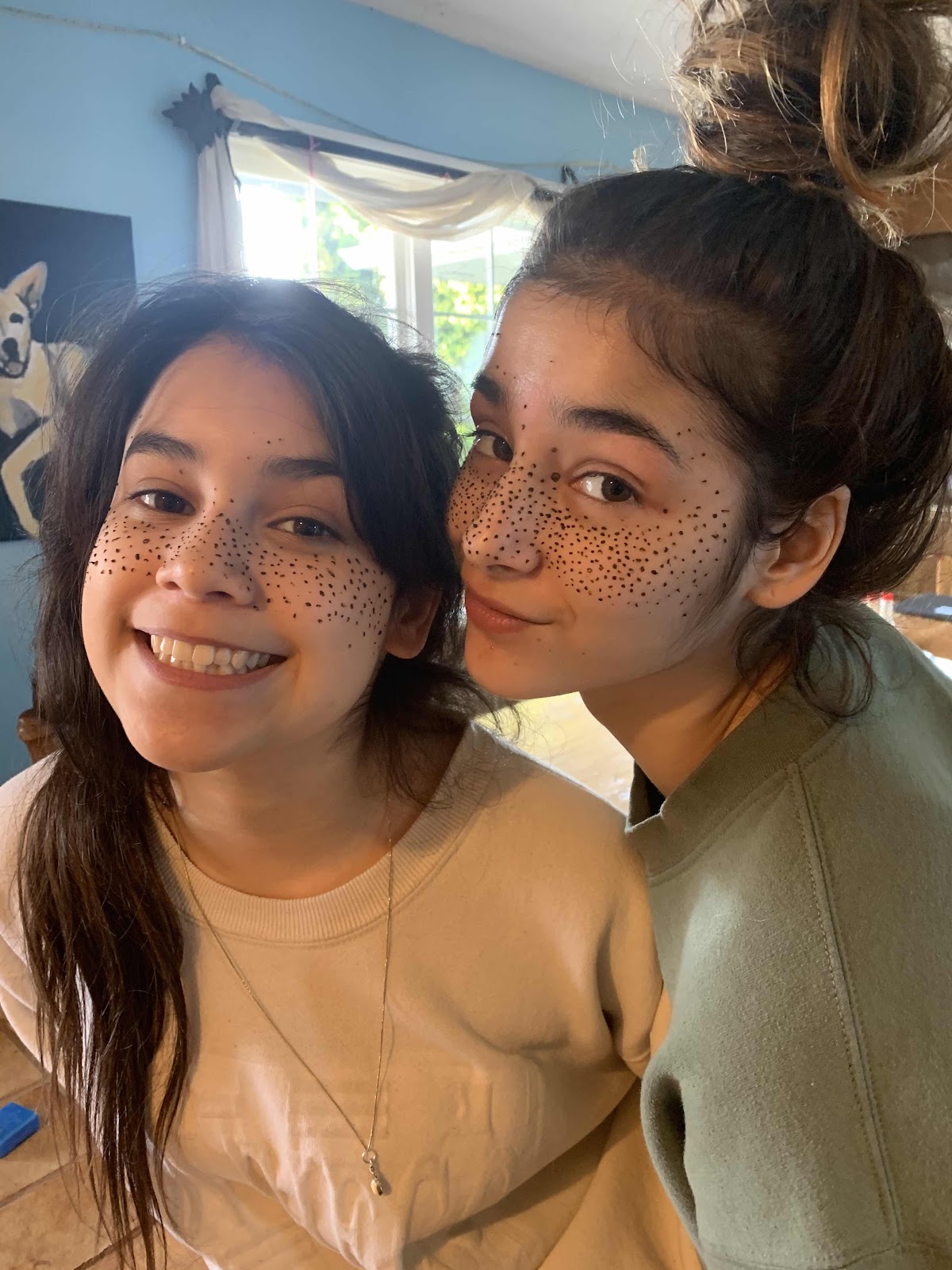
The girls amuse themselves at home with Henna freckles 


DQ2 - day two of “quarantine.” We aren’t officially quarantined, of course, and not even prohibited from going out and visiting. The official prohibitions in Washington are (as of right now) no gatherings of over 50 people (or has it been changed to 10?) and smaller gatherings must abide by strict “social distancing” rules that keep people 6 feet apart. 

Schools are closed at least through 4/27. I started the DQ count from the first day that schools were closed, which was yesterday, hence today is DQ2. Restaurants are closed, though takeout and delivery is allowed. Bars are closed, as are any place where people habitually gather, such as bowling alleys, churches, movie theaters, museums, libraries, barber shops, etc. Grocery stores and pharmacies are open. 

Everyone who can work from home is being told to work from home. I am still working, working more than usual in fact. As a medical interpreter, I spend my days going from one doctor’s office to another, which I suppose makes me high risk for infection. Today, for the first time, there were nurses with thermometers stationed at the entrances of the clinics, taking everyone’s temperature before they were allowed in. I don’t have a fever. 

Homero is still working as well, but he works from home all the time anyway. People still need their cars fixed, even if they are being told to stay home, I guess. I worry a bit about him because he has a few different underlying health conditions (as do I) that could make him a higher risk for complications. At least he wears gloves all the time. 

The girls were initially thrilled about the prospect of a six week spring break, until it was made clear to them that they would not being spending much time hanging out with friends, or indeed outside the house at all. I have let them see a couple friends, one or two at a time, and I’m thinking of getting in touch with the parents of a few of their “best friends” and asking about creating a closed circle of friends so they can all hang out with each other without becoming vectors of disease. 

Nobody knows yet when school will resume. Teachers have been told not to send homework for the time being, since not every child has internet access at home and it wouldn’t be equitable. The district is working on a solution, at least for high schoolers, and I expect sometime in the next week or two that they will probably send home some fat packets. In the meantime, I told the girls this isn’t a vacation, and that they needed to write up a schedule for themselves. It doesn’t have to be a strict schedule, or overly specific, but it has to exist. Here’s what they came up with:
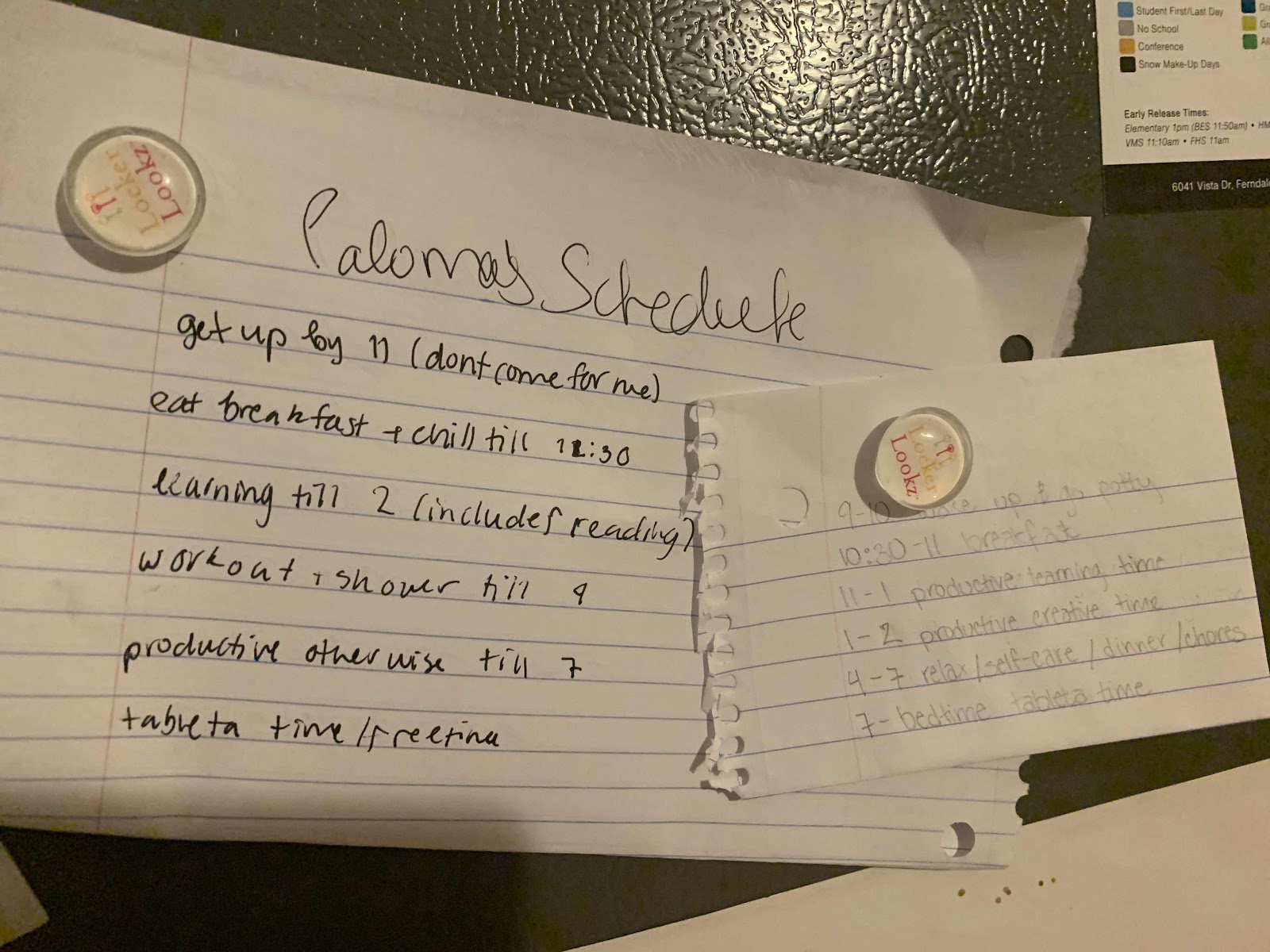


I especially like Paloma’s first line item: “get up by eleven (don’t come for me).” 

Each schedule has to include a two hour block of time for school related work (their teachers can’t assign work that will be collected and graded, but they can post “suggestions” online) and a two hour block of “productive other” time. This second category can be anything from playing piano to drawing to exercising to working in the garden to reading a book. Other than those two categories, and one chore assigned by me or their papa each day, their time is their own. 

Some examples of the chores I intend to make them do, in no particular order:

- walk the pastures and pick up all the pieces of broken plastic, plastic baling twine, or plastic bags and assorted trash they can find. No matter how careful one is, small plastic detritus accumulates over the winter. 

- turn over some of the compost pile

- clean out a drawer or a cabinet 

- harvest nettles

- organize the canning jars (full ones by contents; empty ones by size)

- use the sewing machine to make patches for mending the quilts with holes in them (our dogs have a tendency to get overexcited and tug on the bedclothes)

- clean up the greenhouse 

Like everyone else, I am imagining all the great stuff we will all get done during this enforced down-time, and like everyone else I am probably fooling myself. It’s unlikely I will take up a musical instrument or learn a third language. A more realistic hope is that I will have time and energy to put in a small garden - something I haven’t done for a few years - and read a few extra books. Perhaps do some drawing. Within a month the goats will kid, and soon thereafter it will be cheese season again. 

A good chore for me would be to find, clean, and organize 
my cheese making equipment, and order new cultures and supplies. 

Another good chore for me would be to commit to keeping a blog diary of our lives during this time.  Nobody knows how this is going to play out. Things could stay bad for a long time. Many of my neighbors are elderly and frail and are really not supposed to go out at all. Tomorrow I will talk about local efforts to pull together and provide help and services for folks who are ACTUALLY quarantined, and for folks who have lost their jobs, and those negatively affected in all sorts of ways by this unprecedented situation. 

Stay healthy! 

Friday, July 13, 2018

Guelaguetza in Oaxaca


Of all Mexico’s thirty-some states, Oaxaca is the one with the most indigenous groups and the most indigenous languages surviving. There are at least sixteen distinct peoples with at least sixteen different living languages, with speakers numbering in the hundreds of thousands. 


As everywhere, indigenous culture and language is under threat from the tide of global monoculture, but more than in most places, Native culture is still vibrant here. And one of the main ways that Oaxacans show pride and maintain their indigenous heritage is through the Gueleguetza. 

http://www.theyucatantimes.com/2018/07/the-guelaguetza-one-of-the-most-important-annual-indigenous-cultural-events-in-mexico/

The entire month of July is given over to parades, music, dancing, and displays of craftsmanship. On any given evening, you can sit on a bench in the zócalo or on the stone steps of an ancient church along main pedestrian avenue downtown and listen to a choral group singing traditional songs, or watch ladies in gorgeous embroidered costumes twirl to the sound of drums and trumpets. 

Today, Paloma and I were wasting a few hours downtownnwhile Mamá was at her danzón class, and we ran smack into a calenda. That’s a parade of musicians and dancers attended by giant puppets and huge paper mache figures. 


The Guelaguetza culminates in two day-long performances by dancers and musicians from each of Oaxaca’s indigenous groups, at a beautiful amphitheater high on a hill above the city. People come from all over Mexico and indeed all over the world to see the pageantry and feel the pride. 

The work that goes into the Guelaguetza is mind boggling. All over the state, children take classes of baile folklórico; women weave and embroider and sew fantastic costumes; artisans create all the enormous and breathtaking accoutrements: fireworks, castles made of straw, fifteen foot tall dancing puppets. 

Yes, there’s an element of tourism. Yes, there are financial incentives. Of course there are. But the Guelaguetza, which is a word that literally means “cooperation” or “mutual support,” or even “an offering” is a tradition that is much older than the modern tourism industry in Oaxaca. Tribes have been gathering on el Cerro de Fortín for a summer festival of trade and celebration since colonial times. In its opulence and ostentation, the Guelaguetza has something in common with our more familiar Potlatch. 

But the concept of Guelaguetza is much deeper and much more embedded in Mexican indigenous culture than any one festival could be. It refers to those beautiful, complicated webs of mutual aid and obligation that are formalized through the compadre/comadre system. Whenever a baby is baptized in Mexico, or a couple is married, or a grandfather is buried - whenever any kind of rite is performed or celebration held - this web gets activated. 

Someone buys the baby’s christening gown. An offering. Someone pays for the engraved glasses that guests take home as souvenirs. An offering. Someone puts a bottle of mezcal on every table at the wedding reception. An offering. Someone brings the flowers to decorate the church for the quinceañera’s mass. 

And at the next christening or wedding or funeral, everything is shuffled and everyone reciprocates and somehow, all these offerings - even offerings of tacky plastic doodads and orange soda and tarps to cover the street in case of rain - somehow all these offerings add up to an extremely durable and flexible and beautiful system of mutual dependence and friendship. 

Guelaguetza. 


Friday, August 5, 2016

Homecoming Harvest


We had a bit of difficulty getting home
from Oaxaca. Without going into details, we got home 48 hours later than we thought we would; paid more than a thousand dollars more than we thought we would have to; and had to take a seven hour bus ride to Mexico City instead of flying from Oaxaca, as we had planned. 

None of that matters, in the grand scheme of things. We are home - whole, hale, and hearty. We had a wonderful trip (recap to follow, with pictures). The farm, under Rowan's care, has flourished in our absence. 

I was sorry to have missed so much of harvest season. All the berries were early this year and the strawberries and raspberries came and went while we were gone. I got anxious as I saw my friends' Facebook posts of blueberries and even blackberries while I was still
thousands of miles away. 

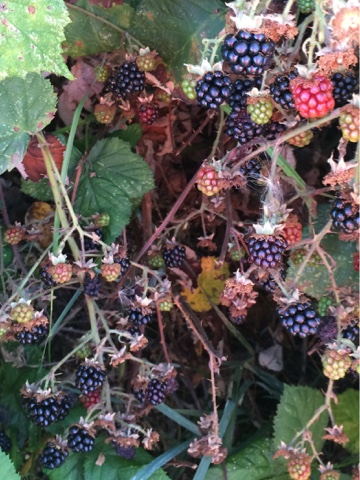
Today I found out that there is plenty of harvest season left. As you can see above, the blackberries are in full swing but there are plenty of green ones left and there will be blackberries for weeks yet. 

The blueberry harvest is not over yet, either. My favorite local no-spray blueberry farm had many plants loaded with berries still, although some had begun to dry on the bush. It only took me twenty minutes to pick about 4 pounds. Sometime this weekend I'll be bringing the kids out to pick more.


Walking the orchard brought some delightful surprises. Some trees that had never yet borne fruit are bearing. Chiefly - the hazelnut. I don't know if this is due to the two new tiny hazels I planted this spring for improved fertilization or if the bush simply needed more time. In years past, it flowered but never developed nuts. This year there are hundreds of nuts all of a sudden. I need to read up on when to harvest them and how to cure them. 

Another tree, which I had pretty much given up on, surprised me: the greengage plum. We have two plum trees - an Italian plum and a greengage plum. The Italian plum has been providing us with a good harvest for several years, but the greengage plum had not set a single fruit, despite growing tall and flowering. For whatever unknown reason, it decided that this was the year it was going to fruit. The plums are just ripe - and delicious. The greengage plum is a heritage fruit that many of us remember, but which you almost never find in the grocery store. I'm so happy ours has decided to bloom.

All the pear trees look pretty loaded (we have four - too many), but one in particular is so weighed down with hundreds of enormous pears that the tips of the branches are actually resting on the ground. I think it is the Comice pear - my favorite. They haven't started to fall yet, so I'll leave them be until they do. 


Our first day back happened to be a Friday, which is farmer's market day in Ferndale. Overly ambitious, perhaps, I bought enough green beans for canning and several pounds of pickling cucumbers and dill to start a crock of lacto-fermented pickles. 

I've already got the pickles going in a big glass container on the kitchen counter but the green beans will have to wait until I buy some new canning jars - tomorrow. I swear. 

Tuesday, June 21, 2016

Oaxaca Trip (Bad Timing)


It's been three full years since we returned from our year in Oaxaca (for more about that trip, see my sister blog, www.newtomexicanlife.blogspot.com). Three years is a long time in the girls' lives - they were children of eight and nine when we returned and now they are young ladies of eleven and twelve. Their memories of Oaxaca are hazy - especially Paloma's, who is the youngest - and their fluency in Spanish has taken a few giant leaps backward.
Therefore we were very happy to be able to plan a fairly long trip this summer - six weeks. We are supposed to leave on Friday. Back in February or March, there was a short period of time when airfare was very cheap. It was so cheap that we decided to fly all the way to Oaxaca, instead of flying to Mexico City and going the rest of the way by bus, as we usually do. Mama was ecstatic that we would be bringing her grand babies back to her, and the girls were delighted at the prospect of seeing their cousins. In fact, since they are so grown up now, we thought we would let the girls stay at Tia Temy's house with their cousins, and Homero and I would stay at Mama's house, fifteen minutes away by car. Maybe we'd even be able to get away for a three-or-four day trip, all by ourselves. 

Then this happened:
Image result for oaxaca unrest 2016
Fires set by protesters to block the road

And this: 


Image result for oaxaca unrest 2016
a truck carrying chickens set ablaze and used to blockade the highway

And this:


Image result for oaxaca unrest 2016
civil unrest in Nochixtlan

The perennial dispute between the branch of the teacher's union known as section 22 and the federal government has once again flared into violence, as it has been doing every couple of years since at least 2006. This particular exacerbation is probably the worst since that time. Eight protestors have been killed by police, and there are fires and marches and blockades and rocks being thrown and molotov cocktails being tossed and batons swinging all over town.

Blockades are nothing new, and for the most part have been traditionally seen as nothing more than annoyances - inconvenient, yes, but a legitimate tactic nonetheless, like a strike. In fact I would venture to say that most Oaxacans view blockades and strikes with a kind of grudging admiration: "these people have guts" sort of thing. If it weren't for these people putting themselves on the line we'd all be ground under the heel of the imperialist oppressor. At worst, a blockade is met with a resigned shrug.

That changed, however, at least among the people I knew, a few years ago when the teacher's strike dragged on so long that schoolchildren missed almost a half a year of school. Those who could afford to sent their children to private schools. Those who couldn't do that had to miss work to care for kids or else leave them at home alone. Blockaders were so inflexible that a woman died in an ambulance that was not allowed to cross the blockade to the hospital. Tourism shrank away to nothing and many jobs were lost.

This time looks to be pretty bad. But it's so hard to judge without being there. A friend of mine who lives in the city center says that the blockades are so bad that grocery stores are running out of food. He said all he could buy at the local market was potatoes, yams, and cucumbers. Mama, on the other hand, just returned from a trip to Tuxtepec and said her bus had no trouble with blockades and that the stores in her neighborhood are perfectly well-stocked. She and my siblings-in-law are pooh-poohing the situation and say that we ought to come down as planned. In three days.

Here is a case where differing cultural expectations can be glaring. When I expressed concern to Homero that there might be a blockade on the road leading from the airport to the city, so that we might be stuck at the airport with no way to get to mama's house, he waved off my fears.

"The blockades are only stopping vehicles," he said. "you can walk around. It's only a few miles."

Somehow, the idea of attempting to traverse "a few miles" of terrain like that in these photos - a terrain littered with tire-fires, riot police, dead chickens, and rock-throwing youth does not inspire confidence. Especially when I imagine having to do it in 90 degree heat, with young children in tow,  dragging all our luggage. I know those Oaxaca highways and even at the best of times they are not suited to those little plastic suitcase wheels.

Thus far we have not been able to contact the airline. My brother suggested that given the situation, the airline would probably waive the change-date fees. Maybe - IF we could get ahold of a human. But really, what good would that do? Who knows when the situation will be any better? Homero spent an hour attempting to contact the customer service department of AreoMexico and only succeeded in soliciting the information (from a computerized voice) that the change-date fee is $250/ticket.

I think we will go. Nothing is ever as bad as it looks on the news.

But I'm bringing a carton of Cliff bars in my carryon.


Sunday, January 1, 2012

Mexico Photos (Part Three)

Agave hearts ready to be roasted (on the left) and after roasting in a pit oven on a small-scale mescal producer's farm (right). Agaves take seven to ten years to reach maturity; then it takes some thirty to forty of the hearts to create a single batch of mescal - we were told that a ton of fermented agave hearts results in twenty to thirty liters of mescal. We bought a liter for thirty pesos - or two and a half bucks. I am sipping some of that right now as I write this post.


Evening in Chiapa de Corzo. Homero bought us a carriage ride around the main square. In an old colonial town like Chiapa de Corzo, there are three or four churches within a two block radius of the main square, each decorated for Christmas. This photo was taken out the back of the carriage, which was driven by an old man in his seventies, who gleefully pointed out all the old points of interest. "That was the movie theatre," he said, and "right there was old mercado, before they moved it." His was the only horse drawn carriage in the area, and patronizing him felt like supporting a time gone by.

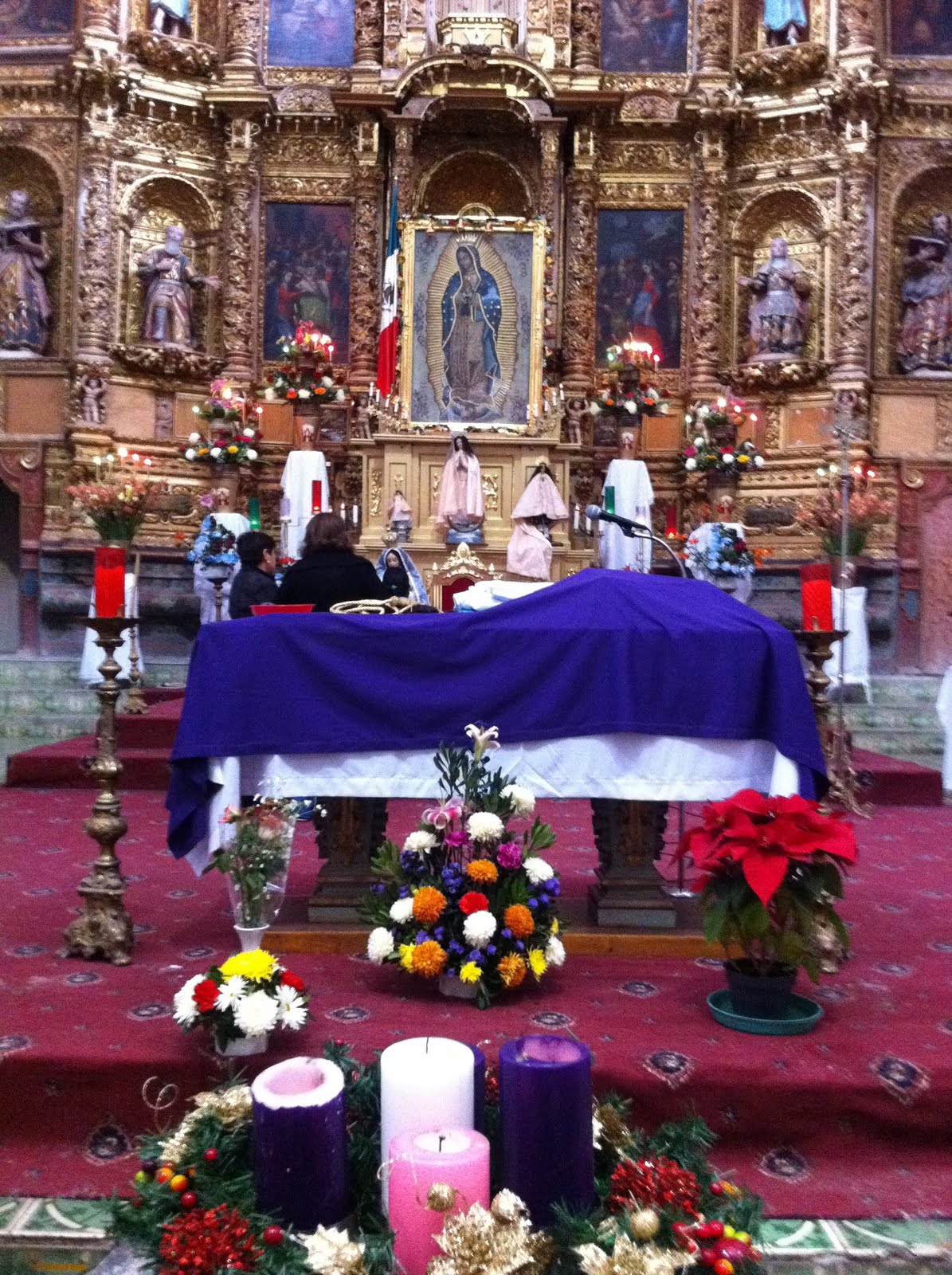
Nearly every business in Mexico has an altar. Perhaps in the Christmas season the altars are more prominent and elaborate than usual, but I have been visiting Mexico for some ten years now and I have always noticed the altars set up in every establishment, no matter how humble. The altar above was set up in a gas station: an ordinary Pemex station along the highway.

This picture is from our visit to the limestone caves above the city of San Cristobal de las Casas. As far as I can tell, the caves have no name besides "las grutas" which simply means "the caves." The entrance is located within a beautiful park about ten miles outside of town. It costs ten pesos to enter the park and another ten to visit the caves - about two dollars total for an incredible experience.

El Palacio Municipal (city center) lit up for Christmas with lovely magenta light. This building lines one side of the zocalo in San Cristobal de las Casas, providing one fourth of the gaudy, gorgeous pageantry surrounding the main square. Three bands were playing; couples were dancing; old movies were projected on rolled down screens; and of course dozens of artisans strolled hither and yon hawking their wares.

Tule: the largest tree of it's species in the world. The species is Taxodium mucronatum , a kind of cypress. It's trunk is the stoutest in the world. The tree towers over the church built in front of it. It is a lovely and impressive tree. The town is also lovely and impressive - about fifteen miles outside of Oaxaca, a goof place to visit, to eat at the mercado and but artesanias.

Hope and Paloma enjoying a few moments climbing all over the back side of Santo Domingo Church.


Beautiful and strange art installation in the corredor turistica in Oaxaca. Somone, or several someones, placed hundreds of hand built, unique clay people in the courtyard of Santo Domingo, the grandest and most ancient church in Oaxaca. It looked like a pilgrimage of Morlocks.
I absolutely cannot remember which of a hundred beautiful churches this is.

Chapulines. Grasshoppers, in other words. In pre-hispanic times, insects provided a significant portion of the people's protein. Even today, many species of insects are highly prized as food and command high prices. Chapulines are only one of many. Agave worms, Chinches, and Escamoles are only a few of the bugs one might find in a well-stocked mercado. Chapulines are the most available: the common wisdom holds that if one eats chapulines one will always return to Oaxaca.

It has always worked for me so far.

Saturday, December 31, 2011

How to Make the Most Beautiful Pinata (Mexican Photos Part Two)


The pinata is the universal celebratory item, is it not? I don't know if the pinata is a purely Mexican invention that has spread around the world, or if the idea of the pinata is a kind of cultural universal (I suspect the latter) but in either case, a pinata is a lot of fun and a must-have item for all festive occasions.

My children broke seven pinatas on this trip. That's by their own count. I kind of lost track. Pinata making is a cottage industry in Mexico, and many is the family that makes its living with newspaper and paste. The sad little cardboard factory made things that pass for pinatas here in the states are pathetic by comparison, and I hate buying them. Pinatas in Mexico are truly works of art, even if most of them are based on Disney characters and one might question the tastefulness of beating the little mermaid to death with a stick.

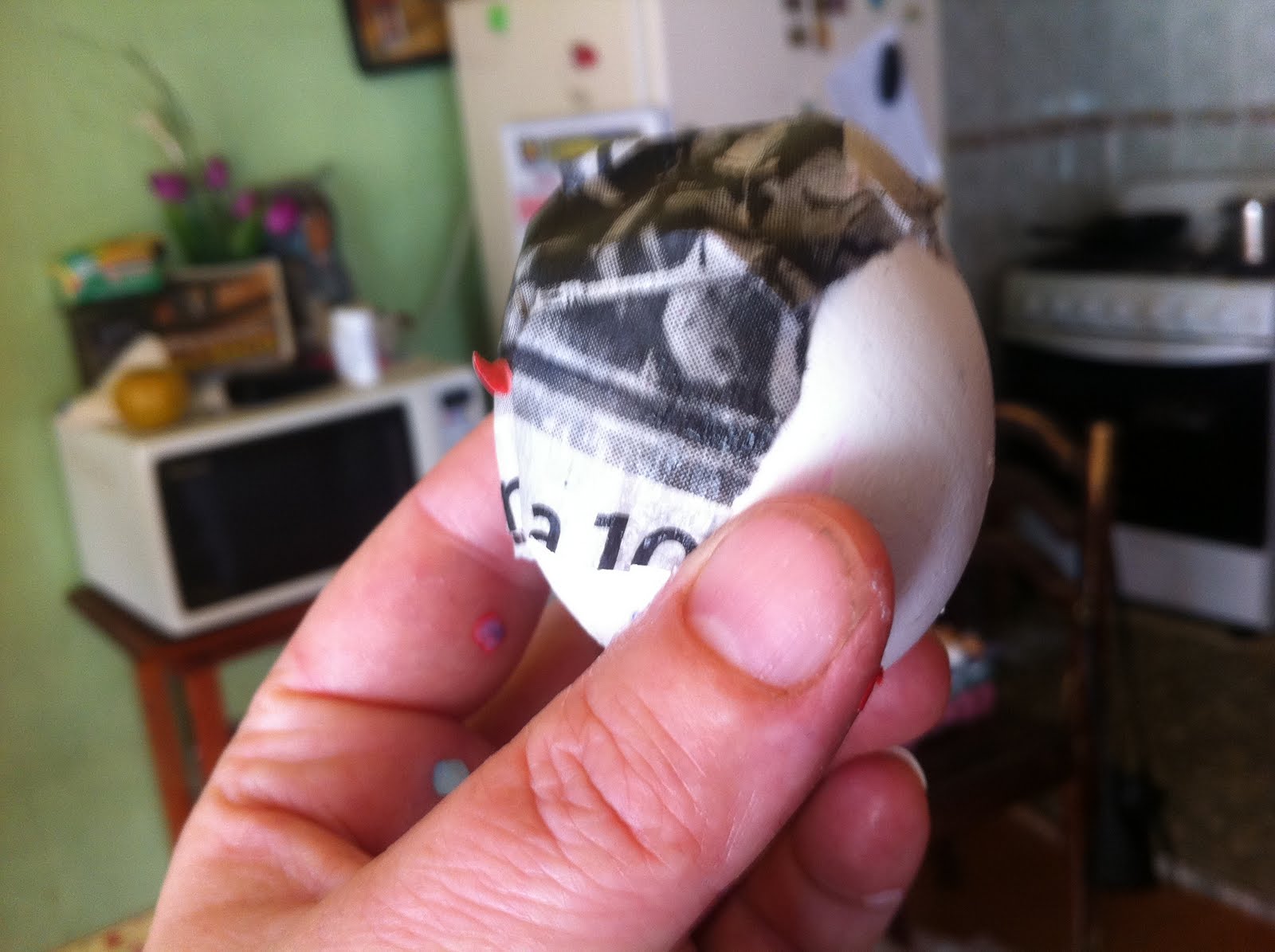
My sister-in-law Temy and her children made the most beautiful pinata I have ever seen - with small help from us. It is in the form of a branch of grapes, and is molded on a clay pot and covered with blown, confetti stuffed eggs. If you count the time it takes to save up so many eggshells, this pinata must have taken months to make. I hope to make one myself someday, so I documented the process. This pinata is truly for those with the Martha Stewart gene, so be warned. But if you want to make the mothers of the friends of your five year old swoon with envy, make this for her birthday party. Just start four months ahead of time.

The girls covering the clay pot with strips of newspaper glued on with a paste made from water and cornstarch. Since you are unlikely to come across an unfired round clay pot here in the states (and may also wish to avoid the risk of concussion), mold your pinata base on a balloon.

For several months ahead of time, anytime you use an egg, be careful to crack it only at the top, preserving as much as possible the shell. Set the shells aside to dry. When you have about 150 of them, buy a bag full of confetti and fill the eggshells with a spoon.

Use small strips of newspaper and paste to cover the openings of the filled eggs. Set the covered eggs out in the sun to dry - this will take a few hours to a day, depending on solar availability in your area.
Turn the pot upside down - or, if using a balloon, cut off a small opening on the top for filling with candy. Then turn upside down. Roll a piece of thin cardboard into a cone and attach to the bottom of the pinata (the top, turned upside down - get it?) with newspaper and paste. Let dry completely. Poke four holes in the rim of the opening and run twine through in a cross pattern. This is to hang the pinata later. When eggs and pinata are dry, use a hot glue gun to attach the eggs, covered side in, to the pinata. Start at the tip of the cone and work your way down on a spiral, trying to cover the pinata as closely as possible. When all are attached and dry, carefully turn pinata right side up and hang with the twine outside somewhere.

Use spray paint to paint the pinata grape-colored. This pinata has leaves made of cardboard covered with green crepe-paper, which is a nice touch. The hardest part is transporting the pinata after it is filled, so if possible make and fill the pinata on the same site where it is to be broken. Once it is turned right side up and filled, a strong person has to hold it at arm's length so the eggs don't break until it can be strung up.


It feels like a damn shame to destroy such a beautiful, painstakingly constructed object. You will not want to. I didn't. But the children have so much fun, they are so delighted with the crash and the shower of confetti and the candy. And there is something both terrible and elating about the violent destruction of beauty, especially of a beautiful object that embodies so much time and effort.

Breaking this pinata is like a tiny lesson in mortality. In all endeavors, natural and artificial, complexity occurs slowly and with effort, but can and will inevitably be reduced in a relative instant. Breaking the pinata is ritually laughing in the face of death, a beautiful celebration of ending. To break the pinata is to bow to the inevitable, but to do so with grace and spirit and joy.

How very Mexican.


Friday, December 30, 2011

Mexico Photos Part One (Shout Out to Rowan)

The trip home was almost interminable - we were up at 5 am two days in a row - but is it finally over. We arrived back at the farm around two o'clock this afternoon, to some very excited dogs and other animals. Everybody is fine and healthy.

Rowan did an amazing job taking care of the place and deserves some public props. For almost three solid weeks she was fully and solely responsible for feeding the horses, goats, chickens, dogs, rabbits, and cat twice a day. For the first week we were gone, the hose was frozen solid and she had to haul warm water in buckets, a nasty job. She kept the house clean (or at least cleaned it before we got home) and even threw a Christmas party for a bunch of teenage friends without wrecking the place. She dropped us off at the airport (125 miles away) when we left and picked us up when we arrived home. She did a bang-up job, and I'm extremely proud of her. Thanks, sweetie.

According to my iPhone just now, I took 488 pictures while I was gone. This is what happens in the digital age, I guess. I am old enough to remember buying three or four rolls of film before a trip and being choosy about what I photographed. Nowadays everyone - including me - just walks around with a camera raised to their face pretty much all the time. This actually drives me batty, in much the same way that people breaking off a conversation in mid-sentence to answer their cell phones irks me, but I am nearly as guilty as everyone else, so I am ashamed to complain.

However, the compensation for seeing Mexico on a three by three inch screen is that I do, in fact, have a lot of very nice pictures. In the old days, I used to come home and eagerly develop my precious 36 frames, usually to discover that 22 of them were complete crap. I specialized in pictures of my own feet. Now, even though the crap:pleasant ratio is about the same, I have a lot more to sift through and can come up with a few pictures worth sharing.

Here are some of them, in no particular order:

Homero sitting on a wild horse. Not kidding. This was during our trip to Crecencio's village to deliver some gifts to his family (A Visit to La Mixteca Baja, Mixteca Trip Part Two, Take Three, Damnit!). The young man holding the horse's head actually went out into the hills and captured that horse, brought it home, and broke it and trained it himself. He is seventeen. The boy, not the horse.

On the way out to Crecencio's village, we stopped to visit the ex-covent of Yanhuitlan. Passing by, Temy, my sister-in-law, noticed it was open. She yelled "Stop!" Apparently, it is almost never open. It was well worth the delay. This enormous and beautiful temple-complex (I don't know what else to call it) was built in the mid sixteenth century by the Dominicans. Well, actually, as the caretaker told us, by six hundred native Mexicans working every day for twenty five years. I have my doubts about whether a single Dominican priest ever lifted a single stone. But breezing right by that (shall we) it is a place of extreme beauty. To be honest, now that I look at the above picture, I think it is probably not of Yanhuitlan at all, b ut instead of one of the apses in Santo Domingo in Oaxaca City. Hmm. So many beautiful churches in Oaxaca, they blend together after a while. But Yanhuitlan's beauty is austere, and Santo Domingo's is baroque. Well. Either way.

Ahem. Moving on. Below is a very ordinary, typical street scene in central Oaxaca. The streets are cobblestone; the buildings are stone or stuccoed adobe, still habitable and functional after five hundred years. The native stone that much of the city is made of is called cantera, and is usually a beautiful light green, though sometimes rosy pink as well. The building on the left is made of cantera. The small fountain in front is operational, and is a favorite place for young lovers to pass a few minutes "tortorleando." Literally: acting like lovebirds.

Below: street corner on the edge of the Mercado 20 de Noviembre, which is the main central market. Plenty of people still shop there for their daily goods, but it has largely become a tourist attraction. That is not to say, however, that you should pass it by if you happen to be in Oaxaca. By no means! Go! The market is a real experience. It may give you a migraine from the press of people, the competing music blaring from adjacent stalls, the mixed up smells of raw meat, rotting flowers, fresh herbs, copal, and sweat, but if you go to Oaxaca and miss the central market, you may as well not have gone.

Besides, the other option is the Mercado de Abastos, where the majority of city residents go when they want to shop (those that don't go to Wal-Mart, that is) and that place is scary as hell. The Mercado de Abastos is for professional adventurer tourists only. There you can hire a brujo to take a curse off of you, or get a pirated version of a movie that isn't even out in theaters yet, or buy anything from a live chicken to a pair of fake monolo blahniks, but you can also get lost irrevocably in the vast labyrinth of tarp-backed puestos, and I am here to tell you that that is not a fun experience. Once was enough for me: now I stick to the Mercado 20 de Noviembre, touristy though it be. It's plenty colorful enough for me. Look below and you'll see.

Senora Maura's garden. Although her patio is very small - perhaps only 10 by 30 feet or so - she has managed to create a very serene and beautiful haven. The concrete walls are dusty pink, and dozens of terra cotta pots are planted with flowers and edibles. The two trees in the photo are a papaya (left) and a pomegranate (right). She also has a chayote vine (that's mirliton to you southerners) and a chile de arbol. A bird of paradise plant blooms along the other wall, and night blooming jasmine scents the evenings. It was a beautiful place to spend a few hours on a warm December night, chatting and drinking mezcal.

In my experience, if I may generalize, Mexicans have a gift for creating beauty in small, intimate spaces. As tourists, many Americans never have the opportunity to get behind the two-story wall of concrete that lines every Mexican street. From the perspective of a tourist, Mexican towns can seem loud, dirty, and claustrophobic. Those damn unbroken walls of cement! There are no sight-lines - all views are blocked by walls. The noise of unmuffled trucks and loudspeakers announcing God-knows-what at high decibels bounces back and forth against the concrete walls. The walls are decorated with spray paint, much of it artless graffiti or poorly drawn representations of Disney characters.

What the unlucky tourist may never know is that just on the other side of each of these walls is a shady, serene courtyard. Every home, no matter how humble, encloses a central space open to the sky. In the city center, the most gorgeous, expansive colonial homes may have three or more courtyards, gardens, fountains, balconies, trees - but none of that will be evident from the outside.

Mexico, somebody talking about sex once said, is not a prudish culture, but it is intensely private. I think that is true of its houses, as well. Homes which are closed up tight as an oyster yield lush, sensual hospitality once you are granted entrance. There are no people on earth as generous, as fun loving, and as welcoming as Mexicans - but you might not guess that from the impassive faces you see in the street. Mexico has a great poker face. But get it to crack a grin - and it's the most beautiful smile you've ever seen.