"United we bargain, divided we beg."
Showing posts with label seasons. Show all posts

Wednesday, September 20, 2023

Merry Mabon (preserving log)


Dressed the altar for Mabon today, a day or two early. I’ll continue to add to it as the season progresses. I bought these Japanese lanterns from a nearby farm stand, but they also had the live plants, and I bought a few and planted them in my garden. Hopefully next year I can harvest some of my own. I also want to add more seasonal plants - I like the red amaranth and yellow tansy at this time of year. 


It was an “on” year for the Italian plum tree. There are still hundreds of plums on it - falling fast - but I think I am done with plums for the year. In addition to eating them fresh until I was sick them, I dehydrated a gallon sized ziploc bag full and made twelve half-pints of plum jam. 

Actually, my mom and I made the jam together and it was really nice. She’s amazing, she doesn’t use pectin and her jam always turns out perfectly. She uses her own system for eyeballing when the sugar syrup is ready - she says it will jell when it looks like “King Farouk on a barstool,” which is to say when there are two side by side drips coming off the spoon instead of only one. 

I also canned six pints of salsa ranchera and six pints of regular tomato sauce, and smoked two sockeye salmon. The main harvest left is the pears, but it wasn’t a very good year for pears and there arent a ton of them, for once. 


Tuesday, September 12, 2023

Change of (Beverage) Seasons


It’s been a few years since we last broke out the old cider press. This is the same machine my family used to press apples when I was a little kid growing up on a three acre hobby farm in Woodinville (years before the Microsoft campus transformed it from a sleepy, far-out Seattle suburb into software-mogul wonderland). My mom gave it to me when we first moved up here and started planting apple trees. 

Our apple trees have met various terrible fates. Some were eaten by goats, other run over with riding mowers when they were but tiny saplings. We do have one beautiful, well grown apple tree that I planted specifically for the purpose of making hard cider. It’s an antique variety called a golden russet. But it’s a late apple, best after the first frost, and also I don’t drink alcohol anymore, so it’s of minimal use on a warm September day when we feel like making cider. 

Therefore I invited my good neighbor Hilde and her family to make cider with us. They have a large old orchard with several different kinds of apples. We all traipsed out to pick apples, and her sharp-eyed daughter saved us from a fate worse than death by spotting this horrendously huge hornet’s nest hidden in one of the trees.


Carefully avoiding the tree of mayhem, we gathered several large totes full of apples. Hope kept asking “do you think we have enough apples?” and didn’t believe me when I told her we manifestly had more than enough apples. Like I said, it’s been a few years, but I can still do 5 gallon bucket-to-gallon jug conversions in my head. 

It was a lot of work, as cidering always is,,but we all had a great time. Hilde’s kids had never made cider before and they were excited to turn the crank and pass the apples hand to hand and pour the juice through sieves and funnels. 

And we made SO. MUCH. CIDER. As usual, the weak link in the cider-making chain is finding enough jars. We filled up all my half-gallon mason jars, which means it is truly the end of milk season (the goat is almost dry anyway). Luckily Homero rooted around in the recesses of his shop and came up with this 3 gallon skull-shaped beverage dispenser. It doesn’t have a lid, but we just put a plate on top of it and will dispense cider at will for the next few days. 


Monday, April 24, 2023

Operation Trampoline Rescue (From the Blackberries)

My youngest daughter is turning 18 this weekend (I am
brushing right past this fact quickly cause otherwise I’ll cry), and she asked if we could possibly get the trampoline into a usable state before her party. 

The trampoline, a very expensive and fine Rainbow brand trampoline with a 1,000 pound weight rating and zero springs, was the first recreational object we bought when we moved here. The kids have jumped on it pretty much since they were old enough to jump. 

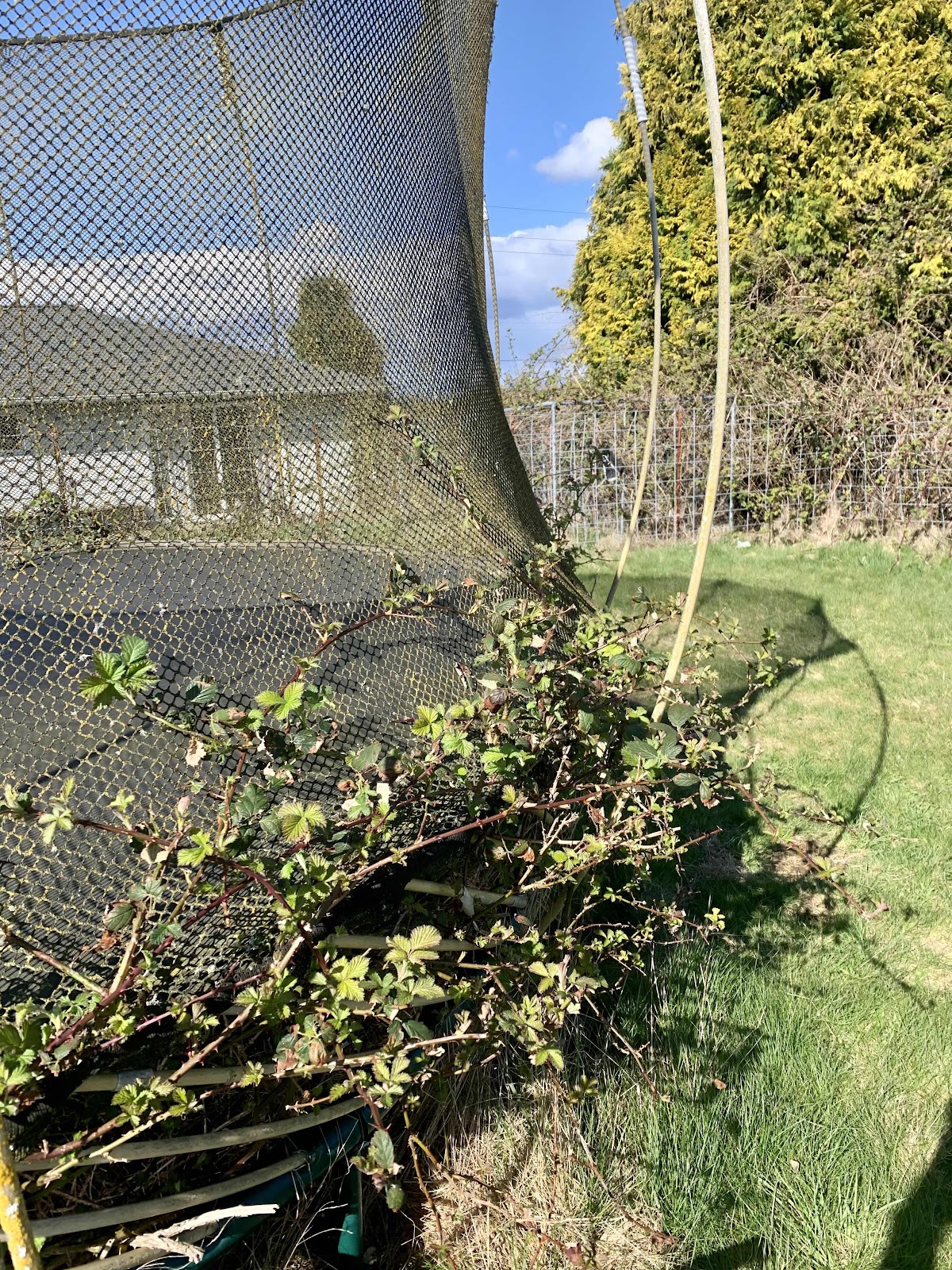
But it hasn’t been used much in recent years, and the blackberries did what blackberries do to inert items left in one place for too long - they ate it. Not entirely, no. In fact they were mostly confined to the underneath part of the trampoline where we couldn’t mow. But over the years the vines got very tough, thick, and woody, and made it impossible to jump on the trampoline at the risk of doing your self a major injury. Actually, I guess the risk of major injury is kind of intrinsic to trampolines, but y’all know what I mean. 

The trampoline is too heavy to pick up and move. Only the occasional 80 mph wind gusts we get up here can do that. As proof against just that, several years ago we pounded some fence stakes into the ground and chained the trampoline down, so it’s EXTRA immovable. And of course it was also lassoed and tied to the earth by innumerable blackberry vines. Moving the trampoline to mow underneath it wasn’t an option. 

Papa to the rescue. I suggested using  the forklift to lift one side of it but he said the forklift needs to be on concrete or it will just tip over or sink into the ground. But he said the tow truck would work. And it did. Once he used the truck to pry the trampoline up on an angle, it was pretty easy to hold it up there. 

The Stihl has a branch-cutter attachment, so homero basically used a chainsaw on a stick to cut all the gnarly canes underneath while Paloma and her boyfriend held the trampoline up. Then Paloma went underneath with a rake and pulled out the cut vines, and I gathered them up with gloves on and put them in the wheelbarrow and hauled them over to the compost. 


It was about an hour’s work for four people. Some of the vines had grown through the net and had to be carefully cut from both sides and extricated, but we got it done. The trampoline is back in action.


Friday, April 14, 2023

King Kong Squash


This gorgeous, enormous Blue Hubbard squash was given to me by a neighbor. I don’t know for sure if she grew it herself but she’s quite a gardener so it’s entirely possible. Blue Hubbards are an heirloom variety winter squash with excellent keeping qualities, fine dry orange flesh, and which grow to impressive size. This one weighs 43 pounds. 


I’m staying home sick from work today, so I decided it was as good a day as any to deal with the giant squash. Their shells are so hard I had to have Homero cut it up with an axe. It occurs to me that this blog is full of pictures of Homero dealing with various large and unusual comestible items. Like the 25 pound Ling Cod. Cow heads. I should make a post of all those photos. 

My plan is to bake it, purée it, and make a bunch of pies, some soup, and….. I guess freeze the rest of the purée for later. It’s not recommended to home-can winter squash, even in a pressure canner. Something about the purée being too thick to heat evenly. But it freezes very well, and quart sized blocks of frozen purée can be used to make soup, pie and quick breads into the future. 

I’m also saving some seeds to plant later this spring. Blue Hubbards are an open pollinated heirloom variety, which means they will produce fruit similar to the parent plant, not like the more common hybrids that will produce fruit unlike, and usually inferior to, the parent plant. 

I love this photo of me and the squash. Look how happy I am! I can lift 43 pounds of food over my head!! 


Friday, January 6, 2023

Rosca de Reyes (King Cake)


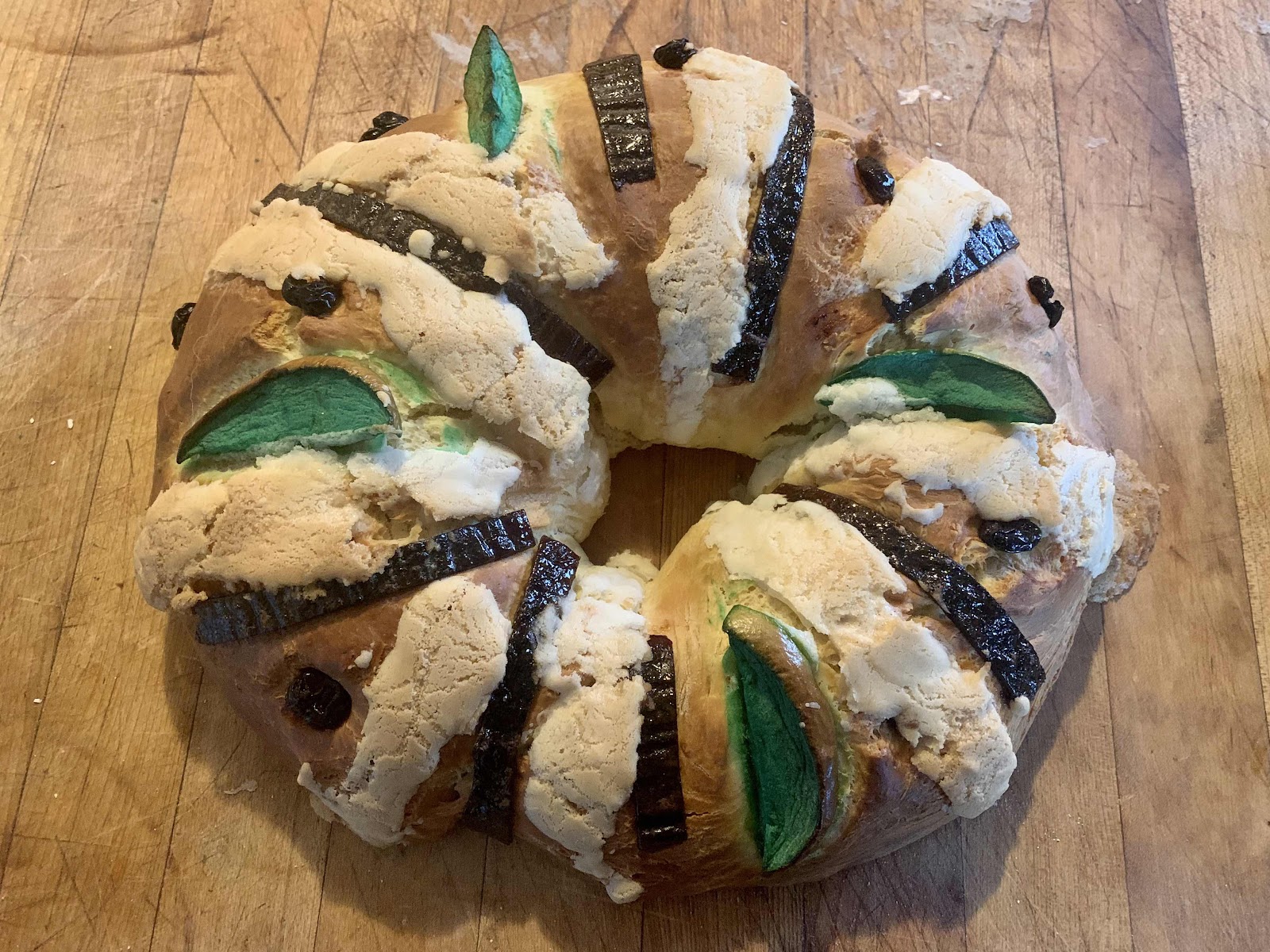
I made this lovely Rosca de Reyes cake today, which is January 6th - also known as Epiphany and the Three Kings day. 

Mexicans celebrate three kings day with a Rosca de Reyes, or a King Cake. It’s a sweet egg-and-butter enriched bread studded with dried fruit, nuts, and sugar paste. Sometimes it’s stuffed with marzipan. And somewhere inside it, there’s a little statue of the baby Jesus. Or a baby anyway. The tradition goes that whoever gets the baby Jesus in his or her slice of King Cake has to make tamales for the next feast on the calendar, which is Candelmas - February second. 

(For a post about Candelmas/Imbolc, click here http://newtofarmlife.blogspot.com/2014/02/imbolc-repost.html?m=1

Like many other catholic feast days, Epiphany has some Pagan antecedents. The tradition of a King Cake goes way back in pre-Christian Europe. Instead of a baby Jesus, a dried broad bean would be baked into the cake and the person who found it was crowned King for a day. 

This is an example of a topsy-turvy festival, when a peasant can be a king and vice versa. The Bean King would be the focus of the celebration and the center of attention. He could behave however he wanted for the night - get super drunk, grope the girls - without repercussions. Such festivals upset the social order and let people blow off steam, flouting the norms which they have to live by the rest of the year. 

But in the REALLY way back days, in some bronze-age planting societies across Eurasia, the bean-king was no laughing matter. Instead of being king for a night, he was made the sacred king for a year, during which he was given the best of everything and revered by everyone. But when the next year’s planting time came around, he would be killed and his blood poured on the fields to ritually fertilize them. 

There is no bean in my cake, nor is there a tiny baby Jesus statue. Oddly enough, I don’t actually own such a thing. For the decorations, I used strips of my homemade fruit leather, and thin slices of dehydrated pears colored with green food coloring. Tonight we will enjoy it with hot chocolate and nobody will be King. 


Friday, August 19, 2022

Farm Stand Fun


One of the things I love about where I live is that, recent development notwithstanding, it is still rural enough that there are dozens of small, seasonal farm stands close to me. 

Many of my neighbors put out farm produce of one sort or another, or of various kinds, throughout the agricultural year.  It begins with eggs in the earliest spring (we have sold eggs ourselves) and progresses through vegetable starts, spring flower bouquets, early greens, right up to August, where we are now, with an absolute abundance of garden produce of all sorts. This particular moment is sweet corn, tomatoes, peppers, cucumbers, and of course, zucchini. Further along there will be apples and pears, pumpkins and gourds and dahlias. 

Some stands are no more than a hand lettered sign and a cooler. Most are some sort of cabinet or old wardrobe, with the goods portioned out into Tupperware or ziplocs, and a cash box of varying degrees of impregnability ranging from a child’s piggy bank to miniature bank vaults. These days, many farm stands accept Venmo or PayPal. The more professional stands will have a refrigerator and possibly an entire greenhouse. In addition to edible goods, some stands sell locally made soaps and lotions, or bric-a-brac, or second hand books. I have a bias towards the small, the ramshackle, the eccentric, and the obviously run by children. 

There’s a circuit I do when I want to see what’s up in my local farm stands. A couple of circuits, really - a small one that is a square about two miles on a side and includes five farm stands, and a longer route I do if I have more time or want to hit up some of the bigger stands. A little bit further will take me to a special stand I like that has dairy products - Jersey milk, yogurt, and cheese. It’s a really relaxing and enjoyable way to spend an hour or two - driving down my well-known country roads with the windows open and the smell of curing hay blowing in the window, discovering what my neighbors have been planting, what did well this year and what failed, maybe having a chat with a farmer if you happen to catch one replenishing the ziplocs. 

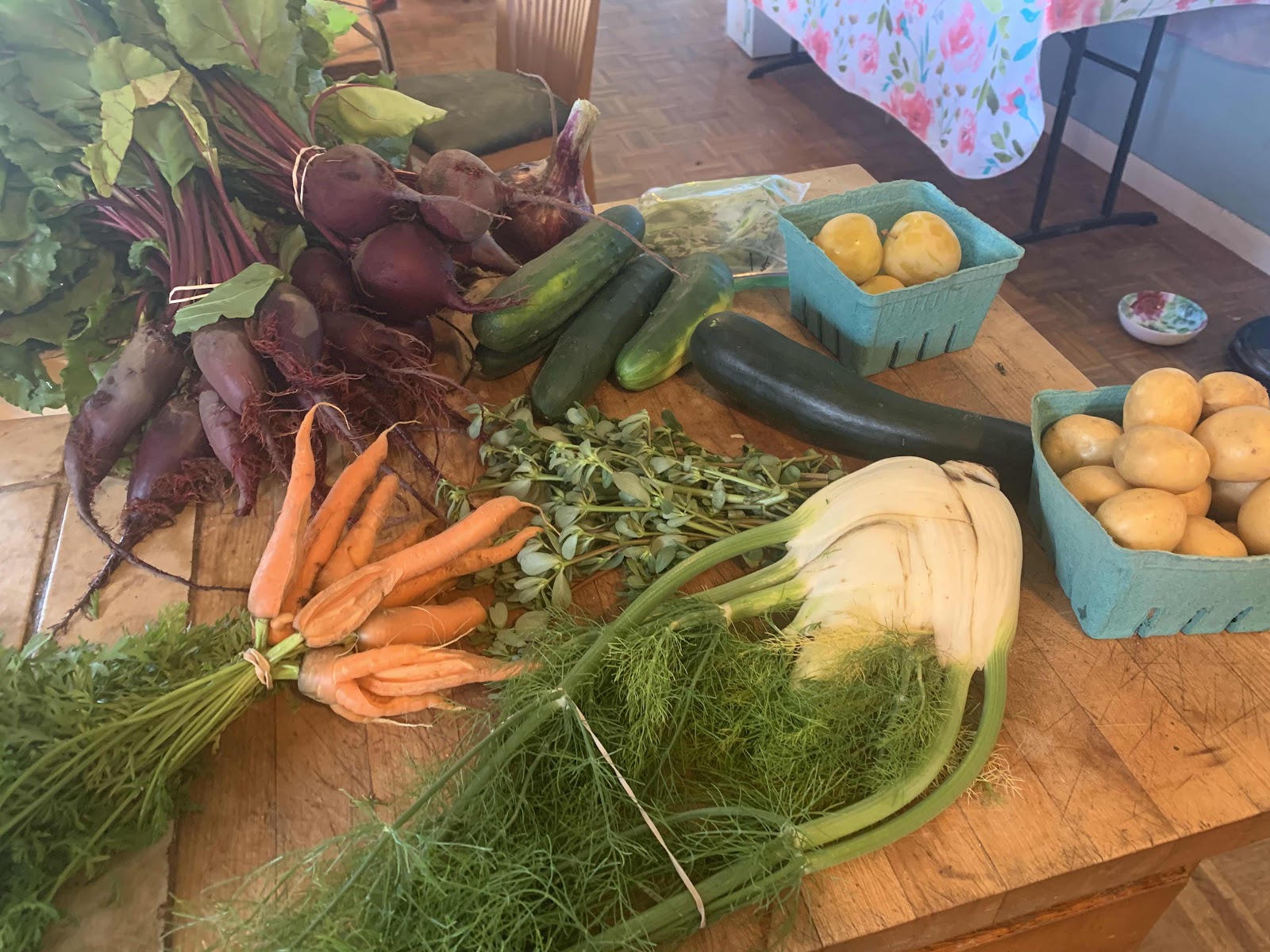
Yesterday’s haul was all from my small local circuit. Twenty dollars total got me everything you see above - new potatoes, Italian frying peppers, carrots, beets, fennel, cucumbers, plums, onions and purslane. Those three bunches of beets made six pints of pickled beets with enough left over for a beautiful roasted beet and goat cheese salad for dinner. 

There are only three of us at home these days, and it often happens that my eyes are bigger than all of our stomachs. 


Friday, July 29, 2022

Balking a Buck (Apron Antics)


Breeding season is here.  It seems awfully early, being still high summer, but the days are getting shorter and that is the signal that sends the does ovaries into overdrive. It doesn’t seem to matter that they all gave birth fairly late this year and are all still nursing young kids. 

Since we have our own buck this year, I have to take precautions to prevent him from impregnating everyone right now. Not only would it be hard I the does to get pregnant again so soon, but if they get pregnant in July they’ll give birth in December or January and that is not good. 

We do have one goat named Christmas, who was obviously born Christmas Day, and she’s a fine healthy goat, but that is an anomaly. Some breeders like to have kids born in winter, presumable because they’ll be grown enough to breed come fall, but those farmers must have barns with electricity and heat. Probably heated electrified barns that are not situated a few hundred yards away from the house so they have to trudge through a howling blizzard to get to them. Or maybe they live in places that seldom experience cold weather, even i the depths of winter.  We have a primitive barn and a cold wet climate, and we like our babies born in May. 

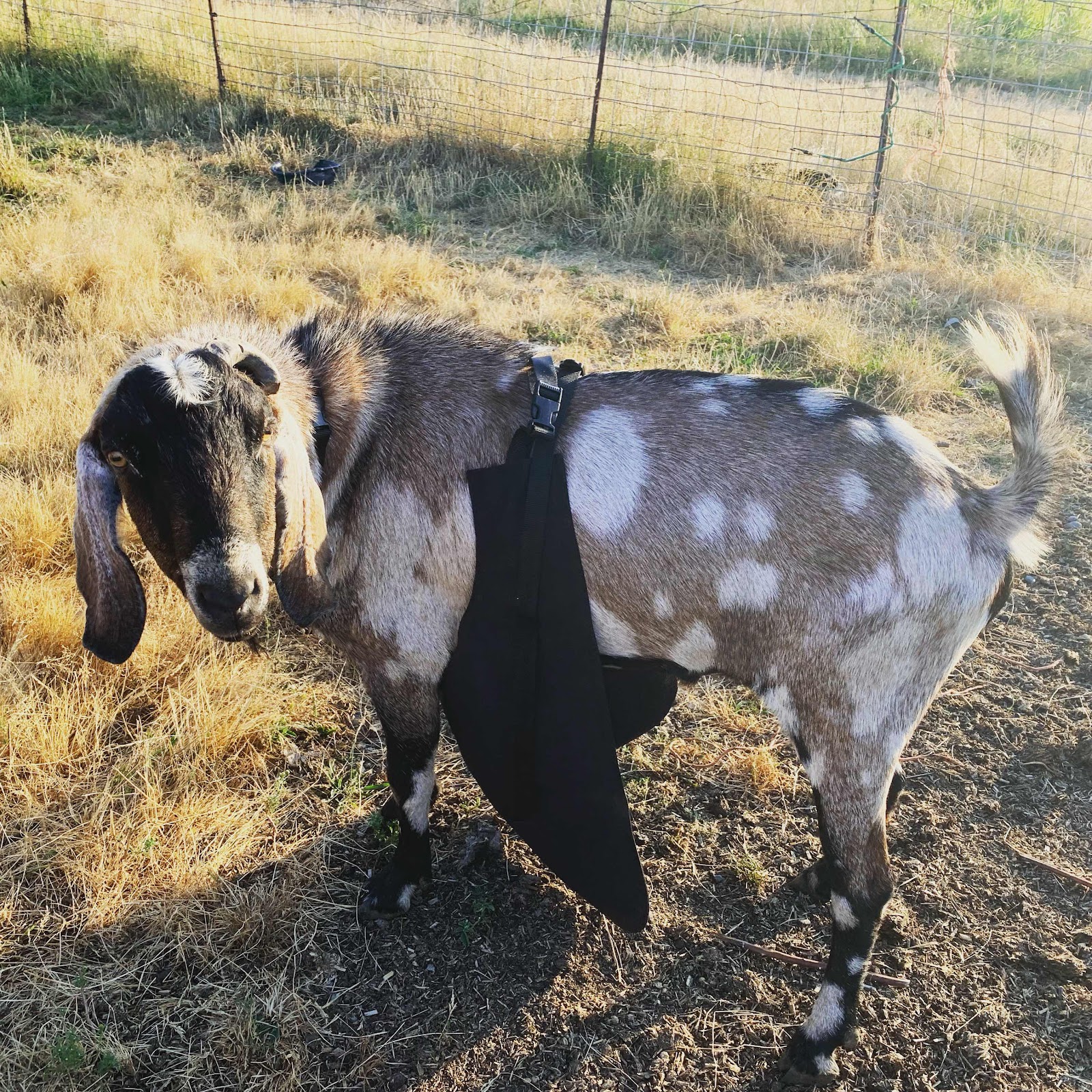
That means we have to control the buck. Not an easy thing to do. Until today he was separated from the herd in the sacrifice area along with the cow, but they ran out of grass. So I bought the  contraption you see in the photo: a buck apron. 

A buck apron is designed to provide a barrier between the buck’s business and any does. Reports of its effectiveness vary, and I’ve never tried one before. I guess we’ll find out. 
It wasn’t a ton of fun putting it on him - he stinks to high heaven - and it was expensive, so I hope it works. 


Monday, May 30, 2022

Herb Harvest 2022


Mint is one of my favorite herbs, not only for its zingy flavor and medicinal qualities, but because it’s a hardy perennial that’s damn near impossible to kill, even for a notorious plant murderer like me. 

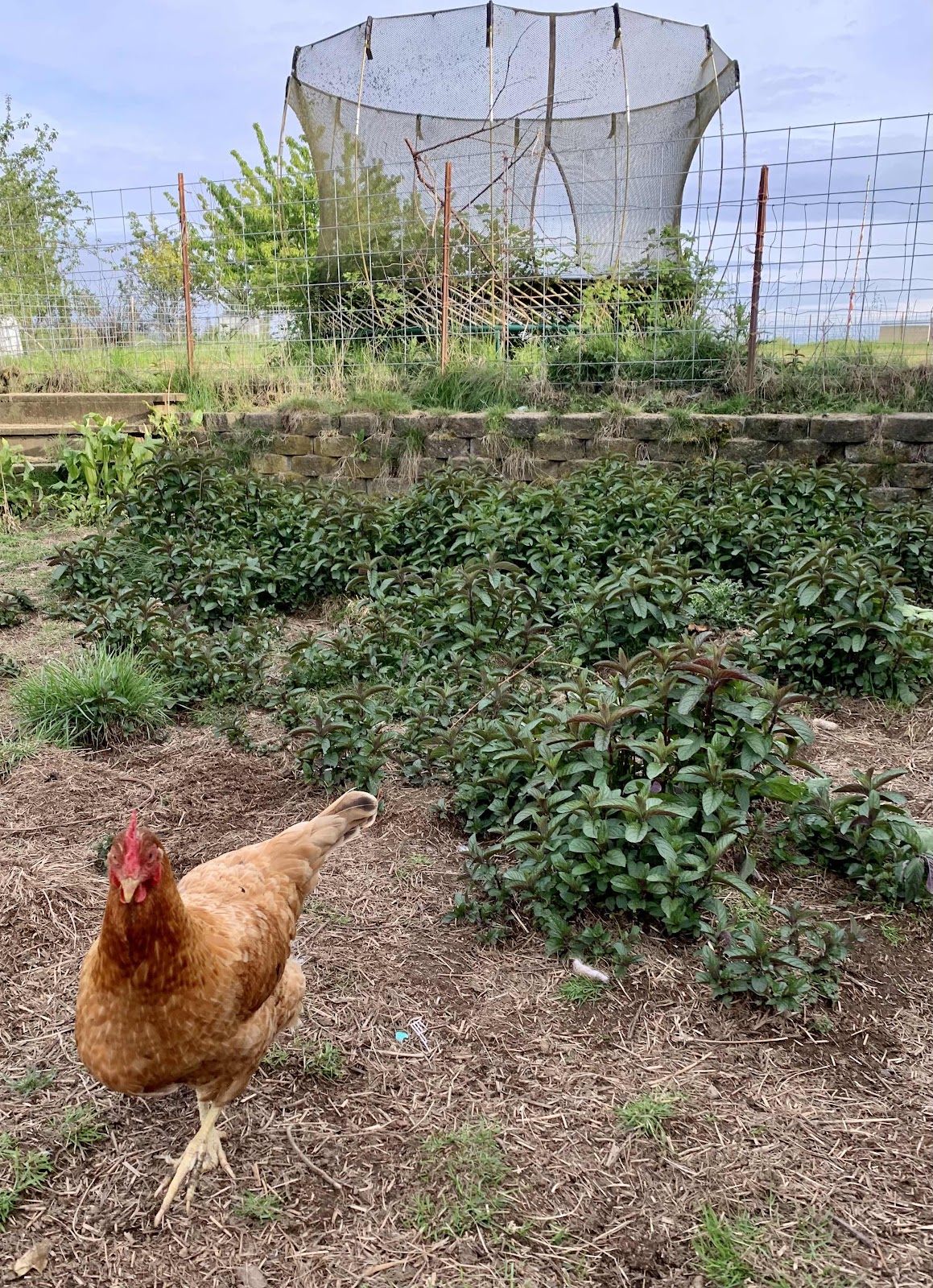
I have spearmint in the front yard and peppermint in the back yard. The spearmint is buried in amongst a hedge of tall weeds and I have to forage for it. This used to be the case for the backyard peppermint as well, but ever since we moved the chickens, the mint is the only green thing left. The rest of the yard has been scratched bare. 


Spearmint is a lovely herbal addition to lots of dishes and we eat a fair amount of it fresh. I add it by the handful to tabouli, for example, and to fresh fruit salads, especially melons. I added some to the melange of herbs I chopped finely and added to my chevre. It even goes well into a pot of Mexican chicken soup, if you can believe that.

Peppermint is a different proposition altogether. It’s much too strong for use as a vegetable or salad green. Mine is so strong that if you chew on a fresh leaf it actually burns your mouth. It’s pretty strictly for tea. A few years ago I made some peppermint vodka, but that’s out of my realm these days. 

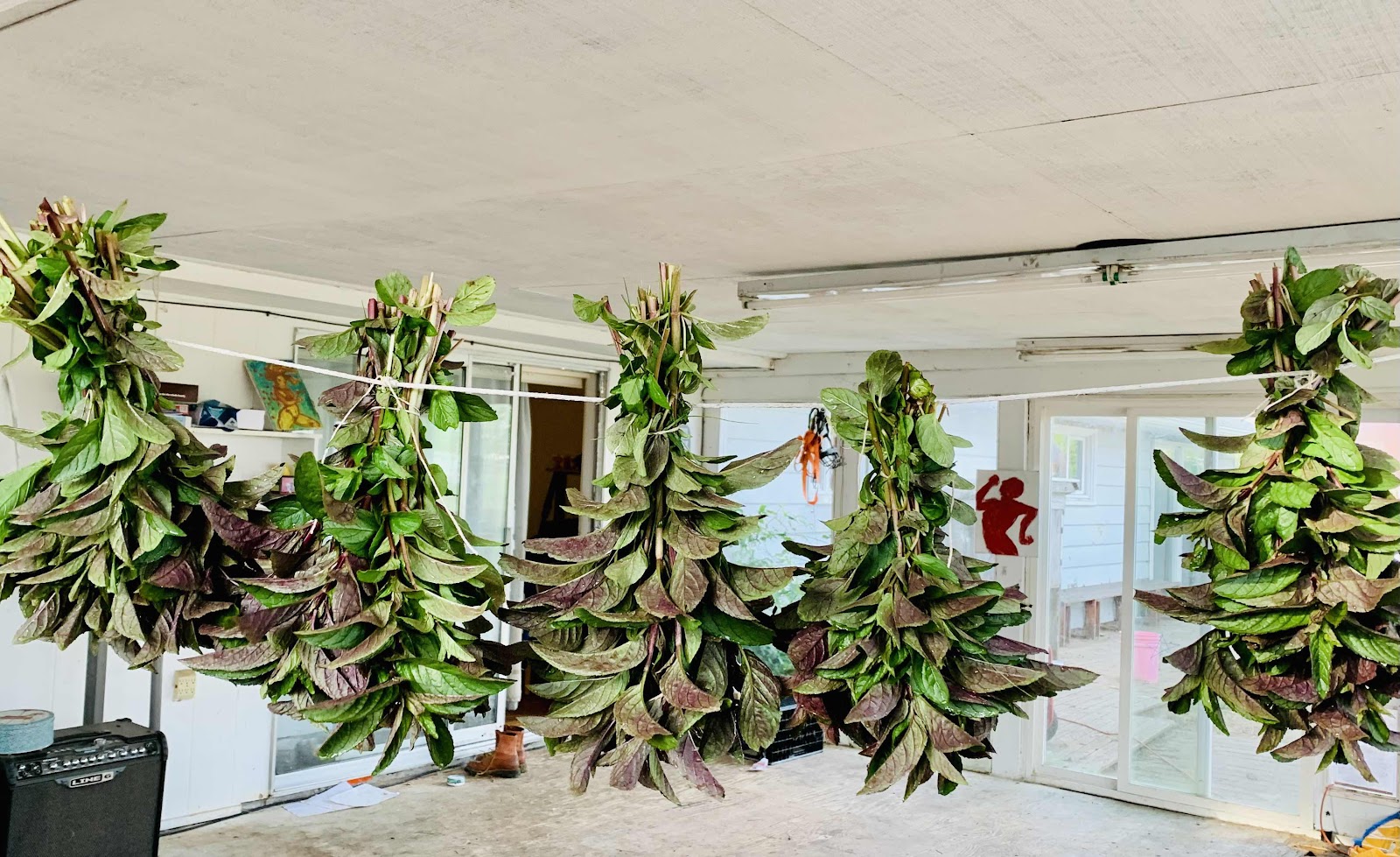
Last year I cut a couple bunches and hung them up to dry in the playroom. Then I forgot about them for an entire year. You don’t generally want to leave your herbs to dry for a whole year - most books will tell you dried herbs last a few months, maximum. However, today when I took the bunches down and rubbed the leaves off them, the scent of peppermint that wafted up was still vibrant. So I crushed them in my hands - they were crispy dry and crumbled nicely into bits - and put them into an airtight storage jar. Later on tonight I’ll make some tea and see how it tastes. 


Then I went and cut five more big bunches of peppermint and hung them up to dry. Since they are in the chicken yard, 
I gave them a good rinse first. This time I will try to remember to strip the leaves and jar them up before another year goes by. I should probably order some desiccant packs from the restaurant supply store, too. That will eliminate any chance of mold. And I’ll want them in a few months when it’s mushroom drying season. 


Now, I should probably get to work and harvest the lemon balm! Lemon balm makes delicious lemony tea and it’s very calming and good for nerves and insomnia. And I have an absolutely ridiculous amount of it. It’s in the mint family as well, and it gets out of control fairly quickly. 

Wednesday, February 16, 2022

To Plant or Not to Plant


The other day I went for a walk in a nice neighborhood downtown. There were signs of spring everywhere - crimson buds on the rhubarb plants in the alleys; small green shoots in garden beds that will soon be blooming crocuses and narcissus; red alder catkins dangling from the branches like caterpillars. And, in many yards, evidence of industrious people preparing for early planting season. 

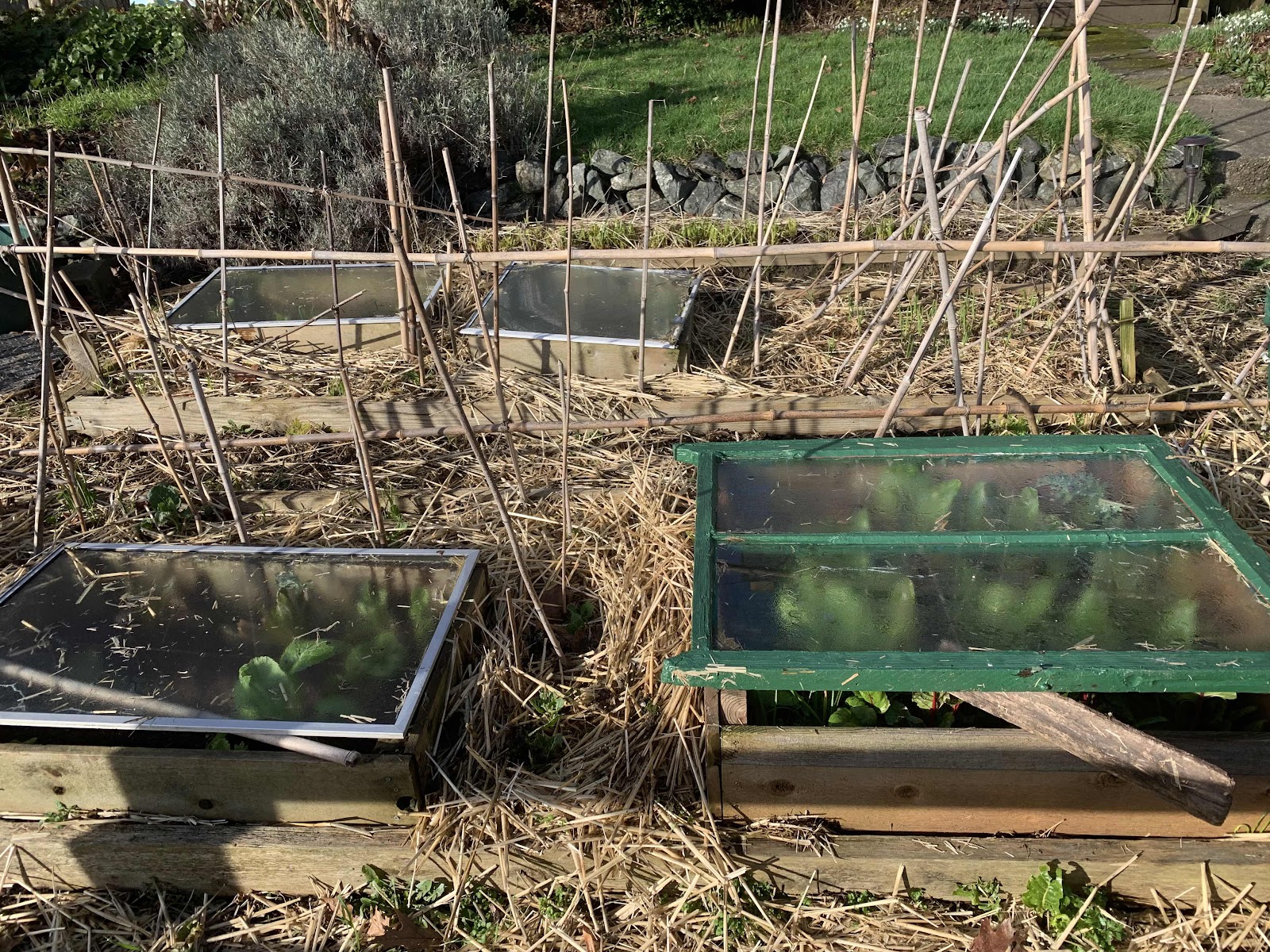
I took a picture of these beautiful cold frames. They are just old windows attached with hinges to raised wooden beds. They can be kept closed or propped open. Inside, I could see fresh greens. It’s too early for these to be new spring greens, they looked like overwintered chard and kale. But they were gorgeous, bright green, tender and delicious-looking. 

I got excited. I have long wanted cold frames just like this. If I had such nice cold frames, I could plant radishes and spinach ANY DAY NOW. I could start slow-to-mature vegetables in April instead of direct sowing in late May. I could grow CUCUMBERS. I could grow EGGPLANTS. 
I even remembered that we have four or five good-sized windows just sitting on a trailer in the yard near the shop, doing nothing. 

Then I remembered that I am one of the world’s worst gardeners and there are many reasons for my failure besides my lack of cold frames. Mostly a lack of will or energy to spend hours and hours a week pulling weeds and picking slugs and bugs off of my plants. My aching knees and creaky back. My inability to remember where I put the trowel and the gardening fork for the life of me. 

I remembered that “I fought the weeds and the weeds won” is pretty much our farm-anthem around here. I remembered that I have consciously cultivated tough perennials like raspberries and rhubarb just so I don’t have to prepare garden beds every year. I remembered that I belong to the gleaner’s pantry and have pretty much unlimited access to organic vegetables year-round, even if they aren’t quite as fresh as they would be if I were picking them from my own garden. 

I always plant a few things, and I’m sure I will this year as well. Maybe this will be the year I actually get some asparagus crowns into the dirt. Maybe I can convince Paloma to help me lay down all the cardboard I keep intending to bring home from Gleaner’s and so get a jump start on weed suppression. Maybe Homero will finally put the wheel back on the wheel barrow so I can move compost in quantities larger than a five gallon bucket. 

Maybe. 


Sunday, April 11, 2021

First Fire (Carne Asada)


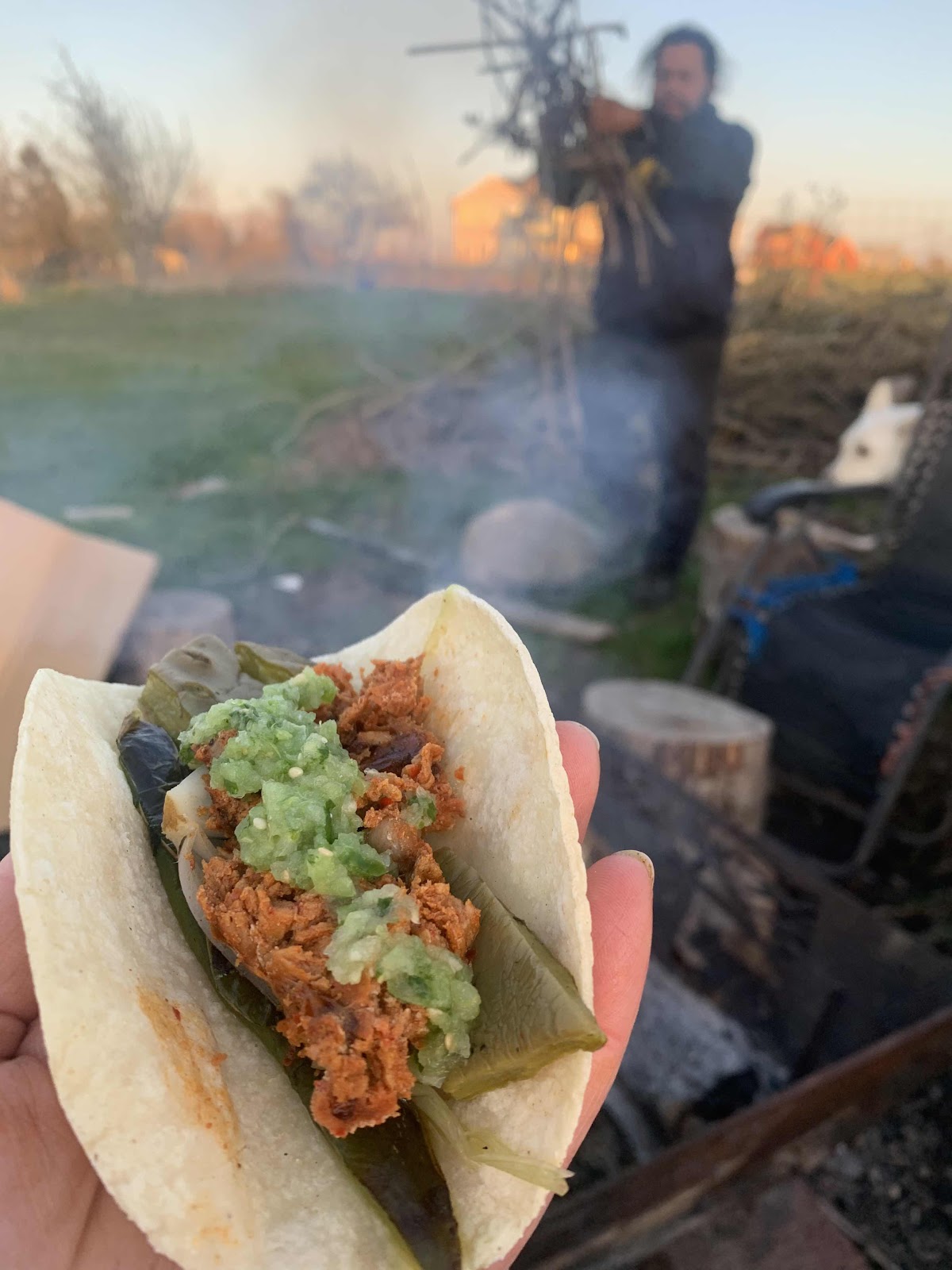
Built a fire this afternoon and had a carne asada, just for us. It’s still cold, but the sun was bright and tempting. I just took the oven rack out to the fire pit and laid it over the coals. Nopales and spring onions, tasajo, and a bit of fresh chorizo. I whizzed up a quick raw tomatillo salsa in the blender, heated up tortillas, and brought out the quesillo I made last week. 


Saturday, April 10, 2021

Yard work (Before and After)

This past week, the first week in April, has had typically schizophrenic weather. Bright sunny days alternate with gloomy, freezing days - and the occasional hailstorm thrown  in for fun. 

Last night there was a windstorm that blew frigid air into the house under the doors and -seemingly- right through the windows. But this morning dawned bright and clear, and warm enough that I felt like working outside.  It was cold, but not so cold that a few minutes with a hoe wouldn’t warm me up. 

The farm is a mess. I mean, it’s always a mess, kind of, but in early spring the accumulated detritus of winter really stands out. There’s work to do anywhere I rest my eyes. Today I decided to spend the day doing something about it. 
Turns out, “a day” for me means about four hours, and that right leisurely. Nonetheless, I did manage to make a noticeable difference. 

I cleaned up two small garden beds, each about two by ten feet. I dug out the buttercup and the grass roots, raked, and brought over fresh compost from the pile. I had a few plants in pots I wanted to get into the ground, so in one bed I planted a sage plant and some lemon thyme, and in the other I sowed scarlet runner beans. 


The trampoline has been overrun with blackberries over the last few years. It took me a solid hour with a pair of pruning shears and a pair of gardening gloves (not thick enough - need leather) to get it cleaned up. 


The cut blackberry vines went over the fence into the hot yard, where the goats were very happy to see them. There are still blackberries growing underneath, but I can’t get at those without loving the entire trampoline, which is staked down against the wind. That will have to wait. 

I did a good enough job for Paloma, anyway. 


Saturday, March 20, 2021

Notes from the Year of the Pandemic (Spring Equinox, 2021)


So far, spring this year is cold. There was a week of warm sun sometime in early March - there usually is - that tempted me to start shoveling some dirt into a wheelbarrow and laying down cardboard in the garden, but it was only a tease, and the frost returned as expected. I knew it would, of course, even as I stood on top of the compost pile in my shirtsleeves, shovel in hand. I'm slow but I do learn. 
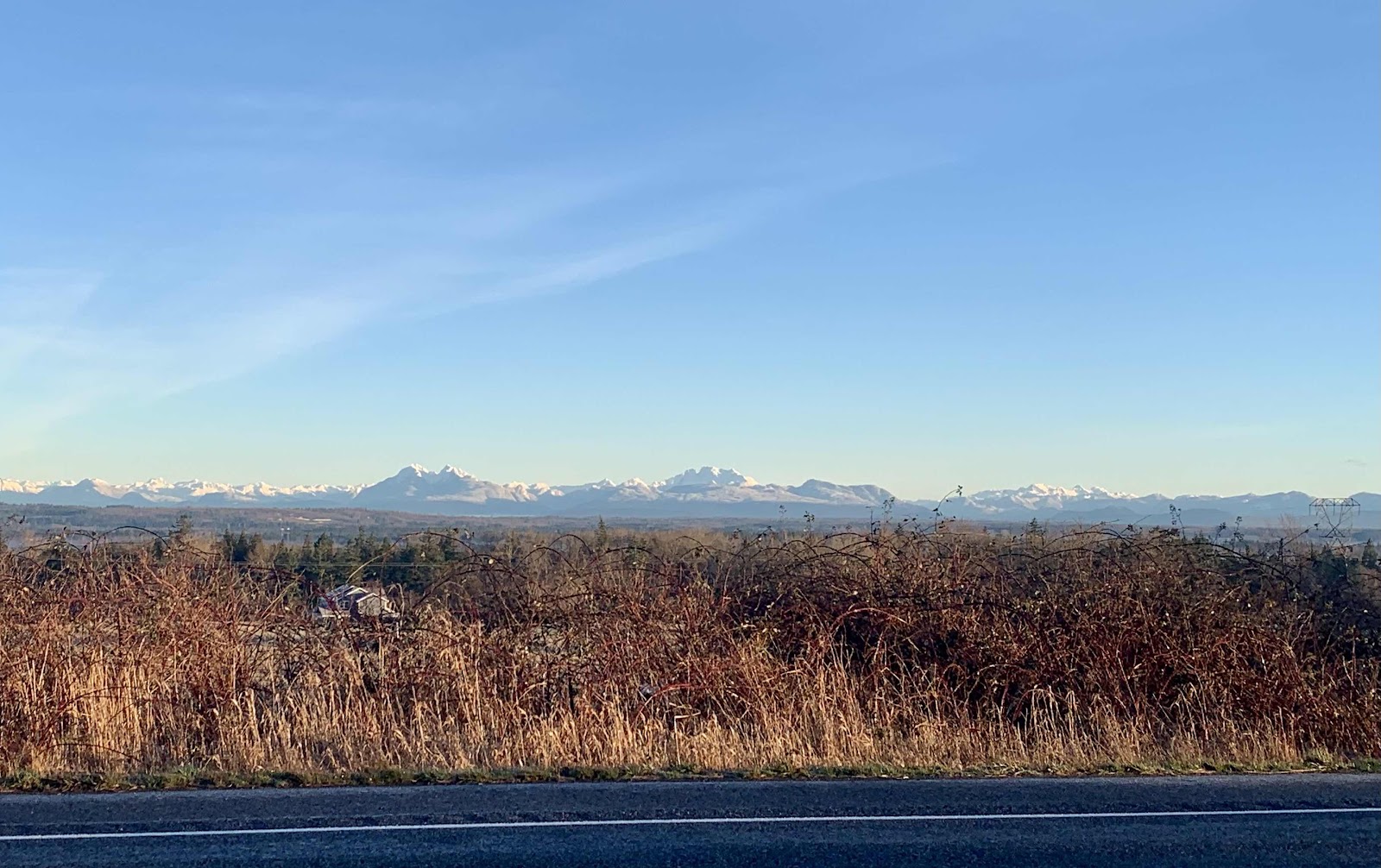


The awareness that the warmth on my shoulders was the product of a small, false spring didn't matter. When the sun shines in March in the far Pacific Northwest, and you live on a farm, you get outside and you pick up a shovel with as much thought as worms have as they come to the surface when the ground thaws, as much as chickens who start to lay when the days lengthen, even though the eggs may freeze in the nest boxes overnight. After a Northwest winter, especially this last one which threatened to draw a final dark curtain across so many lives, you take your lumens while you may. Get out in that thin wind and squint, and take off your coat, and shiver, and give thanks.

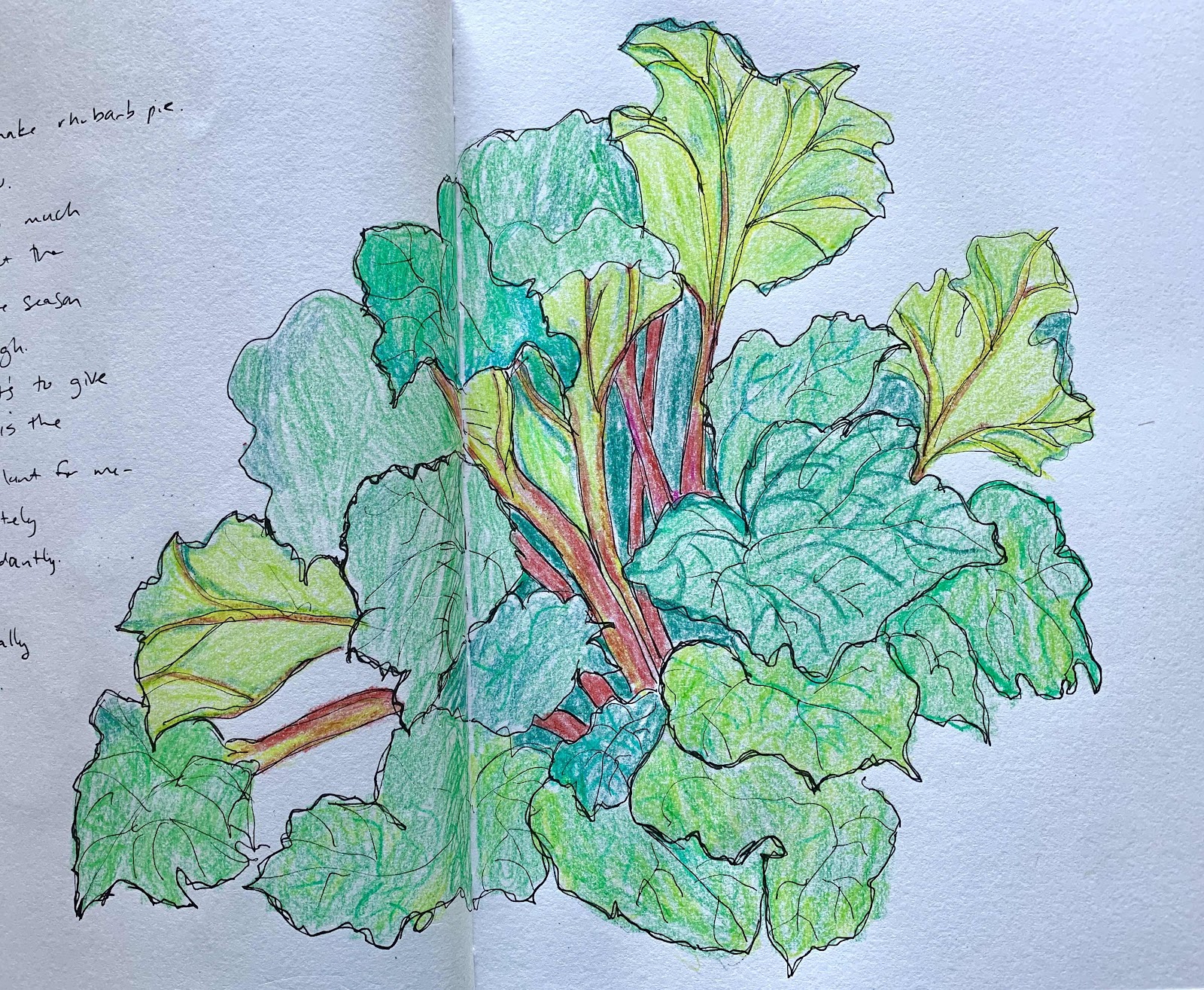
It was a bad winter. In so many ways. Last spring, when the pandemic was just ramping up and we didn't know how long it would last, we made jokes about lockdown lasting a whole month, and we distracted ourselves with the rites and tasks of spring on the farm. I took up an old habit and carried a sketchbook around the property, drawing leaves and bugs and chickens. Like everyone else, I put in a big garden. I bought mountains of craft supplies for the girls and we all planned the ways we would enjoy ourselves and better ourselves and learn things and have fun together during this time of enforced togetherness. We were optimistic, if not about the course of the pandemic then about the possibility of our own growth and development during it. Like healthy people everywhere, undamaged people, people who know not what lies ahead, we embraced the imagined challenge of joy in adversity.



And I'm not saying none of it happened. We did stuff. The craft supplies were used to make crafts. I taught the kids to play cribbage and rummy. We took to going hiking on Sundays as a family and discovered beautiful places we'd never gone before. The garden did pretty well and many vegetables were fermented, and many loaves of sourdough were baked (yeast being in short supply). The farm produced, as it does every summer, a crop of beauty and fun in the form of baby goats and baby chicks and, this year, baby guinea hens. For months, the work of the day was sufficient thereunto, and we were more or less content. 


Then fall came, and school did not start. Life refused to return to anything approaching normal. Milestones passed uncelebrated. The new systems that were hastily constructed to replace the old, now-impossible ways of doing things were confusing and inadequate. We were all sick of the sight of each other. The stress of waiting to get sick was making us sick. The uncertainty -the total, global uncertainty - was wearing us all down. Would Hope be able to apply to colleges? Would school sports ever happen? Would we ever be able to have a birthday party? Would ANYTHING ever be NORMAL again? Time seemed more meaningless by the week, and I stopped updating the altar or looking forward to seasonal celebrations. 

It was especially hard to keep our spirits up after the string of disasters among the animals. The problem of multiple drug-resistant parasites with my goats has gotten worse and worse, and my veterinarian has basically thrown up his hands. First baby Stormy died, then Flopsy. Trying to medicate Lilac - out of desperation, as all the medications we have tried have utterly failed - the plunger slipped in my hand and I accidentally gave her a fatal overdose. This was especially awful, as Lilac was young and healthy and I expected her to be the star of the next generation of milkers. Polly and Christmas are looking thin and unthrifty and there's not a damn thing I can do about it. All I can do is keep them all contained in the sacrifice area, where there is nothing to eat, and feed them (presumably parasite free) hay. I am terrified I will simply have to watch them all die slowly, one after another. I can't sell any babies, should there be any, because I can't ethically export these awful worms to other farms. Paloma is not even looking forward to baby goats this year, after she fell in love with Stormy last year and lost him so soon.


An entire clutch of newly hatched chicks drowned in a waterer. 

Thirteen out of fourteen baby guinea hens failed to survive. They just disappeared one by one over a few days, and by the time we could catch the mother and remaining babies there was only one left. 

Gucci, Hope's beloved ferret, got tumors in the belly and had to be put down.

Turning our attention away from the farm to the outside world was little solace; the news was full of death, disaster, riot, war, idiocy, and fear. Fall was scary and long and dark and cold, and it often felt like the whole damn world was going straight down the shitter. The election was a bright spot of blessed relief, but the period between November 3 and January 20 was nerve-wracking.  Every day threatened rampage and disruption on a scale unimagined in my lifetime.

Now I've just been sitting here staring at the screen for five minutes. Then what? Then it was winter. We lived through it. It was not so awful for us, really, not compared to so many others. We had work. We didn't get Covid until January, and when we did it wasn't so bad, thank God. Homero's oxygen dipped down to 89 a few times and that was scary, but they put him on prednisone and gave him an inhaler and he was fine. I had awful chills and couldn't stay warm. I would shiver and my teeth would chatter while submerged in a hot bath. But it only lasted about ten days and we have almost totally recovered. I get winded quickly, that's all. Everyone should be so lucky.

There was a pretty good snowfall in February - 18 inches or so, enough to entirely transform the landscape and bring a welcome intermission from the tedium of rain and mud. My kids no longer play in the snow much, being in their high teenage years, but the dogs do. 


I don't know what I'm going to do next. Im staring down the barrel of empty-nest-hood. Hope did apply to colleges, and she will go away next fall, to one or another of them. Paloma is only two years behind her. Sports did start, and both girls have evening practice most nights. They have jobs on the weekends. They  drive. They kiss me and say "goodbye, mom!" and go see their friends.  I cook too much food, and nobody eats it. Well, the pigs do. 

Will nothing be normal ever again? No, it will not. Not for me. Normal is little girls blowing dandelion clocks on the lawn; normal is shiny baby goats bouncing across the field. Normal is reading bedtime stories. Normal is being able to make it all better with a kiss, and having answers to all their questions, or at least them believing I do. Normal is a memory now.


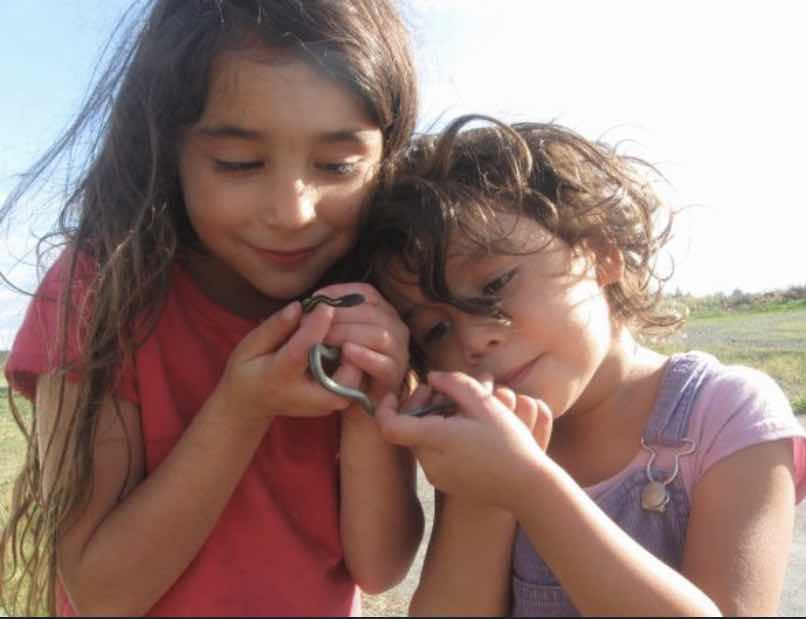


It is the equinox today. Winter is passing away and Spring is on the verge of emerging. The year of the pandemic - godwilling - is over, but I cannot see what is coming next. Like the planet, I am balanced on the knife edge of a new season. Be gentle with me, spring. I'm getting old and I'm slow, but I learn if you give me enough time. 


Monday, October 12, 2020

Samhain Season Altar


I’ve neglected my altar for many moons. Not for any particular reason - life just rushes in and gets in the way. Like everyone else’s, our family has been preoccupied by dealing with life in the Covid era. The new school year has been difficult so far. Distance learning is not going well, and it’s been exceedingly frustrating. We aren’t in lockdown, but there are still strict rules about how many people outside your own household you can see per week and how restaurants can operate and so on and so forth. It’s all exhausting. 

Last week I finally cleaned and purified the altar - and used way too much copal. The whole house filled up with resinous, fragrant smoke. I just used my turkey feather wafter to waft it all around, smudging the house basically, and then opened all the windows and doors wide and let the cool breeze finish the job. 


(Altar tools: the turkey feather fan is for wafting smoke, smudging an area. The pampas grass wand is for doing a limpia of a person - brushing their aura, for lack of a better term)


Except for lining up some squash, however, I left the altar empty. I just wasn’t inspired to decorate it. It wasn’t quite Samhain season, not quite time for the day of the dead altar, and too late to dress it for Mabon. So it stayed empty and clean for a week. 

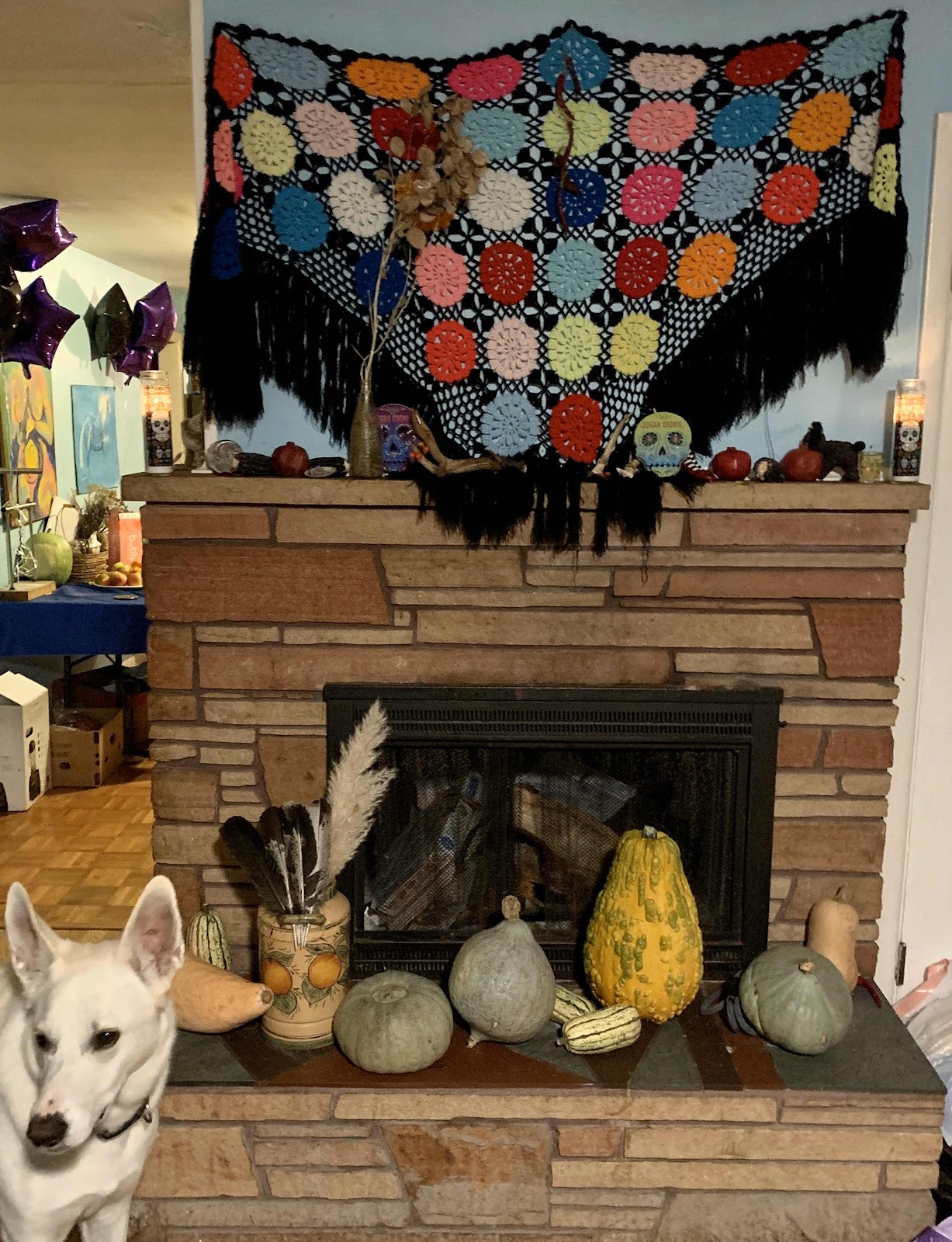
Today my oldest daughter Rowan was visiting, and Hope asked if we could all dress the altar together. She found an altar cloth (a crocheted shawl I had just given her for her birthday) and we all chose seasonal items to place, either from the yard or from my collection of altar pieces I keep on a shelf in the kitchen. It only took about fifteen minutes and was a really nice group activity. 


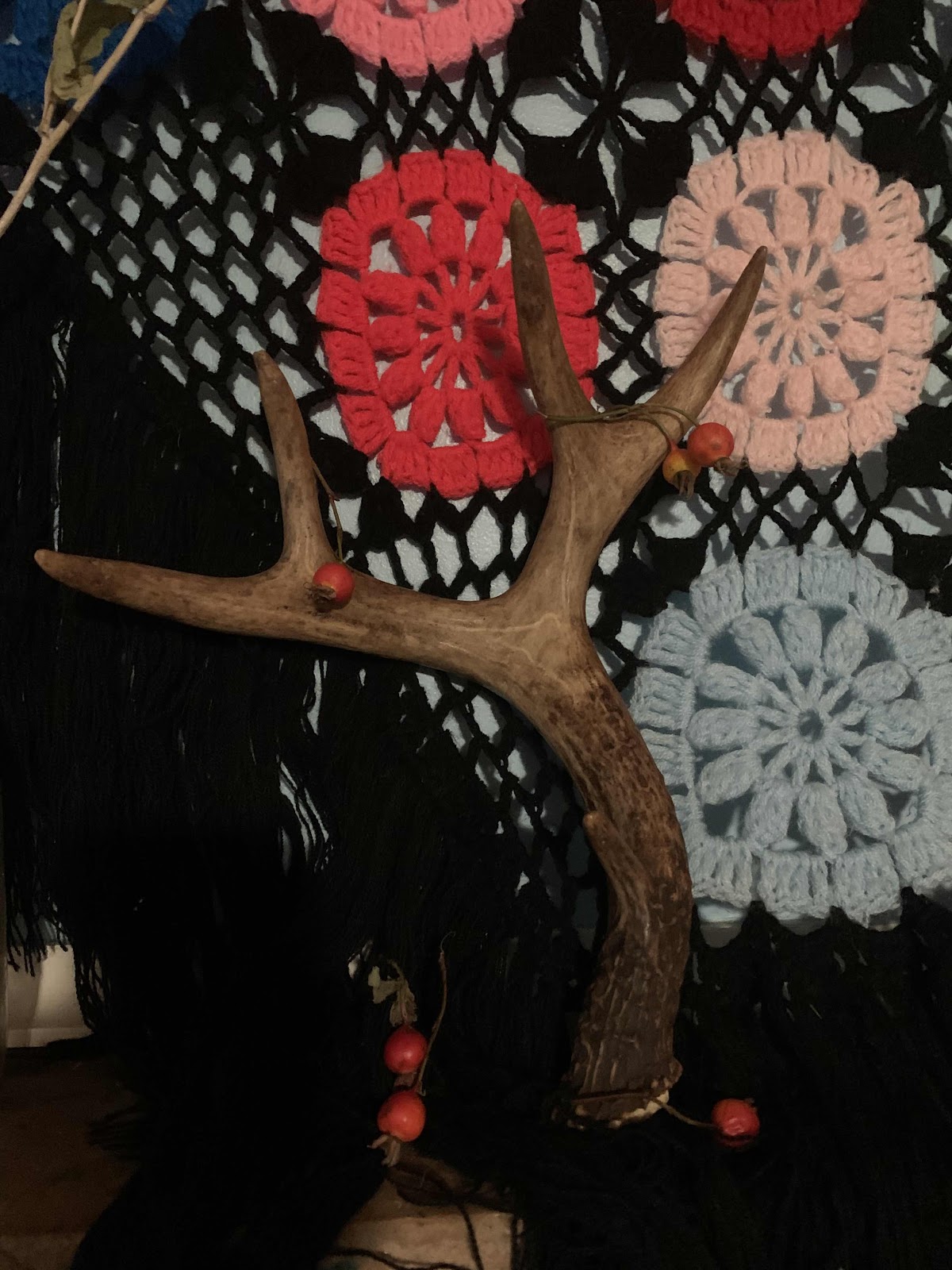
The picture of the whole altar doesn’t show details, so here are a few of our seasonal items. Shed antlers, decorated with rose hips. Reminds me of a seasonal crown on Cernunnos, although he isn’t really a deity I have dealings with. 


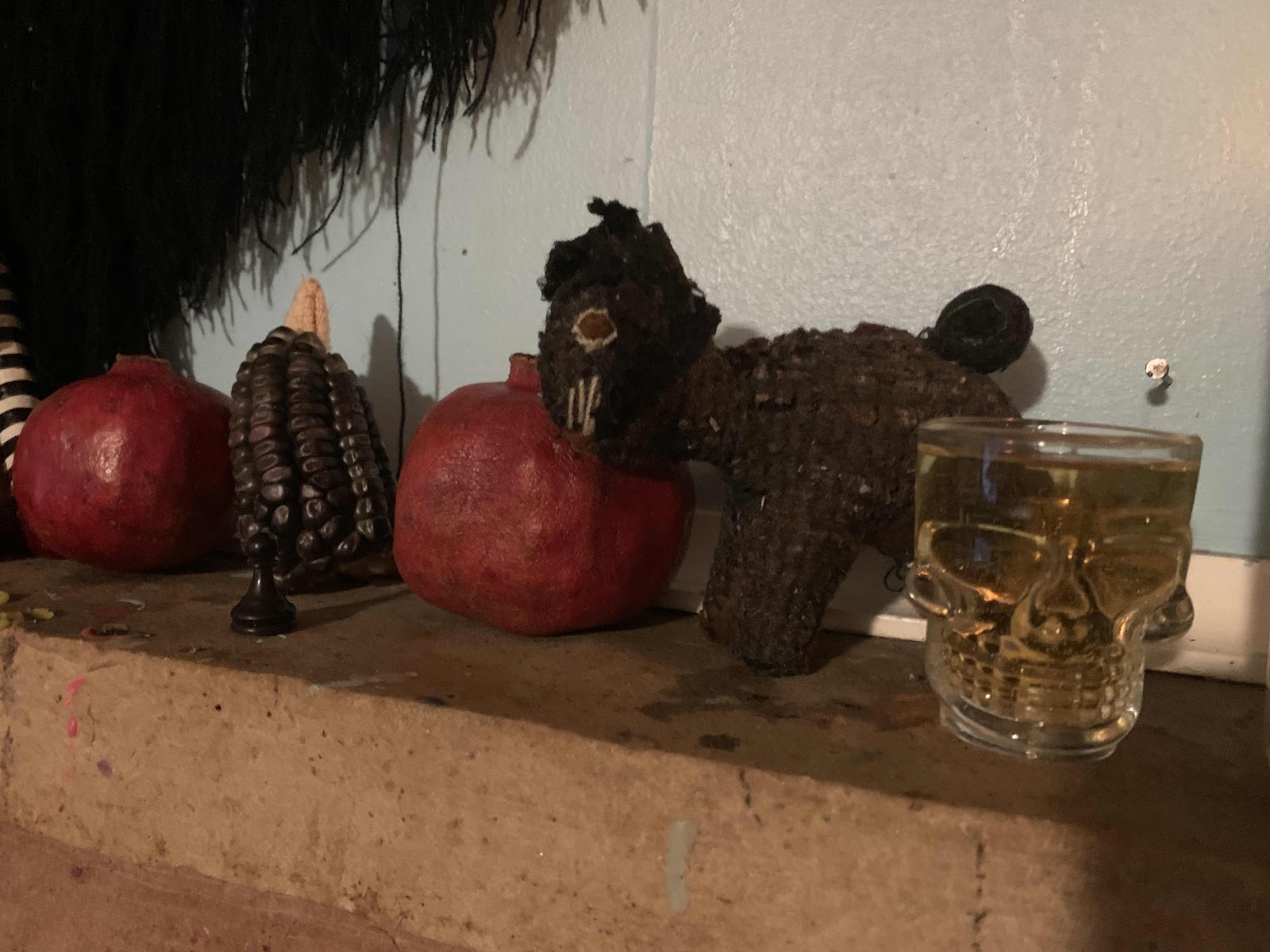
Pomegranates, of course, are a beautiful and appropriate decoration for an autumn altar. Persephone is sinking into Hades right now, to meet her husband and take on her aspect as queen of the dead. The black corn I brought back from Oaxaca, and is there simply for its beauty. The skull shot glass has apple cider in it, for visitors. And that tattered crocheted animal is a representation of the Black Rabbit of Inlé (What? You haven’t read Watership Down? Go start it right now). 

This altar will probably stay up through the day of the dead, and we will add to it as the day approaches. We will out up photos of our dearly departed, and add flowers and fruits and sweet breads. On the day itself, we will make a big batch of hot cocoa, light a fire, and sit around the altar eating and drinking and telling stories of our ancestors and beloved dead. 

The house feels so much more homey with an altar laid. 

Friday, March 20, 2020

DQ4 - Garden Notes


I haven’t bothered with a garden in years - beyond my perennials; rhubarb, raspberries, fruit trees - because I can get unlimited free produce from the gleaner’s pantry. This year, however, things are so very uncertain that it seems like it can’t be a bad idea to try to plant a few things. So far, gleaner’s is carrying on, but if the governor issues a shelter in place order, as so many others have, then I assume it will have to come to a halt. 

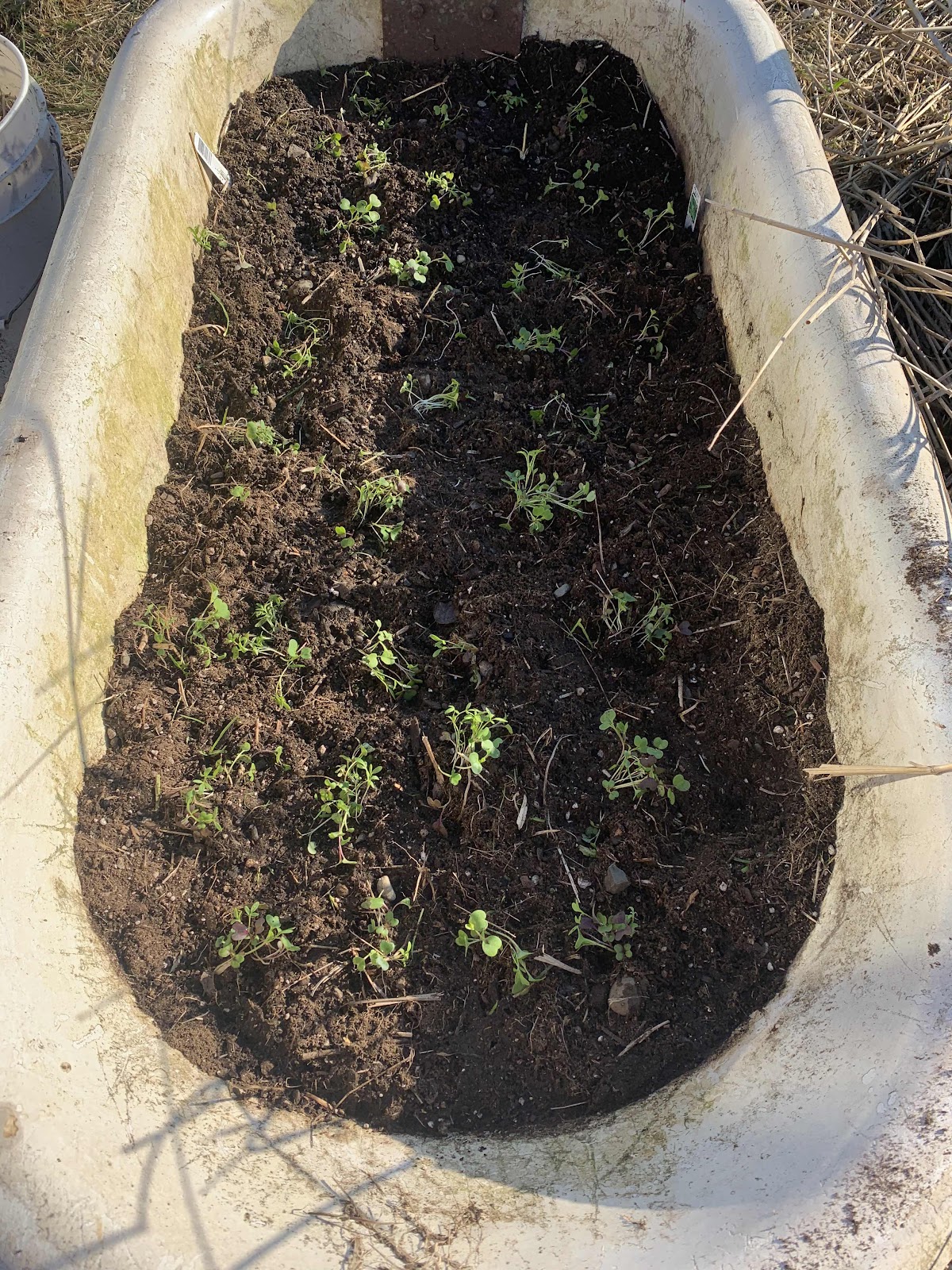
Our old garden space is a mess. The beds are entirely gone - just grass. Homero took a weed eater to the canary grass and Paloma clipped the blackberries. I hauled a few buckets full of compost and topped up one of the bathtubs. Then we planted a couple packs of spicy salad mix. 

A few days ago Paloma and I planted five egg cartons worth of snap peas, and they are germinating in the kitchen table. I’ll have to prepare a bed for them soon. Also sorted through some drawers and found seed packets of years past - most of the seeds will still sprout. I have cylindrical beets, radishes, and green beans. Also nasturtiums. No place to plant those though, until we do a lot more work. 

We have the time. Nothing but time. 
Wednesday, February 12, 2020

Dedicated Cheese


Today I opened up a cheese from last spring, that had been resting, vacuum sealed, in the dedicated fridge in the store room. The “dedicated fridge” is a half-sized refrigerator that I bought last year to store cheese, smoked salmon, and various fermented products such as sauerkraut, kim chee, and so forth.

As of today, there were only three packages of cheese in the dedicated fridge, totaling  perhaps  four pounds. Most of the cheese had been either eaten or traded away months ago. It’s always a gamble opening up a sealed cheese. 

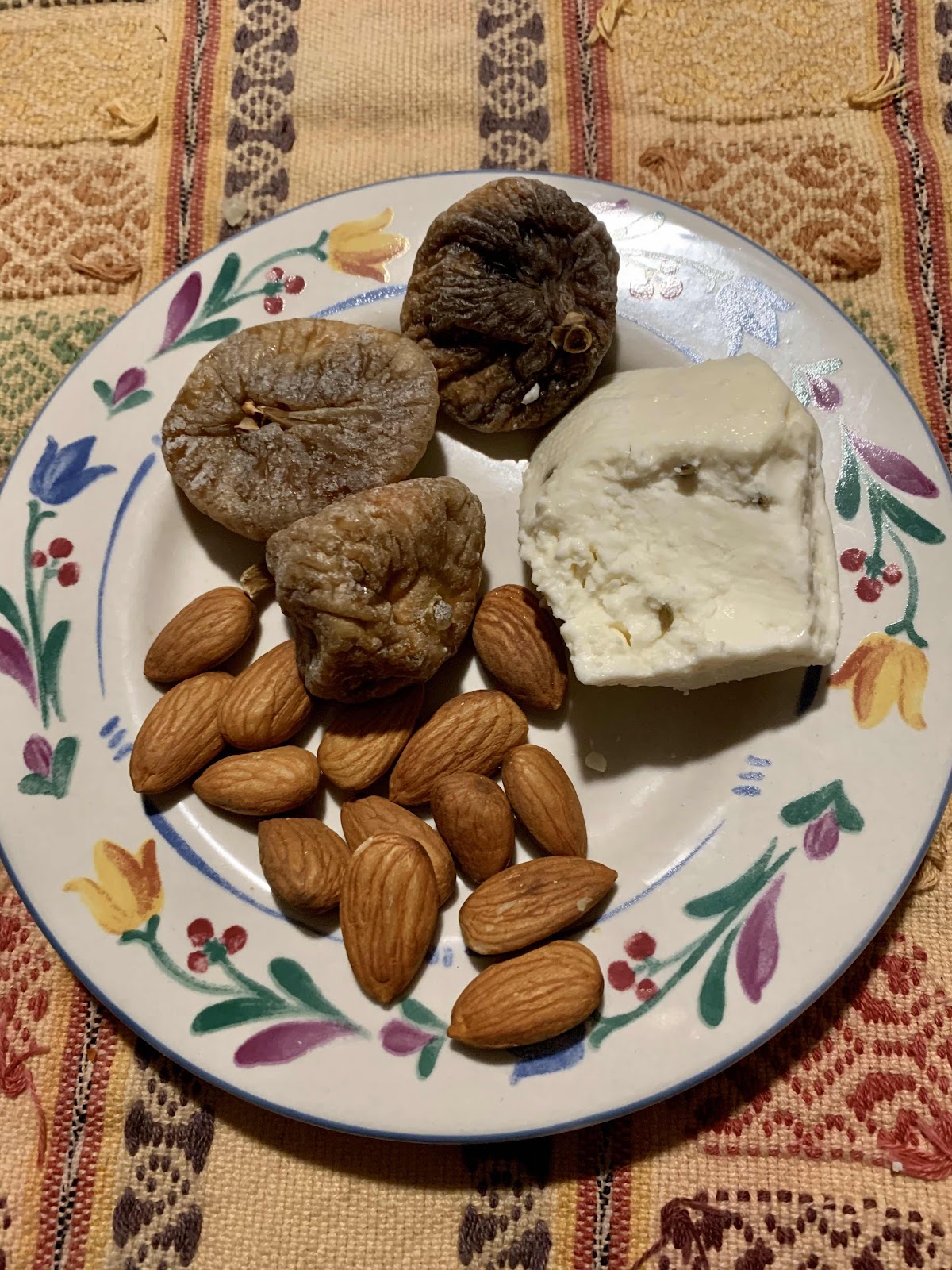
This gamble paid off. The cheese is strong but delightfully rather than offensively so; goaty but pleasantly so; herbal with the scent of caraway seed, but not overpoweringly. A handful of almonds and a few dried figs made a beautiful accompaniment.

Other likely partners include fresh apple slices, sourdough bread, olives, maybe roasted red peppers and artichoke hearts... basically it would be an enhancement to any mezze plate or antipasto plate. 

I’m inordinately proud. I mean seriously. How many people are there, in this day and age, who make their own cheese? And cheese made from the milk of goats who they raised and milked themselves, at that? the cheese I enjoyed tonight is a true artisan farmstead product that few people have the chance to taste.

More’s the pity. if you ever make it out here, there’s cheese in the dedicated fridge. Dedicated for you. 

Saturday, January 18, 2020

Snow Week (Indoor Chores)


The past week has brought frigid temperatures and a fair amount of snow - nothing like last year’s two and a half feet of snow, but enough to close school since Wednesday. And Monday being a holiday, we have quite a long stretch of being mostly home bound.

The first couple of snow days are always exciting, with a feeling of playing hooky. We play cards, break out the board games, watch movies, and play in the snow. But as the week stretches on, boredom inevitably sets in. The girls are used to three hours of wrestling practice six days a week, and they get antsy and irritable without exercise. The snow goes from pristine sparkly white to dingy grey, and my husband leaves gritty puddles behind him wherever he treads. The house starts to feel stuffy and stale, and we’re out of fresh food and snacks. There’s nothing to do. 

Time to get on top of some indoor chores. My mom used to answer every complaint of “I’m bored” by telling me to go clean something, and I guess I must have internalized  it. 

My New Year’s resolution was to clean out one cabinet or drawer per week. This old farmhouse has a truly absurd amount of storage; every room is lined with built in drawers and cabinets. Which is great, except that for the past thirteen years, whenever I find myself standing in the middle of a room with an object in my hand that has no designated location, I simply opened the nearest drawer and put it inside. Now every single one of my drawers and cabinets is basically a junk drawer, and all of my stuff is indiscriminately jumbled together and evenly distributed throughout aforementioned ridiculous amount of storage. 

So far I’ve cleaned out the silverware drawer and the spice drawer. It’s not as simple as removing extraneous stuff - kitchen drawers and cabinets somehow acquire a sticky layer of grime that needs to be scrubbed off. In the case of the spice drawer, there were enough spices embedded in that layer to make a medieval peasant rich for life. Today, I think I’ll tackle the beverage cabinet. That’s the place where I keep the coffee and coffee accoutrements, tea, chocolate, etc. 
Right now its cluttered with empty boxes, crumpled up coffee filters, dusty expired tea leaves, and random bits of kitchen equipment that I haven’t used in years. 

It’s also “tend to the ferments” day. Find the neglected jar of kefir in the back of the fridge, strain and wash the grains, scrub the jar and fill with fresh milk. Peel the crust off the sourdough starter, add some new flour and water, and set it in a warm place for a while. Sort through the jars of various fermented experiments that have gotten shoved to the back of the fridge and decide if any of them are worth keeping or if it’s time to give them all to the pigs. Start a few new jars with the vegetables that need to get used up. I found cabbage, carrots, and cilantro, ergo I’m making curtido. 

Also a good day to make slow food, so while I clean the cabinet I will be accompanied by the smell of beef bones roasting for the soup we will have for dinner later. My youngest child is keeping herself amused by teaching herself “Two Guitars” on the piano, and my other daughter is in her room attempting “Purple Rain” on her guitar. A homely cacophony as background noise. 

Snow days aren’t so bad. 

Sunday, November 17, 2019

Paloma’s Pigs


Some years we raise a couple of pigs, and some years we don’t. The decision whether or not to get a pig in any given year is based on a number of factors - how much meat we have in the freezer, the price of local weaner piglets, whether or not our neighbors are raising pigs this year, etc. 

In general, I have more or less decided that it is as cheap to buy pork from our neighbors as it is to raise a pig of our own, and much less work. However I can be swayed. This year we were swayed by our youngest daughter’s need for an FFA project coinciding with the availability of some handsome well-grown weaners raised by a close neighbor and offered at an excellent price. 

Paloma, our youngest, swore up and down to us that she would be in charge of feeding the pigs. Of course, she doesn’t know what that actually entails. We get much of our pig food from the Gleaner’s Pantry, and she can’t participate in that. The truth is that I will be doing most of the sourcing of food for the piggies, and Paloma will only be in charge of doing her pig-related homework. 

The question she posed and will be trying to answer is “is it financially advantageous to raise your own pigs?” For those who are interested enough to follow the links, I’ve already done the math and answered this question to my own satisfaction:
 
For those who aren’t that interested, the answer is - you can get nearly free meat if you don’t put any value on your own labor. 

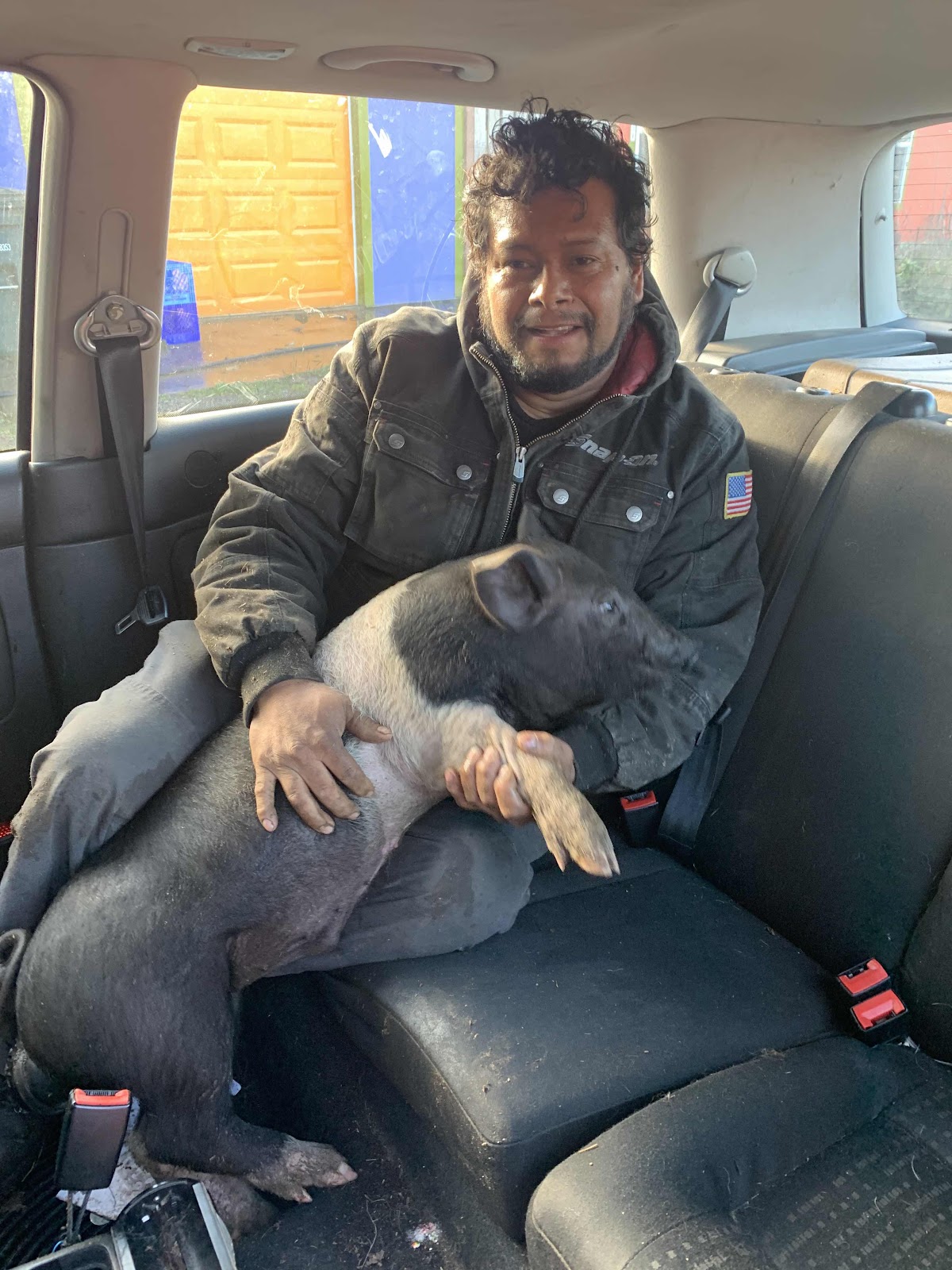
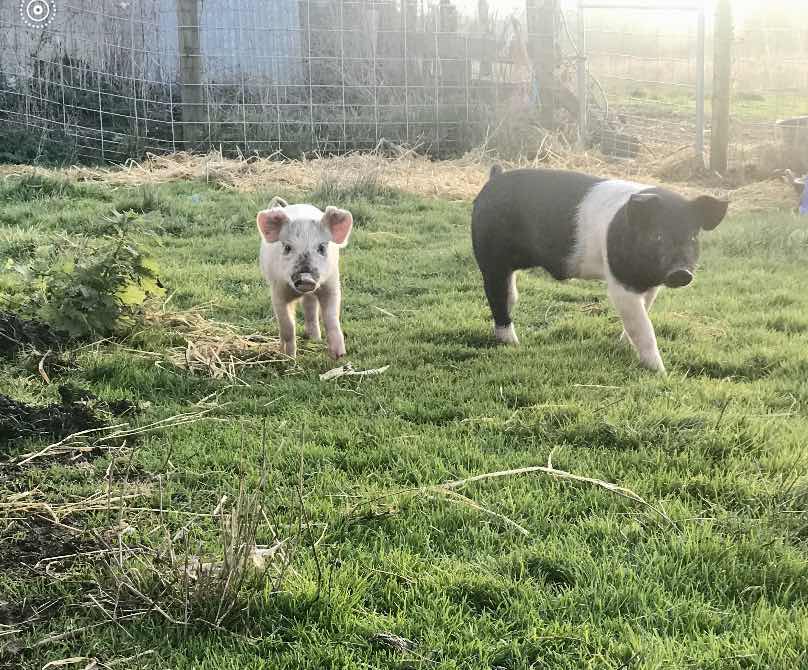
But of course labor counts. Here is Homero, after spending some twenty minutes chasing down a couple of well-grown piglets today. His face clearly shows that labor counts.  My neighbor told me we could choose our own pigs from her litter of fourteen, and there were a couple of standouts. In the end, however, we took whichever pigs Homero was able to catch. 


This handsome boy was the largest of the entire litter, and probably tipped the scales at sixty pounds. Homero was hard pressed to keep ahold of him all the way home. 


The second piglet he managed to catch was the smallest one of the litter, a little pink girl with curled back ears. They seem to be happy with their new digs - we have them in the sacrifice area which is about 100 x 100 feet. Their house is a round calf hutch stuffed with hay. 

Raising pigs over the winter has its challenges, and it obviously costs more than raising the same animals over the summer months, because mammals require many more calories to keep their body temperature up during the cold season. Also their natural rooting behavior causes more damage during the wet season. That’s why we have them confined to the sacrifice area, which is compacted and has a bad weed situation. Any rooting they do may actually be beneficial, and their manure will help fertilize the sandy poor soil. 

As in past years, the idea is to sell one pig (post-slaughter, in cuts) and use that money to offset the costs of raising the other pig, which we will keep for ourselves. Paloma will be keeping the books this year, and I’ll keep you all updated on her conclusions. 


Thursday, October 10, 2019

Lobsters of the Forest (Mushroom Madness)


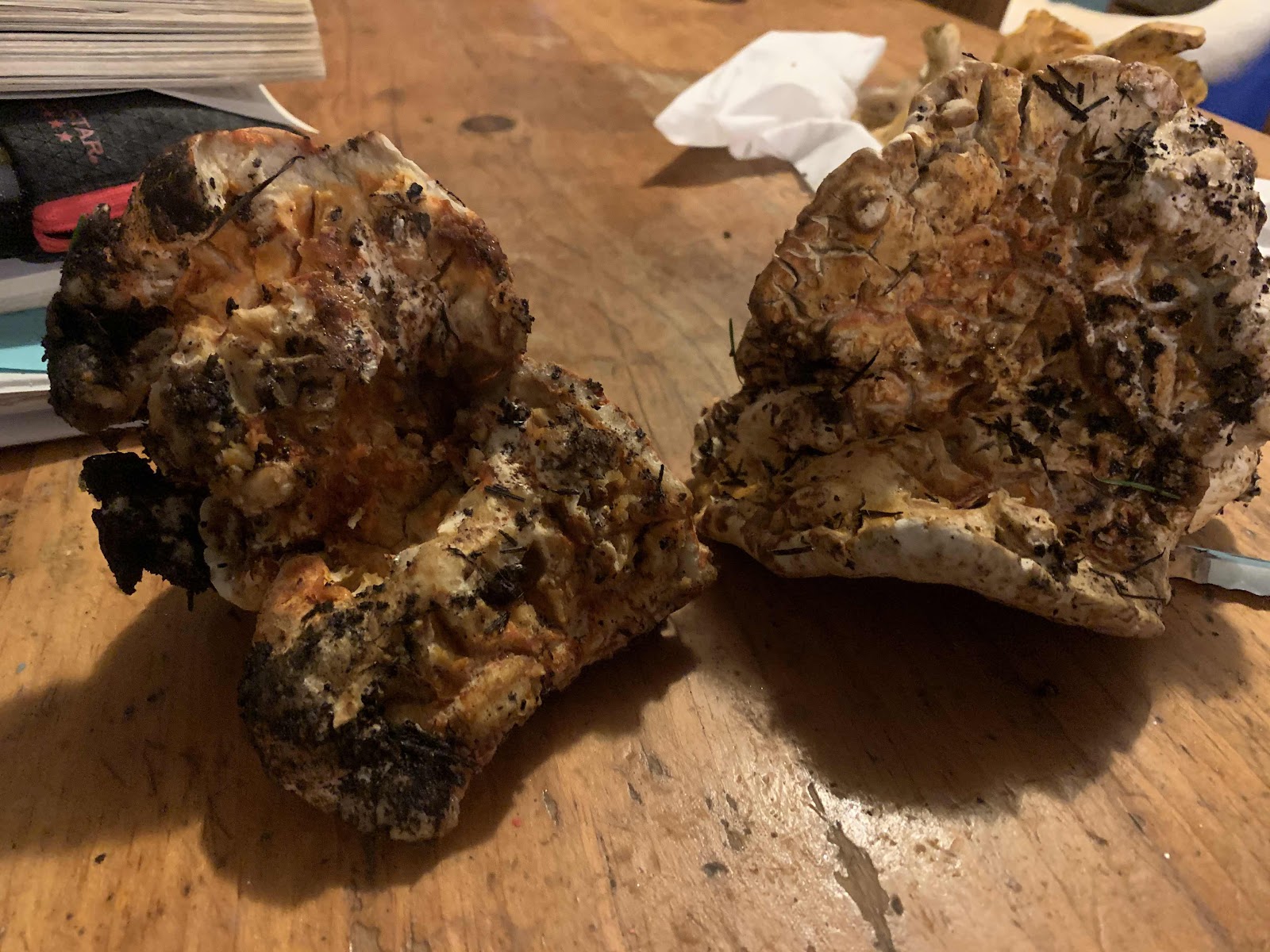
These ugly lumps are actually highly prized lobster mushrooms. 

It’s prime time for mushroom hunting in the Pacific Northwest. The rains came in mid September, right on schedule, and since then we’ve had alternating rain and sunshine, which is just perfect for making the mushrooms pop up. By all accounts it’s been a bumper year for chanterelles. 

I have long been fascinated by fungi, but I’ve not done the work of educating myself to pick them, beyond a very few varieties that are easy to identify. There’s a patch of shaggy manes out in the back pasture. I’m relatively sure I can recognize agaricus campestres (though there are toxic lookalikes). If I happened to trip over a chanterelle or a morel I would know what it was. 

Nobody just trips over forest mushrooms though. You have to go out and search for them, and you have to get off the trails and go bushwhacking through the deep woods. It’s hard physical exercise and it gets you wet, dirty, and scratched up. Also exhilarated and energized. 

A relatively new friend of mine is a confident forager. In the past I’ve traded her goat cheese for mushrooms, but this year I asked if I could pay her to just take me out with her foraging. Not to any of her secret spots! That would be a very rude thing to ask. Just out into the woods and help me improve my eye for good habitat and gain some confidence identifying a few more varieties. She was happy to do so. 

We found several edible mushrooms - coral mushrooms and oyster mushrooms, a couple of decent boletes, and a small patch of chanterelles- but the coolest find was a large number of lobster mushrooms. 


The ugly lumps after careful cleaning.

Lobster mushrooms are cool. They are actually a boring, bland mushroom that has been attacked by another fungus and improbably turned into something delicious. Lobsters start out as Russula Brevipes, which is a large white mushroom that pushes up through the forest duff in evergreen forests. They are edible but exceedingly bland. Wherever you find lots of Russulas, though, you will find a few that have been turned into lobsters. The fungus makes them bright orange and hard, and curls them into fantastic, tortuous shapes. Keep an eye out for glimpses of orange poking through the forest floor. 

Cleaning them is a chore. You don’t want to wash them with water if you can help it because they will soak it up like a sponge and ruin their texture and dilute their subtle flavor. Use a stiff brush instead. Most lobsters will have at least a few wormholes in them (these ones are exceptionally free from worms) but don’t worry about that. Just trim off any bits  that seem too wormy to eat. Ditto any parts that are stubbornly grubby - though as my mom says, you gotta eat a peck of dirt before you die and eating it along with wild mushrooms seems like as good a way as any. 


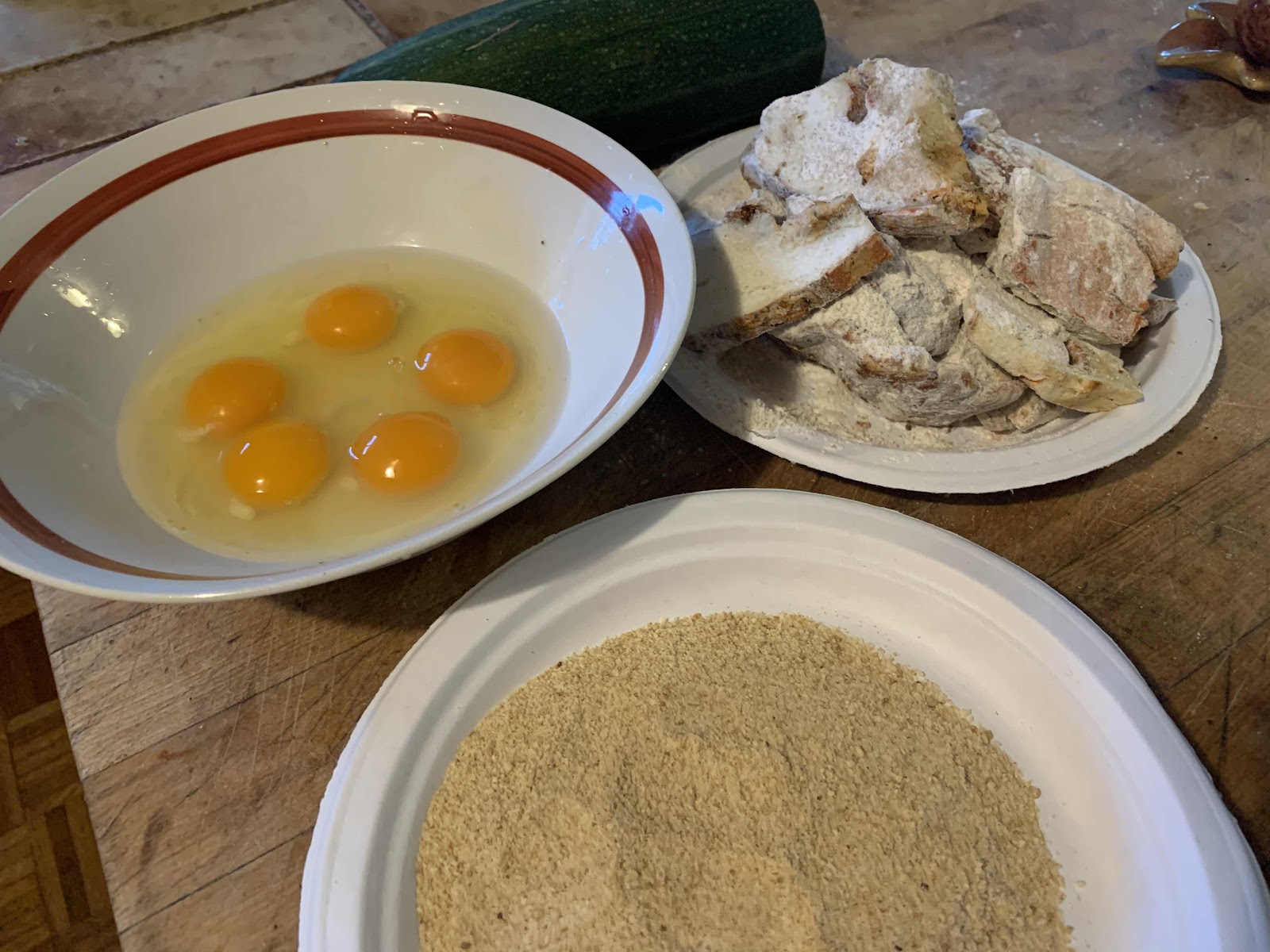
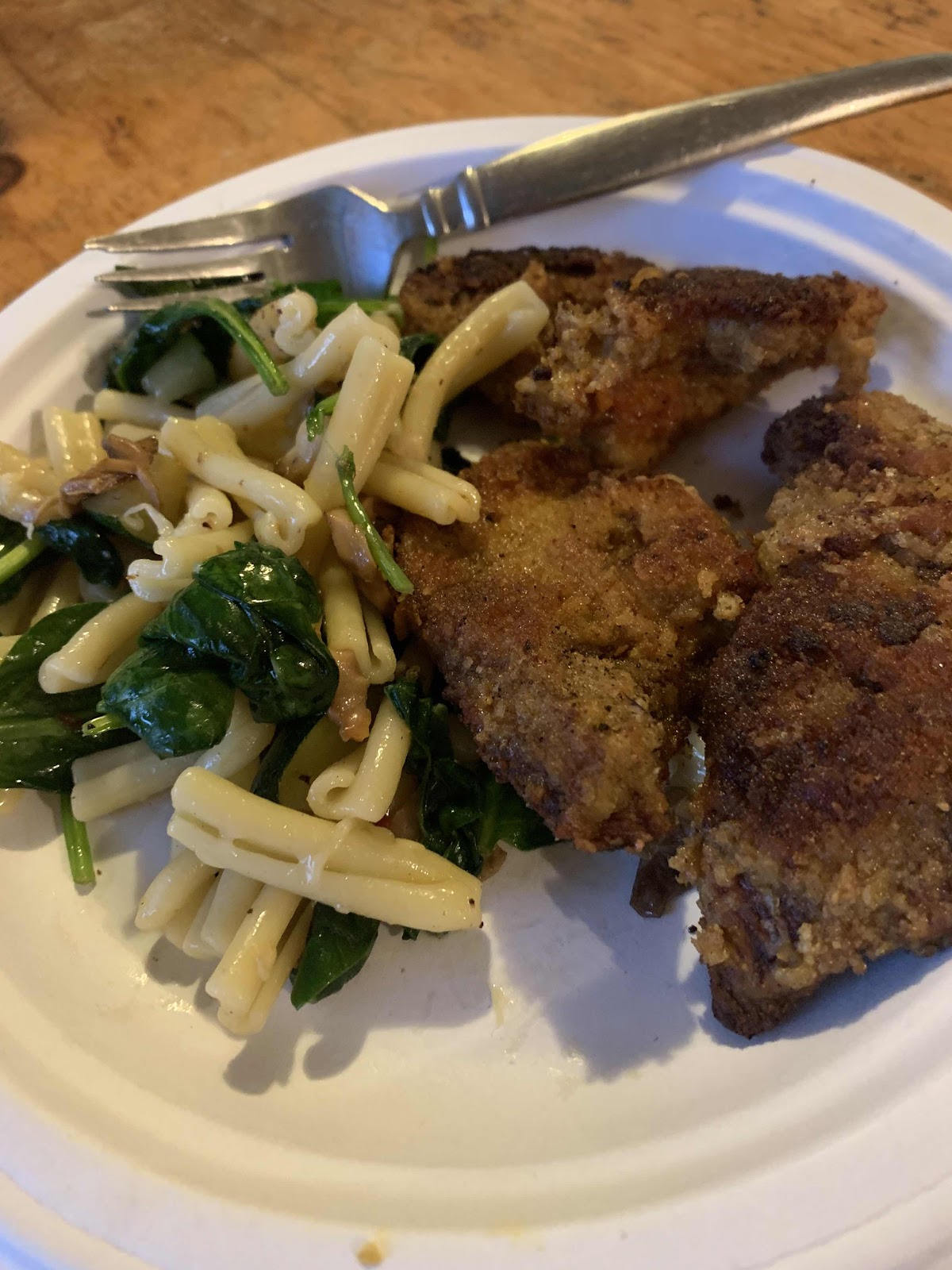
There are lots of ways to prepare lobsters, but they are one of the few wild mushrooms tough enough to stand up to being sliced and fried in egg wash and crumbs like chicken-fried-steak. I added Parmesan to my bread crumbs and pan fried the mushroom steaks y til deep golden brown on both sides. I found I liked them better the more cooked they were, so next time I might use a little lower heat and give them more time. 


The other mushrooms we found went into a pasta side dish with spinach. My husband and kids were a little leery of eating the lobsters at first, but they both enjoyed them after trying them. Homero, in fact, ate an entire lobster mushroom
all by himself. 

After three hours of hiking in the intermittent rain and then cleaning the haul and cooking dinner, Ipushed back from the table, told everyone to clean up please,  I was going to take  a long hot bath. I earned it. 

Tuesday, October 1, 2019

October Altar (Waste Not)


An enormous volunteer squash plant grew out of our compost pile this summer. This happens not infrequently, and because squash vines love rich compost, the plants tend to sprawl over vast areas and produce prodigious amounts of squash. However, most summer squash are hybrid varieties, so volunteer plants that sprout from discarded seeds are unlikely to bear fruit that is much good for eating. 

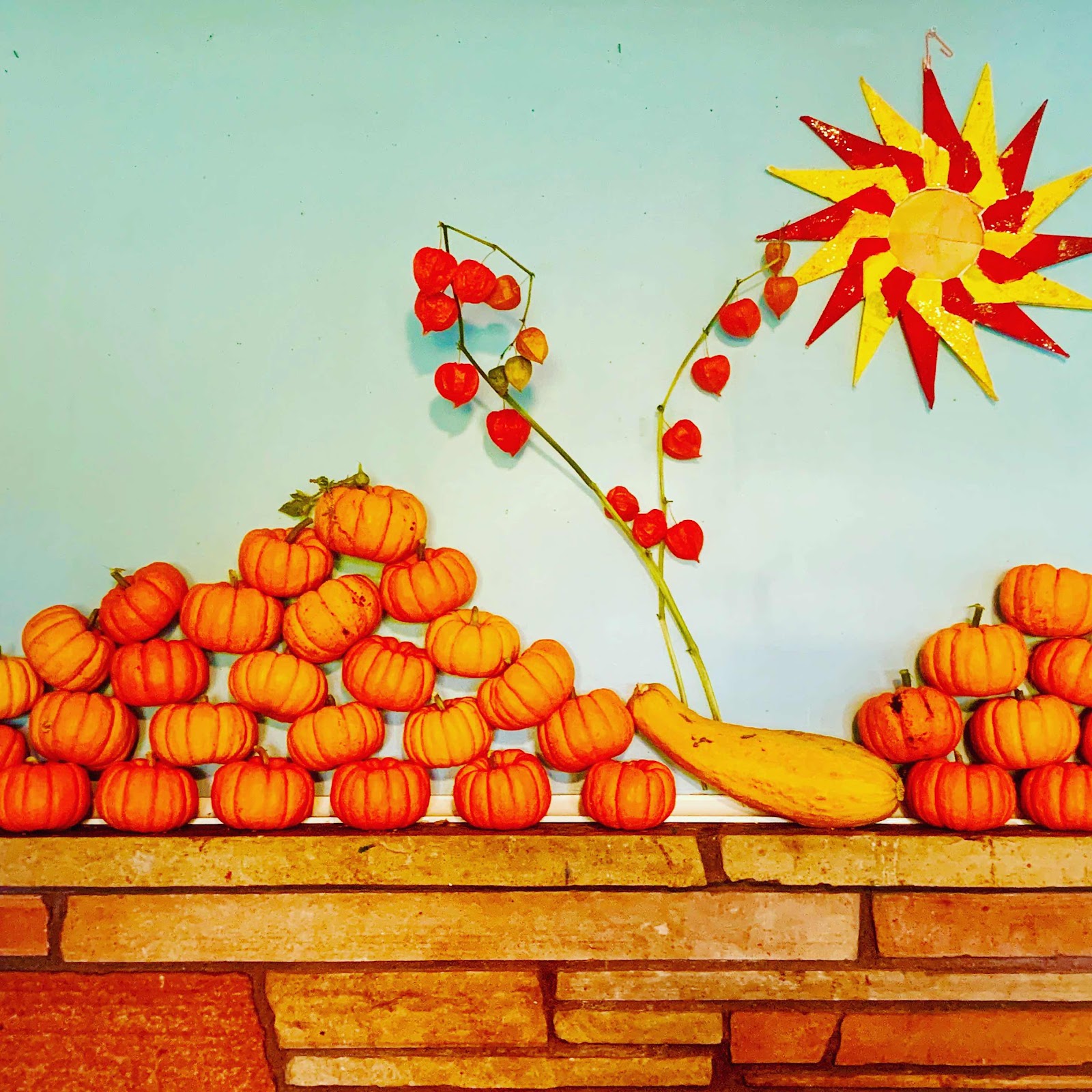
All squash blossoms are nice for eating, though. We picked many many blossoms for stuffing inside of quesadillas, or for stuffing with goat cheese. But no matter how many blossoms we picked, there were plenty left over for making squash. Past volunteer squash have produced warty gourds, yellow crooknecked squash but with hard shells and thin meat, or strange globular fruits. This one produced tiny rubbed hard shelled pumpkins, the kind you see 
decorated  with googly eyes and painted grins in bins at the grocery store in October. I’m sure they would be poor eating, but they make a nice autumn altar. 


After we picked all the little pumpkins, I let the goats go to town on the giant vine. They appreciated it. After we enjoy them on the altar for a while, I am donating these little guys to my sister, who is a pre-school teacher. No doubt they will all be festooned with googly-eyes and painted grins. 

Happy Fall to you and yours. 


Friday, August 23, 2019

The Gift of the Crab


Hope’s best friend’s dad took the girls out to check his crab pots today. Of course I instantly told her to offer the Dad goat cheese for a couple of crabs. She rolled her eyes a little and said she would. 

Then she started texting me photos. Photos of a giant cauldron of crabs boiling in seawater. 

“Mom we got SO many crabs! And we’re going back out!”

“Don’t forget!” I wrote. “Goat cheese! Or ham! Or maybe some grass fed beef?”

More photos. More crabs. Big crabs! Hope learned to clean a crab. Hope sent pictures of herself eating big handfuls of snowy white crab, but no word on whether or not she was bringing any home.

“My right arm? My firstborn child?” I texted. And then “you’re killing me, smalls!” 

When she finally came home, she shook her head. 

“Sorry mom, they didn’t want to part with any crabs.”

“Really?!” I was surprised, but not THAT surprised. I mean, no matter how many dungeoness crabs I had, I’d still find it difficult to give them away. Maybe they were for a big event. Lots of people have crab parties on the beach this time of year. 

“Bummer!” I said. “I was really hoping....” 

“Sorry mom, But I could only ask him once, you know” she said, a little witheringly. 

“I know, I know. It’s fine,” I answered, but not really feeling fine. Dungeoness crab is the absolutely best seafood on earth. Fight me. 

Then the door opened and her best friend came galloping in holding an ice chest and both girls dissolved into giggles. 

“Gotcha, mom!” Hope teased me. “How could he NOT give you crabs? I showed him our text thread. You were THIRSTY for crabs.” 

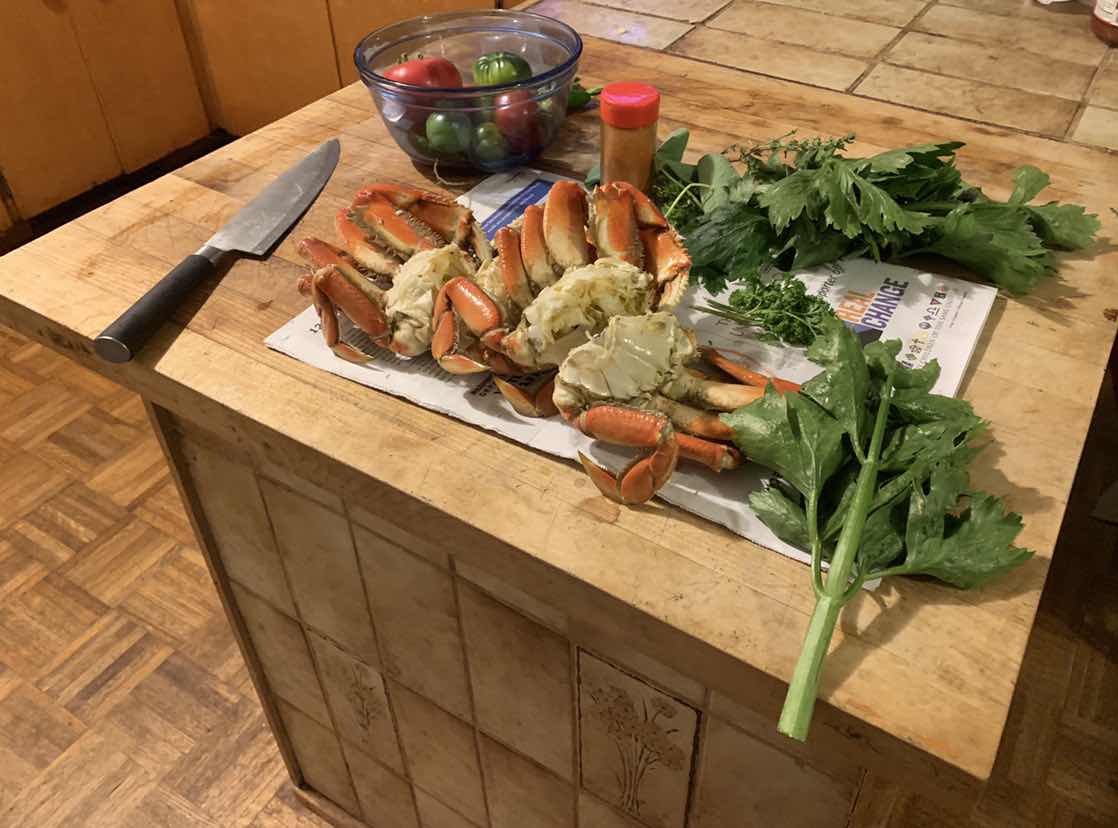
Four big crabs, already cooked and cleaned. I didn’t even have a chance to give him anything in return. Hope’s friend is spending the night, so I can send her home with something. 

Not my right arm, though. I need that to hold the nutcracker.