"United we bargain, divided we beg."
Showing posts with label recipe. Show all posts

Friday, January 6, 2023

Rosca de Reyes (King Cake)


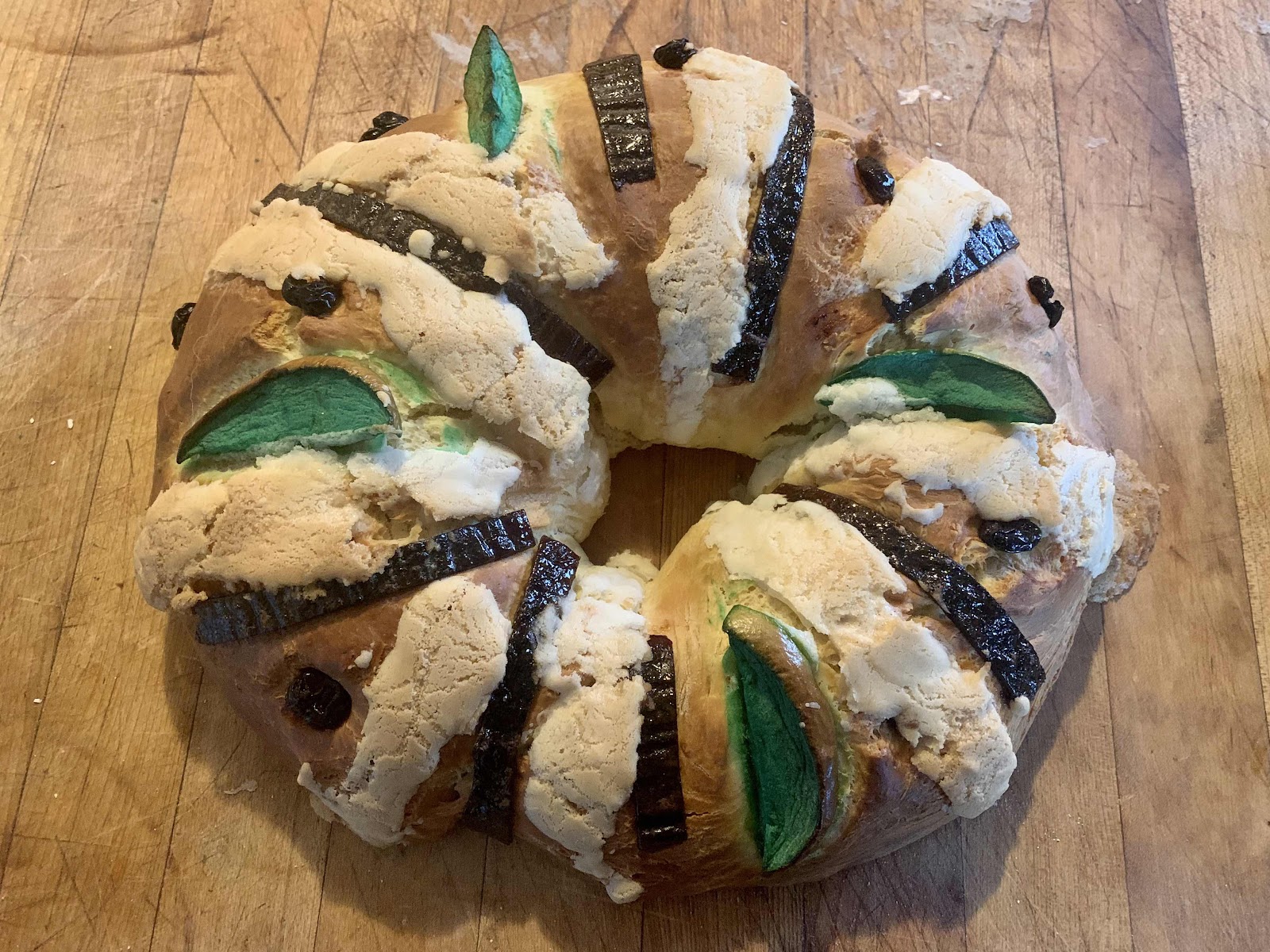
I made this lovely Rosca de Reyes cake today, which is January 6th - also known as Epiphany and the Three Kings day. 

Mexicans celebrate three kings day with a Rosca de Reyes, or a King Cake. It’s a sweet egg-and-butter enriched bread studded with dried fruit, nuts, and sugar paste. Sometimes it’s stuffed with marzipan. And somewhere inside it, there’s a little statue of the baby Jesus. Or a baby anyway. The tradition goes that whoever gets the baby Jesus in his or her slice of King Cake has to make tamales for the next feast on the calendar, which is Candelmas - February second. 

(For a post about Candelmas/Imbolc, click here http://newtofarmlife.blogspot.com/2014/02/imbolc-repost.html?m=1

Like many other catholic feast days, Epiphany has some Pagan antecedents. The tradition of a King Cake goes way back in pre-Christian Europe. Instead of a baby Jesus, a dried broad bean would be baked into the cake and the person who found it was crowned King for a day. 

This is an example of a topsy-turvy festival, when a peasant can be a king and vice versa. The Bean King would be the focus of the celebration and the center of attention. He could behave however he wanted for the night - get super drunk, grope the girls - without repercussions. Such festivals upset the social order and let people blow off steam, flouting the norms which they have to live by the rest of the year. 

But in the REALLY way back days, in some bronze-age planting societies across Eurasia, the bean-king was no laughing matter. Instead of being king for a night, he was made the sacred king for a year, during which he was given the best of everything and revered by everyone. But when the next year’s planting time came around, he would be killed and his blood poured on the fields to ritually fertilize them. 

There is no bean in my cake, nor is there a tiny baby Jesus statue. Oddly enough, I don’t actually own such a thing. For the decorations, I used strips of my homemade fruit leather, and thin slices of dehydrated pears colored with green food coloring. Tonight we will enjoy it with hot chocolate and nobody will be King. 


Monday, June 20, 2022

Project Pantry (Meatballs and Morels)


Today’s dinner - kinda sorta Swedish meatballs but not really. I had a pound of ground venison from the gleaner’s  pantry that I wanted to use, but I’ve never cooked with it before. As I was perusing google on the subject of ground venison, Swedish meatball recipes kept popping up and they looked great. I’ve never made Swedish meatballs before either, but I have eaten them. I belong to a Lutheran church full of elderly people of Scandinavian heritage. 

After I decided to make Swedish meatballs, I realized that I was short several ingredients, but the benefit of having a deep pantry is that one can always adapt. I don’t have any beef broth, but I have dried morels, so I made more mushroom stock. I consider that an upgrade. I do wish I had fresh dill or parsley, all I have is chives and celery leaves. But who cares, I tasted the sauce and it’s fabulously delicious. 

I can’t remember what Swedish meatballs are traditionally serviced with (which starch, I mean. I know they are served with lingonberry jam but we will make do with blackberry). I’m thinking wild rice would be a good choice to go with the mushroom sauce. 

“Swedish” venison meatballs 

This is how I made them today, substitutions and all. Not how they are “supposed” to be. 

1 pound ground venison 
1/2 pound ground pork 
1 egg
1/2 cup breadcrumbs 
1 teaspoon sugar 
Garlic powder to taste 
Dash cinnamon (go very easy on this, a pinch is plenty) 
Fresh ground black pepper 

Mix all ingredients with hands and shape into meatballs. Place on a sheet pan lined with parchment paper or tinfoil and bake at 375 for 20 minutes. 

While meatballs are baking, get out a cast iron skillet and make sauce 

2 tablespoons butter 
Two yellow onions, sliced fairly thin ribbons 
Two tablespoons flour
1 teaspoon maggi chicken bouillon 
1 cup give or take dried morels, some broken into small pieces 
1 teaspoon Dijon mustard
2 cups goats milk
Black pepper 
Minced fresh herbs 

Melt butter and sauté onions over medium-low  heat until softened, about ten minutes. Increase heat to medium. Sprinkle over flour and mix with a wooden spoon until well incorporated and onions are coated. Sprinkle maggi and keep stirring. Add mustard and about 1/2 to 3/5 cup water. Add the morels. Stir until sauce smooths out and begins to thicken. Add more water if needed. Then add goat’s milk and stir until smooth. Bring to a simmer but not a boil. Add meatballs. Turn meatballs in sauce and let simmer until sauce is slightly reduced. Just before serving shower with herbs and fresh ground pepper. 

Breakdown: 

From the gleaners pantry: 

Venison 
Pork
Bread (for crumbs)
Maggi chicken bouillon 
Flour 

From the farm or trade network:

Egg 
Herbs 
Goat’s milk 
Morels 

From the grocery store:

Butter
Onions 
Mustard
Pepper 


Friday, June 17, 2022

Cajeta (The Best Thing You Can Do With Goat’s Milk)


This time of year, I am usually drowning in milk. 2022 is a bit of an anomaly, because the only two goats in milk are the two young first fresheners, and they don’t give a ton of milk. Also, we let one of them dry off when Homero and I went on vacation last week. Now it’s just Sweetpea to milk, and she has a baby on her so there just won’t be much milk from now on this year. Unless Christmas gives birth - I am still uncertain if she’s even pregnant or not. 

Knowing that this milk season would likely be short, I made the most of the milk I had before we left and milked every day. Even two undersized first fresheners can collectively produce about three quarters of a gallon a day. By comparison, a single good milk goat in her second or third kidding season will produce a gallon all by herself. 

Three quarters of a gallon of milk a day is still a lot. We store the milk in half gallon sized mason jars, and by day three there are nine of these big jars in the fridge, hogging all the space. I absolutely have to do something with all the milk at least every third day. 

The simplest thing to do with milk is make chevre. That’s just involves adding culture to the still-warm milk and leaving it in a warm place for 24 hours, and then draining through a jelly-bag and salting. 

The next simplest thing to do is make what I call “easy Cheese.” That’s a paneer-type fresh cheese made by heating the milk to 180 degrees, adding vinegar, draining the curds and pressing. It takes about twenty minutes and makes a nice, fresh tasting cheese suitable for quesadillas. It’s a bit bland but it’s easy (hence the name). 

When I have more time I may make cheddar for long term storage, which is a multi-step process that requires active involvement and attention at various intervals over a several hour time frame. If I have lots of time but not the inclination for meticulous processes, I make cajeta. 

Cajeta, for the uninitiated, is Mexican caramel sauce made with goat’s milk. It’s unearthly delicious. Just crazy good. Try it on sliced bananas, or fresh peaches. My husband likes it on toast for breakfast. Everyone likes it on vanilla ice cream. Cajeta can be water-bath canned, and so I often give it as Christmas gifts. Nobody ever complains about getting a jar of cajeta. 

CAJETA 

1 gallon goats milk (must be very fresh) 
6 cups granulated sugar 
Teaspoon vanilla extract 
Half teaspoon baking soda 
Pinch salt 

In a very large stockpot, combine milk, sugar, and vanilla. Put over medium-high heat. When milk is hot but not yet boiling, add the baking soda. Careful, it may foam up quite a bit, but it will subside. Add salt. 

Bring milk to a  boil, then turn down to a fast simmer. Be careful - when the milk boils it will rapidly - instantly - I greatly increase in volume. That’s why the stockpot needs to be really big. But when it goes down to a simmer it will subside. Keep the simmer as fast as possible though, almost a true boil. 

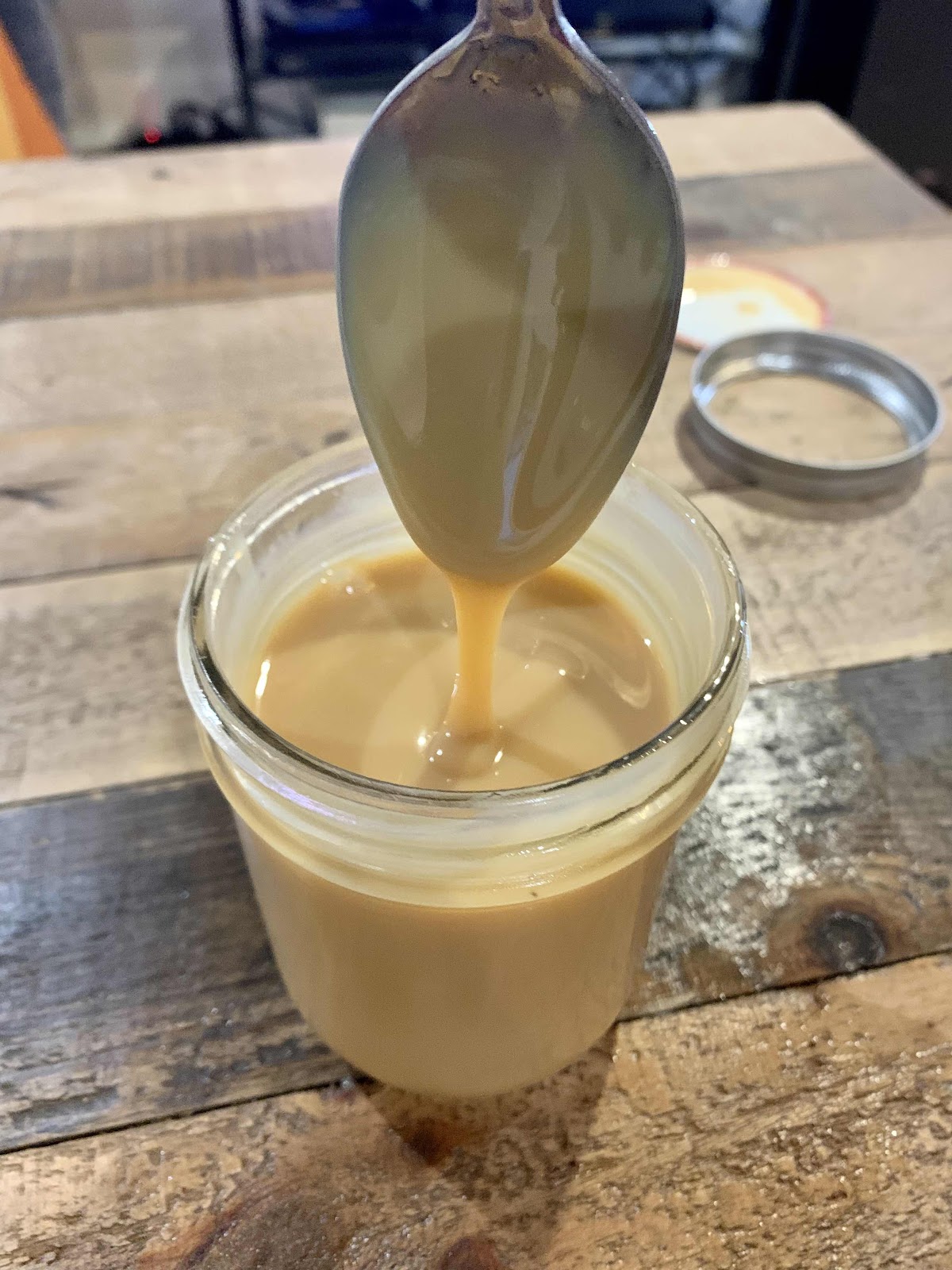
Leave it for about an hour. Every once in a while, check on it and scrape the sides with a rubber spatula. Keep it simmering until it thickens, and coats a spoon thickly.  It may take up to three hours, but it can be pretty much unsupervised except for the last bit. At the end, it will begin to boil quickly at the same heat. That’s okay, just stir it and don’t let it scorch. It should get medium-light brown (the cajeta in the picture above is a little bit pale), and be thick like caramel. It will thicken more as it cools. 

Put hot cajeta into sterilized jam jars and top with sterilized lids. Process in a water bath for fifteen minutes. If any jars don’t seal, don’t worry, they will keep in the fridge for a month, anyway. 

Monday, June 6, 2022

Project Pantry (Poor Man’s Soufflé)


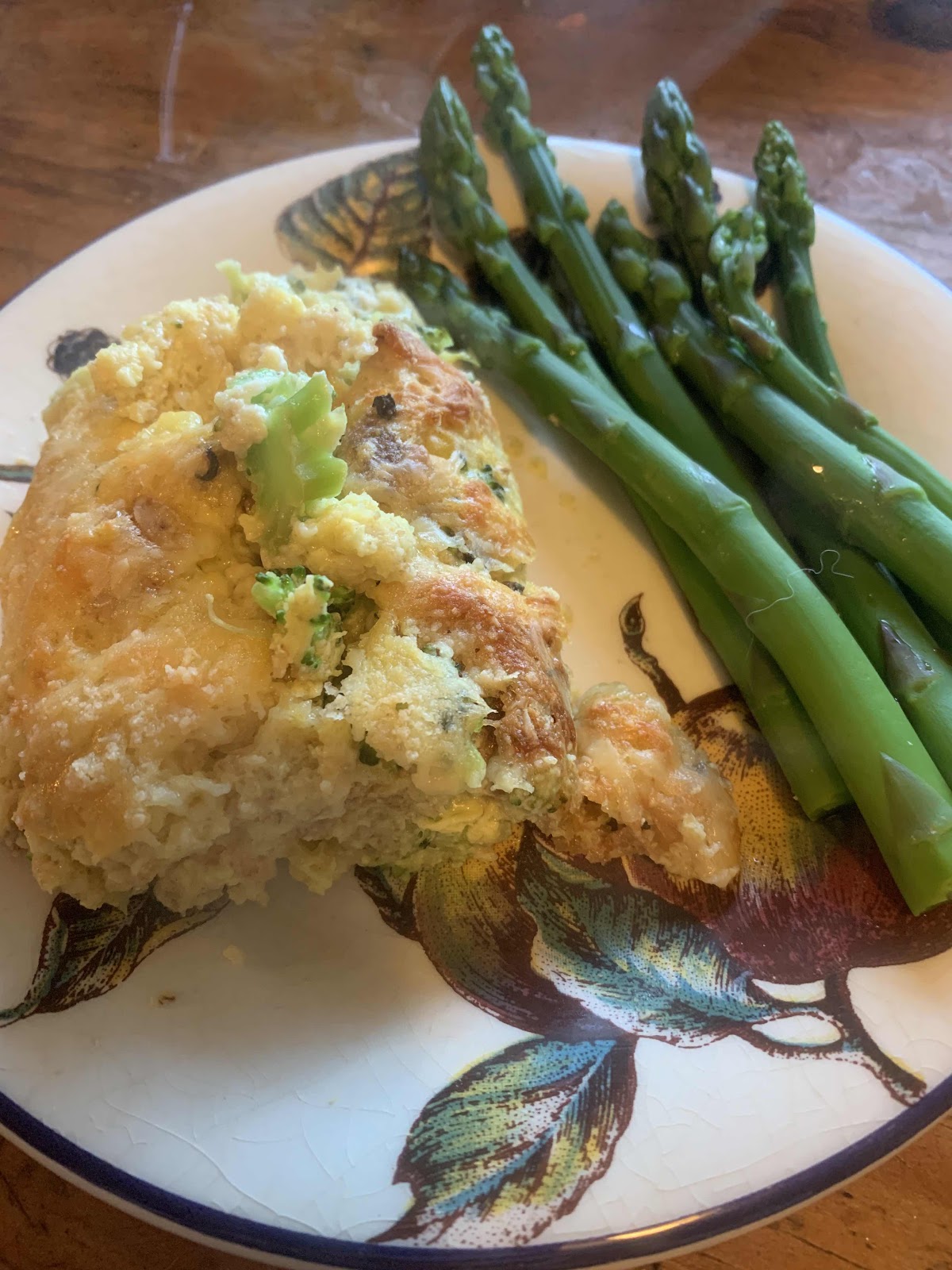
Episode two of Project Pantry, my occasional feature where I describe a recent home cooked meal and detail which ingredients came from where. Tonight’s dinner was a broccoli strata, and it was delicious. 

Strata, as far as I can tell, is a relatively new term made up to seem fancier than “savory bread pudding.” It sounds vaguely Italian, which this dish probably isn’t. This dish, in fact, screams “Ladies Home Journal Brunch Contest 1996.” 
That’s not an insult - as a veteran of a few recipe contests myself, I appreciate the ingenuity, ease, and frugality evident in a dish like this. But I like to call it a Poor Man’s Soufflé, because it really is almost as puffy and delicate. 

Ingredients: 

2-3 cups cooked broccoli, chopped into small pieces 

4 large eggs 

1 1/2 cups milk (I used goat milk since that’s what I got) 

5 pieces sandwich bread. You can use whole wheat but it has to be soft, squishy bread. Nothing too crusty. 

3 oz chevre or other semi-soft, crumbly cheese 

1 cup extra sharp grated cheddar 

Fresh ground pepper

Preheat oven to 350
Tear up the bread and scatter in a casserole dish. Beat eggs with milk and pour over bread. Add chopped broccoli and chevre. Several grinds of pepper. Turn with a large spoon several times to coat. Leave bread to soak for at least fifteen minutes. Then add cheddar on top, and bake for 30 minutes, until puffed up and barely jiggly in the middle. Broil for one minute to brown cheese topping. 

Serve with a green salad, or as I did, with fresh asparagus from a local farm stand. 

Ingredient breakdown: 

From the store: cheddar cheese, broccoli, pepper

From the gleaner’s pantry: bread 

From our farm: eggs, milk, and chevre

From a local neighbor’s farm: asparagus 


Sunday, March 27, 2022

Project Pantry Week One


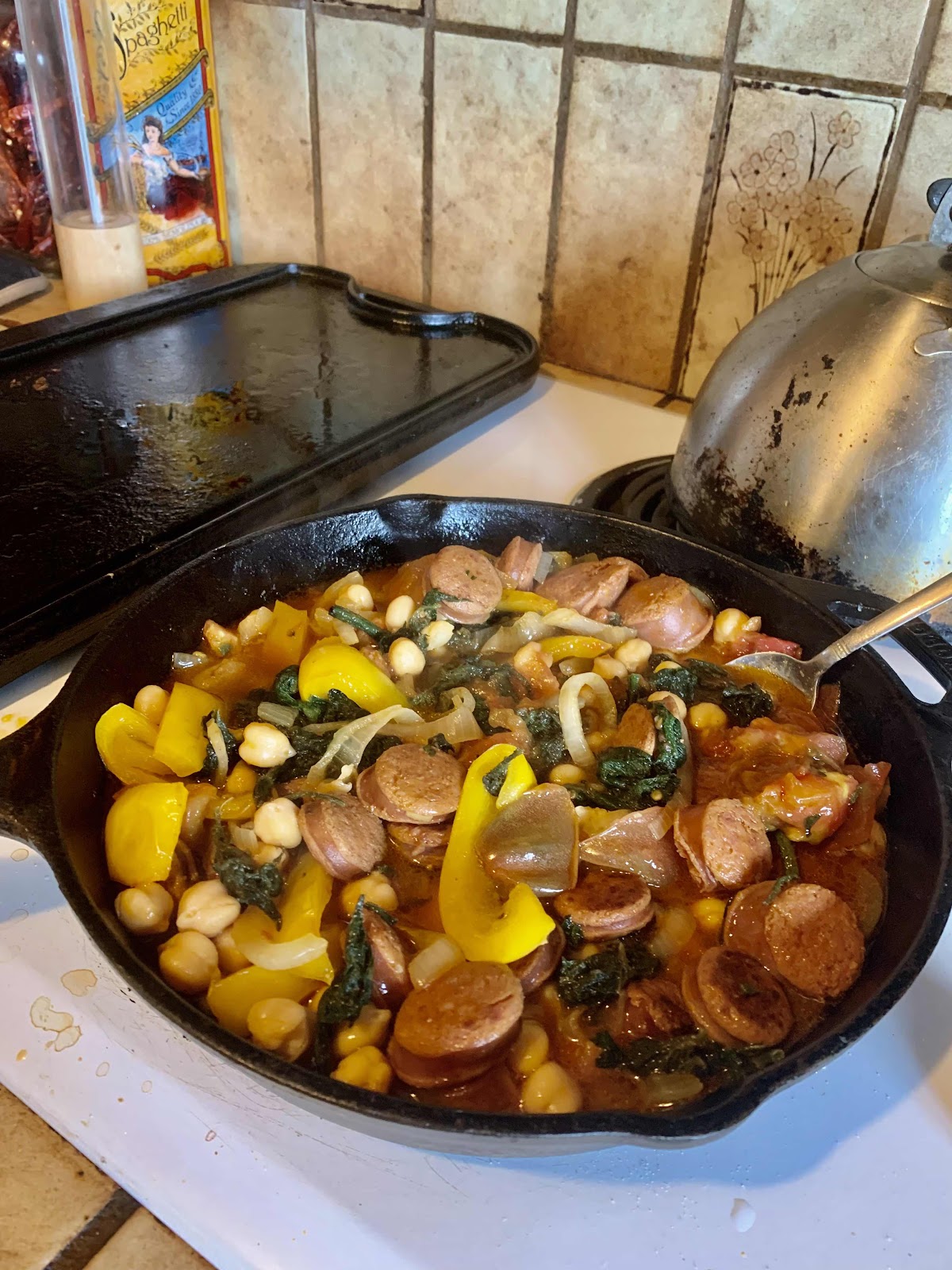
Every single ingredient in today’s dinner - chickpea and sausage stew -  is from the gleaner’s pantry, except for the nettles, which were foraged. But even if you were to buy all the ingredients, this would still be a cheap meal. And it’s healthy, too! 

Chickpea and Sausage stew 

- One sausage per person. I used Louisiana hotlinks because that’s what the gleaner’s pantry gave me, but Italian sausage, Polish, kielbasa, or chorizo works great too. Slice into coins. 

- one yellow onion, sliced 

- one bell pepper, sliced, red preferred. 

- 1-2 cups nettles, or whatever tender greens you have on hand. Spinach is good. So is Swiss chard. Chop roughly. 

- 1 large tomato, chopped

- one can chickpeas 

In a little bit of oil, sauté sausage over medium-high heat until browned. Add peppers and onions.  Continue to sauté until vegetables wilt and are slightly browned. Add chopped tomato. Add rinsed, drained beans. Add greens. If needed, add a tablespoon or two of water. I find the vegetables usually give off enough moisture, but sometimes a little water is good. Or lemon juice. 

Cover and simmer 15-20 minutes, until flavors meld. 

Nice additions if you have them - chopped Kalamata olives, capers, zucchini. 

Score:

Gleaner’s - 5

Foraged - 1

Grocery store - (the oil) 


Monday, February 21, 2022

The Fermentation Files (Ginger Beer/Not Beer)

Small batch fermenting is one of my favorite things to do. I love to make sauerkraut, kim chee, and kosher dill pickles. During milk season I make kefir and, of course, cheese. People don’t think of it that way, but cheese is in fact a fermented food. Someday I would love to try my hand at another non-intuitive fermented food - dry cured salami. Fermented foods have a ton of health benefits and they are a cheap, low stakes hobby that doesn’t require much in the way of equipment. 


A notable exception to that cheap and easy thing, though, is one type of fermentation that I don’t do anymore. I used to be a home brewer. I’d make plum wine in the late summer and hard cider in the fall. I never got all that good at it, but I did enjoy myself and I did amass a collection of cool glass carboys and neato accoutrements like airlocks and bottlecappers. And I felt a great deal of satisfaction and pride whenever I got “high on my own supply” and enjoyed a few glasses of mediocre but effective home made hooch. 

Alas, I enjoyed it all a little too much and eventually I quit drinking alcohol altogether. I gave away all my cool carboys and tubing and whatnot. It was sad to part with it all, but I still had a whole world of fermenting projects and kitchen-witchery to console myself. I’ve stayed away from fermented beverages ever since. Until a few days ago. 

My daughter Hope has long wanted to make old fashioned root beer and/or ginger ale. It’s a fermented drink, but it isn’t alcoholic. Or, at least, it shouldn’t be more than about 0.5-1% alcoholic, which is the same amount that’s allowed to be in regular apple or orange juice that you buy at the grocery store. So when, last week, the Gleaner’s Pantry offered up a bounty of a whole pound of fresh ginger, we decided to give it a try. 


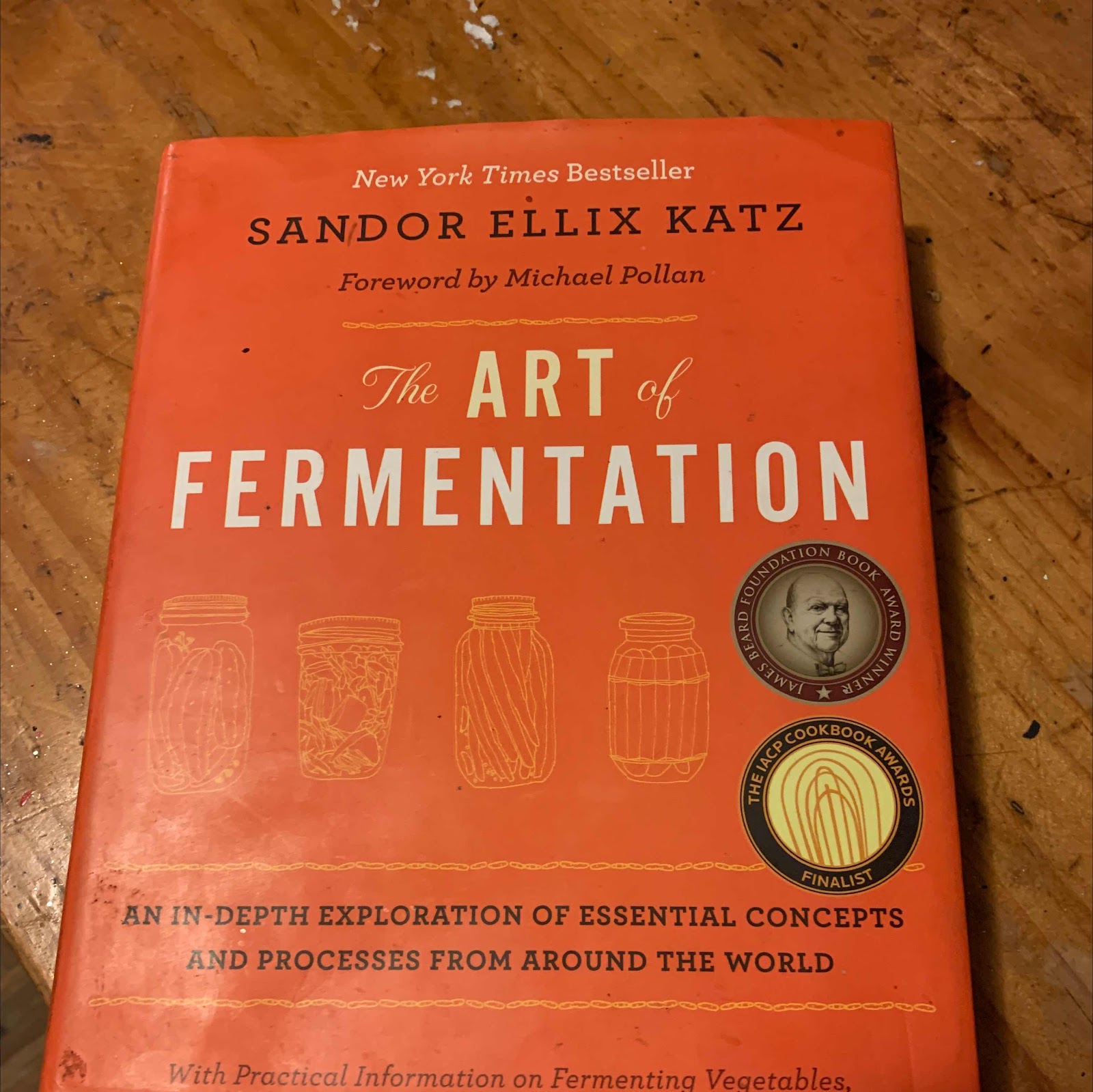
I wasn’t sure how to go about it, but that’s why I have books. The first step in making ginger beer is making a ginger bug. A ginger bug is very simple to make. You just grate a ton of ginger into a jar, add a big scoop of sugar, and fill the jar with water. Leave it on your fermenting shelf (what? You don’t have a dedicated fermenting shelf?), and within a day or two it will be bubbling away. 

When your ginger bug is nice and active, make a pot of very strong ginger tea - actually a decoction of ginger. Grate, chop, or thinly slice at least six inches of ginger root into a half gallon of water. Simmer for twenty minutes. It will reduce down to about a quart. Strain into a half gallon jar and add a full cup to two cups of sugar and another quart of cool water. Temperature should be lukewarm. Then add your ginger bug in a mesh bag. 

Cover, but do not seal. Put it on your fermenting shelf (you set one up in the last minute and a half, right?). Wait a day or two until it’s nice and fizzy and drink. You can bottle at this point, but be careful. We bottled some in stoppered bottles and when we opened one a day later it shot out like champagne. 

I ended up not drinking the ginger beer, after just a taste. On the first day, I couldn’t taste any alcohol, but on the second day I thought I could. I might have been imagining it. It tasted like apple cider when it’s left out overnight. I’m certain it would be impossible to get drunk on this ginger beer, but these days I take no chances. It is a sugar-based ferment, and that means it must have some alcohol in it. I don’t fuck with alcohol anymore. So Hope gets to enjoy it all herself. 

However the taste I did get was great! Very “hot” ginger taste, light carbonation, and that slightly sweet-sour taste fermented liquids have. I’m sure it would be tremendously refreshing over ice on a hot day, and probably very good for stomach ills and nausea. Next time, I may try just making the string, sweet tea and adding carbonated water instead of a ginger bug. It won’t be a real fermented product that way, but at least I could drink it. 

Saturday, March 21, 2020

QD5 - Spring Sting (Nettle Soup)


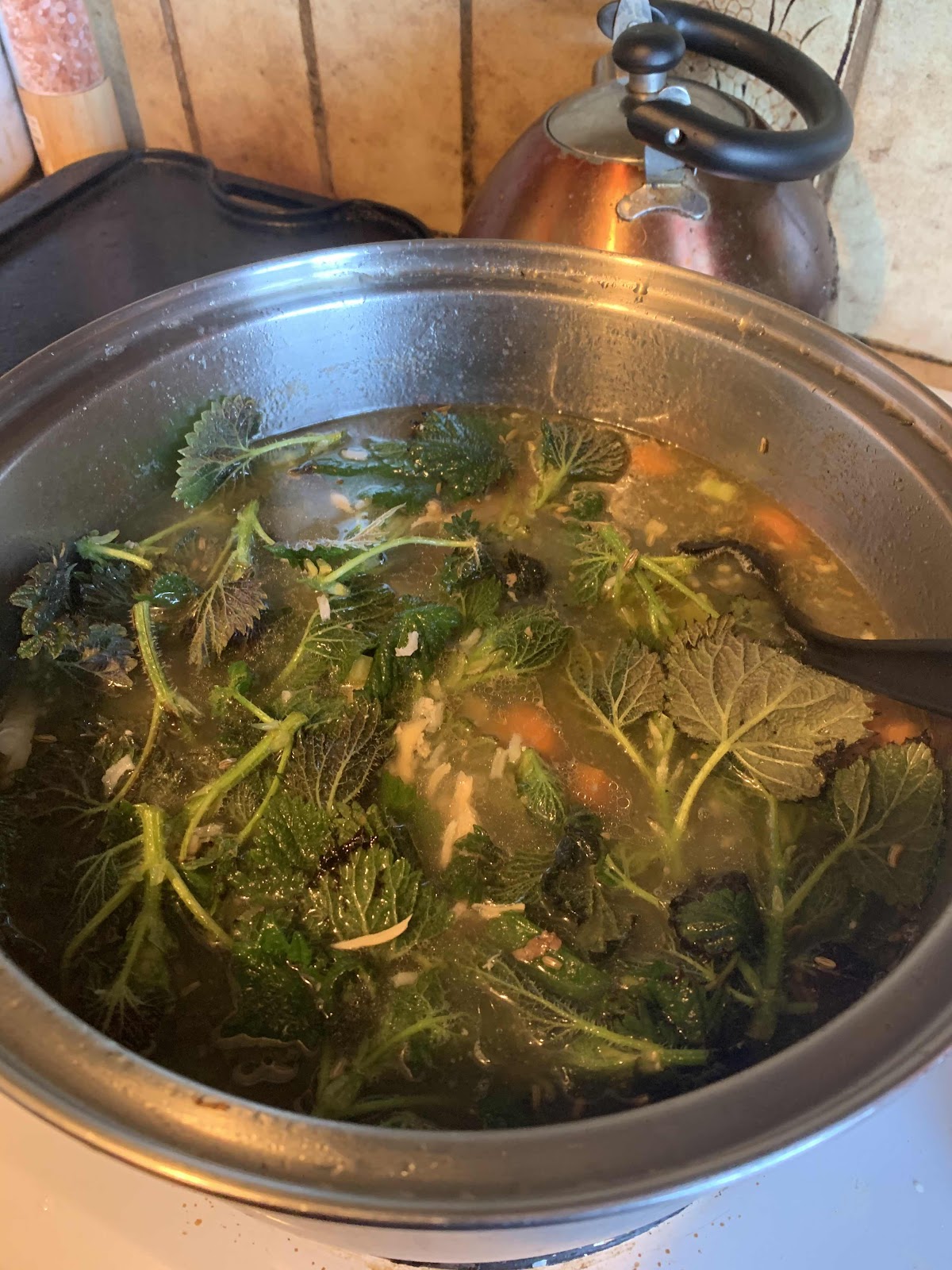
Stayed at home today - as we are all supposed to do - and having not much to do, decided to harvest some nettles and make avgolemeno soup with the remains of the chicken I roasted yesterday. 

Note to self: nitrile gloves are not proof against nettle stings. Right now, six hours later, three fingers on my left hand are still bitching and complaining. Nonetheless, I did manage to harvest half a brown paper shopping bag full of nettle tips. 

Avgolemeno soup is one of my favorite things, and I only make it once a year, just about now, when the nettles are ready. Avgolemeno means “egg and lemon.” It’s Greek. It refers to a delicious, tangy sauce that can be poured over vegetables, or used to thicken and bind broth. 

SPRING AVGOLEMENO SOUP:

take one chicken - or the remains of a roast chicken you ate  the night before - and simmer in plenty of water with salt to make broth. Let cool, and remove bones, reserving flesh.

To the broth, add two stalks chopped celery, two chopped carrots, a teaspoon fennel seed, a tablespoon salt, a couple
Cloves garlic, and a cup of white rice. Simmer gently.

While soup is simmering, go gather your nettles. Use gloves (not nitrile!). Rinse nettles in a colander to clean and remove any grass or extraneous vegetable matter. Add nettles to broth. 

When veggies are tender, make avgolemeno sauce: 

Crack three eggs into a bowl. Squeeze three large lemons and add juice to eggs. Beat well, until smooth. Then use a ladle to slowly add a cup of hot broth to egg mixture, beating all the while. This is called “tempering” the eggs. If you were to add the egg mixture directly to the soup, you’d have scrambled egg soup and it would be gross. Tempering the eggs with the lemon makeS a smooth, beautiful yellow tangy sauce which you can then add in a thin stream to the soup, stirring at the same time. 

Hit the soup with a teaspoon or so of fresh ground black pepper, maybe a bit of cayenne, and serve with crusty bread. 

Other lovely additions to chicken avgolemeno soup might be asparagus, spinach or other tender greens, or cubed cooked potatoes. 

Friday, August 23, 2019

The Gift of the Crab


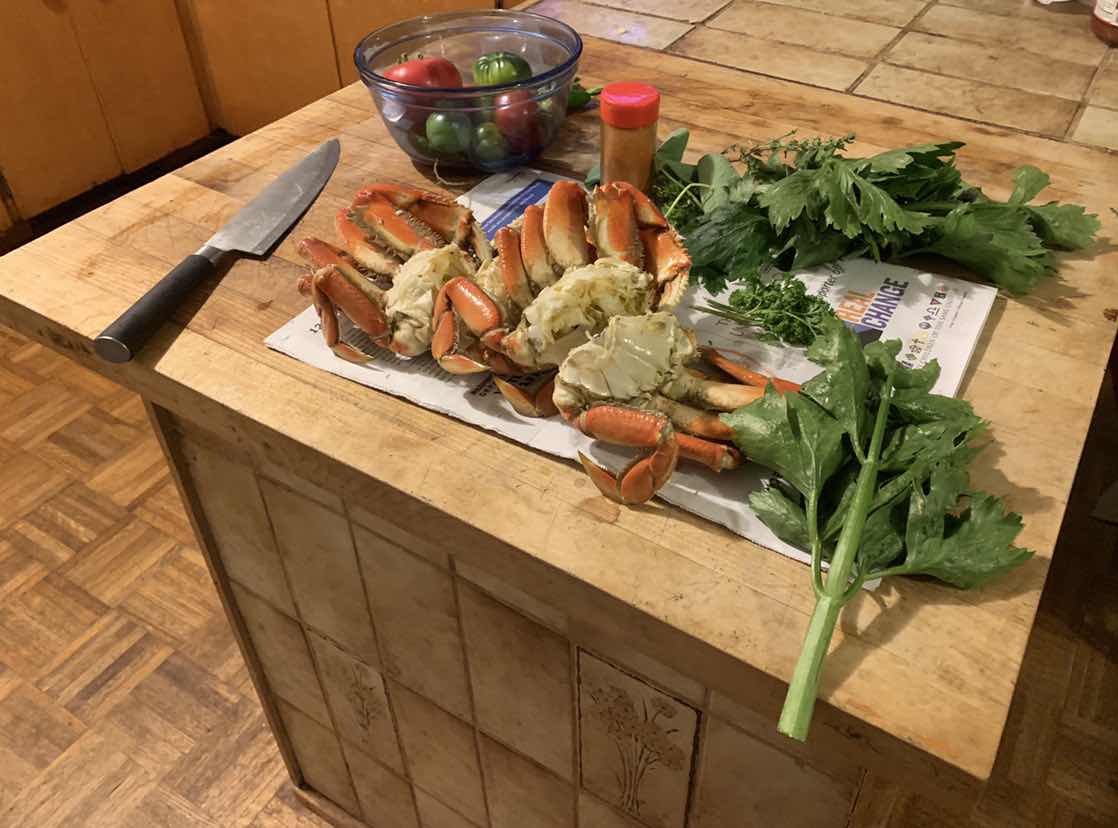
Hope’s best friend’s dad took the girls out to check his crab pots today. Of course I instantly told her to offer the Dad goat cheese for a couple of crabs. She rolled her eyes a little and said she would. 

Then she started texting me photos. Photos of a giant cauldron of crabs boiling in seawater. 

“Mom we got SO many crabs! And we’re going back out!”

“Don’t forget!” I wrote. “Goat cheese! Or ham! Or maybe some grass fed beef?”

More photos. More crabs. Big crabs! Hope learned to clean a crab. Hope sent pictures of herself eating big handfuls of snowy white crab, but no word on whether or not she was bringing any home.

“My right arm? My firstborn child?” I texted. And then “you’re killing me, smalls!” 

When she finally came home, she shook her head. 

“Sorry mom, they didn’t want to part with any crabs.”

“Really?!” I was surprised, but not THAT surprised. I mean, no matter how many dungeoness crabs I had, I’d still find it difficult to give them away. Maybe they were for a big event. Lots of people have crab parties on the beach this time of year. 

“Bummer!” I said. “I was really hoping....” 

“Sorry mom, But I could only ask him once, you know” she said, a little witheringly. 

“I know, I know. It’s fine,” I answered, but not really feeling fine. Dungeoness crab is the absolutely best seafood on earth. Fight me. 

Then the door opened and her best friend came galloping in holding an ice chest and both girls dissolved into giggles. 

“Gotcha, mom!” Hope teased me. “How could he NOT give you crabs? I showed him our text thread. You were THIRSTY for crabs.” 

Four big crabs, already cooked and cleaned. I didn’t even have a chance to give him anything in return. Hope’s friend is spending the night, so I can send her home with something. 

Not my right arm, though. I need that to hold the nutcracker. 


Tuesday, January 22, 2019

Birthday Dinner

It’s my birthday so I can cook whatever I want and nobody can complain. And what I want is Lima beans with ham hocks and homemade upside down cornbread. What’s upside down cornbread? Glad you asked. It’s my own invention. 

You take a cast iron skillet and sauté chiffonade collard greens and onions in plenty of the fat of your choice (lard from our own pig). Make your cornbread batter. Pour batter right into the sizzling hot skillet, right over the greens. Top with grated cheese. Bake at 350 for twenty five minutes.
 
You can change up the flavors any way you want. Try onions and poblano peppers, garlic and cumin as the sauté, and top with grated pepper jack. Or - I havent tried this - what about a sweet cornbread batter, and use something like sliced peaches or plums as the sauté? Top with cinnamon sugar?


Friday, January 11, 2019

Bounty from the Sea (Gleaner’s Dinner)


This week, Gleaner’s Pantry got a donation of frozen seafood. There were a few different types of fish, but the nicest was frozen filets of flounder. Everyone took home some twelve or fifteen filets. 

Flounder is a delicate white fleshed fish that needs gentle treatment. Here’s what I did with some of it tonight. The vegetables came from Gleaner’s as well. 

Preheat oven to 325

In a lidded casserole dish, lay down a bed of chiffonaded kale or other hearty greens. Add a layer of thinly sliced red onion. Lay down the flounder filets, and shellfish if you’ve got some. Mussels would work as well as clams. Add two cloves of minced garlic. Pour over 1/2 cup of orange juice and 1/2 cup of white wine. Dot with a few tablespoons butter. Salt and fresh ground pepper to taste. Also add a tablespoon fennel seed. Cover and bake until all
Shellfish are open or until fish flakes easily. 

Serve with baguette or plain rice. 

Monday, December 24, 2018

Christmas’s Eve 2018 (with recipes)

Another Christmas. Another year almost gone. As my children get older, each year seems more and more precious. As in years past, I made an advent calendar of events, a posterboard hung with 24 gift tags, each one of which had an activity or community event written on the back. Although they are both teenagers now, Hope and Paloma were still excited to turn over a tag each night before bed. 


A few highlights: 


Pioneer Park Old Fashioned Christmas. Our favorite event of the season. Santa looks a little skeptical of my big girls. 


We crossed the border to visit Vancouver’s Van Dusen botanical garden light show. It was raining cats and dogs and we got soaked, but the lights were spectacular.


Decorating cookies. The girls invited friends and made a party out of it. We went overboard and there were hundreds of cookies. Hope had the bright idea of distributing cookies at Ferndale’s assisted living facility. She’s a sweet, thoughtful child. 


All three kids in front of this year’s tree. It’s another live tree and will be added to our small but growing Christmas grove. 

The menu tonight is simple but yummy. It’s just the five of us, for the first time in memory. We usually go to my Mom’s house for a formal Christmas Eve dinner with the good china, but this year my stepdad broke his leg and had to have surgery the day before yesterday and isn’t feeling up to visits. We will get together for new year’s instead. 

Small Feast: 

Cream of mushroom soup 

Roast lemon- garlic-herb chicken 

Fingerling potatoes roasted in drippings

Romaine lettuce and crudités with “Cesar” dip. 


I recently invented this mock-Cesar dressing/dip and I love it. I make the base in a mortar and pestle, remove half of it to be a rub for he roast chicken, and then finish the dressing. 

Mock-Cesar dip:

In a mortar and pestle, combine 

1 large clove garlic
1 tsp whole Black peppercorns
1/2 tsp salt
2 anchovy filets 

Mash with pestle until a coarse paste forms. Add

1 Tbspn olive oil and mix with a spoon. 

Remove half the paste and use it to season your whole chicken, making sure to get some inside the cavity as well. I stuffed the cavity with a half onion and a half lemon, and set the chicken on a bed of rosemary and thyme. 

To the remaining paste in the mortar, add

1 tsp whole grain mustard
Juice of one large lemon
Heaping spoonful mayonnaise

Mix gently until well incorporated and smooth. 
Add lemon juice if needed for acidity, taste for salt. 

Make a crudités platter with celery sticks, hearts of romaine separated into leaves, cucumber rounds, etc. Serve the dio right there in the mortar. It’s very strong flavored but super yummy. 

Merry Christmas! 

Saturday, July 21, 2018

Cooking in Oaxaca (Improv Style)


Meatballs in red sauce 

I love to cook, but cooking here presents some, ahem, challenges..  

We are staying at my mother-in-law’s house and that means I am cooking in her kitchen. Which, I will say, is pretty well equipped. Four burner gas stove with a cast iron comal; functional fridge and freezer. Decent selection of cookware, by which I mean there is a small skillet and a large skillet, stockpots of various sizes, cutting boards, and a full range of implements like spatulas and strainers. A pretty good blender. 

But most of the equipment is.... not of a quality I would buy at home. Pots and pans are aluminum, or whatever that sheet metal-covered-in-blue-enamel camping ware is. They are warped and don’t sit flat on the burner. Knives are cheap, dull, and plastic handled. There is theoretically an oven but it hasn’t been used since we lived here five years ago and is crammed with stuff I wouldn’t attempt to remove and find other space for.

Then there’s my mother-in-law’s organization system, or lack thereof. Now, I’m no neat freak and I know my own kitchen falls far below the standards of those of many people. So I’m not being judgemental, I’m just explaining why I have a hard time sometimes. 

Mamá keeps everything in plastic bags, usually opaque ones, twisted shut, knitted at the top, and thrown into the cupboard. There are probably a hundred such bags, and I can’t tell what’s in any of them. There are big bags, small bags, bags that crackle when you pick them up, as if stuffed with dried twigs, and bags that are heavy and solid enough to be full of sand. The knots are so tight I can never undo them, and I don’t want to tear open the bag to see what’s in it. 

The fridge is the same, as is the freezer. So of course I just buy my own food. I brought home a bag of rice and a bag of beans and mama says “No no no! Why did you buy rice! We have lots of rice!” Yeah - probably eighteen separate bags of rice, but which ones? 

And next time I look for the rice, or the beans, or the yogurt, or the cheese I brought home, it’s disappeared into little opaque bags. Some of her kitchen habits leave me mystified. I bought a loaf of sliced bread for sandwiches, and when I went to look for it, she had put it in the freezer and it was frozen solid. 

Mealtimes are also different here than at home. A fairly hearty breakfast whenever we stumble downstairs (we are not early risers), prepared by Mamá, who does not believe us when we say we prefer to eat lightly in the mornings. At home, we have coffee when we wake up, and then lunch a few hours later. Here, we are presented with tamales or quesadillas or chicken in mole or beans and rice with scrambled eggs first thing. 

Dinner is late, usually sometime between 8 and 9. If I want to cook - which I often do, both because I like to and because the children ask me to - I have to work with what I can find. Within walking distance, there are only very small stores in people’s homes that carry a quite basic supply of ingredients: rice, black beans, a few canned goods like tuna and evaporated milk, and a small selection of fresh produce. And a decidedly wider selection of junk food, mostly Bimbo products. 

Cooking Mexican food would not present much of a problem, obviously, as long as I stuck to simple recipes. But Mamá does all those dishes so much better than me that I prefer to leave them to her, and my kids often ask for dishes I make at home. So I improvise. 

Hope asked me for chicken and vegetables in Thai peanut sauce like I make at home. I told her I’d do my best. 

Chicken: no problem. It’s tough free-range ranch chicken, but it tastes good. So I boiled the heck out of it with garlic, onion, clove, allspice, and salt and pepper and shredded it, saving the broth. The corner store had green cabbage and green beans, so those were the vegetables. 

The peanut sauce was the tough part. I had to wait until Friday, when they hold the neighborhood tianguis (street market) to get ginger. There was a bottle of soy sauce in the fridge that I’m pretty sure I bought myself two years ago. 
The hardest thing to figure out was fish sauce. If there’s no fish sauce, it’s not Thai peanut sauce, full stop. Finally I had a brain wave. 


Charolitos

These are dried anchovies, or charolitos, as they are called here. They’re super tiny, less than an inch long, and dried crisp. I got them at the tianguis. Six or eight of them reproduced the flavor of fish sauce, at least somewhat. The tianguis also provided a young coconut, skillfully removed from its husk in one piece, with the water still inside, like a perfect snowball. The man does it with a machete.  

Mamás blender was not up to the task of turning roasted peanuts into a smooth paste, even with the admixture of chicken broth and coconut milk,  so the resulting peanut sauce was a bit gritty, but it had the right flavor profile. Hope was happy. 

Today I had a craving for spaghetti and meatballs. The carnicería right next door was closed, but I was determined to have meat balls so I took a mototaxi up to the big butcher about a half mile away. I asked for three-quarters of a kilo of ground beef. The butcher hacked off a few pieces of very lean meat - I have no clue what part of the animal it was, but there was zero visible fat - and ground it for me. I would have preferred a coarser grind as well as a piece with a little fat on it, but oh well. 

Back at home I mixed the meat with a couple of eggs and some very fine bread crumbs (Mamá had bought a bag of bread crumbs to fry fish the other night) and salt and pepper. I looked in the spice drawer, saw twenty or thirty little plastic bags of various colors, and sent Paloma next door for three pesos worth of oregano. 

No olive oil, so I fried the meatballs in vegetable oil. 

Making a red sauce was fairly straightforward except for the lack of olive oil. Garlic, onion, more oregano, whizz up some lovely ripe tomatoes in the blender. 

When we went to the big grocery store last week (it’s accross town always) I had been delighted to see Parmesan cheese in the green can, just like at home. I bought it, and set it on top of the fridge, but since then it has disappeared into the depths of some cupboard or another and I couldn’t find it. So I used the cheese I have, which is quesillo. It’s basically mozerella, but stringier. It’s basically string cheese. It melted into the red sauce in a lovely gooey way. 

I’m looking forward to seeing how my improvisation turned out. 


Monday, May 28, 2018

Homero’s Great Big Birthday


My husband is a fortunate man in many respects. Not the least of which, obviously, is that he’s married to me. But the luck that I am thinking of is that of having his birthday on one of the most reliably beautiful dates of the year. 

May 22 is his actual birthday; we tend to celebrate it on the following weekend, which is Memorial Day weekend. His friends and their children have a rare three day weekend, and the weather is almost always amenable, to say the least, and outrageously gorgeous, if we’re lucky. 

This year, we were lucky. It has become something of a tradition to invite his best friends from Seattle up for a weekend carne asada. This year, we hosted three families - the best friend’s family, the best friend’s daughter’s family, and the best friend’s best friend’s family. Some of them brought their RV’s and stayed for two nights, and some of them stayed in the house for a night, and some of them just trekked up for a day trip. 

Our own children had both been invited, separately, by friend’s families to go camping or sailing, so it was just Homero and I acting as hosts. I made machaca (also known as ropa vieja, or basically shredded pot roast stewed on the stovetop with sliced onions and spices) for tacos and after dinner we decamped to the fire pit on the highest point of the property. 

 Saturday night was a bit breezy and chilly, but we built a roaring bonfire, wrapped up in wool blankets and serapes, and warmed ourselves with tequila and stories. Nightfall comes late at the end of May, but eventually the sky deepened and a three-quarters full moon rose, attended by Jupiter rising in the east and Venus setting in the west. 

Sunday brought hot sun and more people. We were awakened by the arrival of a new family and hurried to make coffee and set out sweetbread. Suddenly there was a swarm of little kids out on the lawn, running in circles and bouncing on the trampoline. After everyone had recuperated from the previous late night, one of the ladies, who is Salvadoreña,  decided to help me make pupusas and curtido for lunch. 

Pupusas are comida típica from El Salvador, fat little stuffed corn masa cakes. The can be, and are, stuffed with any number of delicious things, but we stuffed ours with mozzarella and served them with a tangy, slightly fermented cabbage slaw called curtido and a mild tomato salsa. They are delightfully crunchy, salty, and melty, topped with the vinegary slaw. 

After lunch, some people understandably wanted to lie around in a food coma, but others, when  I suggested going out to Birch Bay, took me up on that offer. Birch Bay is just a few miles from our house. There is a beautiful state park, but it costs money to park and the beach is rocky. Further along the shore, by the town, there is a mile-long sandy beach. The water is shallow and warm, with beds of eelgrass and lots of tiny crabs and little grey fish that dart away from your feet. This weekend, there also happened to be a kite festival, and the sky was decorated with dozens of colorful fish, dragons, ribbons, and geometric shapes. 

The children, barely more than toddlers, splashed and played in the lukewarm water. The adults rolled up their pantsleeves or tucked up their skirts and waded. We hit the ice cream shop. We hit the farmer’s market. We hit the liquor store. We went home just as the sun was beginning to dip and hunger pangs were beginning to assert themselves in our bellies. I felt the start of a serious sunburn on my forehead and shoulders. 

Arriving, we saw that the home contingent had started a fire again. I let the goats out to browse and followed them slowly  around the property, a beer in my hand, listening to the laughter of the adults around the fire and the shrieks of the children on the swingset. 

After the evening milking, I was ready for a break from the festivities and so I left everyone else to their convivial circle and headed inside to cook some dinner. I had bought a half-halibut a few days before because there was a great sale at my local store, and I had frozen some of it and planned to bake the rest for ourselves, but Homero told me that our guests had decided  to spend a second night and so I needed to make three pounds of fish stretch into dinner for sixteen. The only way to do that that I am aware of is fish soup, with lots of vegetables,  so that’s what I made, along with a big pot of rice. 

Having stayed up late the night before, I was tired and elected to turn in around eleven, long before anyone else. I assume the conversation around the fire went on into the wee hours, until the firewood, the beer, or both ran out, but I wasn’t there to be a part of it. I was dreaming peacefully face down in my down blanket. 

This morning I awoke before anyone else, and put on some water for coffee. I surveyed the wreck of the kitchen with a jaundiced eye, pulled a trash bag out from under the sunk, and began cleaning up, not caring too much if the clink and crash of beer bottles breaking as I threw them into the sack was disturbing anyone’s slumber. Eventually, my ragged-faced family and friends appeared in the kitchen, in search of coffee and food to assuage their hangovers. 

Originally, we had planned to do a carne asada - grilled meat - but it hadn’t happened, so we had a bunch of pre-marinated, thin-cut flank steak in the fridge. We cooked that on a hot cast iron comal (and disconnected the fire alarm, which didn’t like the resulting smoke and kept blasting out high pitched warnings), along with baby onions and fresh nopales. Add fresh hot corn tortillas, avocado slices, and copious amounts of stingingly hot salsa and you have a breakfast that will kick the shit out of your hangover. 

The rest of today, after everyone left, has been relegated to quiet activities - reading, maybe throwing a load of laundry in the machine, wiping down the table. I plan to watch an episode of Westworld in a little while here. That’s about it. 

There are leftover pupusas and fish soup for dinner. I’m looking forward to that. 


Tuesday, December 12, 2017

What is Guacamole, Anyway?


Let's get one thing out of the way: there's no such thing as one "right" way to make guacamole. There are not even one hundred "right" ways to make guacamole. There are as many "right" ways to make guacamole as there are abuelitas in Mexico. 

I'd like to be a fly on the wall listening to a hundred Mexican abuelitas argue about how to make guacamole. There will no doubt be virulent partisans: for or against the inclusion of tomatoes; the chunky tribe versus the smooth; those who advocate garlic and those to whom garlic is a barbarian adulterant. 

If we turn to etymology, as I always do in times of doubt, we find that "guacamole" is a compound word made up of the Nahuatl words for "avocado" and "sauce." (Well, okay if you want to get technical the Nahuatl word "ahuahacatl" actually means "testicle" but that's only an interesting aside. Avocados grow in pairs. Picture it.) Therefore, guacamole is simply a sauce made with avocados. Quite likely, for the prehispanic residents of Mexico, guacamole may have consisted of no more than mashed avocados and salt, perhaps with chiles. 

I don't know enough about regional Mexican cuisine to pinpoint a cook's origin by her guacamole recipe, but I know how they do it in Oaxaca - or, okay, at least how my husband's family does it. In Oaxaca, guacamole contains tomatillos. When Homero and I were getting married, my mom hired some great caterers and told her we wanted a Mexican buffet. They worked up a sample menu and invited us to taste it. It was fantastic - the food is what everyone remembers about my wedding - but Homero had a problem with the guacamole. They had made a chunky style guacamole with tomatoes - like a pico de gallo suspended in a mousse of whipped avocado. Homero barely recognized it as guacamole - he wanted something looser, soupier, more liquid. In Oaxaca this is achieved by blending the avocados with soft simmered tomatillos, fresh raw chiles, onion, and cilantro. Oaxacan guacamole is smooth, of variable spiciness, and most often used as one of several garnishes on tacos, chilaquiles, enchiladas, or what have you. It isn't a "dip," per se. 

Over the years, I've developed what I consider to be my own ur-guacamole recipe, meaning the list of ingredients without which I cannot make guacamole, but in practice, I seldom make guacamole the same way twice. That list is:

- avocados (of course)
- chile (much preferred fresh but I'll use cayenne powder if I have to)
-cilantro
-lime

Onion is nearly as essential but I don't include it because  if I didn't have an onion (the horror!) I wouldn't let it stop me from making guacamole if I had all the other ingredients. 

In Mexico, avocados are cheap. Even in the states, in some areas, avocados used to be ubiquitous and inexpensive. In fact, they used to be called "poor man's butter" in Florida. Alas, no longer. Even in season, avocados these days are pretty dear. So I'm often looking for avocado-extenders. 
If I happen to have them, I'll use tomatillos. I like to use them raw, however, instead of simmered. For one thing, who is going to make guacamole if it involves actual cooking? For another, I like the fresh, slightly citrusy acidity of raw tomatillos and am not a fan of the soft, almost slimy texture of cooked tomatillos. 

Other extenders I've come up with are decidedly less traditional. I have used sour cream, yogurt, and even 

(Dum Dum DUM....) 

Mayonnaise.

I started one time throwing in plain, tangy yogurt not as an extender, but because I was looking for a way to make the guacamole less calorically dense. I decided I liked it. The acidity of good yogurt is a nice balance to the creaminess of avocado. 

Personally, I like the texture that the addition of dairy products brings to guacamole. Avocado is so creamy and rich, and it seems to me that extending it with other creamy and rich products like sour cream or mayonnaise preserves that quality.  That creaminess always needs to be balanced by the acidity of lime. I might extend that to include lemon, but in my mind citrus is the only possible source of acidity. I have occasionally heard of people using vinegar and while I would never do such a thing, I'm not going to tell anybody else what to do. 

Which brings me to my main point. Any given dish made by any given cook has a story, a history. That history interacts with the tastes and the resources of the cook to produce a new dish - the actual dish that the cook is putting on his or her table on any given evening. "Authenticity" is a moving target, not a static Platonic ideal enshrined in any particular place or time. I am a good cook - I'm both respectful of tradition and inventive and innovative. I use everything I have at my disposal - the knowledge imparted to me by my mother and mother-in-law; the skills I have developed through trial and error; the ingredients unique to this farmstead, this time and place; and the feedback from my husband and children, my "customers." 

The food that I place on my family's table night after night is the unique and personal expression of the covergence  of multiple factors. That makes it "authentic." My guacamole is authentic. Is it authentic Oaxacan? No. Is it authentic Oaxacan-American? Yes.

Is it delicious? Hell to the yeah. 

Friday, December 8, 2017

December Doings


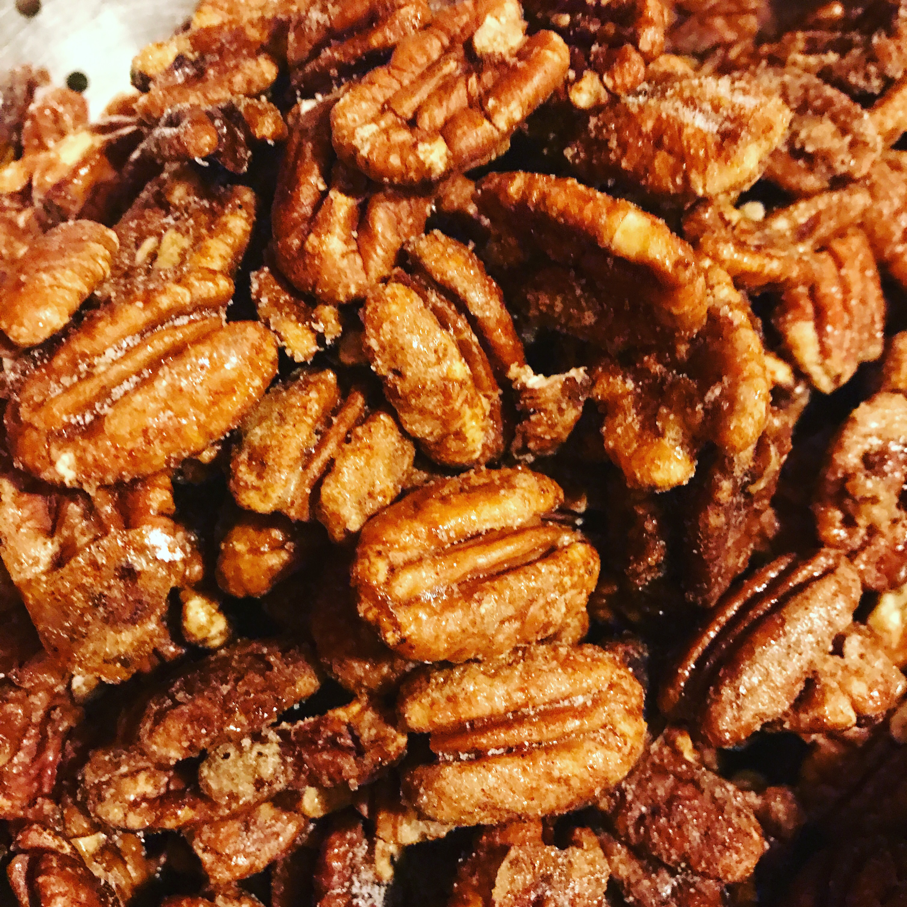
Spiced candied pecans. Made these today to send out in small pretty parcels to my family and close friends. A good friend and neighbor of mine has a relative who owns a large organic pecan farm in Texas, and every year that relative sends her a couple of big boxes of shelled organic pecan halves. Her kids sell them at a very good price to bolster their own Christmas funds. This year I got five pounds. They are the best pecans I've ever tasted, hands down. And they aren't made worse by candying them. Here's how I do it: 

Preheat the oven to 275.
For each pound of pecans:
Whip 1 egg white with one tablespoon water until frothy. Set aside. 
Mix 1 cup sugar with 1 teaspoon cinnamon, 1 teaspoon cayenne, and 1/2 teaspoon salt. You could vary the spice mixture to your taste. One year I made curried pecans. 
In a large bowl, pour egg whites over pecans and mix well to coat. Then add sugar mixture and turn well. Pour out onto a baking sheet and bake for 45 minutes, stirring the pecans well every 15 minutes. They should be almost dry at the end, and toasty but not very browned. 

I'm going to have to keep these pecans under lock and key until I get them packaged up and out the door. 


This year's advent calendar of events. This is the third year in a row I've done this. Some of the events include public festivals like tree lighting ceremonies and free Christmas concerts; some are family traditions like baking cookies and decorating the altar; and some are church events like helping decorate Zion for Christmas and going to the annual Carols by Candlelight evening. A few days just say "redeem this ticket for a piece of Christmas candy." 

Truthfully the kids are getting a little old for this - Hope is 14 and Paloma is 12. Every year I think "this might be the last year I can convince them to sit down and cut out snowflakes with me!" But so far, they have been excited to turn over the tags every evening before bed and happy doing the activities with me. Yesterday we put up Christmas lights, and tomorrow we are going to make cards, to mail out along with the pecans. 


Beautiful frosty December mornings. The mountains have snow on them, and the porch is icy enough to go skating on. 
Time to check the front closet and go over our supply of gloves and hats, and to get out the door a few minutes early to give the cat time to warm up and to defrost the windshield. 

All is well on the farm and we are ready for winter. We have hay, we have a freezer full of beef, we have propane and we have extra quilts. We are snug as bugs in rugs. 

Tuesday, September 19, 2017

End of Summer Summer Squash Casserole


Although I did not plant any squash this year, the squash has arrived as usual. My neighbor - he of the Hotel-Sized-House (HSH) - planted enough squash for the both of us. And then some. Every few days, we meet at the fence line and I give him a couple dozen eggs or a half gallon of goat milk and he gives me a box of produce. The last box had some potatoes and onions, twenty or so tomatoes, and eight big yellow crookneck squash. 

I've been putting squash in just about everything lately - chicken soup, Mexican rice, scrambled eggs. Nonetheless, the squash piles up. So I went looking for an application that would use up larger quantities. After perusing my cookbook collection and consulting Epicurious, I decided on a yellow squash casserole. I'd never made anything like it before, but it sounded good and it would use up at least two yellow squash. There were several recipes to choose from, but none of them exactly fitted what I had in mind, so I decided to do an experiment. I wanted something like a soufflé and something like a gratin. 

An aside. One of the nice things about being a lady of a certain age - and lord knows the pleasures are few - is that I have accumulated enough skill at a number of endeavors that I need not follow someone else's instructions, but can imagine what I want to create and be reasonably certain that I can in fact accomplish my vision. Sometimes there are failures - of course there are - but sometimes there are beautiful minor triumphs. 

Today's experiment was a success. Actually, it turned out so good that I might make the same thing even when we are not inundated with squash. I might actually BUY squash to be able to make this dish. Here's a recipe.

-Preheat oven to 350
-Make a simple bechemel sauce (about two cups - from two tablespoons butter, equal volume flour, and about two cups milk. I used fresh goats' milk) seasoned with plenty of garlic and fresh ground pepper
-Grate enough yellow squash on the large holes of a box grater to make 4 cups of grated squash. 
- in a large mixing bowl, mix grated squash, one half of a minced yellow onion, three eggs, and the (cooled) bechemel
sauce. 
- blend in one cup (give or take) grated pepper jack cheese
-scrape mixture into a deep casserole dish. 
- top with a mixture of fresh bread crumbs, Parmesan cheese, and oregano. 
-bake in a 350 degree oven (covered) for approximately 30 minutes. Uncover and raise heat to 400 to brown the crumbs. 

Serve with a green salad and some sort of starch - pasta or rice. 


Friday, June 30, 2017

Coming of Age Custard Pie


I am forty-five years old. Incredibly, there has not been a death in my immediate family since my last living grandparent - Grandma Eva - died when I was about twenty, some twenty-five years ago. My other grandparents were either dead before I was born, or died when I was still very much a child.

As an adult, only a very few people I know have died, principally the mother of my stepfather. Grandma Joann was a lovely woman, who we saw on every holiday and who always remembered my children with presents or cards. The mother of my best friend died of ovarian cancer years ago, and I went to her memorial service.  That represents the sum total of my experience with human death, pretty much.

Never have I, until now, been an adult member of a community celebrating the death of one of its own. The church I belong to, Zion Lutheran, is a small rural church with a long history. I've written about Zion before. I joined in order to meet a deep, incohate need to be part of a congregation - to experience worship as more than a solitary activity - and in order to become more fully a part of the community I had moved into. That relationship has been everything I could have hoped, and more than I could have imagined when I first joined. It has been a deep pleasure, and a rather strange experience for a lifelong loner like me, to slowly become a fully instated, respectable member of a circle of peers. I am, believe it or not (few who knew me as a teenager would) a member of the church council. I sing in the (occasional) choir.

Zion's congregation is old, and small. There are perhaps thirty families who belong, and maybe thirty or forty individuals who show up for services every Sunday. Most of these folk are elderly. If I had to guess at a median age for people seated in the pews on an average Sunday, I'd say about seventy. Many of them were married at Zion a half-century hence, and christened there even longer ago. The grassy, sloping churchyard hosts a couple score of gravestones, many of which bear the names of the parents and grandparents of current members. In the basement, where we gather for coffee hour after service, there is a wall filled with photos going back to the year Zion was built, 1903. In those days, mass was spoken in Norwegian. There is a very real continuity, a living history, embodied in this tiny, local institution.

Last week, the oldest living member of Zion's congregation, H. R., died. She was in her nineties, and had been a member of Zion all her life. Her photo is one of the older ones on there basement wall. My children and I knew her as a neat, friendly, well-dressed, and tiny lady who still drove herself to church. We pressed her small hands when we passed the peace. She had beautiful snow-white hair and a sweet smile. She had deep, deep ties in our area. She will be missed. Her memorial is Saturday.

Yesterday, I got a phone call from another of the OG's of Zion, M. She is above - or behind - or superior to me on Zion's official phone tree, and she was calling me to ask me to bring a dessert to H.'s memorial service.

Of course I was planning to attend the service. But it would not have occurred to me to bring anything if I had not been called. I suppose I would have thought, if I thought anything at all, that H's family would be bringing "refreshments." At the very few memorial services I have attended, the food was just there, as if my magic, and I was a consumer; not a provider. Even when my step-grandma died just a few years ago, I had nothing to do with putting on the service - I just showed up, signed the book, and ate the cheese and crackers. It was only when I answered the phone that I realized I had become, willy-nilly, a person to be called upon. To be counted on. A sister. A matron of the church.

"Yes, of course I'll bring a dessert," I said. "What time is the service?"

"Noon," M. answered me. "Just bring it by anytime before." And then she surprised me by asking what I was going to make.

"I'm not sure," I said, "probably something with rhubarb because I have an awful lot of it."

"Oh good," said M., "rhubarb is my favorite."


Coming of Age Rhubarb Custard Pie

eight cups (or so) chopped fresh rhubarb, from 10 to 12 stems

four store-bought rolled pie crusts, or a double recipe home made

3 cups sugar

1 1/2 cups flour

8 eggs

1/2 cup milk (or more)

tsp salt

Grease a 9 x 13" baking pan. Preheat oven to 375. 

Unroll pastry, or prepare homemade crust and roll out thin. Lay pastry in baking dish, leaving plenty of overlap on the edges. If using store-bought pastry, cut to fit. 

In a large mixing bowl  measure out sugar, four, salt. In a second bowl, beat all 8 eggs together with milk.add wet ingredients to dry, and mix with a fork. If very thick, add a bit more milk until you have a very thick but pourable mixture. Pour over chopped rhubarb and turn to mix, gently. Scrape into the baking dish, spreading to edges. Crimp dough around filling. 

Bake at 375 for approximately 45 minutes until crust is golden and filling is well set. Let cool and top with whipped cream or drizzle with sweetened sour cream. Cut into squares to serve. 


Wednesday, April 19, 2017

Beat Up by a Sheep (For the LAST time)


Sometime this past winter, my sister gave us a sheep. A ram, actually. She and her husband raise Jacob's sheep, a heritage breed that is believed to be one of the oldest breeds around. They typically have four horns, and some even have six. They are not large, for sheep. They are a dual purpose breed, bred for meat and wool. They didn't want this particular sheep, my sister explained, "because he is an asshole."
Image result for jacob's sheep
Not ones to look a gift horse (or sheep) in the mouth, we said "thank you," and took him home.
Soon enough, we found out why they didn't want him around. Every time we went into the pasture, he would charge us like a deranged... well.... ram. Although he only weighed about fifty pounds, it still hurt like hell when he bashed into the side of my knee. And he didn't back off when I fought back, either. I took to carrying a stick, and once I hit him hard enough the nose to make him bleed (yes, I felt bad afterwards) but it made no difference to the sheep. He charged regardless.

The obvious solution would have been to kill him immediately, of course, but there were a variety of reasons we didn't do that. Firstly, we thought we could fatten him up. Secondly, the freezer was already full of beef, pork, and salmon. And lastly, Homero just didn't have time, and he is too cheap to let me schedule a professional to do any job he is capable of doing himself.

So we simply lived with the crazy aggressive sheep. I lost track of the number of times he knocked me down, but one instance stands out in my mind. It was mid-winter, and the ground was frozen solid. Over the past few days, it had repeatedly snowed, thawed, and frozen, and so there were a couple inches of ice in the barnyard, with hummocks of frozen dirt and gravel sticking up, and holes here and there as well. Treacherous ground, on which anybody might turn an ankle, irrespective of the need to fight off mentally impaired ovines.

The hose was frozen, so I was filling five gallon buckets directly from the spigot, precariously standing bent over on the ice-slick that surrounded the water pump. The sheep hit me from behind; I never saw him coming. I fell down, of course, and floundered around on the ice, unable to get up. The sheep backed up and charged again. He hit me in the hip, and I sprawled on my belly. I rolled over on my back and wildly flailed my legs trying to fend off his next charge. This ridiculous and humiliating scene went on for some time, until I managed to grab him by the horns and immobilize him. I still couldn't get up, however. My boots slid helplessly on the ice, and I didn't dare let go of the sheep to grab the fence for support. There were a few minutes of detente, the sheep and I frozen in an absurd tableau, catching our breath.

After a while, I managed to stand up, using the sheep himself as support. I lugged him into the barn and somehow closed the door between us. Then I limped back to the house, determined that the sheep had beat me up for the last time. Not so, alas, not so. Over the next few months, the sheep kept me well supplied with bruises. The children could not be sent out to do chores. We more or less lived in fear of this stupid, obstinate animal, himself apparently the victim of an overdeveloped instinct to attack everything that moved.

Recently, the grass finally being grown enough to provide forage, we moved the sheep by himself into the orchard, where he wouldn't interfere with daily chores. This worked fine until yesterday. Yesterday, I took the goats out to browse, and the sight of them moved the sheep to heroic efforts. He escaped, and as soon as he was free, he charged me. This time I saw him coming, and I grabbed him by the horns before he could hurt me. Holding on, I yelled for my husband. While I was waiting for him to run over from the shop, I noticed that one of the ram's four horns was curled back and growing straight into his own skull. As far as I could tell,  it hadn't yet penetrated the flesh, but it was surely uncomfortable, and soon would be downright painful, if it wasn't already. When Homero arrived, I showed him the situation, and said "we have to kill this sheep today."

Luckily, it was a fairly nice afternoon, and so Homero quickly dispatched the ram via a bullet to the back of the head (never the front; the bullet will ricochet off the shelf of thick bone). Within a couple of hours, the evil ram had been reduced to his constituent parts and was fulfilling his ultimate purpose of providing us with tasty protein. According to our personal system of division of labor, Homero deals with the slaughter and the icky parts of skinning, cleaning, and gutting, and delivers the meat to me inside in the form of large hunks - what I believe are called in the trade "primal" cuts - whole legs, shoulder, ribs and belly, back. I take it from there and trim and cut the chunks into reasonable portions as best I can, which isn't all that great since my only education in butchery is a thin book I bought called "home butchery of livestock and game."

The ribs (both sides) went into the oven, slathered with barbecue rub, and cooked on a moderate 325 degrees, covered in tinfoil, for about five hours until they were falling apart tender. That was dinner last night. I broke down the back legs into butt and haunch (I know those aren't the right terms) and packaged four nice roasts for the freezer. Then I took all the rest - shoulder, neck, back - and packed them into my giant tamalero (basically a gigantic spaghetti pot; a steamer) to make broth.

Today I strained the broth, ladled it into gallon ziplock bags for the freezer, and shredded the meat off the bones to be packaged in quart sized ziplock bags in the freezer. Except, of course, for the meat we are using tonight to make tacos de barbacoa de borrego.

Tacos de Borrego:

Make the broth

In a large steamer pot, pack all the mutton pieces (shoulder, neck, ribs, butt, whatever)
add:
1 large onion
1 head garlic, separated
10 chiles guajillo, torn into pieces and seeds shaken out
1 tbsp whole allspice
1/4 cup salt
1 tbsp whole black peppercorns

1 gallon water

cover, seal with foil, and steam 4-6 hours, until meat is falling off the bone

Strain broth and save for another purpose. 
Shred meat off bones and serve on a platter with:

Fresh hot corn tortillas
minced white onion
minced jalapeno peppers
quartered limes
minced cilantro

Raw Green and Cooked red salsa

Green salsa:
10 raw tomatillos, peeled and rinsed
3 serrano chiles
1/2 white onion
cilantro
lime
salt
blend in blender until fairly smooth

Cooked Red salsa:
10 chiles guajillo, toasted, soaked for 1 hour in boiling water
1/4 cup neutral oil, heated until shimmering
1 tsp whole cumin seed
1 clove garlic
1 tbsp apple cider vinegar
salt

Blend soaked chiles, garlic, and vinegar in blender until quite smooth
heat oil in saucepan, add cumin 
pour blended chiles into pan; be careful, it will spit. 
Stir, add salt too taste

To serve:

lay out a platter of steamed shredded mutton, minced vegetables and herbs, quartered limes, hot tortillas, and cubed avocado. Have simple boiled rice on the side. 


Tuesday, May 10, 2016

Fermentation Files (Sourdough)


A couple of months ago, a neighbor gave me some sourdough starter that had been in her family for a very long time. The label on the container said "Skilly Dough, Alaska, 1890." While I can't vouch for the history, I can vouch for the deliciousness. 

For the first few weeks I used it only to make pancakes. I had never made sourdough pancakes before, but that was how my friend used the leaven, so I decided to try it. The pancakes were incredible, with a complex tang I had never tasted before. 

Next I tried making naan - Indian flatbread. That was a revelation, too. The flatbread went from being merely a way to convey curry into my mouth to being the star of the meal. The curry became merely a seasoning for the chewy, delicious bread. 

I made challah - sweet egg bread - for Easter, but I wasn't very happy with it. It was too dense, almost a kind of bread pudding, moist and rich with egg yolks and sugar. It tasted good, but it was not what I was trying to make, and nobody could eat more than a tiny bit of it. 

The same thing happened when I tried to make seeded rye rolls. I didn't get the lift I needed, and the bread, though flavorful, remained dense and wet, without the airiness I wanted. 

I let the sourdough languish in the fridge. A thick crust formed on top, and I thought that I might have let it die entirely. As a test, I took about a tablespoon out of the jar and mixed it with a cup of flour and a cup of warm water. The next day the mixture was bubbling vigorously, so it obviously hasn't died. 

Today, I took that mixture and mixed it with a cup of fresh warm goat's milk, a half cup of sugar, half a stick of melted butter, and more flour. I kneaded it for five or ten minutes and let it rest for a few hours. It didn't double in bulk, but it definitely grew. 

I kneaded it again, formed it into an oblong oval, places it on a greased cookie sheet, and let it rest another hour. Then I slashed the top, preheated the oven to 375, and baked it for 45 minutes. 

As you can see, it's freaking gorgeous. A little bit of the bottom crust stick to the cookie sheet and so I had to pry it off and eat it (I HAD to) with butter. It was perfect - shatteringly crunchy, slightly sweet, and toothsome. I am currently waiting impatiently for the loaf to cool and finish cooking on the counter, before j can slice it and slather it with butter and devour it. 

It smells so good in my kitchen I had to go disturb my husband, who was watching a movie, and make him come into the kitchen and smell the bread. He agreed with me that it smells heavenly and that furthermore I am a genius and he is a lucky man to have married a woman who can bake such a miracle. 


Thursday, May 5, 2016

The Fat of the Land


What's in these jars? Honey? Apple cider?

No! Lard!

I finally took the big package of pork fat out of the freezer and rendered it all. It was a slow day. I don't know how many pounds of fat these six quarts represents - probably about fifteen or sixteen. The sliced fat filled my largest cauldron.

It's not all from our last pig - when I went to the butcher's to pick him up, there was no fat, which I had specifically asked for. The lady behind the counter said  - "oh, let me go look."

A suspiciously long time passed. When she reappeared she apologized and said that the order to save the fat hadn't gotten written down. She gave us a big bag of pork fat that was clearly from a much fatter pig than our had been. I hope nobody else is missing their fat! Not likely - most people don't even want it.

Which is kind of hard to understand. Lard is a wonderful thing, assuming you like pork. Home rendered lard will not be odorless and tasteless like the lard at the store; it will have an unctuous, rich, porky taste. And contrary to popular belief, lard is not a terrible fat, health wise. In fact, it is probably better for you than butter or coconut fat, which is so trendy these days.

To render lard from pork fat, keep the heat on medium to medium-low. Even if all the pieces look like pure fat, there will always be skin and connective tissue, and you don't want to scorch it. As the fat starts to melt, add a cup or two of water. This will help you regulate the temperature (water is simmering = good) and also help avoid scorching. The water will boil off as the fat melts completely.

Occasionally stir and turn the fat to make sure all parts come in contact with the hot bottom of the kettle. The connective tissue and skin and little bits of meat here and there will start to fry, eventually becoming dark, crispy cracklings. These are not the same as chicharrones, which are made from pieces of actual skin. These cracklings will probably be too fatty or greasy to be good, except for the occasional piece of deep fried meat. They do make good dog treats, though in small quantities!

When everything is melted, the water has boiled off, and the cracklings are dark brown, you are ready to store the lard. I am storing mine in quart jars in the chest freezer, plus one jar open in the fridge, for everyday use. There's no need to actually can the fat - it will keep virtually forever in the fridge or freezer.

Simply wait an hour our so with the kettle on the lowest possible heat, for all the solid bits to settle at the bottom. Then you can ladle the clear lard off the top. The last little bit can be poured through a coffee filter. The lard in the photos above is still hot - when it cools it will turn almost pure white.

Lard has a myriad of uses in the kitchen. I probably wouldn't use this lard for pie crust, unless I were making a savory pie like a quiche. Might taste a little funny in a sweet pie. But you can use it as a regular sautéing fat; it's especially good for frying eggs or making fried rice. A spoonful of lard is the best medium for making refried beans. However my favorite use for lard is in tamales. There is nothing like the lard from a real pastured pig to make tamales taste fantastic. One of these days when we are all home and have nothing to do, we will get together and make a whole bunch of tamales together as a family. Here's how my mother-in-law taught me do it. 

I don't think we will get a pig this year. We are going to be gone most of the summer and lately I've been feeling that we have quite enough animals already, thank you. Plus the pasture is still recuperating from the last pig. We have eaten most of that pig already - there's just some unflavored sausage and a ham left. But with all this lard I can have some pig flavor whenever I want, for the foreseeable future.