"United we bargain, divided we beg."
Showing posts with label frugal. Show all posts

Monday, September 19, 2022

Meat Math, Bovine Edition (GRAPHIC)


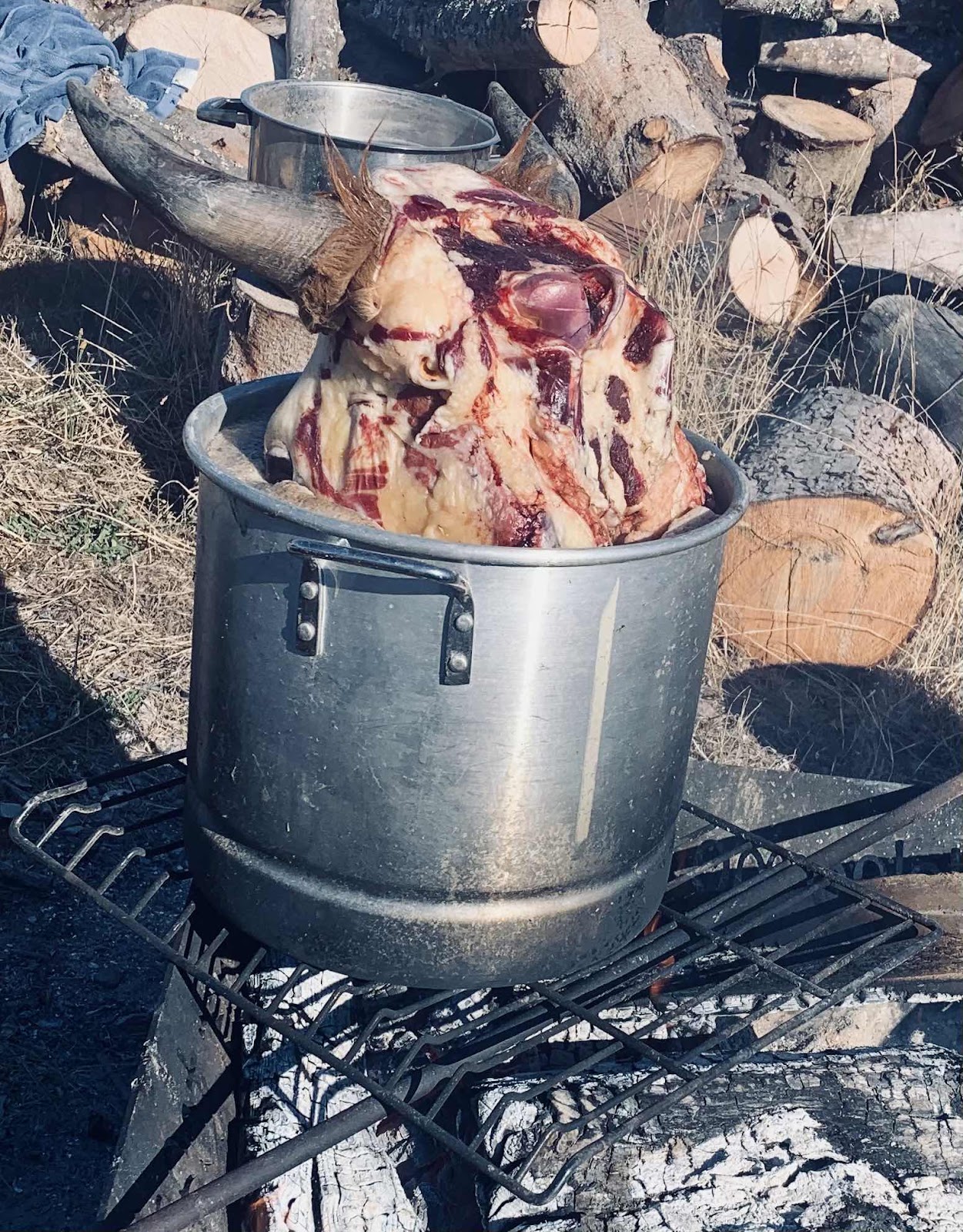
Not a very good picture, but that is a 40 quart stockpot, with  substantially less than half of a freshly butchered steer’s head submerged in it. 

This is what I came home to today. I knew, of course, that today was the day appointed for Pepe Toro, our Jersey steer, to meet his end. The men from Lynden meats were scheduled to arrive in their business-like panel van loaded with motorized equipment and on-board hot water, and do what butchers do. Half of Pepe Toro is already sold, and I have been making room in the freezer for the other half. The death of the cow, per se, was not a surprise. 

I did not know - though I should have suspected - that my husband was going to ask the men from Lynden meats to give him every scrap of the cow, from the horns to the hooves, that they would normally throw away or sell to a glue factory or something, and try to turn it into food. We’ve been through this before, and he ALWAYS does the same thing. 

We are just not prepared for cooking an entire cow’s head. In the past, even pig’s heads have proved to be difficult to manage. The head of a well-grown cow is a majorly large hunk of gristle and bone, and once the tongue has been removed, in my opinion it ought to be ignored. But Homero comes from a background that despises waste and finds a way to use EVERYTHING. This is, of course, admirable, but more so in the abstract than in real life. 


After I found the cow’s head sticking three-quarters of the way out of the pot, I convinced Homero to remove it, and to cut it into pieces with his sawzall, removing the horns and the disgusting patches of hair that clung to the skull around them. He has a plan for the horns - they are a gift to his friend Clacoyo, who wants to mount them on his motorcycle helmet. 

It took two sawzall blades, a cleaver, and a mallet to split the skull I to four pieces, but we got it done. Now the head is simmering over a wood fire - after two changes of water - along with a handful of allspice, cloves, star anise, fennel, and black pepper; three heads of garlic; several onions, and a bunch of guajillo chiles. It ought to be done sometime after moonrise. 

Now for the math. 

This animal was free. Homero has several clients who work on large dairy farms, and they are constantly giving away newborn males. I don’t know why they don’t just centrifuge the sperm they use - almost all cows are bred by AI - but either they don’t, or it has a high failure rate. This was the third free calf we’ve raised. 

The feed for a cow is almost all free too. We did have to bottle feed him for a short while but that was just one bag of milk replacer: about $30. Then of course there’s his winter hay, and a cow eats a lot of hay. I didn’t keep track of how much he ate versus the goats - that would be impossible - but we bought an extra 25 bales last winter and I’ll say that was all cow food. So that’s $100. Other than that, all he’s eaten is pasture grass and free veggies and bread from gleaners. Oh - and the same friend who provided him to us also have us the occasional pickup-load of free silage. 

We did take him to the vet to be castrated because we waited too long to band him. Won’t make that mistake again. I think that was about $100 as well. No medicine or other vet visits were needed over the course of his short lifetime. 

Total cost: approximately $230

Expected revenue: 

Last week I taped Pepe Toro to get an estimated live weight. He measured 78 inches around his heart-girth, which is very well grown. According to the internet charts, that means he has a live weight of approximately 1,112 pounds. The hanging weight of a cow is usually about 60% of live weight, so in our case approximately 668 lbs. 

I sold half of him for $3/lb, which would be $1,002. If I can find a buyer for another quarter I will sell that too, so that would be an extra $501 for a total of $1,503. Plus of course our own meat. 

That sounds like a hefty profit, but it isn’t as much as it sounds because Pepe Toro was wantonly destructive. He destroyed the calf hutch, which will cost $200 to replace, and he got I got he mama barn and put his feet right through the floor in a half dozen places. That will take a sheet of three quarter in inch plywood to fix, and now I have to go look up what that costs ($75) 

Total cost $505
Total expected revenue $1503
Total expected profit $998 

Not bad 


Wednesday, September 14, 2022

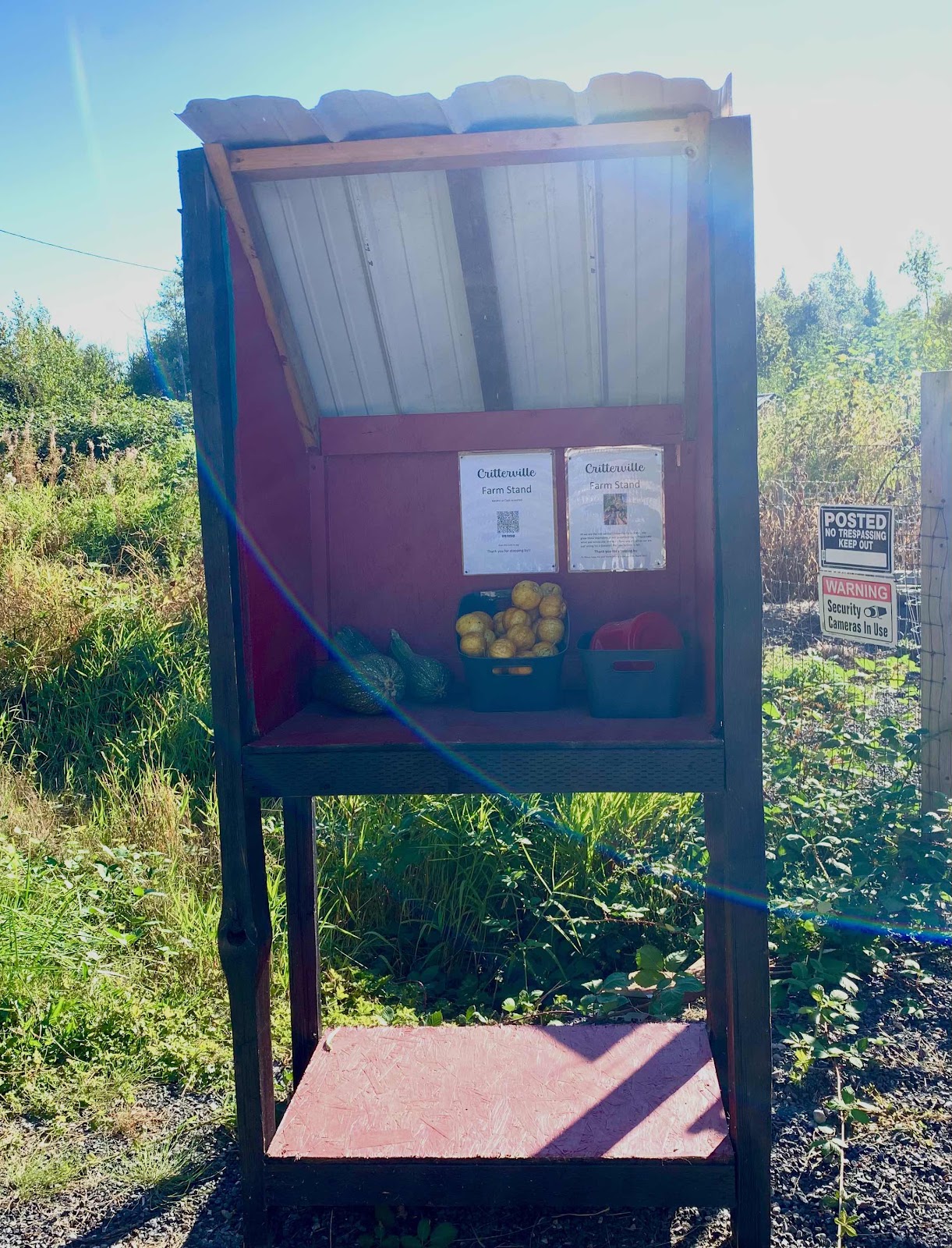
Farm Stand Photos


I thought it would be nice to post some photos of local farm stands and what I appreciate about each of them. They are so varied. 


Small, new farm stand on Blaine road north of Grandview (I think?). A small tow-headed boy came out to greet us, very excited to tell us about his lemon cucumbers. 


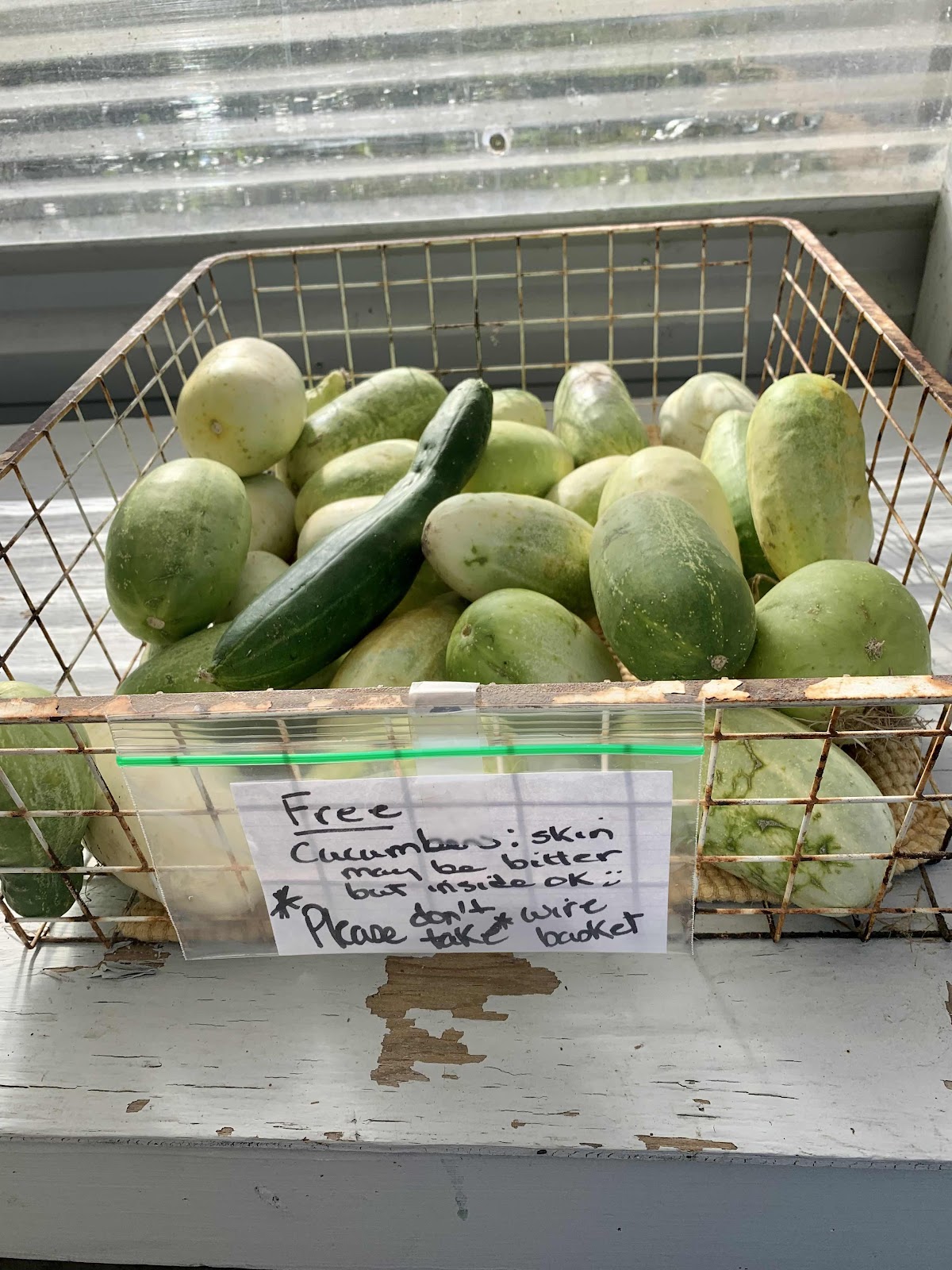
My favorite local stand. Kickerville road between Bay and Birch Bay-Lynden road. They run all season, with veggie starts and live plants in early spring, through to gourds in late fall. They sell seeds as well. There’s a small fridge where the greens stay nice and fresh. Prices are amazing - and in fact they often have free veggies as well. Also sell an assortment of books, baskets, and what-not. I’ve even bought chickens from them in the past. 


Free cucumbers in the Kickerville stand. 


The Kickerville stand from the outside. Looking fairly empty on this particular day. 


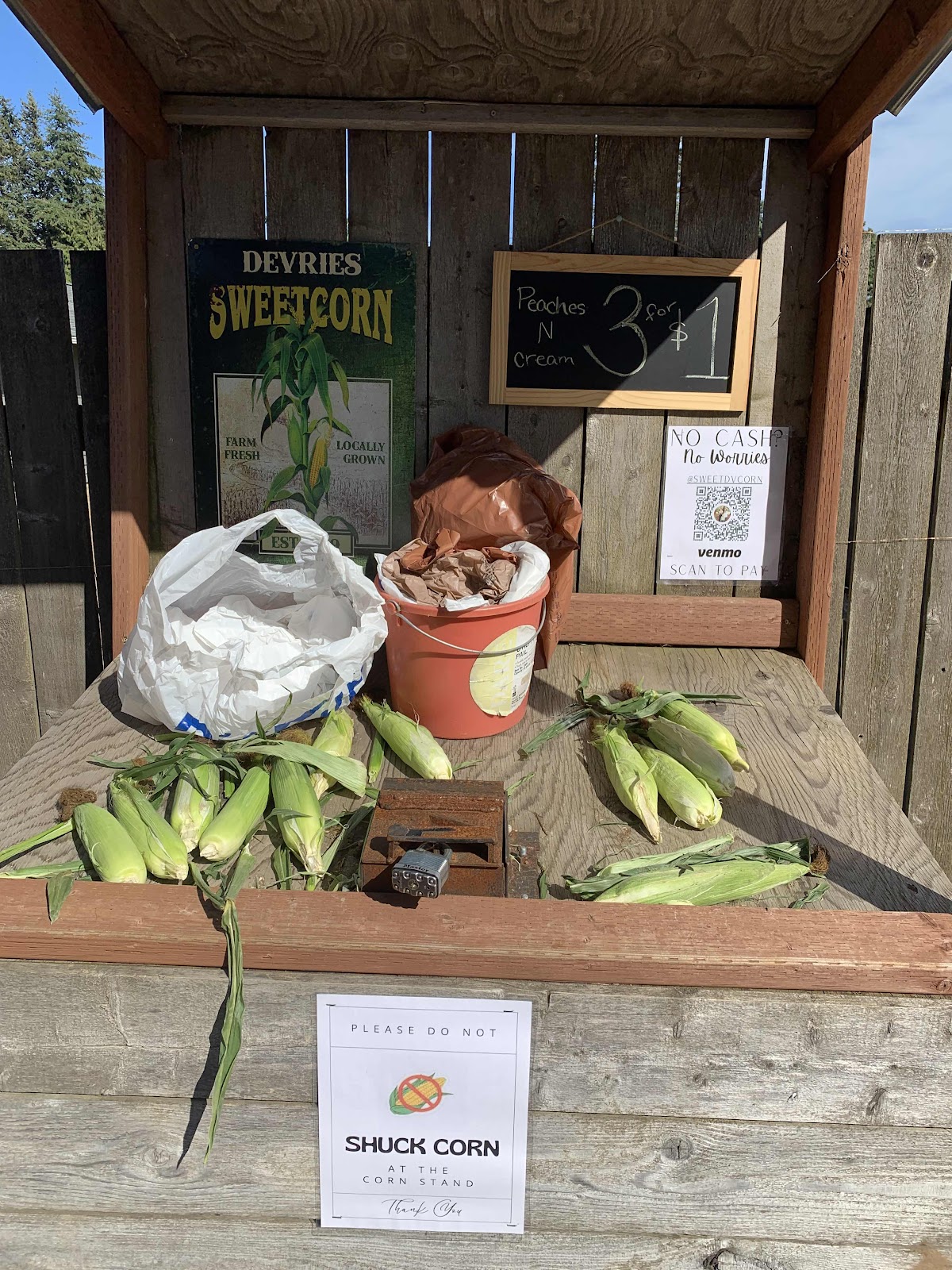
Sweet corn somewhere in the vast, confusing Bermuda Triangle between Enterprise road and the Guide, south of Birch Bay-Lynden road. Forgot to note the address. There are lots of sweet corn stands at the moment, of course, and they tend to be single-produce operations, appearing in mid-august and shuttered by early September. 


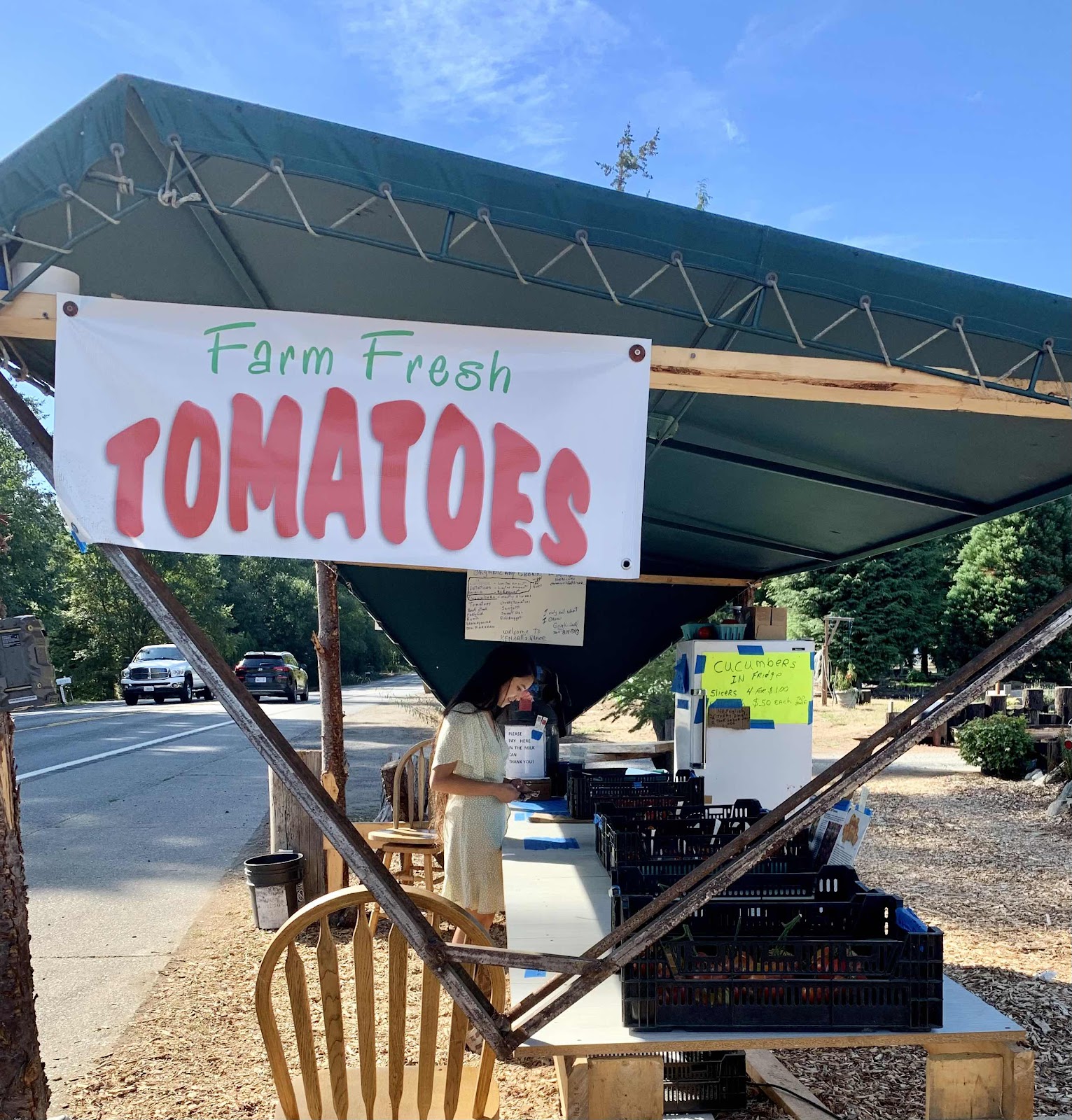
New stand (as of last year) on the Birch Bay -Lynden road just east of the freeway. This young lady grows TONS of tomatoes, many different varieties. Good prices and great tomatoes. 


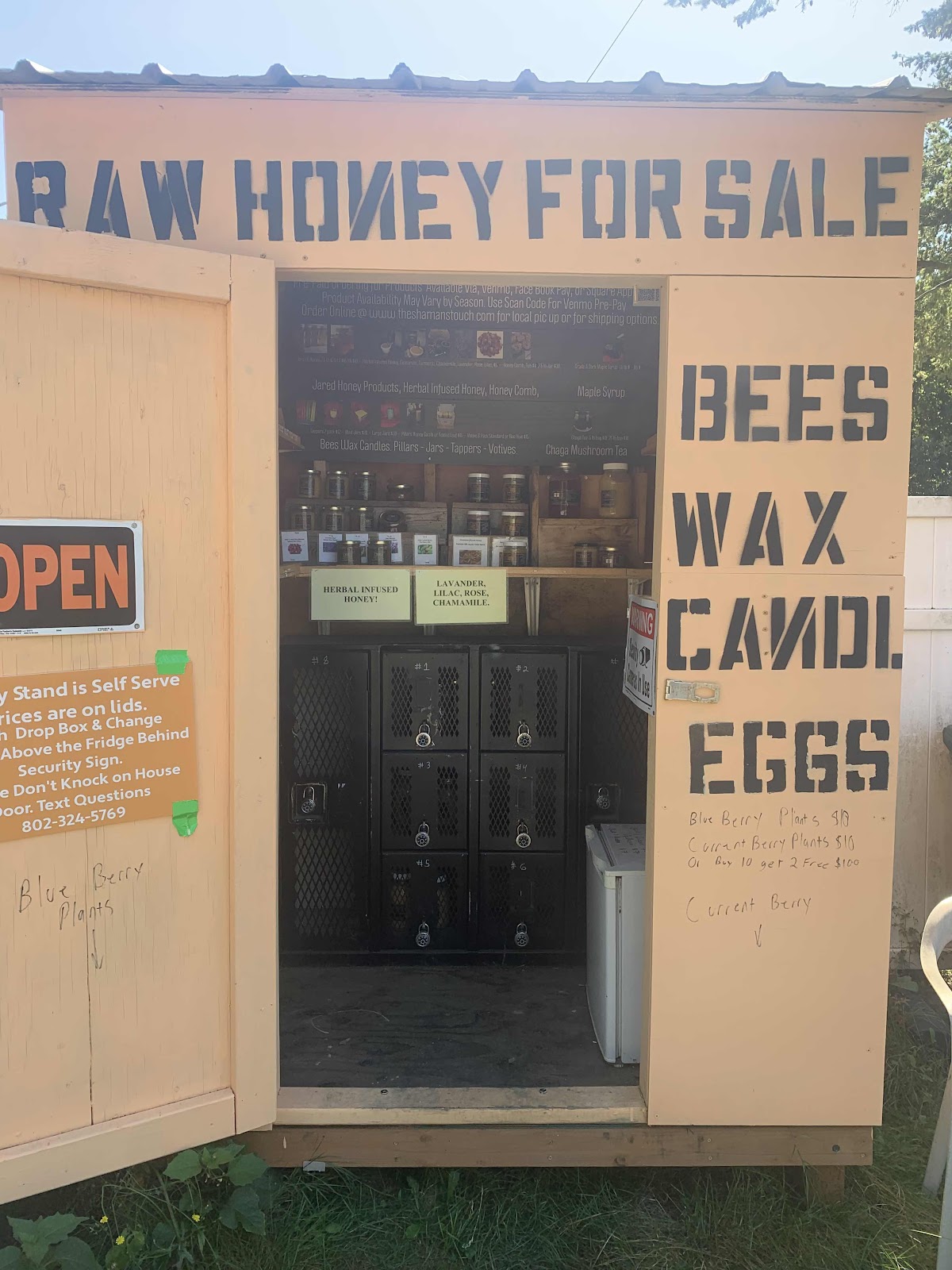
This stand is a real unique one. The owner is a beekeeper and he sells his honey, plain or compounded with herbs and spices and medicines. The lavender honey is especially nice. Overall the best, thickest honey I’ve found. He also sells gorgeous beeswax candles and copies of his self-published novels. 

There are many more farm stands that are worth a mention, but which I haven’t got any pictures of. Just across Kickerville from my favorite farm stand is Tiff’s Dahlias. 
A huge garden with all varieties of dahlias, sold for either $0.50 or $1 a stem, slightly older ones for $0.25. 

Smits family farm in Northwest has a huge and beautiful farm stand worthy of its own post. Mr. Smit has ten acres and grows hundreds of varieties of vegetables, including many not so common ones around here like asparagus. In fact if you are a regular, you can tell Mr. Smit what you would like and he will grow it for you. 

There’s a large stand with two big glass front refrigerators on E. Wiser lake road that sells Guernsey Milk, yogurt, and cream as well as fresh produce. There are also often homemade chocolate chips cookies. 

I never get tired of perusing farm stands, and it always makes me happy when I discover a new one, even if all they sell is zucchini.  

Tuesday, July 19, 2022

The Pantry Project (Ice Cream Edition)


Ran across an ice cream maker at Goodwill the other day, and it reminded me that ice cream is a wonderful way of preserving the products of the season - goat milk, eggs, and fresh fruit. Also it’s been pretty hot lately and that’s just the excuse I needed. I bought the ice cream maker. 


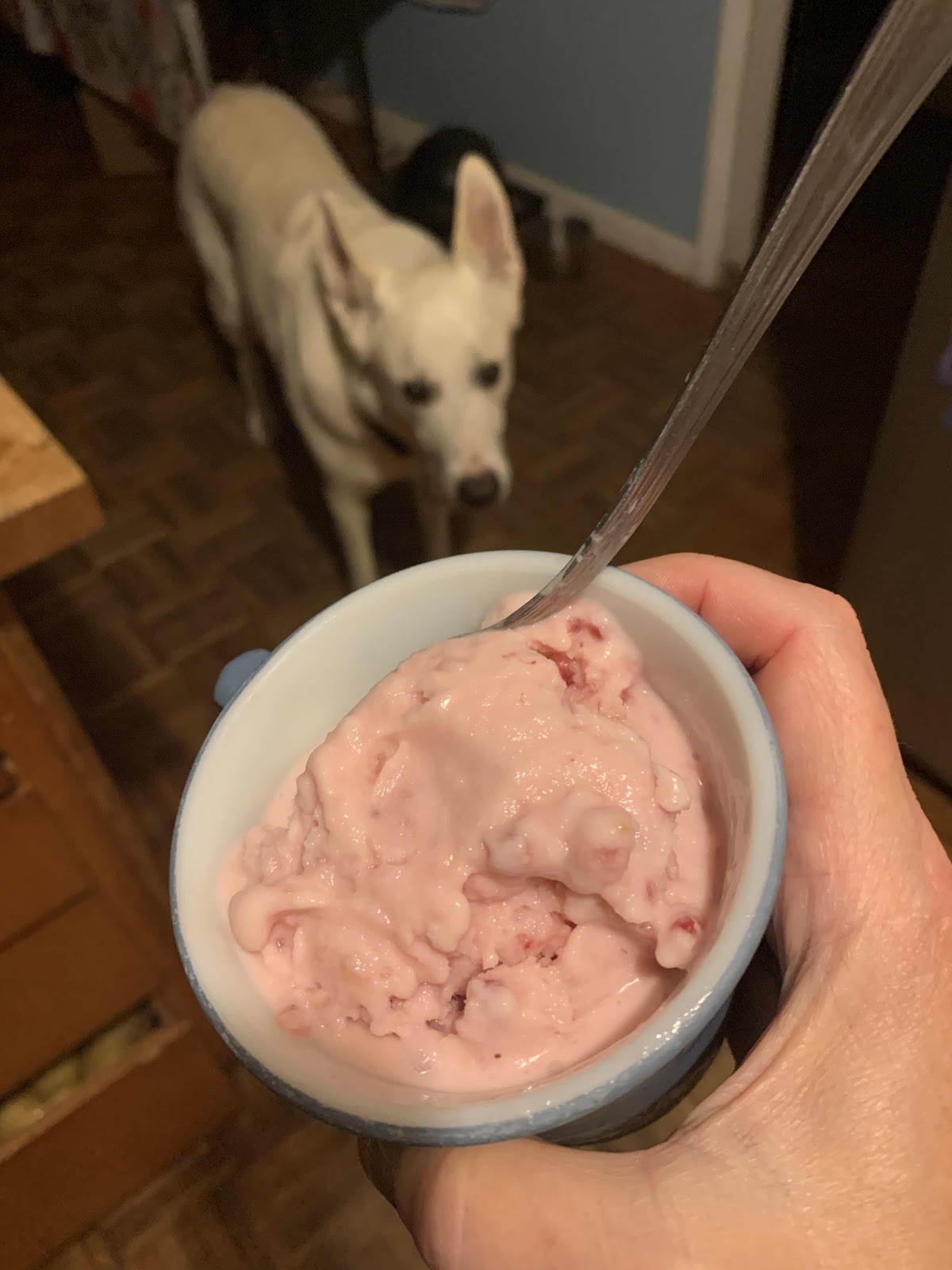
This delicious pink concoction, my first foray, is not technically ice cream, because it doesn’t have any eggs in it (or cream for that matter) but rather frozen yogurt. Sorta. I’m calling it “raspberry cheesecake” and it’s based on a batch of chévre that didn’t quite firm up enough to be called cheese. I could have used it like sour cream, but I already had sour cream in the fridge. It occurred to me to sweeten it instead, mix it with a bunch of raspberries, some yogurt, and run it through the machine. It’s delicious and right now I’m enjoying it as a bedtime snack. 

From the farm: 

Goat milk
Chèvre 
Raspberries 

From the grocery store:

Sugar
Yogurt 

Nothing from the gleaners pantry in this batch of ice cream, but maybe next I’ll try peach - there are always peaches at gleaner’s right now. 

Monday, June 20, 2022

Project Pantry (Meatballs and Morels)


Today’s dinner - kinda sorta Swedish meatballs but not really. I had a pound of ground venison from the gleaner’s  pantry that I wanted to use, but I’ve never cooked with it before. As I was perusing google on the subject of ground venison, Swedish meatball recipes kept popping up and they looked great. I’ve never made Swedish meatballs before either, but I have eaten them. I belong to a Lutheran church full of elderly people of Scandinavian heritage. 

After I decided to make Swedish meatballs, I realized that I was short several ingredients, but the benefit of having a deep pantry is that one can always adapt. I don’t have any beef broth, but I have dried morels, so I made more mushroom stock. I consider that an upgrade. I do wish I had fresh dill or parsley, all I have is chives and celery leaves. But who cares, I tasted the sauce and it’s fabulously delicious. 

I can’t remember what Swedish meatballs are traditionally serviced with (which starch, I mean. I know they are served with lingonberry jam but we will make do with blackberry). I’m thinking wild rice would be a good choice to go with the mushroom sauce. 

“Swedish” venison meatballs 

This is how I made them today, substitutions and all. Not how they are “supposed” to be. 

1 pound ground venison 
1/2 pound ground pork 
1 egg
1/2 cup breadcrumbs 
1 teaspoon sugar 
Garlic powder to taste 
Dash cinnamon (go very easy on this, a pinch is plenty) 
Fresh ground black pepper 

Mix all ingredients with hands and shape into meatballs. Place on a sheet pan lined with parchment paper or tinfoil and bake at 375 for 20 minutes. 

While meatballs are baking, get out a cast iron skillet and make sauce 

2 tablespoons butter 
Two yellow onions, sliced fairly thin ribbons 
Two tablespoons flour
1 teaspoon maggi chicken bouillon 
1 cup give or take dried morels, some broken into small pieces 
1 teaspoon Dijon mustard
2 cups goats milk
Black pepper 
Minced fresh herbs 

Melt butter and sauté onions over medium-low  heat until softened, about ten minutes. Increase heat to medium. Sprinkle over flour and mix with a wooden spoon until well incorporated and onions are coated. Sprinkle maggi and keep stirring. Add mustard and about 1/2 to 3/5 cup water. Add the morels. Stir until sauce smooths out and begins to thicken. Add more water if needed. Then add goat’s milk and stir until smooth. Bring to a simmer but not a boil. Add meatballs. Turn meatballs in sauce and let simmer until sauce is slightly reduced. Just before serving shower with herbs and fresh ground pepper. 

Breakdown: 

From the gleaners pantry: 

Venison 
Pork
Bread (for crumbs)
Maggi chicken bouillon 
Flour 

From the farm or trade network:

Egg 
Herbs 
Goat’s milk 
Morels 

From the grocery store:

Butter
Onions 
Mustard
Pepper 


Monday, June 6, 2022

Project Pantry (Poor Man’s Soufflé)


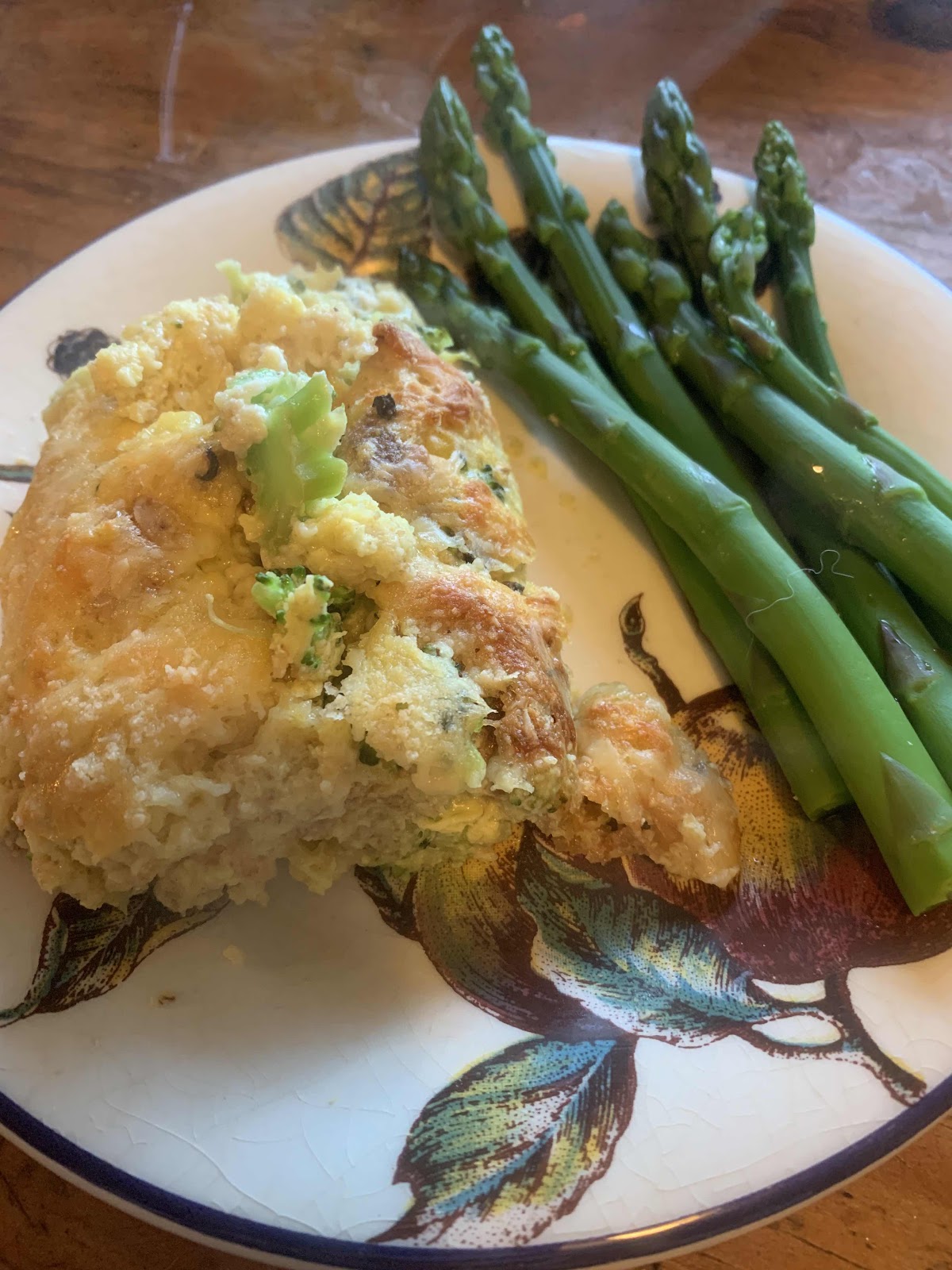
Episode two of Project Pantry, my occasional feature where I describe a recent home cooked meal and detail which ingredients came from where. Tonight’s dinner was a broccoli strata, and it was delicious. 

Strata, as far as I can tell, is a relatively new term made up to seem fancier than “savory bread pudding.” It sounds vaguely Italian, which this dish probably isn’t. This dish, in fact, screams “Ladies Home Journal Brunch Contest 1996.” 
That’s not an insult - as a veteran of a few recipe contests myself, I appreciate the ingenuity, ease, and frugality evident in a dish like this. But I like to call it a Poor Man’s Soufflé, because it really is almost as puffy and delicate. 

Ingredients: 

2-3 cups cooked broccoli, chopped into small pieces 

4 large eggs 

1 1/2 cups milk (I used goat milk since that’s what I got) 

5 pieces sandwich bread. You can use whole wheat but it has to be soft, squishy bread. Nothing too crusty. 

3 oz chevre or other semi-soft, crumbly cheese 

1 cup extra sharp grated cheddar 

Fresh ground pepper

Preheat oven to 350
Tear up the bread and scatter in a casserole dish. Beat eggs with milk and pour over bread. Add chopped broccoli and chevre. Several grinds of pepper. Turn with a large spoon several times to coat. Leave bread to soak for at least fifteen minutes. Then add cheddar on top, and bake for 30 minutes, until puffed up and barely jiggly in the middle. Broil for one minute to brown cheese topping. 

Serve with a green salad, or as I did, with fresh asparagus from a local farm stand. 

Ingredient breakdown: 

From the store: cheddar cheese, broccoli, pepper

From the gleaner’s pantry: bread 

From our farm: eggs, milk, and chevre

From a local neighbor’s farm: asparagus 


Monday, May 30, 2022

Herb Harvest 2022


Mint is one of my favorite herbs, not only for its zingy flavor and medicinal qualities, but because it’s a hardy perennial that’s damn near impossible to kill, even for a notorious plant murderer like me. 

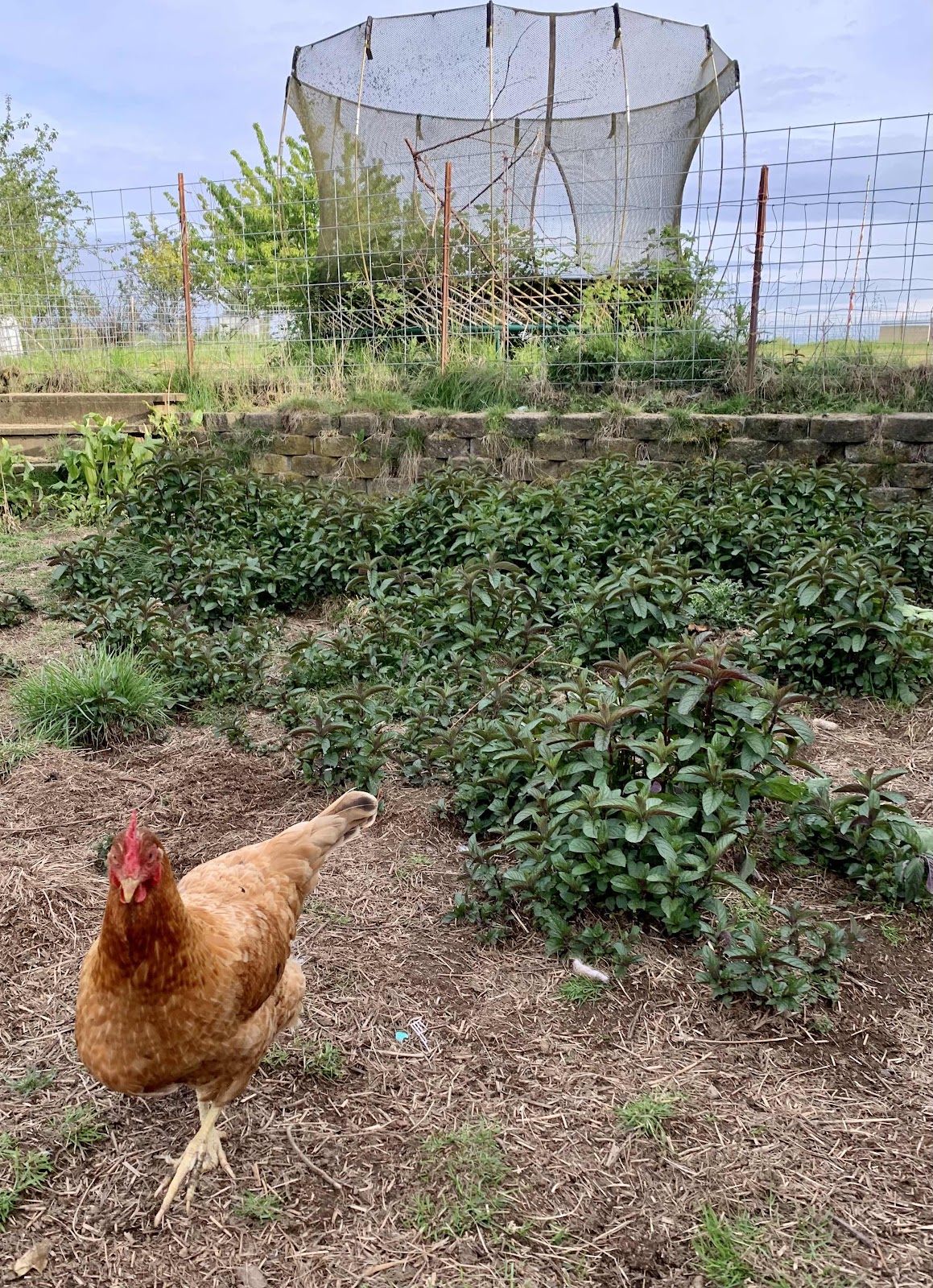
I have spearmint in the front yard and peppermint in the back yard. The spearmint is buried in amongst a hedge of tall weeds and I have to forage for it. This used to be the case for the backyard peppermint as well, but ever since we moved the chickens, the mint is the only green thing left. The rest of the yard has been scratched bare. 


Spearmint is a lovely herbal addition to lots of dishes and we eat a fair amount of it fresh. I add it by the handful to tabouli, for example, and to fresh fruit salads, especially melons. I added some to the melange of herbs I chopped finely and added to my chevre. It even goes well into a pot of Mexican chicken soup, if you can believe that.

Peppermint is a different proposition altogether. It’s much too strong for use as a vegetable or salad green. Mine is so strong that if you chew on a fresh leaf it actually burns your mouth. It’s pretty strictly for tea. A few years ago I made some peppermint vodka, but that’s out of my realm these days. 

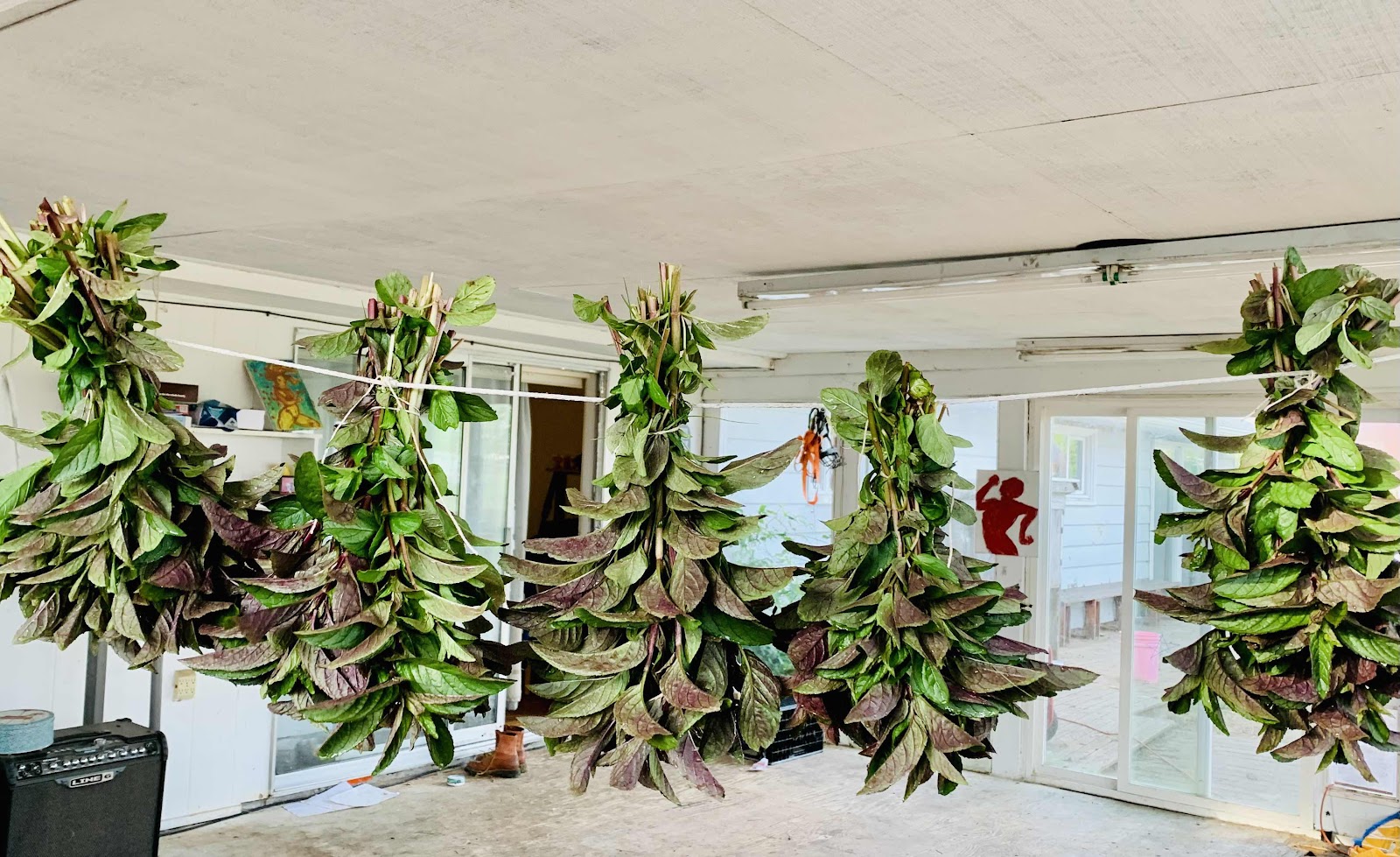
Last year I cut a couple bunches and hung them up to dry in the playroom. Then I forgot about them for an entire year. You don’t generally want to leave your herbs to dry for a whole year - most books will tell you dried herbs last a few months, maximum. However, today when I took the bunches down and rubbed the leaves off them, the scent of peppermint that wafted up was still vibrant. So I crushed them in my hands - they were crispy dry and crumbled nicely into bits - and put them into an airtight storage jar. Later on tonight I’ll make some tea and see how it tastes. 


Then I went and cut five more big bunches of peppermint and hung them up to dry. Since they are in the chicken yard, 
I gave them a good rinse first. This time I will try to remember to strip the leaves and jar them up before another year goes by. I should probably order some desiccant packs from the restaurant supply store, too. That will eliminate any chance of mold. And I’ll want them in a few months when it’s mushroom drying season. 


Now, I should probably get to work and harvest the lemon balm! Lemon balm makes delicious lemony tea and it’s very calming and good for nerves and insomnia. And I have an absolutely ridiculous amount of it. It’s in the mint family as well, and it gets out of control fairly quickly. 

Sunday, March 27, 2022

Project Pantry Week One


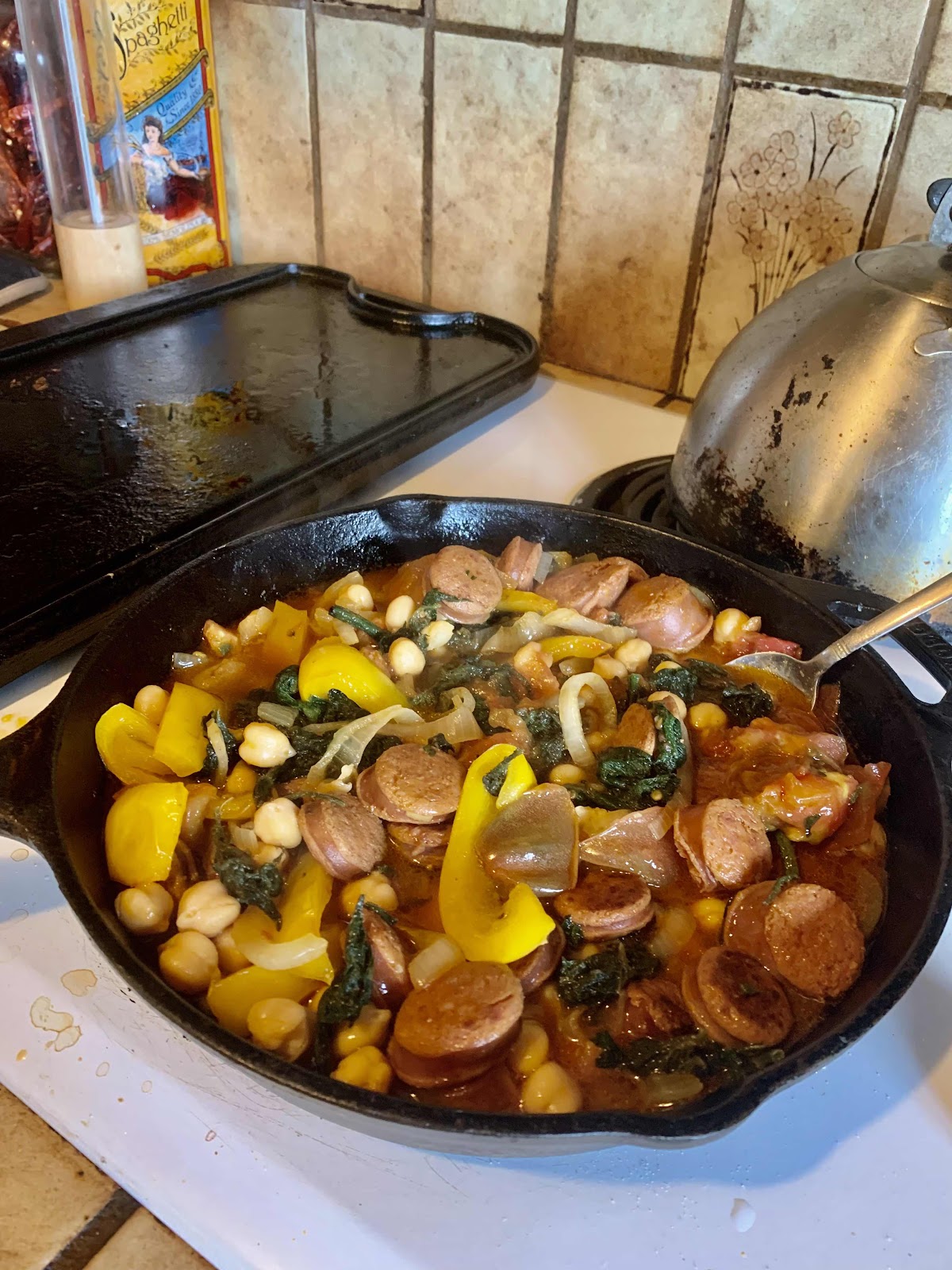
Every single ingredient in today’s dinner - chickpea and sausage stew -  is from the gleaner’s pantry, except for the nettles, which were foraged. But even if you were to buy all the ingredients, this would still be a cheap meal. And it’s healthy, too! 

Chickpea and Sausage stew 

- One sausage per person. I used Louisiana hotlinks because that’s what the gleaner’s pantry gave me, but Italian sausage, Polish, kielbasa, or chorizo works great too. Slice into coins. 

- one yellow onion, sliced 

- one bell pepper, sliced, red preferred. 

- 1-2 cups nettles, or whatever tender greens you have on hand. Spinach is good. So is Swiss chard. Chop roughly. 

- 1 large tomato, chopped

- one can chickpeas 

In a little bit of oil, sauté sausage over medium-high heat until browned. Add peppers and onions.  Continue to sauté until vegetables wilt and are slightly browned. Add chopped tomato. Add rinsed, drained beans. Add greens. If needed, add a tablespoon or two of water. I find the vegetables usually give off enough moisture, but sometimes a little water is good. Or lemon juice. 

Cover and simmer 15-20 minutes, until flavors meld. 

Nice additions if you have them - chopped Kalamata olives, capers, zucchini. 

Score:

Gleaner’s - 5

Foraged - 1

Grocery store - (the oil)