"United we bargain, divided we beg."
Showing posts with label brewing. Show all posts

Sunday, September 13, 2020

Preserving Log (Late Summer 2020)


I’ve been on an absolute tear in the kitchen the last two weeks. Late August/early September is the middle harvest season (Mabon is coming right up), the prime harvest season around here. Here’s a list of what I’ve done lately - as far as I can remember. 
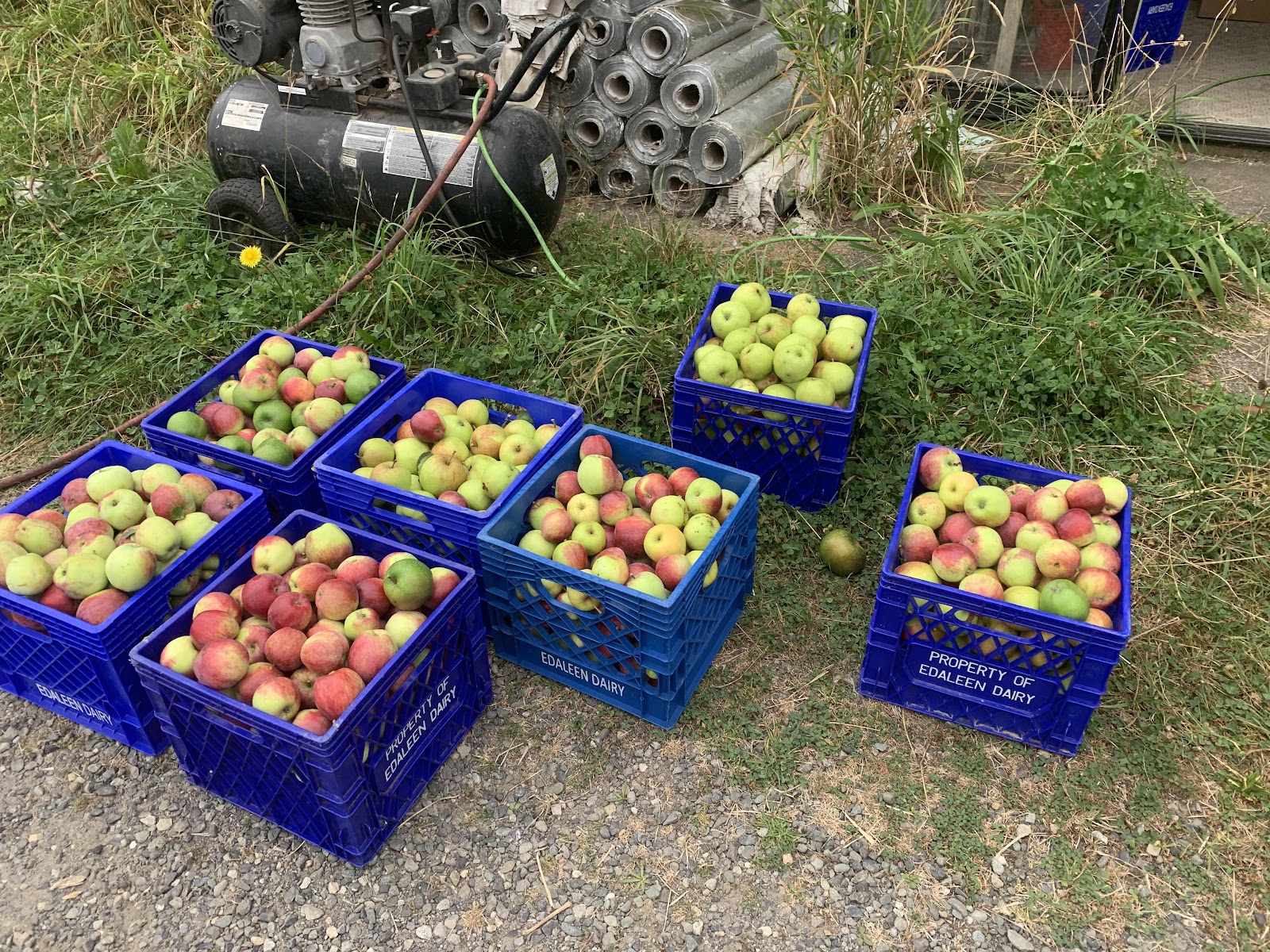

Today the girls and I pressed about ten gallons of cider, from the apples you see above. My friend H. down the way has a dozen apple trees and was only too happy to let us pick some. Tomorrow I will bring her some cider. 

Cidering is hard work. Picking the apples, carrying the crates, washing the apples, hauling the press out and cleaning it, bending down and standing up approximately 7000 times, pressing the buckets, pulling the tight-packed plate back out of the buckets, carrying the apple mast to the compost. It’s messy too, with little bits of apples flying everywhere and juice on everything. By the end I was so sweaty and sticky and tired! Working outdoors in this horrible smoke isn’t a lot of fun, either. But this was the first time we’ve pressed cider in a couple years and overall it’s a great experience. 

The smaller of my two carboys, three gallons, will be made into hard cider, and we’re keeping the rest sweet. I threw two gallons into the freezer, which leaves us about six gallons to get through before it turns into tepache. Not that there’s anything wrong with tepache. 
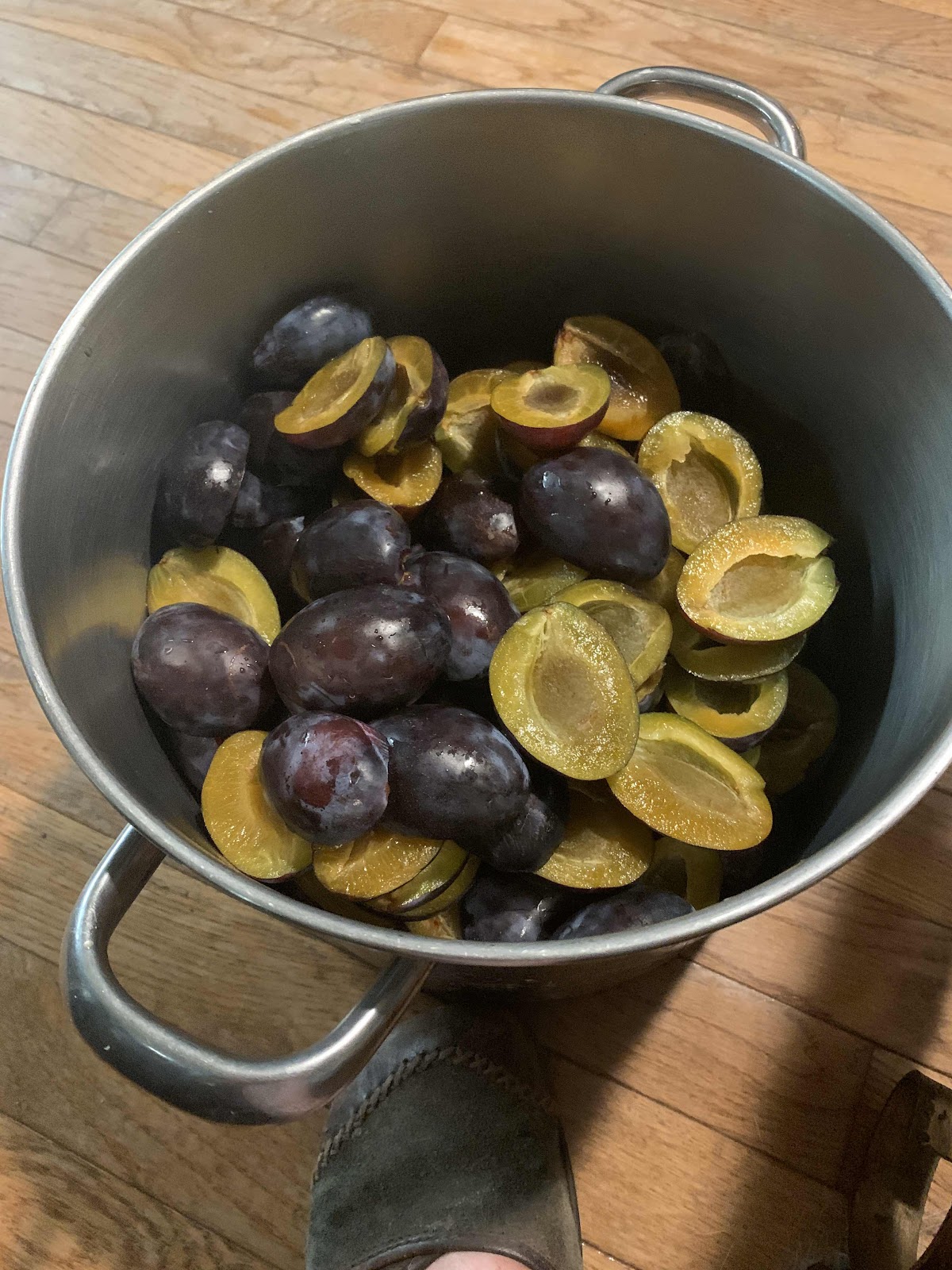


Plums. This in an on-year for the Italian plum tree, and there are hundreds and hundreds of plums. I’ve dehydrated enough to fill a gallon ziploc bag - more plums than you probably think - and the dehydrator is full of plums right now too. 

I’m taking another swing at plum wine. My past efforts have been drinkable, not fantastic.  Probably I won’t get any better unless I buy a little more equipment - like a hydrometer - and start taking recipes more seriously. But hey - there are so many plums. How far wrong can you go? Right now there’s about two gallons in a primary fermenting chamber and I’ll pitch the yeast tomorrow. I have to go buy another carboy because all of mine are currently full of apple cider. 
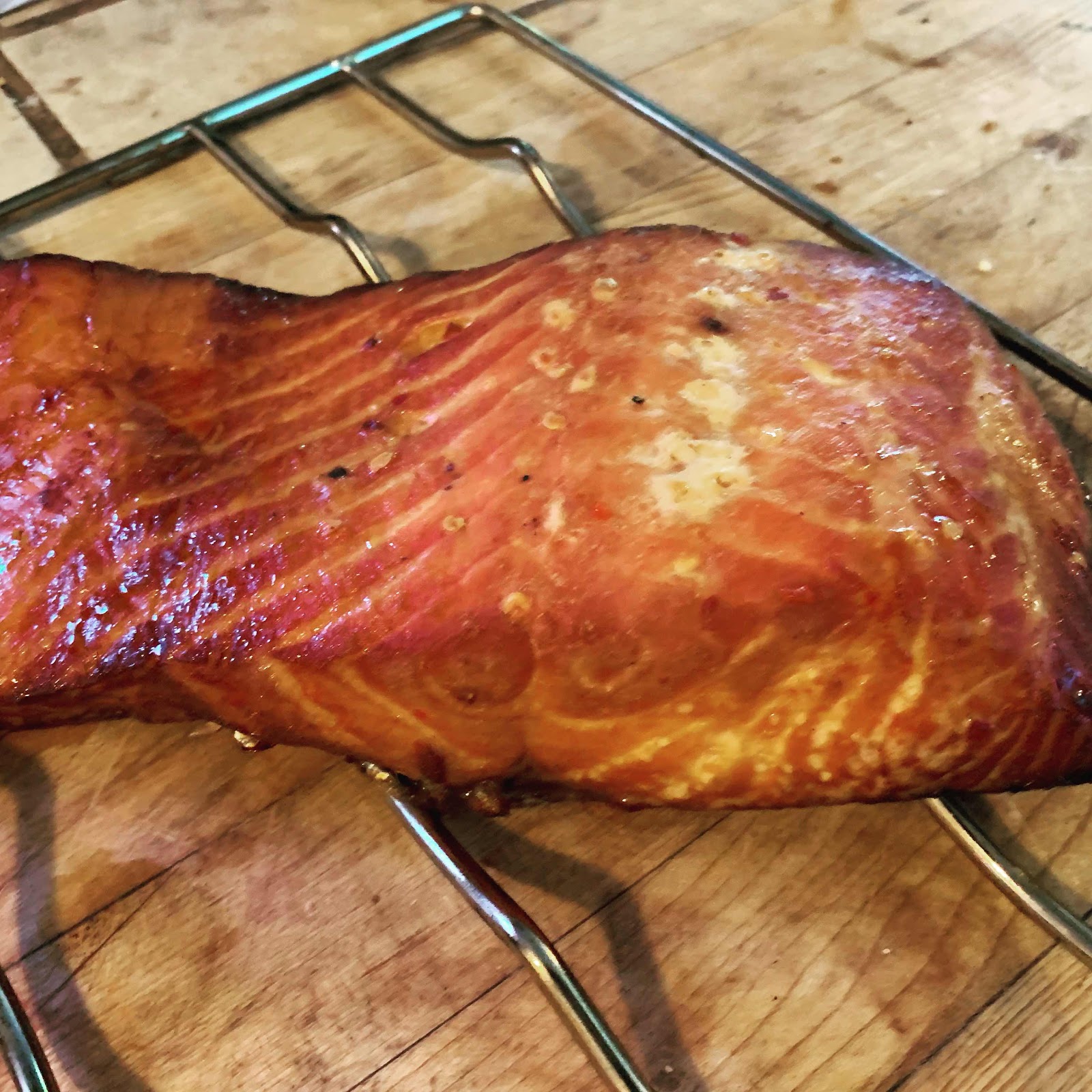


One of Homero’s clients brought him an enormous side of  salmon as a tip. I cut it into five approximately 1 1/2 lb pieces, and we ate one fresh and then I smoked the others. One of the smoked pieces is in the fridge to snack on and the others are vacuum sealed and will keep in the fridge for a few months. Probably not until Christmas though, sadly. Smoked salmon is my favorite thing to send friends and family as a Christmas gift. I could throw them in the freezer but I’m not sure how well the texture would hold up. 

Let’s see, what else? Oh, I canned six quarts of salsa ranchera  this week with tomatoes from gleaners. But I’m not doing a lot of canning for the simple reason that I can’t find canning lids anywhere! Apparently canning lids are the toilet paper of this phase of the pandemic. I have one package of small mouth lids left. 

A couple days ago I hit my favorite local farm stands just to see what was available. I brought home some sweet corn (which we ate), some cherry tomatoes (ditto), five pounds of green beans, and three smallish kohlrabi. I started kimchee with the kohlrabi. Earlier this summer I made a batch of kohlrabi kimchee and it was the BOMB. It’s only about a quart, but we will enjoy it. 

I’ll have to decide if I want to use the last of my canning lids to make canned dilly beans with the green beans, or if I will lacto-ferment them like kosher dill pickles. Both ways are good. 

I haven’t even started in the pears. Good lord, the pears! WHY did I plant FOUR pear trees? 


Saturday, May 18, 2019

The Fermentation Files, Spring 2019


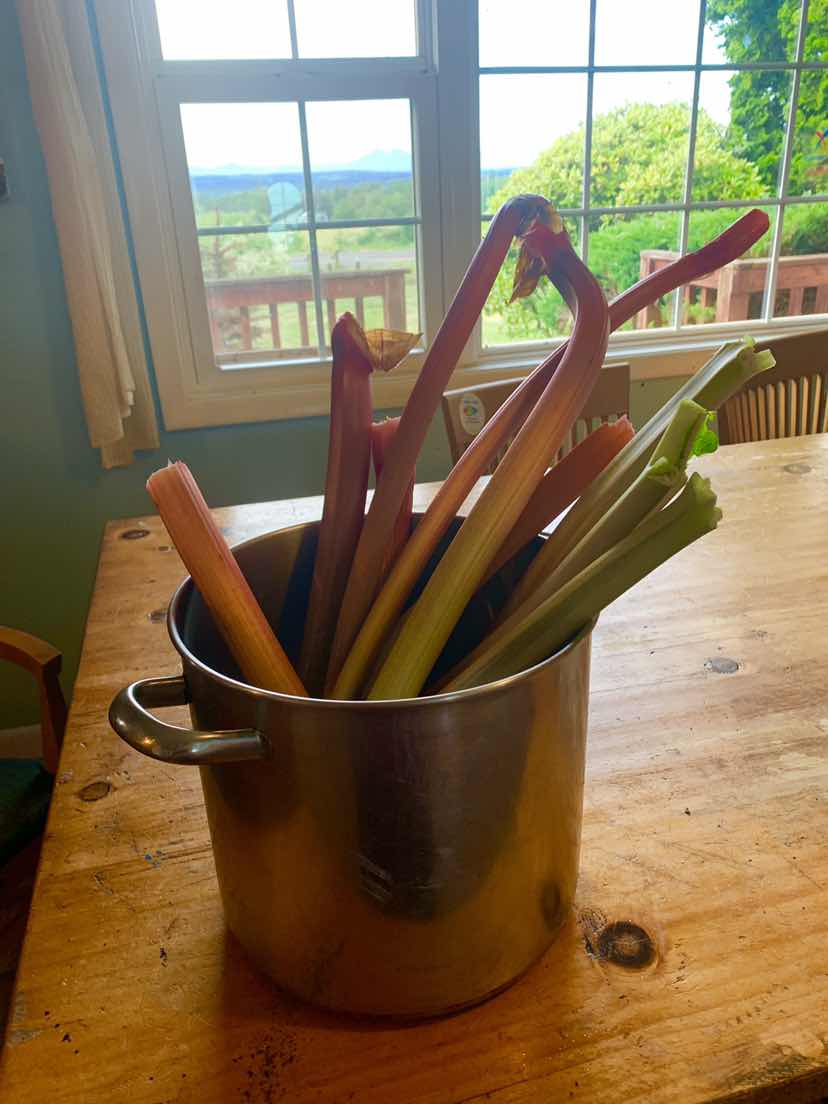
Spring finally sprang, and we’ve had a few weeks of beautiful weather. The grass grew all at once, the trees blossomed, and the rhubarb plant went wild. 


I love rhubarb, it’s exactly the kind of low maintenance perennial I want to fill my property with. But it is seriously prolific. By mother’s day I had already exhausted my family’s patience with rhubarb crisp, rhubarb pie, and rhubarb quickbread. So today I decided to start another batch of rhubarb wine. 

Last year’s rhubarb wine came out pretty good - dry, light pink, and quite quaffable. It’s nice to be able to start a wine in springtime, because most homemade fruit wines are only possible in the fall - blackberry, plum, hard apple cider. Rhubarb can be started now, in May, and be ready for drinking in September when the other wines are just getting started. 


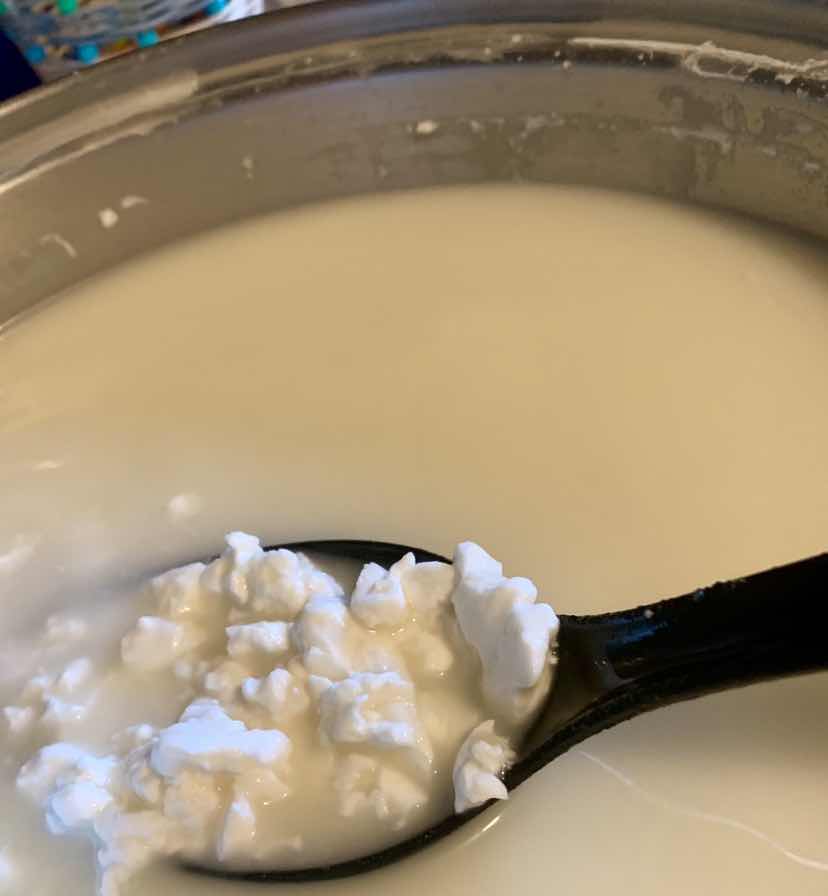
It’s cheese season. The mama goats still have nursing babies on them, and will for the next few weeks. So I’m only getting about three quarters of a gallon daily, but that’s still plenty for making some cheese. 

This year I decided to switch up the cultures I usually buy.  In years past,  I have bought an all-purpose mesophilic starter that says it is suitable for chèvre, queso fresco, feta, and cheddar. And it is suitable for all those purposes.   But this year I decided to spend a little bit more for a fancier culture from France, and I’m so glad I did. My chèvre is leaps and bounds better than last year. It’s smooth, tangy, and delicious. It was a big hit at mother’s day brunch. 

Tonight I’m making cheddar with the same culture. I’ve made two batches of hard cheese before now, and they have been drying in the shelf during this nice dry weather. Today I broke out the vacuum sealer and sealed them up for long term storage in the fridge. That’s the best system I’ve yet found for keeping hard cheese at home without molding. It’s not ideal - the cheese doesn’t “breathe” if it’s vacuum sealed - but it does keep the cheese from molding for a good six months, which means we can enjoy cheese in December. 


Monday, October 16, 2017

Brewing Notes (Cider and Wine)


Mainly just notes for myself so I don't forget when I did what. Today I racked the rhubarb wine into a clean carboy. It's been about a month in the first one, and a week in a fermentation bucket before that. I tasted it as a transferred it and it's AWFUL. But that doesn't mean anything. The plum wine was gross at this stage too, and it turned it pretty good. This is only my second attempt at fruit wine. Last year's plum wine was the first. Having never even tasted rhubarb wine before, let alone made it, I have nothing to compare it to. I just had so much rhubarb I had to do something with it. If it turns out horrible it's no big loss - my plant puts out rhubarb enough for as muchexperimentation as I feel like doing. 

Also racked the cider into a second carboy.  The cider tastes pretty good already. It's very dry, though. I think when I bottle it in a couple weeks I will add a bit of sugar for a little sweetness and fizz. I like my cider frizzante. 

Brewing is fun. It feels like magic. 

Monday, October 10, 2016

Fall Fermentation (Wine and Cider)


Plum wine in the autumn sun 

The satisfactions of living off of one's own land are many and varied. It is, for example, delightful to invite my extended family over for Thanksgiving and feed them on turkey we raised ourselves and apple pie made from the apples on the trees of our own orchard.  It makes me happy and proud to throw a big birthday bash for Homero and give his Mexican friends the pleasure of an old-fashioned goat barbacoa such as they remember from their younger days back home in Jalisco or Oaxaca; the slaughter, butchery, and the digging of the pit oven included. These pleasures still lie in the future this year - imagining them is one of the distinct joys of this short ephemeral season. 

This is my favorite time of year - after the heat of summer has dissipated and the leaves have turned and are falling, creating a crisp, fragrant carpet underfoot - but before the rains have turned everything into cold muck. The sky these past several days is a cool, cerulean blue, and the trees are ninety different shades of gold, orange, burgundy, and brown. I try to let the goats out every afternoon to forage on the dry leaves and blackberry vines, and on the fall-flushed grass before the first frost comes and kills the nutrition. 

Today I enjoyed the unique pleasure of sitting out in the late afternoon sun on a warm October afternoon and drinking a glass of beautiful, pink, home-brew plum wine. I'd have to page back in this blog to find out when, exactly, I started this batch of plum wine. I don't want to do that - bathed as I am in the rosy glow of the same. Let's just posit that the wine was ready, today, for bottling. I decided to do it today not because of any learned examination of the wine itself, but because I had finally collected a sufficient number of large brown bottles. Corona beer puts out a "family" size that measures 36 ounces. There were eight of them lined up today, and I decided that the time was ripe. 


I have never made wine before - though I have made apple cider a few times. In fact, I made apple cider earlier this year. That's a funny story, and a lesson. We pressed apples on three separate occasions this year, which is three times more often than we usually do. Faced with many gallons of fresh juice, I decided to try making hard cider. I'm not the kind of person who cautiously measures and precisely calibrates anything. I'm more of a "wing it" kind of cook. I'm a good cook, I won't ever say I'm not, but I am much better at soup (such a forgiving medium) than I am at baking cakes.  When it comes to brewing, that means I am not going to be exactly certain of the strength of my creations. 

A few weeks ago, I bottled this year's cider. I bottled it in these same 36 oz Corona bottles. My husband, seeing them lined up on the mantle, decided he was thirsty and didn't feel like going to the store. Accustomed as he was to downing one of these hefty bottles full of Corona, he did just that. But the bottle was full of home-brew cider. Hard cider that you buy in the store is usually more or less beer strength - 5 to 7%. I, however, used a champagne yeast, and my cider was at least twice as strong as beer. Maybe as much as three times. Had my husband consulted me, I would have told him to drink it like wine, not like beer. Alas, he did not. 

I have never seen Homero so drunk. He was accidentally drunk, so it doesn't reflect on his character at all - but it was pretty funny nonetheless. Poor man could hardly speak, and hardly stand up. I had to put him to bed. My main regret was that he had downed  too much of the limited supply of cider.

Most of the plum wine was bottled today in the same size jugs. I simply capped them with bottle caps instead of using wine bottles and corks. My local brewer's supply store rents out a corking machine, but we don't drink enough wine to have bottles to use. I asked about using beer bottles and capping them like this, and was told that if we drank the wine within the year it shouldn't matter at all. 

No problem there. I drank about one-tenth of it today. Such a beautiful afternoon and evening. I absolutely love days like this - crisp enough that other people complain of the cold, and I can feel superior and smug sitting out in my shirtsleeves. Especially on days like this, when I have completed all my housework and I can take a book outside with me to read without remorse or guilt. Well - only the delicious guilt of reading trashy fiction instead of anything "serious." 

A canvas slingback chair, a cheap novel, a jug of new plum wine, and the sunset......

Thursday, October 20, 2011

Brewing Up a Storm (Drinking and Driving)


My first batch of hard cider came out great! I can't take all the credit - or even most of it - or, in fact, hardly any of it at all. I pressed the apples, but J. (my homebrewing friend who moved away and gave me all his equipment - see Cider, Revisited) found the recipe and walked me through the beginning of the process with little baby steps.

After pasteurizing the fresh juice, cooling to room temperature, and tranferring into a sterilized carboy, J. "pitched the yeast" which basically means, pour your yeast into the carboy, and added the airlock. A week later, after it stopped bubbling, we transferred the cider - now somewhat alcoholic - into a second clean carboy, leaving the dregs behind. This second carboy bubbles away with an airlock for another week or so, and then it's time to bottle.

Since I was trying to make carbonated cider, I had to add some more sugar to the cider before bottling it. The idea is that the sugar will fuel a second fermentation in the bottle, creating carbon dioxide which provides the fizz. Just like champagne. I managed the final bottling on my own.

Then I was suppoosed to let it mature for several weeks before imbibing, but I was impatient. Of course I had tasted the cider as I was bottling it, and it tasted pretty good. Not knowing how long it might take to develop some fizz, I waited about four or five days before opening up a couple bottles. There was some slight fizziness, but nowhere near as much as in a bottle of commercial brew. The taste, however, was very good - off dry and apple-y. I drank a bottle as though it were beer, and felt quite tipsy. Clearly, stronger than beer, though not as strong as wine. I'm guessing somewhere around 8%.

Over the next two weeks, all twelve bottles disappeared. I think I gave away six, and Homero and I shared the other six. So, no idea how it might have tasted after the recommended six weeks in the bottle. Better luck this batch - it's a five gallon batch instead of a two gallon batch, so there will be many more bottles. I hope it turns out as tasty this time. The fresh cider was not quite as good - nor as sweet - as the last batch of fresh cider. I'll just have to hope for the best.


Homero has been brewing, too. He's had virtually no work these last few weeks, and so has been turning his attention to those projects that tend to languish when he is busy. One of these is biodiesel. It had been a fair while since the last batch, but over these last two weeks he's made several batches, using up our stored oil and our chemicals. All three vehicles have full tanks, and there is still some thirty gallons leftover to refill them again. I think he made seventy-five gallons in all.

The oil is free to us - he has arrangements with a few local restaurants to pick up their used oil with his oil-sucker. The oil sucker is a very cool device he made. Basically it is a fifty-five gallon drum fitted with hoses and valves. He sticks it in the bed of the pickup and goes to one of his restaurants that has a full oil-dumpster. Then he can use the compression of the engine of his truck to create a vacuum inside the drum and suck up oil. I was very impressed. The oil is free, but the chemicals are expensive. Homero did the math a while ago and at that time, biodiesel costs us about $1.40 a gallon, when you figure in electricity. So, filling the three gas tanks cost somewhere in the vicinity of sixty dollars, or about one-third the cost of regular diesel.

Of course, it takes time, too. Homero hasn't quite got the fiddly precise process down, and so he spends many hours on each batch, and it can be quite frustrating. But even so, it's a highly worthwhile endeavor, economically speaking. Much more so, truth be told, than my cheesemaking or cider-brewing. But I get a lot of satisfaction out of my fiddly processes, too.

I am so proud of him. Of us, really. We are just a couple of homebrewers, each in our own specialty. Driving homebrew on his end, drinking homebrew on mine. Don't worry - we won't mix the two. Never the twain shall meet.


Monday, October 3, 2011

Cider, Revisited


As I wrote in my last post, our neighbors J. and L., our pastors and friends, are leaving town. In exchange for Homero fixing up their car, they are giving us all of J.'s homebrewing equipment - and a couple of lessons. On saturday, I went over to their house with a few gallons of freshly pressed apple cider to get my first lesson.

Wow, J. has a lot of stuff! He's a fairly serious homebrewer - meaning, I guess, that he brews several times a year and consistently turns out a yummy product. The pile of equipment he is giving us was enough to almost cover their kitchen floor. Three carboys of varying sizes; yards and yards of various types of tubing; airlocks, small buckets, mesh bags, filters and funnels of all descriptions. Large stainless steel kettles. A stainless steel chiller - which is a really cool item that enables to cool down five gallons of boiling mash to room temperature in short order. A stand-up bottlecapper. Bags of bottlecaps. And several boxes of bottles.

the bottle-capper

the chiller


When I arrived, J. had a batch of dandelion wine in the smallest carboy that was ready to bottle. So we did that first, and I learned how to sterilize bottles and tubes, siphon the liquid off the top of the carboy into the bottles and how to use the bottlecapper. We sampled the wine, of course, and it gave the rest of the proceedings a certain golden, summery glow - which I believe is the whole point of dandelion wine.

Some of the equipment...

J. has not actually tried making cider before, probably because he doesn't have a cider press. Believe me, when you have ten or fifteen gallons of fresh cider on hand, turning it into a storable product - a storable alcoholic product - floats to the top of one's mind. Winemaking, let us not forget, is one of the preservation arts, no less than smoking or drying. Originally, in fact, winemaking was most likely a semi-accidental by-product of preserving fruit. The pleasant effects of alcohol were probably a felicitous side-effect, one that was only afterwards studied, harnessed, and turned into an art in its own right.

God bless the internet - in under five minutes, we had located a simple recipe for hard apple cider. We added two cups of sugar per gallon of fresh cider and brought it to a temperature just short of boiling. Then we let it cool to blood temperature, more or less (we didn't use the chiller, because it needs to be well-washed and sterilized), and poured it into the carboy. At this point, before you add the yeast, you want to aerate the product, so we shook it up real good.

Then J. put in the yeast - a champagne yeast which I bought at the Four Corners brewing supply in bellingham, and capped the carboy with an airlock. Today, not quite 48 hours later, he called me to let me know that the cider is bubbling away. In a week or so, we will decant it into another carboy for the secondary fermentation, and a week after that I will bottle it. Probably by myself, since I think J. and L. will be gone by then.

I hope this batch comes out better than my single past batch, which was wholly undrinkable. I'm very much looking forward to adding brewing to my small but growing repertoire of traditional skills. I can think of no other ability that has the ability to add so much cheer to a long dark winter.

I read in the paper today that there is a new La Nina system forming in the pacific, meaning another wetter and colder than usual winter around here. Here's hoping that we will have plenty of hard cider to keep our spirits up!

Wednesday, September 28, 2011

Good News, Bad News

I'm sad, because my pastor is moving across the country to be some other church's pastor. Pastor L. and her husband J. are friends as well as spiritual leaders, and we will miss them greatly. I can't even say much more about it, because I don't feel like crying at 11:00 in the morning.


They will be driving across the country, and came to Homero to check out their car and make sure it is fit for a long journey. Homero looked, and found several important things that needed to be fixed. He told them to get the parts and there would be no charge for the labor. Of course they protested, and we protested, and they said "we can't possibly..." and we said "we can't possibly..." and we were at an impasse.

Then J. called the next day and said, "you know, we are selling off most of our stuff, anything that won't fit in the car. Would you be interested in accepting our brewing equipment as payment for the mechanic work?" J., you see, is an enthusiastic and talented homebrewer. We have sampled his product a few times and can attest to it's deliciousness. He and Homero have talked several times about getting together to do a few batches, but it just hadn't happened.

I have had a little run-in with homebrewing of my own (Cider Season) and it was a miserable failure. I've always wanted to give it another go, but making cider is such hard work - picking the apples, hauling the press out of the garage, washing the apples, getting stung by bees, cleaning everything up afterwards - that I just haven't wanted to risk turning the hard-earned delicious fresh cider into disgusting undrinkable sludge. Again.

HOWEVER! If we are to have our very own brewing equipment, and a few lessons from a master before they (sniff) go away, then I am willing to take the plunge. Delighted, in fact.
Only problem - I still don't have any APPLES.

Gotta work on that.

Monday, November 16, 2009

Homebrewers Make Good!

Hooray! Several weeks ago, a couple of college age homebrewin' boys came to press apples with me. Even though I have burned in the past by homebrewers who take all my juice and never deliver the promised cider, I decided to take a chance on these boys. What the heck, I already had a freezer full of juice. So instead of taking 50% of the fresh juice (my usual take), I asked for 25% of the finished product back. I figured odds were 50/50 I'd never see them again.


But on friday, they showed up! With 24 bottles of hard cider! They said they had just bottled it, so leave it at room temperature for another couple of weeks, but it should be ready to drink by Thanksgiving.

I'm SO glad I'm hosting this year!

Wednesday, November 4, 2009

Quiet Days on the Homefront

I'd be writing more, but there's just not that much to write about. This is the quiet time of year. We still have the rent-a-buck here, and we are still living in a faint miasma of funky goat ball pheromones and watching the goats butt heads and tails together, but other than that, there's not much going on.


A black hen is still on her eggs up in the hayloft. I think today I will clean out the rabbit hutch and get it ready to transfer her and her eggs into. And I'm going to keep them there as long as possible.

Food preservation season is over. Maybe, maybe someone will still want to press a few apples, but there aren't that many apples around any more. I did have fun making tepache - basically, wild fermented apple-beer. Leave it out on a warm countertop for three or four days, until it gets a not-unpleasant tang, then freeze it. Remove ice. The liquid left over is pretty strongly alcoholic. I'm guessing here, but maybe 12-15%? From a gallon of cider, I got a quart of tepache. I poured that into a quart jar and screwed the cap on loosely and left it in the fridge for another two days. When I opened the jar, it was fizzy and quite delicious. And rather heady. I would
try making more, but I'm all out of fresh cider. I am also out of cheese and running out of eggs.

But the freezer is still full of beef and berries. And seven or eight gallons of frozen cider.

The last food preservation job of the year is butchering the goats. I am not looking forward to it, but it is almost time. When we are feeding the goats exclusively hay, then it's time. When the weather is cold enough to hang them for a day or so, it's time. When they are fat (and they are) it's time.

I better go get a gun, I guess.

Friday, September 11, 2009

My Favorite Time of the Year


Apple cider time. We pressed our first batch of cider yesterday, and as usual, it kicked my butt. My knees and hips and ankles ache like murder. I always forget just what hard work it is to press cider - and I don't even pick the apples!


Last week I put an ad on Craigslist asking for apples and offering to split any cider 50/50, and several people have answered. There is generally a glut of apples in this area, as in most semi-rural areas, I believe. So many old homesteads and large suburban lots have three or four or more apples trees, generally planted long ago enough to be fully mature but not yet old enough to be in decline, which means bumper crops of apples. Most of these apples fall to the ground and rot, attracting wasps and slugs and generally littering up the landscape. Few people make full use of their apples. I never did, back when I lived in the city and had only two trees.

Of course, many of these trees are neglected and produce small, scabby apples, but that doesn't matter when it comes to cider. The apples can be just as ugly as you please and still make a delicious product. Yesterday a guy came over with two garbage cans full of apples and we washed them in the kiddie pool and pressed them in my old motorized press, which I had previously hauled out of the falling down shed we call the "Parthenon" and scrubbed and bleached to within an inch of it's life.

We made about eight gallons of cider, and then we had to stop because we ran out of containers. There are still about half a barrel of apples outside. Today I made applesauce and I guess I will make some more tomorrow, but my guess is many of those apples will end up on the compost heap. The chickens and the goats will eat them, so it's not really a waste.

It was hot and sunny while we worked and the yellow jackets were out in force, but they didn't bother us because they were all drunk on apple-mast. I plan to try again this year to make hard cider (last year's attempt was a dismal failure) but in the meantime I just bought a bottle of rum and if I want my apple cider alcoholic all I have to do is tilt my wrist.

Which I did, and I am enjoying the result as I write to you all. Hope you are enjoying your afternoon as much as I am.

Sunday, September 14, 2008

Apple Overload

   Apples and equipment are sterilized in a very dilute bleach-water bath


   Hot day + hard work + cider and pulp everywhere = sweat + wasps


Everyone wants to use the cider press! I have appointments lined up all week. Today a family with four kids is coming over, and the dad says he has two 55 gallon drums full of apples. A guy came over last week with a whole bunch of windfalls which he pressed to make ethanol for his Prius. (Don't worry, I carefully disinfected the press afterwards.) And I have about 150 pounds of apples in the shed, still.

My problem is that I don't have any containers for juice. Last year we saved all our gallon milk jugs and used them for juice storage, but this year I haven't bought any milk at all since April. I have my 6 gallon carboy, of course, but my first batch of hard cider is just about ready to decant into the carboy for the secondary fermentation, so I can't use it. I guess I could use the 6 gallon plastic bucket that is currently holding the hard cider, if I decanted it right now, but I would have no way to refrigerate it, and without refrigeration, it turns into vinegar in about two days. 

I guess I'll just have to use the big jars that I use for milking, and figure out how to get more jars quick!