"United we bargain, divided we beg."
Showing posts with label apples. Show all posts

Tuesday, September 12, 2023

Change of (Beverage) Seasons


It’s been a few years since we last broke out the old cider press. This is the same machine my family used to press apples when I was a little kid growing up on a three acre hobby farm in Woodinville (years before the Microsoft campus transformed it from a sleepy, far-out Seattle suburb into software-mogul wonderland). My mom gave it to me when we first moved up here and started planting apple trees. 

Our apple trees have met various terrible fates. Some were eaten by goats, other run over with riding mowers when they were but tiny saplings. We do have one beautiful, well grown apple tree that I planted specifically for the purpose of making hard cider. It’s an antique variety called a golden russet. But it’s a late apple, best after the first frost, and also I don’t drink alcohol anymore, so it’s of minimal use on a warm September day when we feel like making cider. 

Therefore I invited my good neighbor Hilde and her family to make cider with us. They have a large old orchard with several different kinds of apples. We all traipsed out to pick apples, and her sharp-eyed daughter saved us from a fate worse than death by spotting this horrendously huge hornet’s nest hidden in one of the trees.


Carefully avoiding the tree of mayhem, we gathered several large totes full of apples. Hope kept asking “do you think we have enough apples?” and didn’t believe me when I told her we manifestly had more than enough apples. Like I said, it’s been a few years, but I can still do 5 gallon bucket-to-gallon jug conversions in my head. 

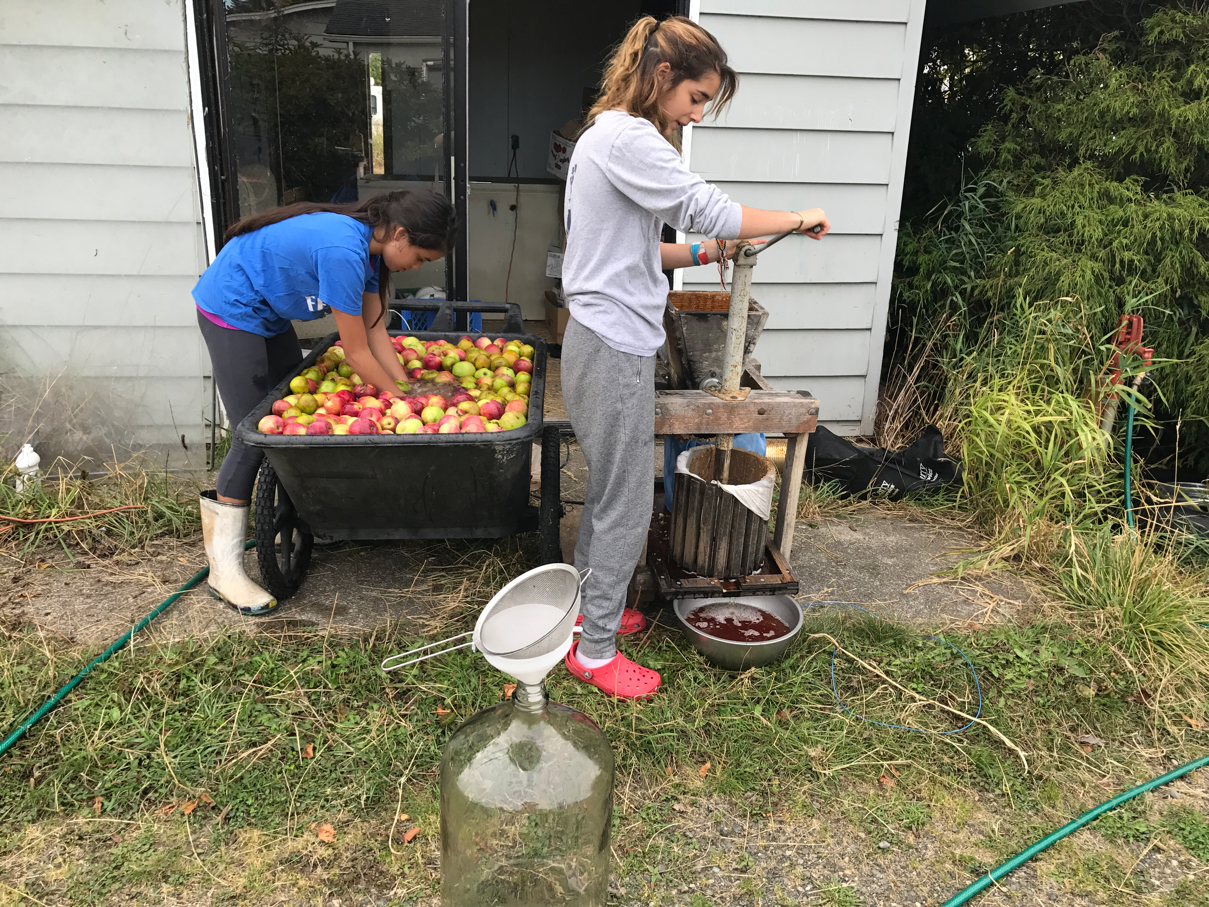
It was a lot of work, as cidering always is,,but we all had a great time. Hilde’s kids had never made cider before and they were excited to turn the crank and pass the apples hand to hand and pour the juice through sieves and funnels. 

And we made SO. MUCH. CIDER. As usual, the weak link in the cider-making chain is finding enough jars. We filled up all my half-gallon mason jars, which means it is truly the end of milk season (the goat is almost dry anyway). Luckily Homero rooted around in the recesses of his shop and came up with this 3 gallon skull-shaped beverage dispenser. It doesn’t have a lid, but we just put a plate on top of it and will dispense cider at will for the next few days. 


Sunday, September 13, 2020

Preserving Log (Late Summer 2020)


I’ve been on an absolute tear in the kitchen the last two weeks. Late August/early September is the middle harvest season (Mabon is coming right up), the prime harvest season around here. Here’s a list of what I’ve done lately - as far as I can remember. 


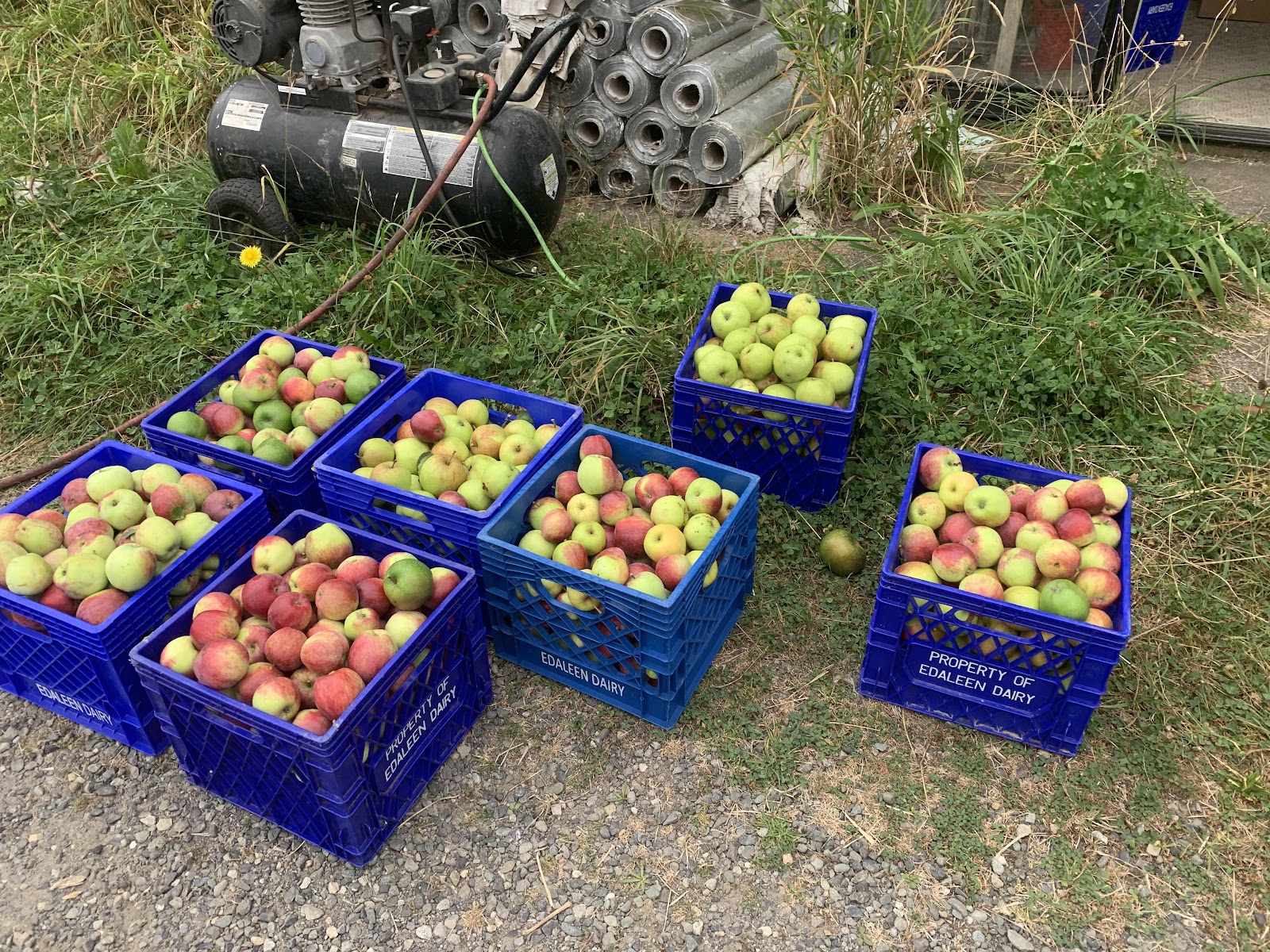
Today the girls and I pressed about ten gallons of cider, from the apples you see above. My friend H. down the way has a dozen apple trees and was only too happy to let us pick some. Tomorrow I will bring her some cider. 

Cidering is hard work. Picking the apples, carrying the crates, washing the apples, hauling the press out and cleaning it, bending down and standing up approximately 7000 times, pressing the buckets, pulling the tight-packed plate back out of the buckets, carrying the apple mast to the compost. It’s messy too, with little bits of apples flying everywhere and juice on everything. By the end I was so sweaty and sticky and tired! Working outdoors in this horrible smoke isn’t a lot of fun, either. But this was the first time we’ve pressed cider in a couple years and overall it’s a great experience. 

The smaller of my two carboys, three gallons, will be made into hard cider, and we’re keeping the rest sweet. I threw two gallons into the freezer, which leaves us about six gallons to get through before it turns into tepache. Not that there’s anything wrong with tepache. 


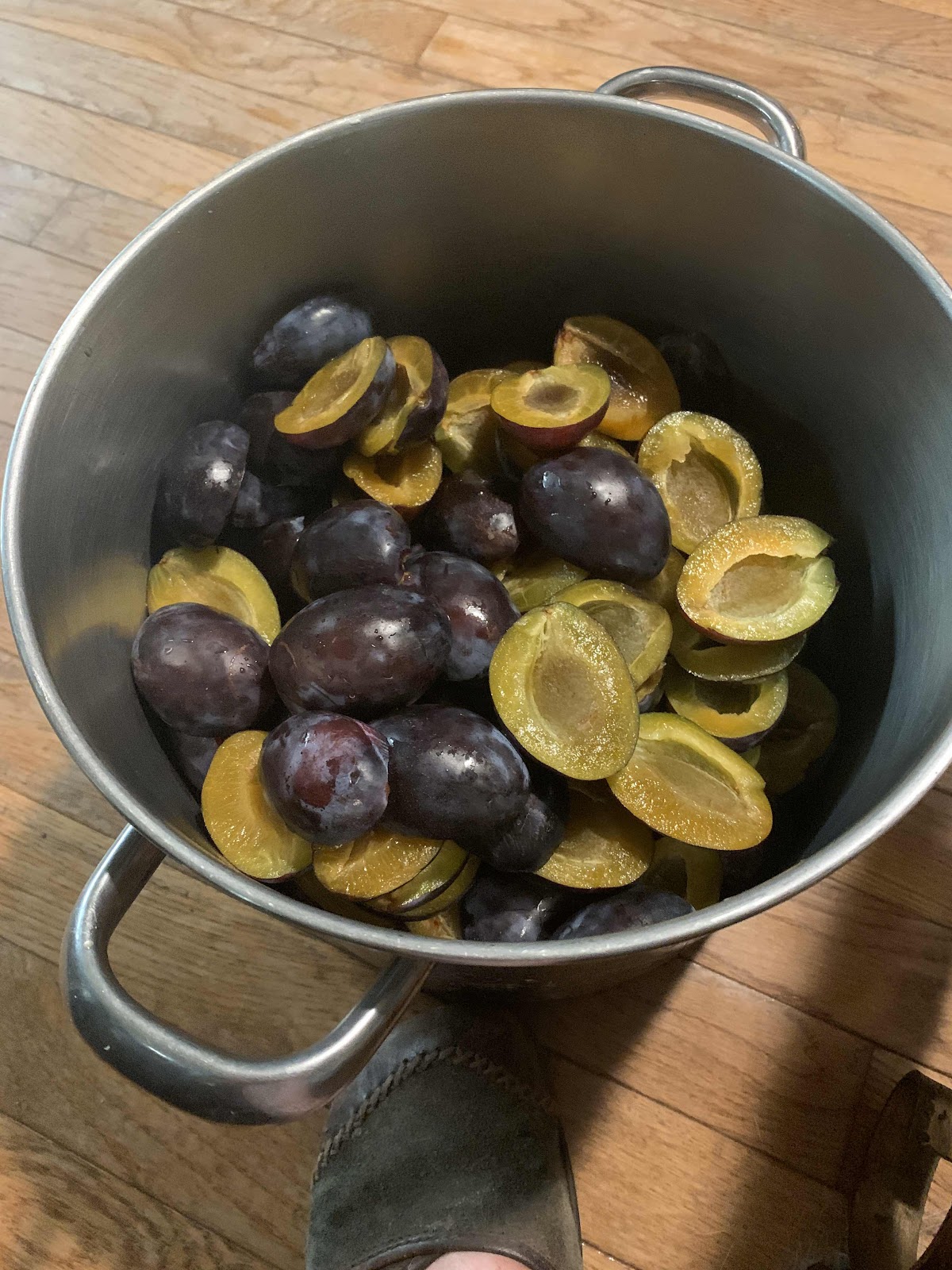
Plums. This in an on-year for the Italian plum tree, and there are hundreds and hundreds of plums. I’ve dehydrated enough to fill a gallon ziploc bag - more plums than you probably think - and the dehydrator is full of plums right now too. 

I’m taking another swing at plum wine. My past efforts have been drinkable, not fantastic.  Probably I won’t get any better unless I buy a little more equipment - like a hydrometer - and start taking recipes more seriously. But hey - there are so many plums. How far wrong can you go? Right now there’s about two gallons in a primary fermenting chamber and I’ll pitch the yeast tomorrow. I have to go buy another carboy because all of mine are currently full of apple cider. 


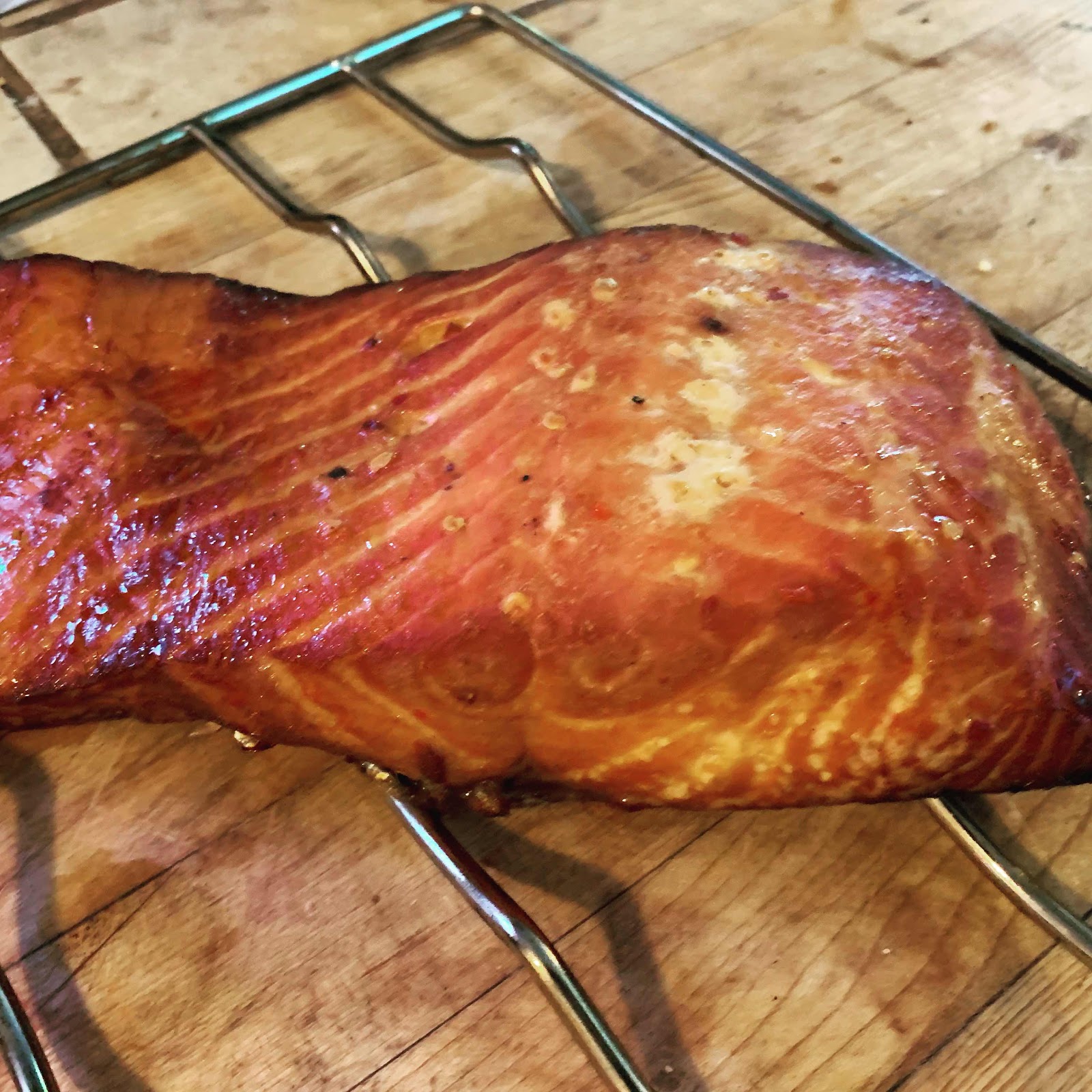
One of Homero’s clients brought him an enormous side of  salmon as a tip. I cut it into five approximately 1 1/2 lb pieces, and we ate one fresh and then I smoked the others. One of the smoked pieces is in the fridge to snack on and the others are vacuum sealed and will keep in the fridge for a few months. Probably not until Christmas though, sadly. Smoked salmon is my favorite thing to send friends and family as a Christmas gift. I could throw them in the freezer but I’m not sure how well the texture would hold up. 

Let’s see, what else? Oh, I canned six quarts of salsa ranchera  this week with tomatoes from gleaners. But I’m not doing a lot of canning for the simple reason that I can’t find canning lids anywhere! Apparently canning lids are the toilet paper of this phase of the pandemic. I have one package of small mouth lids left. 

A couple days ago I hit my favorite local farm stands just to see what was available. I brought home some sweet corn (which we ate), some cherry tomatoes (ditto), five pounds of green beans, and three smallish kohlrabi. I started kimchee with the kohlrabi. Earlier this summer I made a batch of kohlrabi kimchee and it was the BOMB. It’s only about a quart, but we will enjoy it. 

I’ll have to decide if I want to use the last of my canning lids to make canned dilly beans with the green beans, or if I will lacto-ferment them like kosher dill pickles. Both ways are good. 

I haven’t even started in the pears. Good lord, the pears! WHY did I plant FOUR pear trees? 


. 

Monday, October 29, 2018

Apple-anch, 2018


It’s apple season again, which means I’m too busy to write about it. These lovely specimens were part of a farm glean courtesy of the Gleaner’s Pantry. I’m hoping the weather holds and we can haul out the press this weekend, but in the meantime I’m dehydrating, making sauce and pies. 

Enjoy fall!! 

Wednesday, September 12, 2018

Preserving Log 9/18


Arrived home from Oaxaca ten days ago. In that time we had a lot to do to get the kids ready for school- go shopping for supplies and clothes, adjust their schedules, etc. Paloma made a schedule and posted it on the fridge:


We did all that. Also I started a serious job - ten days of full time, 8 hour days interpreting for a student enrolled in he Washington state Caregiver’s training program. I have done this same course several times before. It’s very demanding; after eight hours of simultaneous interpretation my brain feels like a bowl of cold oatmeal. But it pays well and after our expensive summer abroad I couldn’t turn it down. 

Meanwhile, the pears and the plums and the early apples just kept on coming. Here’s what I’ve done in the way of preserving in the last ten days, more or less in order:

1) dehydrated two gallons of pears and two gallons of plums

2) canned six quarts salsa ranchera

3) canned four quarts pear/apple sauce

4) three gallons lacto-fermented pickles

5) made three gallons of plum wine - currently undergoing secondary fermentation in a carboy on the mantle. 

6) made three pounds chevre

7) canned eight pints blackberry jam

8) froze a gallon blueberries

Planning on picking up several pounds of peppers for canning later this week. That’s about it for now. I want to hit the farmers market and look for wild mushrooms - chanterelle season is in full swing, and I’d like to dry a few pounds. 

Happy Mabon to you all. 


Monday, October 16, 2017

Brewing Notes (Cider and Wine)


Mainly just notes for myself so I don't forget when I did what. Today I racked the rhubarb wine into a clean carboy. It's been about a month in the first one, and a week in a fermentation bucket before that. I tasted it as a transferred it and it's AWFUL. But that doesn't mean anything. The plum wine was gross at this stage too, and it turned it pretty good. This is only my second attempt at fruit wine. Last year's plum wine was the first. Having never even tasted rhubarb wine before, let alone made it, I have nothing to compare it to. I just had so much rhubarb I had to do something with it. If it turns out horrible it's no big loss - my plant puts out rhubarb enough for as muchexperimentation as I feel like doing. 

Also racked the cider into a second carboy.  The cider tastes pretty good already. It's very dry, though. I think when I bottle it in a couple weeks I will add a bit of sugar for a little sweetness and fizz. I like my cider frizzante. 

Brewing is fun. It feels like magic. 

Saturday, September 23, 2017

Happy Apple Cider Day (Neighbors to the Rescue)


A close up of the gear mechanism of the apple press. The girls and I had pressed about three gallons of cider today, and were only about a third of the way through the wheelbarrow full of apples, when the press broke.  It always breaks in the same way - the little rod that goes through the horizontal gear and attaches it to the presser-rod breaks. Last time this happened, after I let some over enthusiastic college boys use the press, Homero fixed it by using a nail to replace the little rod. Today, that nail broke in half. 


The girls and I could not figure out how to fix it. It's simple
enough to see how it works but the presser-rod had slipped down inside the tube and we couldn't get it to come up high enough to thread a new nail through the hole. Nor could we figure out how to remove the vertical gear which we would have to do. Nor could we find any tool hanging around capable of cutting off the excess nail so it wouldn't halt the turning of the horizontal gear halfway through a revolution. I learned that you cannot cut a nail with long-armed garden loppers, and it's dangerous, so don't try. 

Homero is in Seattle, and he wasn't answering his phone. I was about to give up, and frustrated because I had hoped to do all my pressing in one fell swoop his year. The apples which we gathered from a friend's orchard had already been resting for about a week and I didn't think they would last a whole lot longer. And I didn't want to clean up the press and the mess and then just wait for Homero to fix it. 

Then I remembered Mr B. The B's are close neighbors and friends from church. They are an elderly couple, from whom  we buy a side of beef every year that they have one to spare. One year, the B's borrowed the press, and when he returned it, Mr B had cleaned and serviced it, oiled it and sharpened the blades. I knew he could make short work of this simple
mechanical problem, and he might even enjoy himself while he was at it. 

Five minutes after I called, both B's arrived. It took Mr B a few minutes to figure out how to get the presser-rod to come up through the tube (it screws, but the mechanism is hidden), and after that it was smooth sailing. We brought over a collection of nails and he chose one, threaded it through the hole, marked where it needed to be cut, and then took it back to his workshop and cut it with his sawzall. There was some fiddling around with pliers and the cotter-pin on the vertical gear, and then presto! It worked! 

We all cheered. I convinced them to take home a little thank you basket, with a half gallon of cider, a few ham steaks from the freezer, and a jar of blackberry jam. They didn't want to take it but I insisted. 

Then we had to really rock and roll to get the apples pressed before dark. Pressing cider is hard work, even with a motorized press, and there were a whole lot of apples.  But we got it done. Hooray for good neighbors, who are handy and willing to lend a handy hand. 


Monday, September 5, 2016

Is There Anything as Good as Apple Cider?


Oops, that's a picture of bowls full of cherries. When I selected the thumbprint, I thought it was buckets of apples. Oh well - doesn't matter. I didn't take any pictures of the first - and probably only - cider pressing of the year, because I was too busy pressing cider!

We didn't make any cider at all last year, and I missed it. Cidering is very hard work - even if you can convince other people to bring you apples so you don't have to pick them all yourself. But it is so, so worth it. There's almost nothing as good as that first drink of fresh apple cider after the sweat and the aching back of cidering.

Things that are not as good as fresh apple cider:

- finding a twenty dollar bill in the laundry

- coming home to an unexpectedly clean house

- seeing a movie you thought was going to be dumb but it turned out to be really good after all

- losing five pounds somehow without even really trying

- (average) sex

- a phone call from an old friend

- when you thought you were wrong in an argument but later you read something and find out you were right all along


Things that are almost as good as fresh apple cider:

- getting a handwritten letter in the mail from an old friend

- finding a hundred dollar bill on the sidewalk

- surprise bouquet of your favorite flowers from the husband AND an unexpectedly clean house

- discovering a really, really great new author

- that dream, that one dream, swimming effortlessly underwater like a mermaid in a coral garden

- the hot bath you take after a hard day's work on the farm

- baby goats


Things that are better than fresh apple cider: 

- only you know the answer to this one. We each have a different answer and I'm not telling mine.


Sunday, October 4, 2015

Life as a Microbe (The End of the Food-Chain)


It is a maxim of ecology that "wherever there is something to eat, there will be something to eat it." At least I think it is: I may be remembering this line from the excellent novel Dune, uttered by the Imperial Planetologist Dr. Kynes as he lays dying in the deep desert, eyeing the hawks circling above him.  In either case, the principle is sound. Anywhere on Earth, when anything dies and falls to the ground, it will get eaten, if only by microbes.

Just as there a chain of organisms on the production side of the food pyramid, beginning with clorophyll containing plants that convert sunlight into sugar and ending with peak predators like lions and humans, so there is a chain of scavengers that reduces the remains of all that dies back into its constituent molecules. Descending from the apex on what we might call the downslope of the food chain, we have large animals like hyenas and vultures, followed by smaller creatures that live on decaying flesh like crabs and ants, and ultimately the myriad microbes that slowly transform the less digestible bits such as bones and hair back into soil. The chemistry of systemic catabolism is just as fascinating as that of the more highly visible and valued systemic metabolism.

surplus bread soaking in whey leftover from cheesemaking

I feel that I have firmly joined Team Scavenger. I devote a great deal of time to seeking out resources unnoticed or undervalued by others. In fact, my family largely subsides on my local waste stream. That we live so well and so fatly is a measure of just how rich and bountiful that waste stream is.

In this past week alone I have made 5 gallons of apple cider entirely from apples that other people were throwing away. About half the apples came from a neighbor who didn't want them and the other half from the Gleaner's Pantry. If you've ever pressed cider you know how many apples go into 5 gallons of cider and it's a buttload (not really - a buttload is 126 gallons). The apples that I collected from Gleaner's - in one day!- represented a very small percentage of the apples discarded on a daily basis in my small town. 

That same day, I also collected 6 or 7 boxes of surplus bread. Most of it was quite fresh and I saved a little for us to eat ourselves - the rest of it went out to the mama barn and fed my pig, turkeys and chickens for a solid week. Again, this represented only a tiny fraction of what was there for the taking. I would have taken more but I literally didn't have any more room in my car. 

In addition, I also gleaned enough fresh fruits and vegetables - tomatoes, chiles, onions, a couple of pumpkins, cucumbers, oranges and grapes - to feed my family for a week. I canned 8 pints of salsa, and if I weren't so lazy I could easily can 8 more right now, simply from that one glean. 

Today, my good neighbors N. and R. from church called me and asked if I wanted corn stalks. They were cleaning up the garden for the year and thought I might be able to use them for my animals. I said "sure!" and went over to help them collect and stack the stalks in their trailer. I also brought over a loaf of pumpkin bread (made from the pumpkin I got from Gleaners) and some cheese and a quart of apple cider (also a product of Gleaner's). 

Homero with corn stalks

The corn stalks had many cobs still on them, those that had been damaged by crows and weren't fit for human consumption. They sure were fit for pig and goat consumption! My critters went crazy for the corn.

Everybody loves corn


Haboob the Buck eating corn
In the chain of scavengers, I imagine myself and my family as first-level scavengers. We are the hyenas and the ravens. We take the whole, recently discarded (read: recently deceased) product of society and make what use of it we can. This includes not only the food I get from Gleaner's, but also the clothing and furniture that I buy secondhand from Goodwill or the Salvation Army thrift store. We are warm and well-dressed in the castoffs of others.

Any food that we can't use - peels, skins, bones, and the like - or that we end up not eating because there is just too much of it - the lettuce that wilts in the back of my fridge before I can eat it; limp carrots and cucumbers; bread that has gone a little green - we give to our pig and our chickens. They are the second level scavengers, akin to lobsters or beetles.

And when all that refuse has been processed by my animal's digestive systems, we collect it once again and compost it. Enter the microbes. Our compost pile is rich, black, velvety and fragrant. Once a year, in springtime, our next door neighbor comes over in his tractor and collects some of it for his garden beds. Come next summer, some of it will make its way back to us in the form of sweet cilantro, ruby beets, plump squashes.

This time of year, as the world turns towards darkness and winter, I am especially conscious of and especially grateful for the quiet science of recycling that takes place in the sleeping earth. The dark side of the year is the time to contemplate the renewal that happens as we rest, as the dirt rests. So much grace happens in repose, so many vital processes are accomplished only in stillness. We are all of us, at least in this culture, so biased towards the light - toward action, towards growth and vigor, toward Yang, that we are blind to the necessity of decay. The alchemy of decay; of rot, of mold, of the mushroom and the slug. By such humble beings are we sustained, generation after generation.

Hail Yin, hail Kali and Hecate, hail Persephone, Isis, Osiris, Jesus, and all those good Gods and Goddesses who descend into the earth to rise again after three days, or seven, or nine. Hail the seed that goeth into the ground and dies, that it may live.


Thursday, October 20, 2011

Brewing Up a Storm (Drinking and Driving)


My first batch of hard cider came out great! I can't take all the credit - or even most of it - or, in fact, hardly any of it at all. I pressed the apples, but J. (my homebrewing friend who moved away and gave me all his equipment - see Cider, Revisited) found the recipe and walked me through the beginning of the process with little baby steps.

After pasteurizing the fresh juice, cooling to room temperature, and tranferring into a sterilized carboy, J. "pitched the yeast" which basically means, pour your yeast into the carboy, and added the airlock. A week later, after it stopped bubbling, we transferred the cider - now somewhat alcoholic - into a second clean carboy, leaving the dregs behind. This second carboy bubbles away with an airlock for another week or so, and then it's time to bottle.

Since I was trying to make carbonated cider, I had to add some more sugar to the cider before bottling it. The idea is that the sugar will fuel a second fermentation in the bottle, creating carbon dioxide which provides the fizz. Just like champagne. I managed the final bottling on my own.

Then I was suppoosed to let it mature for several weeks before imbibing, but I was impatient. Of course I had tasted the cider as I was bottling it, and it tasted pretty good. Not knowing how long it might take to develop some fizz, I waited about four or five days before opening up a couple bottles. There was some slight fizziness, but nowhere near as much as in a bottle of commercial brew. The taste, however, was very good - off dry and apple-y. I drank a bottle as though it were beer, and felt quite tipsy. Clearly, stronger than beer, though not as strong as wine. I'm guessing somewhere around 8%.

Over the next two weeks, all twelve bottles disappeared. I think I gave away six, and Homero and I shared the other six. So, no idea how it might have tasted after the recommended six weeks in the bottle. Better luck this batch - it's a five gallon batch instead of a two gallon batch, so there will be many more bottles. I hope it turns out as tasty this time. The fresh cider was not quite as good - nor as sweet - as the last batch of fresh cider. I'll just have to hope for the best.


Homero has been brewing, too. He's had virtually no work these last few weeks, and so has been turning his attention to those projects that tend to languish when he is busy. One of these is biodiesel. It had been a fair while since the last batch, but over these last two weeks he's made several batches, using up our stored oil and our chemicals. All three vehicles have full tanks, and there is still some thirty gallons leftover to refill them again. I think he made seventy-five gallons in all.

The oil is free to us - he has arrangements with a few local restaurants to pick up their used oil with his oil-sucker. The oil sucker is a very cool device he made. Basically it is a fifty-five gallon drum fitted with hoses and valves. He sticks it in the bed of the pickup and goes to one of his restaurants that has a full oil-dumpster. Then he can use the compression of the engine of his truck to create a vacuum inside the drum and suck up oil. I was very impressed. The oil is free, but the chemicals are expensive. Homero did the math a while ago and at that time, biodiesel costs us about $1.40 a gallon, when you figure in electricity. So, filling the three gas tanks cost somewhere in the vicinity of sixty dollars, or about one-third the cost of regular diesel.

Of course, it takes time, too. Homero hasn't quite got the fiddly precise process down, and so he spends many hours on each batch, and it can be quite frustrating. But even so, it's a highly worthwhile endeavor, economically speaking. Much more so, truth be told, than my cheesemaking or cider-brewing. But I get a lot of satisfaction out of my fiddly processes, too.

I am so proud of him. Of us, really. We are just a couple of homebrewers, each in our own specialty. Driving homebrew on his end, drinking homebrew on mine. Don't worry - we won't mix the two. Never the twain shall meet.


Wednesday, September 28, 2011

Good News, Bad News

I'm sad, because my pastor is moving across the country to be some other church's pastor. Pastor L. and her husband J. are friends as well as spiritual leaders, and we will miss them greatly. I can't even say much more about it, because I don't feel like crying at 11:00 in the morning.


They will be driving across the country, and came to Homero to check out their car and make sure it is fit for a long journey. Homero looked, and found several important things that needed to be fixed. He told them to get the parts and there would be no charge for the labor. Of course they protested, and we protested, and they said "we can't possibly..." and we said "we can't possibly..." and we were at an impasse.

Then J. called the next day and said, "you know, we are selling off most of our stuff, anything that won't fit in the car. Would you be interested in accepting our brewing equipment as payment for the mechanic work?" J., you see, is an enthusiastic and talented homebrewer. We have sampled his product a few times and can attest to it's deliciousness. He and Homero have talked several times about getting together to do a few batches, but it just hadn't happened.

I have had a little run-in with homebrewing of my own (Cider Season) and it was a miserable failure. I've always wanted to give it another go, but making cider is such hard work - picking the apples, hauling the press out of the garage, washing the apples, getting stung by bees, cleaning everything up afterwards - that I just haven't wanted to risk turning the hard-earned delicious fresh cider into disgusting undrinkable sludge. Again.

HOWEVER! If we are to have our very own brewing equipment, and a few lessons from a master before they (sniff) go away, then I am willing to take the plunge. Delighted, in fact.
Only problem - I still don't have any APPLES.

Gotta work on that.

Friday, October 22, 2010

Bad Year For Apples

Every fall since we moved up here, I've put out an ad looking for apples to make cider. I inherited a lovely old motorized, double barreled apple press and a giant thirst for cider, but we don't have apple trees here. Of course, we planted some the very first spring, and we planted more the next year (Expanding Orchard) but between the goats, the poor soil, and carelessness with the riding lawnmower, we haven't had a great survival rate. The trees that are still alive are still a few years away from any kind of decent crop.


In years past, I always enjoyed an enthusiastic response to my ads. The deal was: you bring your apples, we share the work of pressing, and each keep half the cider. Homebrewers can have all the cider in return for a quarter of the finished product back. Everyone seemed happy with this deal, and the response was such that I spent most weekends in September and October utterly exhausted (Apples Kicked my Ass).

This year, I got zero response to my Craigslist posting. None. Zilch. I reposted, but no response. I think it has just been a bad year for apples. After my ad got no results, I started asking around, people at church and school, if anyone had extra apples. Everyone told me they had a poor harvest, or even a non-existent harvest this year. My own observations bore this out - usually this time of year, as you drive around the countryside, you see dozens of loaded apple trees. Every old homestead had an orchard, and every third city lot has a tree or two. Normally the apples are falling all over the place about now. But no; all I see are a bunch of bare trees.

It's funny, because we had a great crop of pears this year. It was a long, cold, late spring. I was worried about the pear tree, because during the blossom time I thought it was still too cold and wet for bees. Then it was a short, cool summer. Our pears did fine, but apparently many apple trees did not.

For the first time, I had to buy apples! Now, I can't buy enough apples to press for cider. I can't afford to. Maybe later in the year, as the season is ending, the commercial growers will be happy to sell their U-pick apples at a price that will make cider economical, but for now, it's just not. Still, I can't possible just let apple season go by without any fresh new crop apples to munch on! I bought a 40 pound crate of Jonagolds from a homesteader out in Lynden. They are delicious, but 40 pounds is a lot of apples to eat fresh. I still have a bunch of canned pear sauce, so I didn't feel like making applesauce.

I made several apple-cakes. My particular made-up recipe is an apple-ginger-walnut cake. Furthermore it is made - these days - with homemade goat-yogurt and topped with cajeta. Wish I'd taken a picture, but I didn't. Since I made four of them, we will eat one and wrap three for the freezer. Cake freezes beautifully. Just thaw it on the counter and warm in a slow oven to serve.

Wednesday, September 1, 2010

I'm Not Ready!

I'm not ready for apple season! Driving around the county, I see it's definitely starting to be that time of year - everywhere I look, it seems, are heavily laden apple trees. Some have already dropped their apples all over the ground. Our pear tree is covered in pears, and they are starting to fall. We already have a big box set aside to ripen.


I do love apple season. I love pressing apples, I love fresh cider (Apple Madness). I love teaming up with local homebrewers and trying to make hard cider. I love making applesauce. I love discovering new varieties. I really really like just about everything about apples.

But man, apple season is a lot of work (Apples Kicked my Ass). And I am still in the throes of cheese season, which is a lot of work, too. My heavy-work seasons are not supposed to overlap! I guess there's no law that says I have to start pressing apples the minute they become available. After all, there will still be plenty of apples around in October. I could hold off for a little while.

That sounds like a good idea - wait to start in on apples until I get the goats down to one milking a day. Meanwhile, I can post my annual craigslist ad looking for people with apple trees and for homebrewers.

Might as well go do that now....

Monday, January 11, 2010

Expanding Orchard


Trees of Antiquity is a fantastic nursery that specializes in heirloom fruit trees. After drooling for several days over their online catalogue, I wrote to them asking if they could help me pick some apple varieties suitable to my microclimate (wet n' windy) and needs (cider, lots of it!). I included all the information I had to hand about my property - the climactic zone, the annual rainfall and high/low temperature averages - all easy to google - and my personal preferences about apples. One of their experts e-mailed me back the very next day with a number of suggestions.


Their trees are organically raised and shipped at five feet in height, bare root, at the appropriate time of year for planting in your climate. I am personally delighted to be helping to propogate some rare heirloom varieties, and I can't wait until I have some fancy new apples (in two or three years, alas!). I also ordered a cherry and a plum tree. Check out this site; even if you don't have room for an orchard, you might be able to squeeze in a tree or two wherever you are. They have some tips on varieties for small spaces.

Back when I lived in the city, I planted five fruit trees on your basic city lot. I sorely miss my Bing cherry tree - at only ten years of age it was producing some fifty pounds of cherries - not even counting what the birds and the neighbors ate!

Monday, November 16, 2009

Homebrewers Make Good!

Hooray! Several weeks ago, a couple of college age homebrewin' boys came to press apples with me. Even though I have burned in the past by homebrewers who take all my juice and never deliver the promised cider, I decided to take a chance on these boys. What the heck, I already had a freezer full of juice. So instead of taking 50% of the fresh juice (my usual take), I asked for 25% of the finished product back. I figured odds were 50/50 I'd never see them again.


But on friday, they showed up! With 24 bottles of hard cider! They said they had just bottled it, so leave it at room temperature for another couple of weeks, but it should be ready to drink by Thanksgiving.

I'm SO glad I'm hosting this year!

Sunday, October 18, 2009

Apples Kicked my Ass


After the girl scouts went home, a lovely older couple from Lynden showed up with a full barrel (or more) of Russet apples off their antique tree.


I've heard of Russets before but I hadn't ever, to my knowledge, eaten them. They are kind of a homely apple; small, greenish-brown, and speckled. But they are also a freakishly delicious apple. Crisp, sweet, and juicy.

This gentleman's apples were terrific, clearly from a very healthy tree. They hadn't a scab, a wormhole, or a bruise on them anywhere. The cider they made was, like the apples, rather homely and kind of brown, but extremely sweet and flavorful. They took home about six gallons of cider, and I got about four - plus all the extra apples, which amounted to a couple of tote bags full. I think we will mostly just eat them as is, but if there are too many for us to eat in a timely fashion, I'll have to see how they cook up.

I believe I might be done with cider for the year. There are ten or more gallons frozen in the chest freezer, and a couple of gallons in the fridge. My arms and legs are killing me, and I got a wasp trapped in my dress today. It didn't sting me; it was far too drunk on apple cider. But still.


Sunday, September 27, 2009

Apple Madness

More people came over to cider yesterday afternoon. They were a very sweet couple originally from New York with six or seven big tote bags full of beautiful apples. Almost too beautiful to press, except what else can you do with 500 apples? I think they were gravensteins. They made a very clear, sweet cider, and lots of it. About seven gallons, and the couple wouldn't take more than two. They also left me the thirty or apples that were left over from the last barrel. I think I'll make a pie this evening.


The press itself is showing its age. It still works perfectly, but the frame is getting rather rickety and the blades are in need of sharpening. Also the wooden tray that the barrels sit on is a little bit warped and the juice runs out the sides unless we cover the tray with something flexible like tinfoil or chopping mats. I think at the end of this apple season I will see about getting it serviced..... at least, the blades removed and sharpened and some screws tightened or whatever. This is the same press we used when I was a child in Woodinville, after all, and I doubt it was new then.


Monday, September 21, 2009

Cidering Party

What a great day I had yesterday. Two of my friends came over with their husbands, kids, and boxes of apples and pears to make cider.


I made lunch, and beforehand we had a picnic on the grass in the lovely bright september sunshine. The kids played together beautifully. The men talked easily with beers in their hands (including Homero! Yay!) and bonded over the mechanical aspects of pressing, while us girls chatted as we washed fruit and cast an occasional eye in the direction of the kids.

When we ran out of apples we raided the neighbor's tree. She owes me apples.

All in all we pressed some eight or nine gallons of a delicious cider, roughly 80% apple and 20% pear. I love cidering.

Monday, September 14, 2009

Applemania

Pressed fifteen gallons of cider yesterday. A guy came with a pickup truck half full of gorgeous honeycrisps. I only kept four gallons, because I ran out of containers and because the guy is a serious homebrewer and offered to make up the difference in wine. Um, yes please!


There was a five gallon bucket of apples leftover. Today I used those, plus the last of the holy pears to make a gallon or so of pear-and-applesauce. It is delicious. So delicious, I'm not even bothering canning it, because I know we will eat it all within a couple of weeks.

Friday, September 11, 2009

My Favorite Time of the Year


Apple cider time. We pressed our first batch of cider yesterday, and as usual, it kicked my butt. My knees and hips and ankles ache like murder. I always forget just what hard work it is to press cider - and I don't even pick the apples!


Last week I put an ad on Craigslist asking for apples and offering to split any cider 50/50, and several people have answered. There is generally a glut of apples in this area, as in most semi-rural areas, I believe. So many old homesteads and large suburban lots have three or four or more apples trees, generally planted long ago enough to be fully mature but not yet old enough to be in decline, which means bumper crops of apples. Most of these apples fall to the ground and rot, attracting wasps and slugs and generally littering up the landscape. Few people make full use of their apples. I never did, back when I lived in the city and had only two trees.

Of course, many of these trees are neglected and produce small, scabby apples, but that doesn't matter when it comes to cider. The apples can be just as ugly as you please and still make a delicious product. Yesterday a guy came over with two garbage cans full of apples and we washed them in the kiddie pool and pressed them in my old motorized press, which I had previously hauled out of the falling down shed we call the "Parthenon" and scrubbed and bleached to within an inch of it's life.

We made about eight gallons of cider, and then we had to stop because we ran out of containers. There are still about half a barrel of apples outside. Today I made applesauce and I guess I will make some more tomorrow, but my guess is many of those apples will end up on the compost heap. The chickens and the goats will eat them, so it's not really a waste.

It was hot and sunny while we worked and the yellow jackets were out in force, but they didn't bother us because they were all drunk on apple-mast. I plan to try again this year to make hard cider (last year's attempt was a dismal failure) but in the meantime I just bought a bottle of rum and if I want my apple cider alcoholic all I have to do is tilt my wrist.

Which I did, and I am enjoying the result as I write to you all. Hope you are enjoying your afternoon as much as I am.

Wednesday, September 24, 2008

Pear Problem Solved, and Cidering in the Rain

Well, that took all of three minutes. 


I should have done my google search before I wrote the last post and revealed myself as a fruit ignoramus. Pears, apparently, do not really ripen on the tree at all, and ONLY ripen after picking. I just have to wait. If I am impatient (what do you think, kids?) I can put them in a paper bag with a ripe banana.

Meanwhile, I have lots of nice apple cider to drink. A family with four kids came out today with fully a bushel of apples and we pressed for two hours, even though the rain was varying in intensity between drizzle and downpour. The cider is probably slightly dilute, but man is it delicious. I guess the apples are finally ripening up. I've been so impatient for cider that I've been using apples that aren't totally ready, with predictably disappointing results. But this cider - mostly Gravenstein, I think - is great. I'm going to heat some up with cinnamon and cloves and see if it doesn't help the nasty head cold I'm developing from standing around in the cold rain like an idiot.